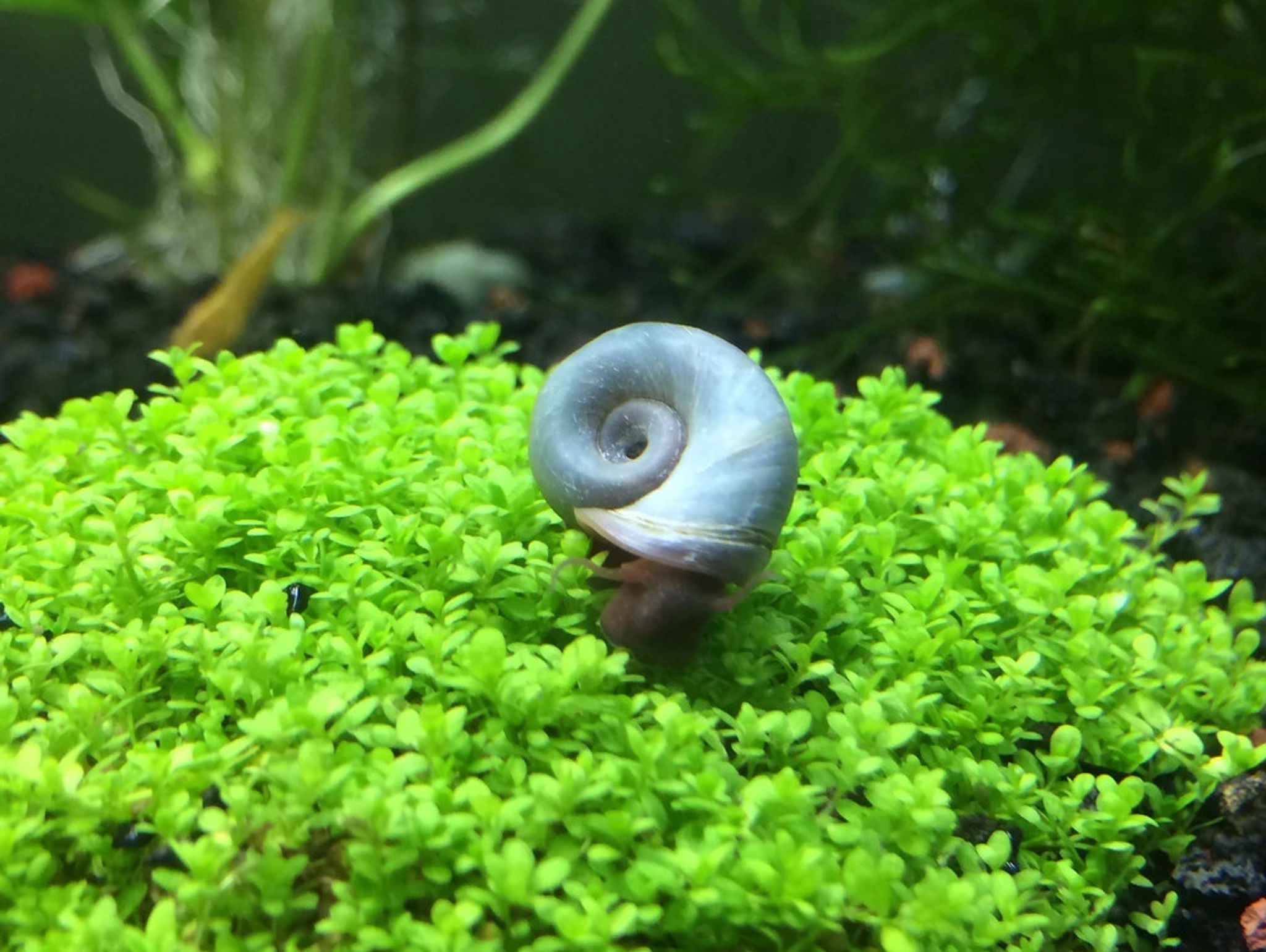

Best Tank Mates for Ramshorn Snail: Safe Fish and Invertebrate Companions
Ramshorn snails are peaceful scavengers, so the real compatibility question isn't whether they'll harm your other livestock — it's whether your other livestock will harm them. This guide breaks down which fish and invertebrates make safe, community-friendly tank mates, which species actively hunt ramshorns, and the water parameters that keep both the snails and everything else in the tank healthy.
How Ramshorn Snails Fit Into a Community Aquarium
Ramshorn snails often arrive as accidental hitchhikers on live plants, and many hobbyists only notice them once a small population has already settled in. That's usually not a problem. Ramshorns are detritivores and algae grazers — they eat dead plant matter, leftover fish food, biofilm, and soft algae, but they don't damage healthy plant tissue or bother tankmates.
Their ecological role is mostly beneficial:
- They clean up uneaten food before it fouls the water.
- They graze algae off glass, decor, and leaf surfaces.
- Their shell condition acts as a rough bioindicator — smooth, solid shells suggest good water chemistry, while pitted or eroding shells point to a hardness or pH problem.
The one downside is reproductive speed. Ramshorn snails are hermaphrodites that can self-fertilize or cross-fertilize, and they lay gelatinous egg clusters that hatch in roughly two to four weeks, with snails reaching sexual maturity in about a month. Given excess food and detritus, a handful of snails can turn into a few hundred fairly quickly. Understanding this life cycle explains most of the "tank mate" questions people ask — many readers aren't looking for companions at all, they're looking for population control.
Water Parameters Ramshorn Snails Need
Because most tank-mate compatibility comes down to shared water conditions rather than direct aggression, it helps to know the range ramshorns actually need before picking companions.
| Parameter | Tolerable range | Best range for shell health |
|---|---|---|
| Temperature | 64–86°F (18–30°C) | 70–78°F (21–26°C) |
| pH | 7.0–8.0 | 7.2–7.8 |
| General hardness (GH) | 8–18 dGH | 10–16 dGH |
| Carbonate hardness (KH) | 5–15 dKH | 6–12 dKH |
| Tank size | 2 gallons (7.5 L) and up | Larger tanks buffer swings better |
Ramshorns need alkaline, calcium-rich water to build and maintain their shells. Soft, acidic water — common in shrimp-only setups, blackwater tanks, and CO2-injected planted tanks — will slowly erode or pit their shells even when the fish and shrimp sharing the tank are perfectly fine. If you run a CO2 system for plants, keep an eye on daytime pH dips; a planted tank doesn't have to be a dedicated "soft water" setup to still stress ramshorn shells.
Fortunately, this range overlaps comfortably with most community fish, which is why ramshorns coexist so easily with typical freshwater setups.
Safe Fish Tank Mates
Most peaceful community fish either ignore ramshorn snails entirely or are too small to bother with them. Good options include:
- Corydoras and other peaceful bottom-dwelling catfish — bottom feeders that share a similar diet without competing aggressively.
- Guppies, platies, mollies, and other livebearers — generally indifferent to snails of any size.
- Celestial pearl danios, chili rasboras, and other small rasboras and tetras — too small-mouthed to threaten adult ramshorns.
- Otocinclus — algae grazers with no interest in snails.
- Honey gourami and dwarf/pearl gourami — usually fine with adult snails, though see the caveat below.
You can browse compatible options like corydoras and small community fish such as tetras and rasboras if you're stocking a new setup around your snails.
The Gourami Caveat
Gouramis are the fish most likely to get conflicting advice. Dwarf and honey gourami usually leave adult ramshorns alone, but as gourami species grow larger and their mouths widen, they become more opportunistic and may pick at small or juvenile snails. Treat gouramis as "usually fine, but watch juveniles" rather than an unconditional yes — the size of the fish's mouth relative to the snail, not the species label alone, is what determines the outcome.
Are Ramshorn Snails Good for a Betta Tank?
Generally yes. Bettas are typically indifferent to ramshorn snails, and the two make a common pairing in nano tanks. An individual betta may occasionally nip at a very small or newly hatched snail out of curiosity, but this isn't consistent predatory behavior, and adult snails are rarely bothered.
Safe Invertebrate Tank Mates
Ramshorns share their diet and water preferences with several other invertebrates, making mixed invert tanks straightforward:
- Cherry shrimp and other neocaridina/caridina shrimp — peaceful, similar diet, no aggression toward snails.
- Ghost shrimp — likewise compatible and low-maintenance.
- Other peaceful snail species — nerite snails, mystery/apple snails, and Malaysian trumpet snails all coexist well.
- Freshwater clams — listed as compatible by some sources, but this deserves a caveat: most freshwater clams are filter feeders that struggle to find adequate food in typical aquarium conditions and often starve slowly over months. Treat clams as an advanced, situational choice rather than a default recommendation for a community tank.
A key mistake is assuming all shrimp are automatically safe. True dwarf shrimp — cherry, ghost, and amano — are non-aggressive and fine. Larger or more aggressive shrimp species, and crayfish in particular, are a different story and belong on the avoid list below.
If you're building a shrimp-and-snail setup, you can source dwarf and other freshwater shrimp to pair with an existing ramshorn population.
Fish and Invertebrates to Avoid
Some species are known, deliberate snail predators. If you keep any of these, don't be surprised when your ramshorn population disappears — sometimes overnight:
- Loaches — clown loach, yoyo loach, and zebra loach are the most emphatic snail hunters in the hobby; they will actively seek snails out.
- Freshwater pufferfish — all species are specialized mollusk eaters and will hunt snails relentlessly.
- Crayfish — opportunistic and strong enough to crack shells.
- Larger or aggressive cichlids — will crush and eat snails as a matter of course.
- Goldfish — opportunistic rather than specialized, but will eat snails when the opportunity arises.
- Larger gourami species (as opposed to dwarf/honey types) — more consistently predatory as they mature.
- Assassin snails — a targeted snail predator (see below).
| Category | Predation risk | Notes |
|---|---|---|
| Botia loaches, freshwater puffers | Very high | Will actively hunt snails; add only for control |
| Crayfish, larger crustaceans | High | Strong enough to crack adult shells |
| Aggressive/large cichlids, goldfish | Moderate–high | Opportunistic, size-dependent |
| Larger gourami species | Moderate | More predatory than dwarf gourami |
| Dwarf/honey gourami | Low | Usually safe; may pick at juveniles |
Why "Peaceful" Fish Sometimes Turn Predatory
Species aren't uniformly predatory or safe — behavior often tracks with size. A juvenile gourami or a young fish of a normally opportunistic species may genuinely ignore snails, then start picking at them once its mouth grows large enough to manage a shell. This is why stocking advice that lists a species as a flat "yes" or "no" can be misleading; it's worth watching how a fish behaves as it matures rather than assuming the label holds forever.
Assassin Snails: A Control Tool, Not a Companion
Assassin snails deserve a separate mention because they're often mistaken for a peaceful addition. They aren't. Assassins are specialized predators of other snails, including ramshorns, and people who add them expecting coexistence are usually surprised when the ramshorn population starts shrinking. If that's your goal, a small number of assassin snails is actually a reasonable, targeted way to manage an overpopulation — just don't treat them as a general tank mate.
Managing Ramshorn Overpopulation
Because ramshorns reproduce so readily, population control is often the real reason people search for "tank mates" in the first place. A few practical levers:
- Reduce excess feeding. Overfeeding fish leaves leftover food that fuels snail population booms; cutting back on feeding often does more to control numbers than adding a predator. Messy eaters like goldfish or large cichlids indirectly drive snail numbers up by leaving more food behind — the same bioload that makes a tank harder to keep clean also feeds a growing snail colony.
- Introduce a moderate predator in limited numbers. A small loach or a few assassin snails can bring numbers down without wiping the population out, if that's your preference.
- Remove excess snails and eggs manually. Periodically scraping off gelatinous egg clusters and pulling extra snails by hand keeps numbers in check without changing your stocking plan.
- Quarantine new plants. Most unwanted — and most wanted — ramshorn populations start with unquarantined live plants. A quarantine period lets you spot and remove egg clusters before they reach the display tank.
Common Mistakes to Avoid
- Adding a known predator and being surprised when snails vanish. Loaches, puffers, and aggressive cichlids don't gradually thin a population — they can clear it out in short order.
- Blaming the snails instead of the feeding routine. A booming population is almost always a symptom of excess food, not a snail-specific problem.
- Assuming all shrimp are safe. Only true dwarf shrimp are reliably peaceful; larger or more aggressive shrimp and crayfish will attack snails.
- Ignoring water hardness. Soft, acidic setups — including many shrimp-only, blackwater, and CO2-injected planted tanks — cause visible shell pitting and erosion in ramshorns even when everything else in the tank looks healthy.
- Treating assassin snails as companions. They're a control tool; adding them expecting peaceful coexistence misunderstands what they're for.
- Skipping plant quarantine. This is how most accidental (and most intentional) ramshorn populations get started.
A Warning on Copper-Based Medications
If you ever need to treat fish for disease, check the label on any medication carefully. Copper-based treatments are lethal to ramshorn snails and to snails generally — a course of medication aimed at your fish can wipe out your entire snail population as a side effect. If you keep snails you want to preserve, either avoid copper-based treatments or move the fish being treated to a separate quarantine tank first. Look for water-safe treatment options in a medication category that lists snail safety before dosing a display tank.
Frequently Asked Questions
Will ramshorn snails harm my fish or plants?
No. Ramshorn snails are scavengers, not predators — they eat dead or dying plant tissue, algae, biofilm, and leftover food rather than healthy plants or livestock. They pose essentially no direct risk to fish or plants.
What fish eat ramshorn snails?
Loaches (especially clown, yoyo, and zebra loach), freshwater pufferfish, some larger gourami species, goldfish, and aggressive cichlids are the main fish predators. Assassin snails also prey on them, though they're an invertebrate, not a fish.
Can I keep ramshorn snails with shrimp?
Yes. Dwarf shrimp — cherry, ghost, and amano — are excellent, peaceful tank mates with overlapping diets and no aggression toward snails. Avoid larger or more aggressive shrimp species and crayfish, which will attack them.
How do I control a ramshorn snail population without removing all of them?
Introduce a moderate predator, such as a small loach or a limited number of assassin snails, reduce overfeeding, and periodically remove excess snails and egg clusters by hand. Combining these approaches works better than relying on any single method.
Do ramshorn snails need special water parameters compared to my fish?
Mostly no — their preferred range overlaps with most community fish. The main difference is that ramshorns need harder, more alkaline water than typical shrimp-only or soft-water setups provide, since calcium-rich water is essential for healthy shell growth.
Can ramshorn snails live with other snail species?
Yes, generally. Nerite, mystery/apple, and Malaysian trumpet snails all coexist fine with ramshorns. Avoid adding assassin snails unless population control is specifically your goal.
Are ramshorn snails good for a betta tank?
Usually yes — bettas are typically indifferent to ramshorn snails, making them a common nano-tank pairing. An individual betta may occasionally nip at a small or juvenile snail, but this isn't reliable predatory behavior.
Whether you're stocking a new community tank around an existing ramshorn population or adding snails to a tank you already keep, matching water hardness and picking tank mates by size and temperament will keep everyone healthy. You can browse betta and other community fish options on FishyHub to round out a ramshorn-friendly setup.


