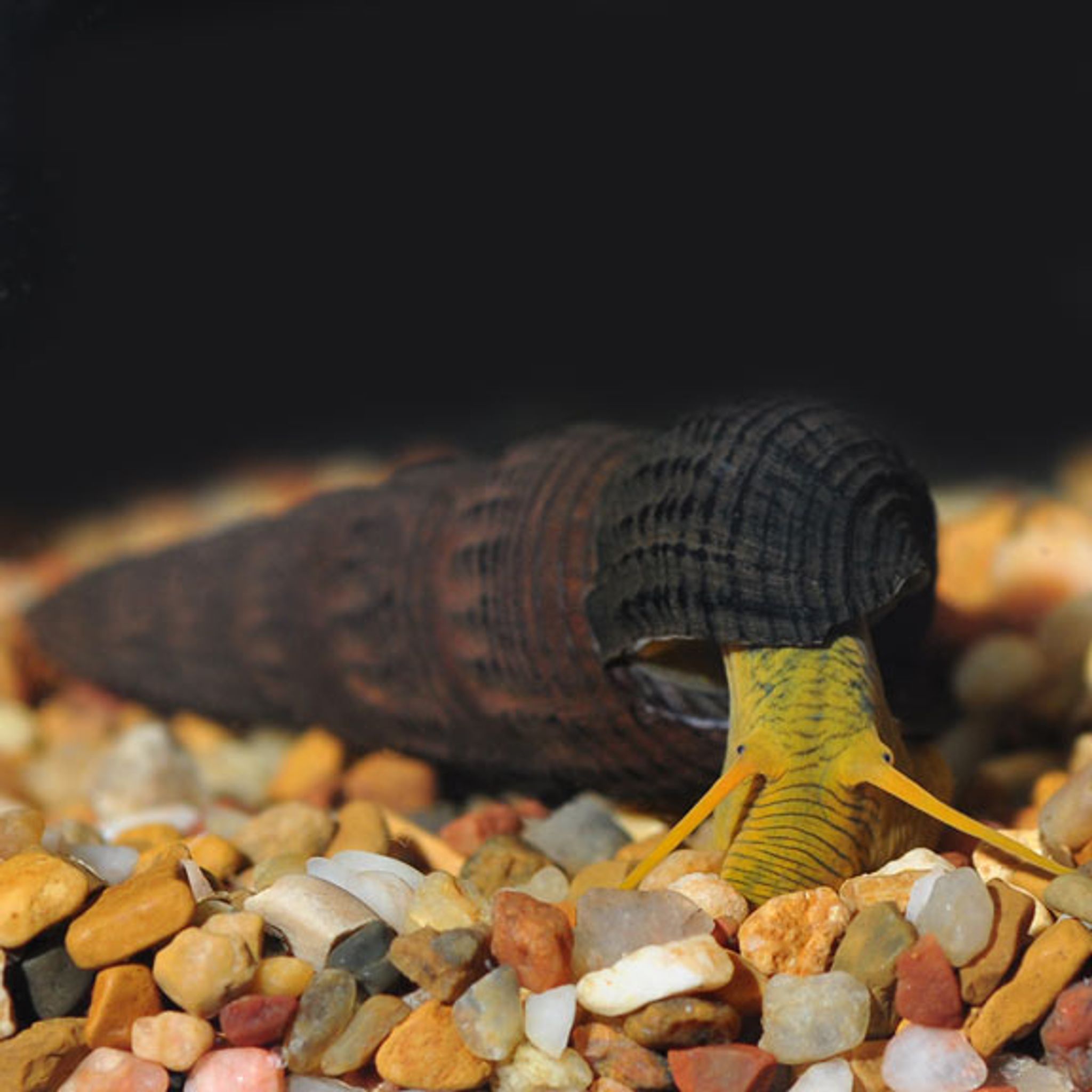

Best Tank Mates for Rabbit Snail: Safe Fish and Invertebrate Companions
Rabbit snails (genus Tylomelania) are slow, shell-bound grazers, so a good tank mate list comes down to one question: can this animal hurt or outcompete a snail that can't run away? This guide breaks down which fish, shrimp, and other snails pair well with rabbit snails, which species to avoid, and how water chemistry affects your options.
Rabbit Snail Basics That Shape Compatibility
Rabbit snails are native to Sulawesi's alkaline lakes and are peaceful algae, biofilm, and detritus grazers. They live roughly 1–3 years and are livebearers, producing just 1–2 fully formed young at a time — a reproduction rate too slow to cause overpopulation problems, unlike many freshwater snails.
Their care needs directly affect which tank mates make sense:
- Tank size: A single snail can get by in something like a 10-gallon (38 L), but a small colony of 3–5 does best in a 20–30 gallon (76–114 L) tank with generous substrate and grazing surface.
- Temperature: 68–86°F (20–30°C), with the mid-70s°F as an ideal target; warmer water within that range supports more activity and breeding.
- Water chemistry: pH 7.3–8.5, leaning alkaline, with moderately hard to hard water (roughly 8–15 dKH) to protect shell integrity. Ammonia and nitrite should read zero, with nitrate kept low.
- Substrate: Fine sand so they can burrow; sharp gravel can injure the foot.
- Diet: Algae wafers, sinking pellets, and blanched vegetables like zucchini, spinach, or broccoli, plus a calcium source (crushed coral or a cuttlebone in the filter) to prevent shell pitting.
Because rabbit snails prefer harder, more alkaline water than many soft-water tropical fish tolerate, that mismatch is the single biggest compatibility wrinkle to plan around — more on that below.
The Core Compatibility Rule
A safe tank mate for a rabbit snail is:
- Peaceful — no fin-nipping or territorial aggression toward slow-moving animals.
- Not built to crack or pry shells — no strong crushing jaws or pincers.
- Not faster and hungrier at the food bowl — won't consistently out-compete a snail for sinking food.
- Tolerant of a similar temperature and water hardness range, or at least not harmed by it.
Anything that fails one of these four tests belongs on the "avoid" list, regardless of how docile it seems on paper.
Safe Fish Tank Mates
Most small, peaceful community fish coexist well with rabbit snails, since neither competes directly for the other's niche. Good options browsable in FishyHub's small community fish selection include:
- Tetras — neon, ember, Congo, and similar peaceful schoolers
- Rasboras
- Guppies, mollies, and platies
- Corydoras catfish — bottom-dwellers that graze without bothering snails
- Otocinclus — algae grazers that share the snail's diet without conflict
- Dwarf, honey, or pearl gouramis
- Small rainbowfish
- Killifish
Corydoras deserve a specific note: because they're also bottom feeders, an especially large or enthusiastic group can outcompete a slow rabbit snail for sinking food, so it's worth checking the corydoras category for smaller species if snails are sharing the tank floor with a big cory group.
What About Bettas?
Betta fish are a frequent question for rabbit snail keepers, and the general answer is yes, they're compatible. Bettas mostly ignore snails and show no real interest in attacking a shell. The one caveat: an individual betta with a nippy temperament could peck at extended antennae, so it's worth watching a new pairing for the first week or two. You can browse betta stock in FishyHub's betta category if you're planning this combination.
Safe Invertebrate Tank Mates
Shrimp
Amano shrimp, cherry shrimp (neocaridina), and ghost shrimp are all compatible with rabbit snails. Rabbit snails are too large and slow to bother shrimp, and the two groups use similar biofilm and detritus food sources without meaningful competition. Shrimp are a popular, low-conflict addition and can be found in FishyHub's shrimp category.
Other Snails
Snails don't prey on other snails, so mixing species is generally safe:
- Mystery/apple snails
- Nerite snails
- Ramshorn snails
- Trapdoor (Chinese mystery) snails
The main friction point isn't aggression — it's competition for calcium and sinking food, which is easy to manage with extra calcium supplementation and enough food to go around.
Trapdoor Snails: A Closer Look
Trapdoor snails (family Viviparidae) are worth calling out specifically because they're often confused with rabbit snails and make an especially good match. Like rabbit snails, they're peaceful grazers and livebearers, and neither species preys on the other. The key difference is temperature tolerance: trapdoor snails handle a wider, cooler range than rabbit snails, which need the warmer mid-70s to low-80s°F band. If you keep both together, set up the tank for the rabbit snail's warmer preference — the trapdoor snail will be fine there too. Both species also benefit from the same hard, alkaline water and calcium supplementation.
Fish and Invertebrates to Avoid
Some tank mates are outright unsafe because they're built to eat snails or share none of their water preferences:
| Avoid | Why |
|---|---|
| Clown loach, yoyo loach | Marketed as "snail eaters"; will pester or crush shells |
| Crayfish, larger freshwater crabs | Will actively hunt, crack, and eat snails |
| Goldfish | May nip antennae; prefers cooler water and softer conditions than rabbit snails need |
| Pufferfish | Specialized shell-crackers (molluscivores) |
| Most cichlids, especially large/aggressive species | Strong jaws and territorial behavior put snails at risk |
Goldfish are sometimes described as only "risky" rather than fully incompatible, but between the antennae-nipping behavior and the mismatch in preferred temperature and hardness, treating them as unsafe is the more reliable call for a rabbit snail tank.
The Soft-Water vs. Hard-Water Tension
Rabbit snails clearly do best in harder, more alkaline water than many popular tropical community fish prefer. Species like wild-caught tetras or discus are adapted to soft, slightly acidic water, and pairing them with rabbit snails means one animal or the other is living outside its comfort zone. If you're set on a mixed setup:
- Test your source water's GH/KH before stocking.
- Lean toward the middle ground — pH 7.5–8.0 with moderate-to-high hardness — rather than chasing the extreme ends of either species' tolerance.
- If you're moving rabbit snails from an existing soft-water community tank, raise hardness gradually using crushed coral or a mineral supplement rather than a sudden swap, to avoid shocking the snails.
A Note on Copper
Copper-based medications are lethal to rabbit snails and to invertebrates in general. Any fish medication used in a mixed tank must be explicitly labeled invertebrate-safe. This also applies to some plant fertilizers that contain trace copper — check labels carefully before dosing a tank that houses snails or shrimp.
Stocking and Feeding Considerations
Rabbit snails do best kept in groups of 3 or more, since they're not territorial and tolerate each other well; overstocking from breeding isn't a realistic concern given how slowly they reproduce. When it comes to bioload, treat rabbit snails as very light on the biological filter — but their food and calcium competition scales with how active and numerous your fish are. A tank with a large, fast-moving school of tetras or a big group of corydoras needs more sinking food distributed across more spots so the snails aren't left empty-handed at feeding time.
Common Mistakes to Avoid
- Adding known predators without research — loaches, puffers, crayfish, and larger cichlids are frequently added on impulse without checking species-specific behavior.
- Keeping water too soft or acidic, which causes shell pitting and erosion, in turn making snails more vulnerable to tank mates that wouldn't normally bother a healthy shell.
- Using copper-based medications or fertilizers in a tank that houses snails or shrimp.
- Mistaking normal inactivity for illness or death. Rabbit snails rest for long stretches; before assuming the worst, check for a foul odor or an empty shell.
- Not providing enough sinking food, letting fast fish or shrimp consistently beat snails to the bottom of the tank.
- Skipping quarantine on new snails, which are a common way to introduce leeches, parasites, or predatory pest snails.
- Assuming "peaceful" means harmless in every context. Some fish that generally ignore snails may still nip at extended antennae, especially around a newly introduced or retreating snail. Watch new pairings closely for the first couple of weeks.
Quarantine Checklist for New Snails
Snails are an underrated vector for hitchhiking pests, so quarantine isn't just a fish-only precaution:
- Quarantine new snails for 2–4 weeks in a separate container before adding them to the main tank.
- Inspect closely for leeches or unfamiliar egg clusters on the shell.
- A brief saltwater dip (following species-appropriate guidance) can help dislodge leeches before introduction — freshwater snails tolerate short dips better than prolonged exposure.
- Watch for tiny pest snails (like bladder snails) hitching a ride on plants or substrate that came with the new animal.
Frequently Asked Questions
Can rabbit snails live with bettas?
Generally yes. Bettas mostly ignore rabbit snails, though an individual betta could occasionally nip at extended antennae. It's worth monitoring a new pairing for the first week or two.
Will shrimp bother rabbit snails or compete with them?
No. Shrimp and rabbit snails are compatible and draw on similar detritus and biofilm food sources without meaningful conflict.
Can rabbit snails live with other snail species like mystery or nerite snails?
Yes. Snails don't attack other snails, so the main concern is competition for calcium and food, which is easily managed with supplements and adequate feeding.
Do rabbit snails need a heater?
Yes, in most US homes. Their preferred range — mid-70s to low-80s°F — is typically above unheated room temperature, so a heater is necessary for consistent conditions.
Why is my rabbit snail not moving?
This is usually normal. Rabbit snails are slow movers that rest for long stretches. Before assuming illness or death, check for a foul odor or confirm the shell isn't empty.
Can rabbit snails be kept with crayfish or crabs?
No. Crayfish and larger freshwater crabs will actively hunt, crack, and eat rabbit snails, so they should never share a tank.
Do rabbit snails eat plants?
Rarely. They mainly graze on algae and detritus, though an underfed snail may nibble very soft-leaved plants like Java fern.
How many rabbit snails can I keep together?
A colony of 3–5 in a 20–30 gallon (76–114 L) tank is a common, comfortable starting point, especially given how slowly they reproduce.
Ready to build out a rabbit snail community? Browse peaceful companions and other freshwater grazers in FishyHub's freshwater livestock category to find fish, shrimp, and snails suited to a warm, alkaline setup.


