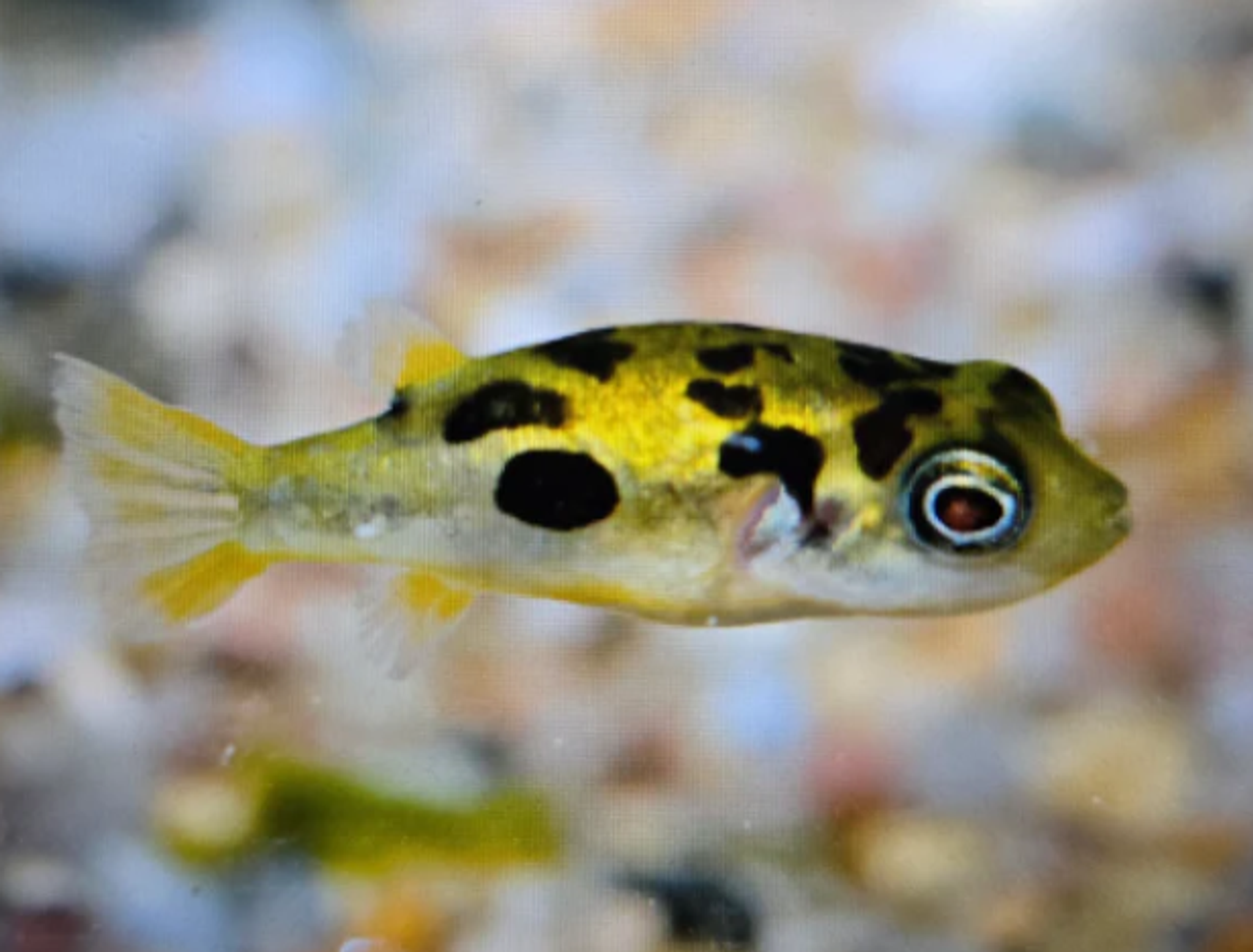
Best Tank Mates for Pea Puffer: Compatible Fish and Species to Avoid
The safest home for pea puffers is a species-only tank. If you want company for them, the best tank mates for pea puffer setups are fast, short-finned schooling fish such as Endler's livebearers, chili rasboras and ember tetras, kept in a heavily planted tank of 20 gallons (76 L) or more. Slow fish, long-finned fish, shrimp and anything small enough to swallow belong on the avoid list.
Know the Fish Before You Pick Its Neighbors
The pea puffer (Carinotetraodon travancoricus), also sold as the dwarf or Indian puffer, comes from rivers in the Western Ghats of southwest India. Most puffers need brackish water at some point. This one doesn't. It's a true freshwater fish, and adding salt does it no good.
Adults grow to about 1 inch (2.5 cm), but size says little about attitude. Pea puffers are smart, curious and confident. They inspect everything, and many of them nip fins and hassle anything slow enough to catch.
Water parameters
| Parameter | Target |
|---|---|
| Temperature | 74–82°F (23–28°C) |
| pH | About 6.5–7.8 |
| Hardness | Soft to moderately hard |
| Ammonia / nitrite | 0 ppm |
| Nitrate | Under 20 ppm |
They don't tolerate poor water well, so the tank has to be fully cycled before any puffer goes in. Any tank mate you choose must be comfortable in this same range.
Tank size and stocking
- 10 gallons (38 L) is the practical minimum for a single puffer with a few dither fish, or for a small puffer-only group.
- Plan on 3–5 gallons (11–19 L) per puffer. Use the 5-gallon figure once other species share the tank.
- Wait for a 20-gallon long (76 L) or larger tank before adding real tank mates.
Watch out for "compatible species" lists that suggest fish needing 20–30 gallons (76–114 L). Those picks don't fit the 10-gallon tanks most pea puffers end up in.
Males, Females and Why the Ratio Matters
Tank mates tend to get picked on when the puffers are fighting among themselves. Stressed puffers take it out on whatever swims by, so get the ratio right first.
- Males are usually more colorful, with a dark line along the belly and wrinkle-like streaks behind the eyes.
- Females are rounder, plainer and lack the belly stripe and eye wrinkles.
Males fight each other. Keep one male with two or three females, or keep a larger group in a bigger, densely planted tank where no single male can control the whole space. Too many males looks like constant chasing, clamped fins and fish that stay hidden. The fix is more plants and rehoming the extra males.
Aquascaping Is Your Main Defense
Dense planting and hardscape do more to cut aggression than any other change. Moss, bushy stem plants, driftwood and floating plants break up sightlines, so a puffer can't watch its whole territory and chase everything it sees. A bare tank with a few plants will turn even a peaceful group into bullies.
How to Choose a Compatible Tank Mate
Check every candidate against these rules:
- Fast. It needs to get away from a curious puffer.
- Small to slightly larger than the puffer. Big enough that it isn't food, small enough not to bully.
- Short fins. Long, flowing fins get nipped.
- Uses a different part of the tank. Surface or midwater schoolers overlap less with puffers than fish that hover among plants.
- Same temperature range. It has to live comfortably at 74–82°F (23–28°C).
- Too big to fit in the puffer's mouth. Anything smaller is prey.
A Decision Order That Works
- Species-only by default. Set up the puffers alone and see how they behave.
- Dither schoolers next, and only in 20 gallons (76 L) or more with dense planting.
- Bottom dwellers last, once you know the puffers leave the schoolers alone.
Temperament varies a lot from one puffer to the next. One fish can live peacefully with tetras while its tankmate shreds them. Always have a backup tank or a return plan before you mix species.
Best Tank Mates for Pea Puffers
Many of these are available as tank-bred stock in the US, especially Endlers and chili rasboras. You can browse small community fishes on FishyHub to put together a shortlist.
| Species | Why it works | Conditions |
|---|---|---|
| Endler's livebearer | Quick, short fins | Better choice than fancy guppies |
| Chili rasbora | Tiny, fast, stays in the midwater | Group of 6+ |
| Harlequin rasbora | Active schooler | 20 gal (76 L)+ recommended |
| Ember tetra | Small, fast, peaceful | Group of 6+ |
| Zebra danio | Very fast top-dweller | Needs swimming room |
| Celestial pearl danio | Small, quick, likes dense plants | Heavy planting |
| Otocinclus | Grazes algae off surfaces | Needs algae and biofilm to eat |
| Small killifish | Stays near the surface, quick | Choose short-finned types |
| White cloud minnow | Fast, hardy | Only at the cool end, around 72–74°F (22–23°C) |
| Neon, black neon, cardinal tetra | Fast schoolers | Groups of 6+ |
Conditional tank mates
These can work, but only with extra care:
- Kuhli loaches. They have no scales, so bite wounds get infected easily. Give them sand and plenty of cover.
- Clown pleco or other small plecos. They hide in wood through the day. Add caves and target-feed.
- Sparkling gourami. Small but slow. Try it only in dense planting.
- Female or wild-type short-finned bettas. See the betta section below.
- Scarlet badis. Covered in its own section below.
Where Opinions Split
Corydoras
Some keepers call corys good mates. Others report puffers nipping their whiskers and fins because corys are slow and live on the bottom. The middle ground: only hardy, larger cory species, only in 20 gallons (76 L) or more, and only with plenty of cover. Skip pygmy corys in small tanks. If you go this route, bottom dwellers such as corys and plecos should be the last fish you add.
Guppies
Some keepers report guppies living alongside puffers without trouble. Many others report shredded tails. Fancy guppy fins are an easy target. Use Endlers instead, since they're closely related but have short fins.
Bettas
Everyone agrees that long-finned males are out. Some keepers get away with females or wild-type bettas. Even then, you're putting two nippy, territorial fish in a small space. The general advice is to avoid the pairing.
Larger "compatible" fish
Yoyo loaches, Indian glassfish, glass catfish, threadfin rainbows and hatchetfish show up on some lists. They need 20–30+ gallons (76–114+ L), and the slow or delicate ones get nipped. Treat them as advanced combinations or skip them.
Species to Avoid
- Long-finned or slow fish: male bettas, fancy guppies, gouramis, angelfish.
- Other puffer species: larger puffers will kill a pea puffer. Pea puffers should only live with their own kind.
- Dwarf shrimp: cherry shrimp and similar species get eaten.
- Snails you want to keep: nerites and mystery snails will be harassed or eaten.
- African dwarf frogs: slow eaters that can't compete with or escape from puffers.
- Anything mouth-sized: fry and very small nano fish.
Shrimp and Snails: Food, Not Tank Mates
Shrimp. Assume cherry shrimp and other dwarf shrimp will be eaten. Amano shrimp sometimes survive thanks to their size, but it's a gamble. A dense, established shrimp colony can sometimes absorb the losses. Treat the shrimp as a food source, not as pets.
Snails. Ramshorn, bladder and small pond snails are enrichment and beak care. A puffer's beak never stops growing, and crunching snail shells wears it down. A spare jar or small tank of home-cultured snails gives you a steady supply and cuts feeding costs. Buying puffers "for snail control" is fine. Assuming your shrimp will be safe in that same tank is the mistake.
Feeding a Mixed Tank
Pea puffers are micropredators. Most refuse flakes and pellets. They need live or frozen foods such as bloodworms, brine shrimp, blackworms and daphnia, plus pest snails.
Mixed tanks run into trouble when puffers dominate feeding time. To keep everyone fed:
- Use two feeding spots. Feed the puffers at one end, then feed the tank mates at the other.
- Drop sinking food for bottom dwellers after the puffers are busy.
- Target-feed slow or shy species with a pipette or feeding tongs.
- Siphon leftovers. Uneaten frozen food causes ammonia spikes quickly in small tanks. Do weekly 25–30% water changes.
Frozen and freeze-dried foods can be browsed in the food and supplements section on FishyHub.
Introducing Tank Mates Safely
- Quarantine new fish for 2–4 weeks in a separate tank.
- Add tank mates first, or at the same time as the puffers, so the puffers don't claim the whole tank before anyone else arrives.
- Check daily for torn fins for the first two weeks.
Troubleshooting Common Problems
- Frayed fins on tank mates: move the victim to a hospital tank, keep the water clean while it heals, and reconsider the pairing.
- Puffer keeps nipping: rescape with more cover, rehome the victim, and go species-only if it continues.
- Puffer can't eat (overgrown beak): add more snails. Severe cases need a vet or an experienced keeper to trim the beak.
- Chasing, clamped fins, hiding: probably too many males. Add plants and rehome extras.
- Tank mates getting thin: they're losing out at feeding. Use two feeding spots and sinking foods.
Bumblebee Goby Tank Mates
Bumblebee gobies are about 1–1.5 inches (2.5–3.8 cm) long. They're territorial bottom-sitters, and many prefer hard or slightly brackish water. Several look-alike species are sold under the same name, so needs vary. As pea puffer mates they're risky: territories overlap, both want frozen foods, and water preferences don't match well. In their own tank, good goby mates are small peaceful fish. Avoid cichlids and large barbs.
Scarlet Badis Tank Mates
The scarlet badis is a tiny, shy micropredator at about 0.75–1 inch (2–2.5 cm). Males are territorial with each other, so keep one male per 5–10 gallons (19–38 L). It does well with small tetras, chili rasboras, celestial pearl danios, pygmy corys and shrimp. With pea puffers the pairing is only fair: both compete for live food, and the slower badis tends to lose. Target-feed the badis if you try it.
Beginner-Friendly Oddball Fish for Small Tanks
| Species | Setup notes |
|---|---|
| Pea puffer | Species tank, frozen or live food |
| Bumblebee goby | 10–15 gal (38–57 L), jumper, picky eater |
| African dwarf frog | Group of 2+, target feed, tight lid; don't house with puffers |
| Peacock gudgeon | Very peaceful cave spawner |
Most of these need frozen food, and small tanks change fast. That makes cycling and regular maintenance more important than the species you choose.
Frequently Asked Questions
Can pea puffers live with shrimp?
Mostly no. Cherry and other dwarf shrimp become food. Amano shrimp sometimes survive because of their size, but plan for losses.
Can I keep a pea puffer with a betta?
It isn't advised. Long-finned males are ruled out entirely. Female or wild-type short-finned bettas might work in a large, heavily planted tank, but you're still combining two nippy, territorial fish.
How many pea puffers can go in a 10-gallon tank?
Keep one puffer alone, or one male with two females in heavy planting and no other fish. Wait for 20 gallons (76 L) or more before adding tank mates.
Are pea puffers good for beginners?
Basic care is simple, but their live and frozen diet and their aggression make them an intermediate fish. A beginner who cycles the tank properly and keeps a snail culture can do well with a species-only setup.
Do pea puffers need brackish water?
No. They're freshwater fish, and unlike most puffers they don't need salt at any stage.
What if my puffer keeps nipping its tank mates?
Add more plants and hardscape to break sightlines, and move the victim to another tank. If the nipping continues, go species-only. Some individuals just won't share.
Build the Right Community
Start with the puffers alone, add fast schoolers only once the tank is large and densely planted, and keep a backup plan ready. When you're ready to pick the rest of the stocking list, browse freshwater livestock on FishyHub for tank mates that fit the rules above.


