Best Tank Mates for Niger Triggerfish: Peaceful, Risky and Incompatible Choices
The Niger triggerfish has a reputation as one of the calmer members of a famously feisty family, but "calmer" is not the same as "safe with anything." This guide breaks tank mates into three clear tiers — solid choices, case-by-case gambles and outright mismatches — plus the tank size and stocking order that decide which tier you actually land in.
Species Overview: What You're Working With
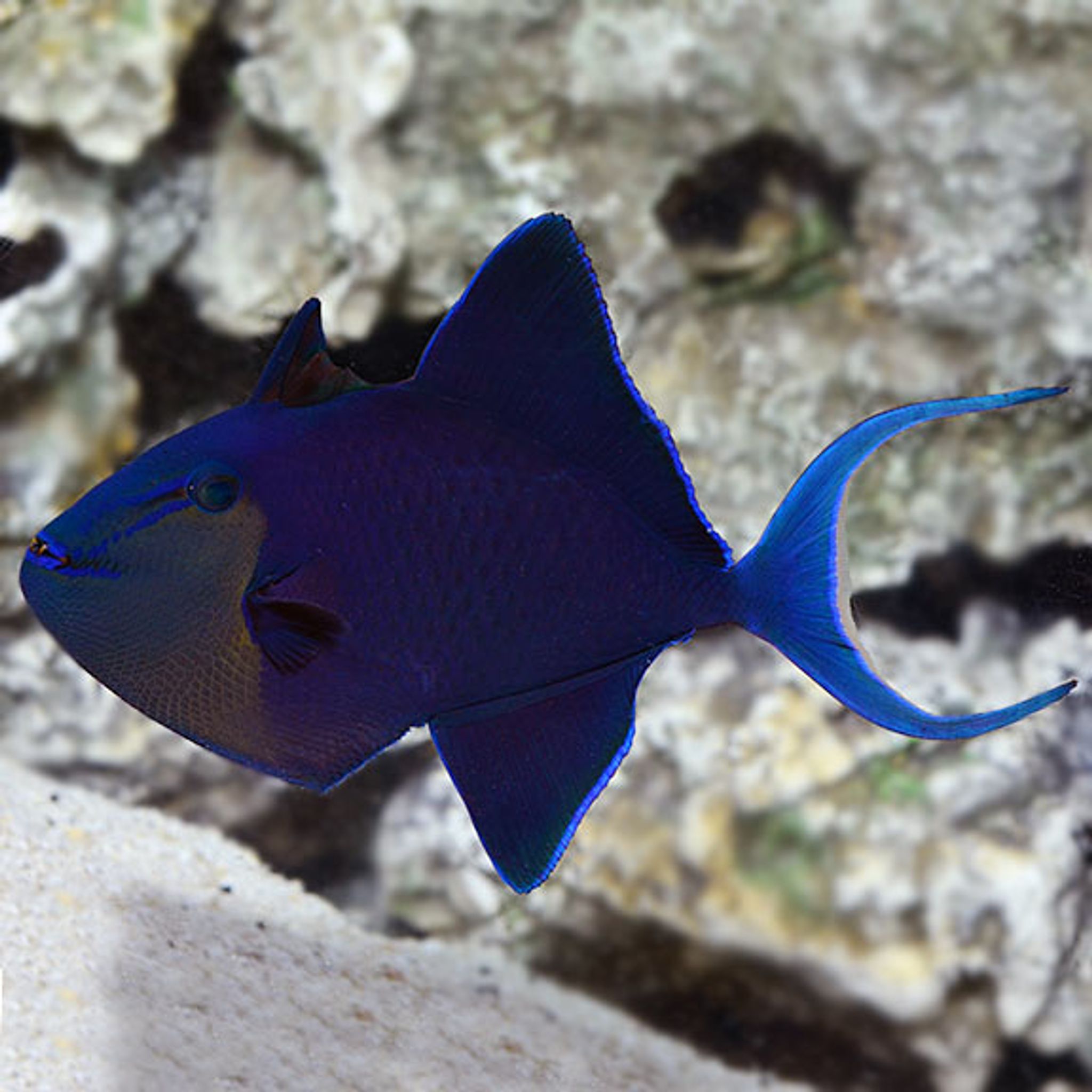
Odonus niger, sold as the Niger, blue, redtooth or red-fang triggerfish, comes from reef edges and drop-offs across the Indo-Pacific. Its deep purple-blue body and pinkish-red teeth (visible when the mouth opens) make it one of the more striking fish-only tank centerpieces.
- Adult size: roughly 12-16 inches (30-40 cm) in captivity, up to about 20 inches (50 cm) in the wild.
- Growth rate: fast, especially with generous feeding — plan tank size around adult size within a couple of years, not around the 3-inch juvenile you bought.
- Lifespan: 10+ years with good care.
- Personality note: often marketed as reef-adjacent-safe and mellow compared to titan or clown triggers, but individual variation is large. A docile juvenile can turn territorial after 6-12 months as it matures and claims space.
Tank Size and Setup Essentials
How Big a Tank Does a Niger Triggerfish Need
- 100 gallons (380 L) is a workable floor only for a single juvenile, and only as a temporary setup with a real upgrade plan already in place.
- 180 gallons (680 L) is the sensible long-term minimum for one full-grown adult, and more if you're keeping other mid-to-large fish alongside it.
- Footprint matters more than raw volume — Niger triggers are strong, active swimmers, so a long, wide tank beats a tall, narrow one of the same gallonage.
Aquascape and Equipment
- Provide a cave or overhang the trigger can retreat into, plus open water for swimming laps.
- Use secured rockwork; loose rock will get pushed around or toppled by a fish this strong.
- Fit a tight, weighted lid. Triggers are powerful jumpers and can knock loose lids off or rearrange (or bite) heaters and probes left exposed.
- Run strong filtration with a high turnover rate — this is a heavy waste producer, and undersized filtration plus infrequent water changes is a common way otherwise-hardy triggers end up stressed.
Water Parameters at a Glance
| Parameter | Target Range |
|---|---|
| Temperature | 72-82°F (22-28°C) |
| pH | 8.1-8.4 |
| Salinity (specific gravity) | 1.020-1.025 |
| Carbonate hardness (dKH) | 8-12 |
These are standard marine fish-only/FOWLR parameters — Niger triggers aren't fussy compared to reef invertebrates, so a well-maintained fish-only system will suit them fine.
Diet and Teeth Maintenance
Niger triggerfish are carnivores and do best fed 2-3 times daily with a varied menu:
- Mysis shrimp, krill, silversides, squid, clams and mussels
- Hard-shelled items (crab, snail, other shell-on foods) on a regular rotation
The hard foods aren't optional extras — a trigger's beak-like teeth keep growing, and a diet of soft foods only can cause overgrown teeth over time. Build hard-shelled food into the weekly rotation from the start rather than treating it as an afterthought.
Behavior and Aggression: Set Expectations, Not Guarantees
Niger triggers are territorial and food-guarding by nature rather than active predators hunting down tank mates — that distinction matters when picking companions. Their aggression is more about defending space and resources than chasing prey, which is part of why they're labeled "one of the calmer triggers." But calmer doesn't mean guaranteed peaceful: hunger, age, and a cramped tank all push the same fish toward more aggressive behavior.
Signs of rising aggression or stress to watch for:
- Chasing or nipping that intensifies rather than settles after the first few days
- A tank mate hiding constantly or refusing to eat
- Torn fins, missing scales, or a fish that stops coming out at feeding time
- The trigger patrolling and "guarding" a section of the tank aggressively
The Stocking-Order Playbook
Add the Niger trigger last, or among the last additions. This single decision prevents more problems than any tank-mate list can fix after the fact.
- First: hardy, established fish that can hold ground — larger damsels, tangs, or other robust semi-aggressive species.
- Next: large angels, large wrasses, or other similarly tough mid-to-large fish, given time to settle in.
- Last: the Niger triggerfish, introduced once everyone else already has a territory to defend.
Adding the trigger early lets it treat the entire tank as its own turf from day one, which makes every later addition harder.
Good Tank Mates for a Niger Triggerfish
These are robust, similarly-sized-or-larger fish that can hold their own:
- Large angelfish
- Tangs and surgeonfish
- Large wrasses
- Groupers
- Large puffers
- Lionfish
- Moray eels
- Tougher, larger damselfish
- Other triggerfish of similar size and temperament (keep singly, or in an odd number like three, only in a large enough tank to spread out aggression)
Browse tangs and surgeons or large marine angelfish as starting points for this tier.
Risky, Case-by-Case Tank Mates
Success here depends heavily on tank size, introduction order and the individual trigger's personality — hobbyists report genuinely mixed outcomes with this group:
- Smaller tangs
- Butterflyfish
- Smaller angelfish
These fish may do fine in a very large tank if added before the trigger and given plenty of space, but they can also get picked on as the trigger matures. Treat this tier as a calculated gamble, not a safe bet, and have an exit plan (a spare tank or divider) ready.
Incompatible Tank Mates: Avoid These
- Small peaceful fish: clownfish, gobies, small damsels, dartfish
- Ornamental shrimp
- Hermit crabs
- Snails and clams
- Most other crustaceans
- Slow-moving or long-finned fish that invite fin-nipping
| Compatibility Tier | Examples | Why |
|---|---|---|
| Good | Large angels, tangs, large wrasses, groupers, lionfish, moray eels, other large triggers | Similar size/toughness, can hold territory |
| Risky | Smaller tangs, butterflyfish, smaller angels | Outcomes vary with tank size and order |
| Avoid | Clownfish, gobies, small damsels, dartfish, shrimp, crabs, snails, clams | Natural prey or bullying targets |
Reef Compatibility: Manage the Odds, Don't Assume Safety
A Niger triggerfish is not reef safe in the traditional sense. It will eat crustaceans and mollusks, and may nip at soft corals or pick off cleanup crew members. Some retail-style descriptions call it "reef safe with caution," which oversells the risk — a more honest framing is that it can work in a very large FOWLR system with tough, fish-only-tolerant corals, kept well-fed, but it is not a beginner reef fish and not a true reef community choice. If your goal is a mixed reef under 180 gallons, this isn't the right fish.
Multiples: Can You Keep More Than One Niger Trigger?
Niger triggers are hard to sex visually, and keeping more than one works best when multiple juveniles are added simultaneously to a very large tank. Introducing a second adult later, into an already-established trigger's territory, usually triggers serious fighting rather than a peaceful pair.
Introduction and Acclimation
- Quarantine new arrivals for 2-4 weeks minimum before adding them to the display.
- Drip acclimate rather than a quick float-and-dump.
- Watch the first 48 hours closely for signs of aggression toward existing stock, especially if the trigger is the new arrival.
- Have a backup plan — a divider or a second tank — ready in case aggression is severe and doesn't settle.
Breeding
Niger triggerfish are not typically bred in home aquariums. In the wild, pairs guard a nest site during spawning, but this behavior isn't something home aquarists should expect to replicate or plan around.
Health and Common Issues
Niger triggers are generally hardy, but they're not immune to standard marine ich and velvet risk, particularly if quarantine steps get skipped. The bigger real-world issue is stress: a bullied or under-tanked trigger (or a trigger bullying others) shows up as poor coloration, reduced appetite and higher disease susceptibility even when parameters look fine on paper.
Common Mistakes to Avoid
- Buying a small juvenile for a 55-75 gallon tank with no upgrade plan, leading to stunted growth and stress-driven aggression.
- Adding the trigger too early in the stocking order, letting it claim the whole tank as its territory.
- Feeding only soft foods, which causes overgrown beak/teeth over time.
- Mixing it with small, slow, or long-finned fish on the assumption that "one of the calmer triggers" means guaranteed peace.
- Underestimating bioload — this fish needs strong filtration and consistent water changes even though it's hardy.
- Using a loose-fitting lid on a powerful jumper that can knock off equipment or escape.
- Trusting cautious retail language on reef safety and losing cleanup crew or soft corals as a result.
Deciding If a Niger Trigger Is Right for Your Tank
Before buying, run through three questions: tank size (do you have 180+ gallons, or a credible path there), current stock (are your existing fish tough enough to hold ground), and goal (true FOWLR versus reef-adjacent with tough corals only). If any answer is shaky, it's worth waiting or reconsidering the stocking plan rather than hoping the "calmer trigger" reputation carries you through.
Frequently Asked Questions
Is a Niger triggerfish reef safe?
Not reliably. It's safe only in very large, fish-dominant systems with tough corals and no small invertebrates — it will eat crustaceans and mollusks and may sample soft corals or cleanup crew.
What is the minimum tank size for one Niger triggerfish?
100 gallons (380 L) works as a temporary setup for a juvenile with a clear upgrade plan. For a full-grown adult long term, 180 gallons (680 L) is the real minimum.
Can you keep two Niger triggerfish together?
Only in a very large tank, and ideally by adding both as juveniles at the same time. Adding a second adult later into an established trigger's territory usually causes fighting.
Will a Niger triggerfish eat my other fish?
It's unlikely to hunt down similarly-sized or larger tough fish, but it will bully, injure or stress small, slow or timid tank mates over time.
What fish are safe with a Niger triggerfish?
Large, robust semi-aggressive species do best: tangs, large angelfish, large wrasses, groupers, lionfish, moray eels, and other similarly sized triggerfish.
Can Niger triggerfish live with shrimp or crabs?
No. Shrimp, hermit crabs, snails and most crustaceans are natural prey items and will be eaten.
How big do Niger triggerfish get and how fast do they grow?
Roughly 12-16 inches (30-40 cm) in home aquariums, with faster growth under good feeding. Plan tank size around adult size within a couple of years rather than the size the fish is at purchase.
Do Niger triggerfish need special teeth care?
Yes. Regular hard-shelled foods (crab, snails, shell-on items) help wear down their beak-like teeth naturally. An all-soft diet can lead to overgrown teeth over time.
Ready to plan your stocking list? Browse marine fish on FishyHub to compare tank mates by size and temperament before you buy.


