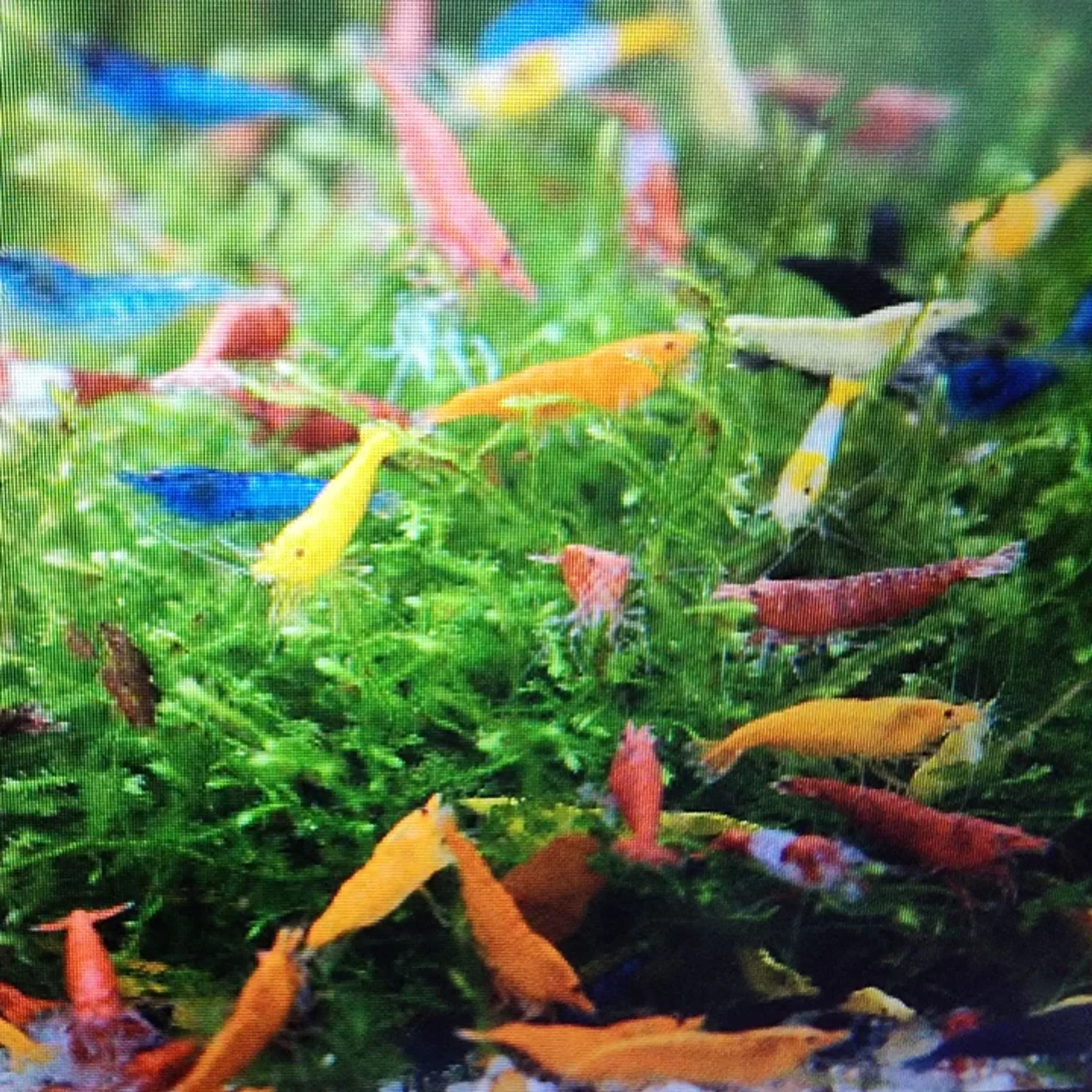
Best Tank Mates for Neocaridina Shrimp: Safe Fish and Invertebrate Companions
Neocaridina shrimp are hardy enough to share a tank with plenty of companions, but "peaceful" on a store label doesn't mean "shrimplet-proof." This guide sorts fish and invertebrates into safe, risky, and never-do categories, and explains the setup choices that decide whether your colony grows or slowly disappears.
Why Neocaridina Compatibility Is About the Mouth, Not the Temperament
Neocaridina davidi — cherry, orange, orange rili, yellow, blue, and black varieties — are the most forgiving dwarf shrimp in the hobby. They tolerate a wide band of conditions:
- Temperature: 65-85°F (18-29°C), ideally 68-78°F (20-26°C)
- pH: 6.5-8.0
- GH: 4-8
- KH: 0-6
That flexibility is exactly what makes them more forgiving than Caridina species like crystal or bee shrimp, which need tighter, softer, more acidic water. But hardiness only protects the shrimp from water chemistry — it does nothing against a fish that views a 2-3 mm baby shrimp as food.
The real selection rule is simple: a companion is only as safe as its mouth is small. Any fish whose mouth can physically fit a shrimplet is a threat to the colony, even if it never touches an adult. Look for small, downturned, or terminal mouths, slow and calm swimming, and a diet based on algae or flake rather than live food.
Safe Fish Tank Mates
These species are small, peaceful, and generally leave shrimp — including most shrimplets — alone when well fed:
- Ember tetras and other micro tetras
- Chili rasboras (Microdevario/Boraras species)
- Harlequin rasboras
- Celestial pearl danios, kept carefully in a well-planted tank
- Pygmy corydoras
- Otocinclus catfish
These fish forage in the water column or graze biofilm rather than actively hunting, and their mouths are too small to bother anything but the tiniest, most exposed shrimplets. Browse small community fish and corydoras options if you're stocking a mixed nano tank.
Risky "Shrimp-Safe" Fish — Read the Fine Print
A lot of species get marketed as shrimp-safe, and the claim is only half true. Guppies, mollies, platies, and swordtails usually leave adult Neocaridina alone, but they will opportunistically pick off newborn shrimplets whenever they find one in open water. The result isn't a massacre — it's a colony that never quite grows, because every new batch gets thinned before it matures.
The honest way to frame it: these fish are fish-safe for adults, not breeding-safe for a growing colony. If you just want shrimp as tank cleanup crew alongside a livebearer community, that trade-off may be fine. If your goal is population growth, it isn't.
Endler's livebearers fall in the same bucket — mostly harmless to adults, opportunistic toward newborns.
Fish to Avoid Entirely
Skip these with a breeding Neocaridina colony:
- Bettas — individually variable, but most will hunt and eat shrimp, especially babies
- Most cichlids, including dwarf species
- Gouramis
- Angelfish
- Larger barbs (tiger barbs included)
- Loaches — many actively hunt shrimp along the substrate
- Goldfish
- Any fish with a mouth large enough to inhale an adult shrimp whole
- Larger, active rainbowfish
Invertebrate Tank Mates
Snails
Snails don't hunt, don't compete aggressively for food, and share the same water parameters as Neocaridina. Compatible options include:
- Nerite snails
- Mystery snails
- Ramshorn snails
- Malaysian trumpet snails
None of these pose any risk to shrimp of any age, and they help manage algae and leftover food.
Other Shrimp
Amano shrimp are a very common and genuinely peaceful pairing. They're larger and more active than Neocaridina but not predatory, and they're excellent algae grazers. One caveat: Amano shrimp will not breed in a home freshwater aquarium — their larvae need a brackish or saltwater stage that a standard setup can't provide, so you won't get a self-sustaining Amano population the way you would with cherry shrimp.
Ghost shrimp are the trickiest call. Sources disagree here, and for good reason: many ghost shrimp sold at pet stores are hardy, harmless scavengers, but several species marketed under the same "ghost shrimp" name are actually predatory toward smaller shrimp and fish fry. Because identification at the retail level is unreliable, treat ghost shrimp as a caution rather than a recommendation — don't add them to a breeding Neocaridina colony where you can't afford to lose shrimplets to a mislabeled predator.
Best Tank Mates for Freshwater Shrimp in General
The same logic extends beyond Neocaridina. Whether you're keeping Amano, ghost, or bamboo shrimp, the checklist is identical: choose small, peaceful, non-predatory fish; favor snails and other calm invertebrates; and avoid anything that hunts along the substrate or has a mouth built for inhaling small prey. If a companion passes the Neocaridina test, it will almost always pass for other dwarf shrimp species too. Explore the full shrimp selection when planning a mixed invertebrate tank.
The Species-Only Option
If maximizing breeding output is the goal, the most reliable answer is also the simplest: skip fish tank mates entirely. A species-only Neocaridina tank, or one paired only with snails, removes predation risk completely and lets shrimplet survival depend purely on water quality and hiding spots.
Tank Setup Factors That Matter More Than Species Choice
Even the "safest" fish list won't save a colony in a poorly set-up tank. These factors matter regardless of which companions you pick:
- Dense cover: Java moss, floating plants, and hardscape give shrimp places to hide and molt undisturbed.
- Sponge pre-filters: Open impeller intakes can pull in shrimplets; a sponge covering the intake prevents this.
- A mature, cycled tank: Never add shrimp to an uncycled tank — ammonia and nitrite spikes kill shrimp faster than fish.
- Adequate volume: 5 gallons (19 L) works for shrimp alone; 10 gallons (38 L) or more gives more stability and margin once fish are added.
- Molting protection: Freshly molted shrimp are soft-shelled and at their most vulnerable for several hours. Dense cover matters most during this window, not just in general.
- Stocking pace: Start light — roughly 2-5 shrimp per gallon (0.5-1.3 per liter) — and add any fish gradually while watching shrimplet survival before increasing numbers.
- CO2-injected planted tanks: These are common in aquascaped setups but add oxygen-swing risk for shrimp. Use a drop checker and keep good surface agitation if you're running injected CO2 alongside a shrimp colony.
Feeding Strategy
Feed fish generously and spread food across the tank so they aren't driven to hunt shrimp out of hunger. Supplement with shrimp-specific foods — algae wafers, blanched vegetables, and shrimp pellets — so shrimp aren't forced to compete directly with faster fish for every meal.
Common Shrimp and Fish Tank Mistakes
| Mistake | Why it matters |
|---|---|
| Skipping the nitrogen cycle | Ammonia/nitrite spikes kill shrimp faster than fish |
| Irregular water testing | Undetected pH swings stress shrimp |
| Overcleaning surfaces | Wipes out the biofilm shrimp graze on |
| Under-cleaning | Lets toxins and waste build up |
| No quarantine for new fish or shrimp | Introduces disease or parasites to the colony |
| Overfeeding | Fouls water and encourages opportunistic predation |
| Copper-based medications or fertilizers | Toxic to shrimp and other invertebrates |
| Sharp or dyed substrate | Can injure shrimp or leach unwanted chemicals |
| Sudden acclimation | Shock from rapid pH/temperature changes; drip acclimate over 30-60+ minutes |
| Overstocking a nano tank | Small volume means faster ammonia buildup and swings than a larger tank |
Copper deserves its own callout: it's toxic to shrimp and other invertebrates at doses fish tolerate fine, so never use copper-based medications in a shrimp tank, and check plant fertilizers for copper content before dosing.
Featured Variety: Orange Rili Shrimp
The Orange Rili is a popular Neocaridina variety with a bright orange body broken by a translucent "Rili" band or saddle across the middle. Adults reach about 1-1.2 in (2.5-3 cm). They share the same hardy parameter range as other Neocaridina — roughly pH 6.5-8.0 and 65-85°F (18-29°C) — and graze on biofilm and algae alongside algae wafers and vegetables. They breed readily and pair well with Amano shrimp and snails. As with other colored Neocaridina, avoid mixing Orange Rili with other color varieties if you want to keep the pattern true, and be cautious with any fish that will target shrimplets.
The "Racing Stripe" Trait
Some red, orange, and yellow Neocaridina develop a lighter stripe running down the back, usually appearing around two months of age. This "racing stripe" is a harmless, purely cosmetic hereditary trait — it can intensify with age, shift or fade between molts, and shows up more often and more visibly in females. It is not a disease and shouldn't be confused with muscular necrosis (sometimes called "white ring of death"). Breeders can select for the trait deliberately if they like the look.
3 Hardiest Dwarf Shrimp for Beginners
- Red Cherry Shrimp (Neocaridina davidi) — extremely tolerant of pH, hardness, and temperature swings; easy to breed; a solid community pick.
- Amano Shrimp (Caridina multidentata) — very adaptable and an excellent algae eater; larger, up to about 2 in (5 cm), so it pairs with slightly bigger community fish; does not breed in freshwater.
- Ghost Shrimp — tough once acclimated, but inconsistent species identification means some individuals are predatory, so use caution around a breeding colony.
Mixing Colors: A Word of Caution
Different Neocaridina color varieties — cherry, orange, yellow, blue, black — interbreed freely if kept together. Over generations, offspring drift back toward the wild-type brown or green coloring. If keeping a pure color line matters to you, house each variety in its own tank.
Frequently Asked Questions
Can I keep Neocaridina shrimp with bettas?
Generally not recommended — most bettas will hunt and eat shrimp, especially babies. It sometimes works with a very well-fed, docile betta in a heavily planted, larger tank, but even then it's a gamble rather than a reliable pairing.
Will guppies eat my shrimp?
Adult shrimp are usually left alone, but guppies (along with mollies and platies) will eat newborn shrimplets, which slows or halts colony growth over time.
What's the best fish for a shrimp breeding tank?
None, if maximum breeding success is the priority. For the best population growth, keep shrimp species-only or pair them only with snails.
Can Amano shrimp live with Neocaridina shrimp?
Yes — this is a very common and peaceful pairing. Keep in mind Amano shrimp won't breed in a freshwater home aquarium, since their larvae need a brackish or saltwater stage.
What snails are safe with Neocaridina shrimp?
Nerite, mystery, ramshorn, and Malaysian trumpet snails are all compatible and pose no harm to shrimp at any life stage.
What size tank do I need for a shrimp community tank?
A minimum of 5 gallons (19 L) works for shrimp alone. Going to 10 gallons (38 L) or more gives added stability and more room once you introduce fish tank mates.
Do different color Neocaridina varieties need separate tanks?
Not for health reasons, but they interbreed freely, and offspring drift back toward wild-type coloring. Separate them by variety if maintaining color purity matters to you.
Are ghost shrimp good tank mates for Neocaridina?
Use caution. Many are hardy and harmless, but some individuals sold under that name are predatory toward smaller shrimp, and unreliable identification at the store level means you can't be sure which you're getting.
Ready to build out your setup? Browse Neocaridina and other freshwater shrimp on FishyHub to find compatible colonies and pairings for your tank.


