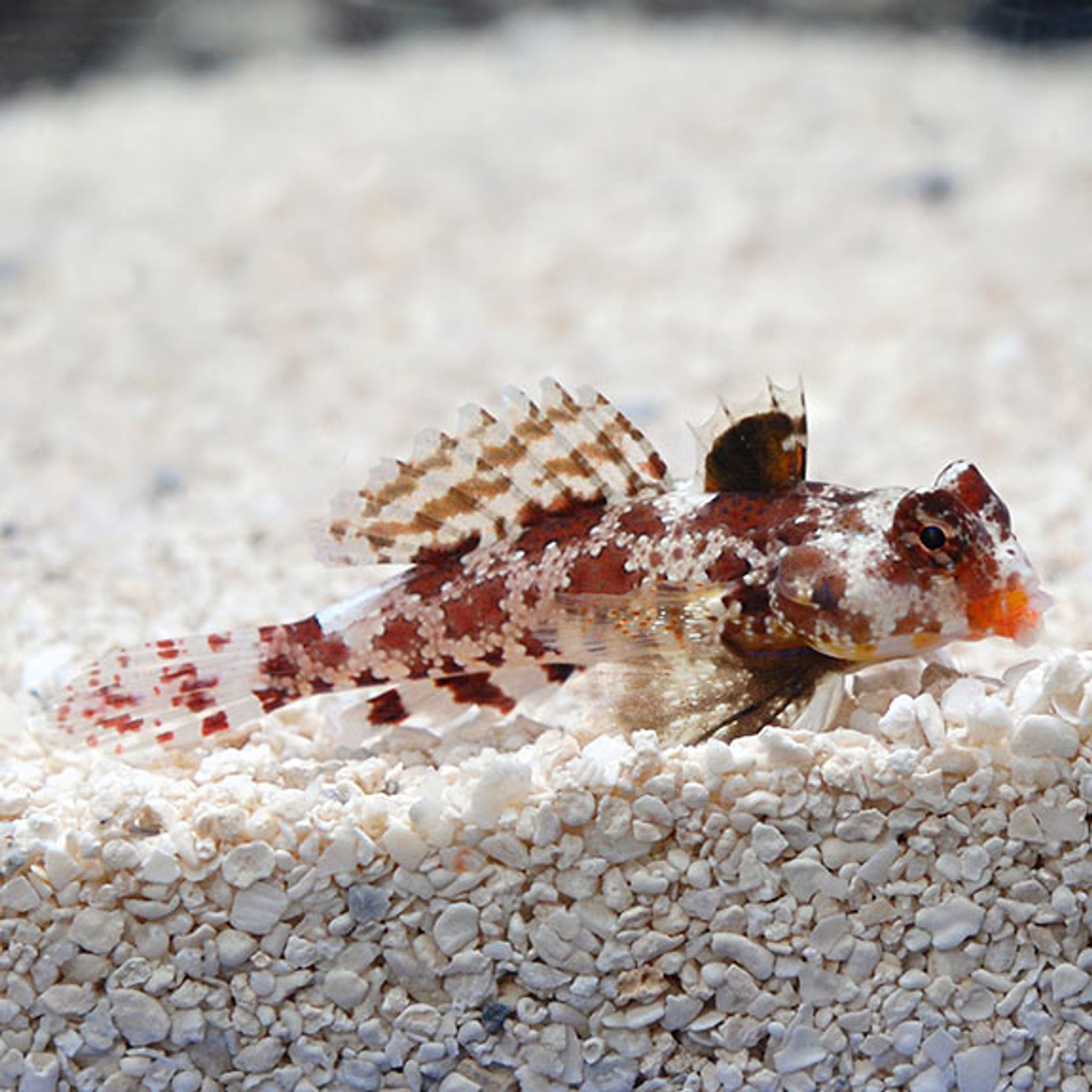
Best Tank Mates for Mandarin Dragonet: Peaceful, Risky and Incompatible Choices
Most compatibility advice for the mandarin dragonet (green Synchiropus splendidus or spotted/psychedelic S. picturatus) focuses on aggression, but that's the wrong lens. The real risk is quiet starvation from tank mates that out-hunt copepods, so this guide ranks companions by feeding competition first, temperament second, and physical size risk third.
Why Aggression Isn't the Main Compatibility Issue
Mandarin dragonets are peaceful, slow-moving, bottom-dwelling grazers that pick tiny copepods and amphipods off rock and sand nearly all day. They almost never show aggression toward other species — the one exception is male-versus-male conflict, where two males will fight over territory, mates and feeding grounds until one is injured or chronically stressed.
That narrow aggression profile is exactly why so many "peaceful" tank mate lists miss the point. A fish can be perfectly calm and non-aggressive and still starve a mandarin out simply by being a faster, more efficient pod hunter. Feeding competition, not temperament, is the deciding factor for almost every pairing decision in this guide.
Tank Size and Maturity Before Any Tank Mate Discussion
A mandarin's compatibility with anything else depends on whether the tank can support two mouths competing for the same food source.
- 30 gallons (114 L) is workable for a single, solo mandarin, but only for an experienced keeper running intensive supplemental feeding.
- 50–75+ gallons (190–284+ L) is the practical floor once any pod-competing tank mate is added.
- 75+ pounds (34+ kg) of live rock and a tank that has been running 6 months or longer are prerequisites — pod populations need that much time and surface area to become self-sustaining.
Skipping the maturity requirement is the single biggest mistake in mandarin keeping: adding the fish to an uncured or newly cycled tank means there simply aren't enough pods yet, regardless of what else is or isn't in the tank.
Two Mandarins in One Tank
- Two males: avoid. They will fight over territory and food, leading to stress, injury and secondary disease.
- One male + one female, or multiple females: workable, but only in a large (75+ gallon), pod-rich, mature system with ample live rock. Doubling the mandarins doubles the pod demand, so tank size and maturity requirements go up accordingly.
Peaceful Tank Mates
These species occupy different water-column zones, feed differently, or simply don't out-hunt pods aggressively, so they coexist well with a mandarin's slow grazing routine.
- Clownfish – host near an anemone or rock, rarely compete for benthic pods
- Firefish and dartfish – hover in mid-water, feed on drifting plankton rather than substrate pods
- Most gobies, especially watchman gobies, which often form a symbiotic burrow-sharing pair with a pistol shrimp and stay low-key toward a mandarin
- Cardinalfish – slow, mid-water plankton pickers
- Royal gramma – holds a cave territory, minimal overlap
- Genicanthus (swallowtail) angelfish – mostly plankton feeders in open water
- Small, peaceful tangs – largely herbivorous grazers on algae, not pods
- Fairy and flasher wrasses – slow, planktivorous feeders (see the wrasse section below for the important exception)
- Anthias – open-water plankton feeders, active but not pod hunters
You can browse many of these directly in FishyHub's clownfish and goby selections when planning a stocking list.
Risky or Situational Tank Mates
These pairings can work, but only with the right tank size, maturity and monitoring.
- Most wrasses – many species are efficient, fast pod hunters; watch food levels closely and expect competition (see the split below)
- Tangs and larger angelfish – mostly herbivorous with low direct pod competition, but they need large tanks regardless, which raises the overall bioload and space requirements
- Pipefish and seahorses – temperamentally an excellent match (slow, calm, peaceful), but they eat the same small crustaceans as the mandarin. Only pair the two in a large, mature system with strong refugium support.
Splitting "Wrasse" Into Two Groups
Treating all wrasses as one category is a common source of bad advice. The useful split is by feeding speed:
| Wrasse type | Examples | Mandarin compatibility |
|---|---|---|
| Slow, planktivorous | Fairy wrasses, flasher wrasses | Generally compatible; low pod competition |
| Fast, hyperactive hunters | Six-line wrasse and similar species | Avoid; both aggressive toward dragonets and highly efficient pod competitors |
Browse the full range in FishyHub's wrasse category and check individual species behavior before adding one to a mandarin tank.
Incompatible Tank Mates: Avoid These
- Six-line and other fast, aggressive wrasses – the most frequently cited conflict pairing; they harass dragonets and strip the pod population fast
- Other dragonets or scooter blennies – identical diet creates direct pod competition, plus territorial clashes between similar bottom-dwelling species
- Large predatory fish – lionfish, groupers and larger triggerfish can simply eat a small dragonet
- Live anemones – can sting or consume a mandarin as it slowly cruises the substrate near the base of rockwork
- Aggressive damsels and pseudochromis – bully slow, deliberate feeders away from food even without directly attacking them
The Refugium: The Single Best Fix for Pod Scarcity
A refugium is a separate, lit chamber — usually built into the sump — that grows macroalgae (commonly chaetomorpha) and copepods away from predators. Plumbed as the last stage before water returns to the display, it continuously reseeds the main tank with live pods instead of letting the display screen them out before they can reproduce.
Running a refugium is the single most effective infrastructure change for supporting a mandarin with any tank mates at all, because it decouples pod supply from whatever is being hunted in the display tank.
Refugium Setup Tips (Advanced)
- Stock with a mix of copepod species rather than a single culture, for resilience
- Avoid introducing predatory hitchhikers (mantis shrimp, aggressive crabs) into the refugium along with live rock or macroalgae
- Keep flow gentle so pods aren't swept out of the refugium before they can establish and reproduce
- Harvest and trim macroalgae regularly to keep nutrient export and pod habitat balanced
Supplemental Feeding Reduces Compatibility Stress
Frozen mysis shrimp, enriched brine shrimp, live copepod cultures and roe-based foods all reduce a mandarin's total reliance on live rock pods. This matters most in nano tanks and any system with pod-competing tank mates, since it takes pressure off the natural pod population.
Captive-bred mandarins typically adapt to prepared foods far more readily than wild-caught individuals, making them noticeably more tolerant of tank mates and smaller systems. If you're choosing between the two, a captive-bred fish is the easier candidate for a stocked tank. You can find a range of appropriate feeds in FishyHub's food and supplements category.
Nano Mandarin Keeping (20–40 Gallons)
Keeping a mandarin in a 20–40 gallon (76–151 L) nano tank is possible, but success depends far more on active target feeding — frozen mysis and roe delivered directly — than on tank volume alone. Even with excellent feeding, adding tank mates in a nano system is riskier than in a larger tank simply because the total pod supply is inherently limited by the smaller footprint of live rock and sand.
Reading Body Condition Instead of Watching for Aggression
Because mandarins rarely display obvious aggression, body condition is a far more reliable warning sign than behavior:
- Well fed: plump body, full cheeks, rounded profile
- Starving: concave belly, pinched or sunken cheeks, visible skeletal outline
Check body shape regularly, especially in the weeks after adding any new tank mate. A thinning mandarin with no visible conflict almost always points to lost feeding competition, not aggression.
Introduction Order Matters
Add the mandarin last, after the pod population and any planned tank mates are already established and stable. Introducing competitors into a tank that already has a thriving, well-fed mandarin is far safer than dropping a mandarin into a tank where fast pod hunters are already established and have already thinned out the supply.
Common Mistakes to Avoid
- Adding a mandarin to a tank under about 6 months old, before a natural pod population has established
- Assuming a "peaceful" fish is automatically safe, when a fast-hunting but non-aggressive fish (like a six-line wrasse) can starve a mandarin without a single confrontation
- Keeping two male mandarins together and expecting them to sort it out
- Skipping a refugium or supplemental feeding, then blaming tank mates when the real issue is total pod supply
- Ignoring early body-condition changes until the fish is critically thin
- Housing a mandarin with live anemones or aggressive substrate feeders without accounting for its slow, bottom-hugging movement
- Overstocking a small tank with multiple pod-eaters (mandarin, scooter blenny and wrasse together) — guaranteed competition even with zero aggression
Frequently Asked Questions
Can I keep two mandarin dragonets together?
Yes, but only as a male-female pair or as multiple females, and only in a large, mature, pod-rich tank. Never house two males together — they will fight over territory and food.
Will a mandarin dragonet eat my shrimp or snails?
No. Mandarins target tiny copepods and amphipods, not larger invertebrates, so shrimp and snails are safe tank mates.
Can mandarins live with seahorses or pipefish?
Yes, temperamentally they're a strong match since both are slow and peaceful. The catch is that they compete directly for the same pod supply, so this pairing should be reserved for large, established, refugium-fed systems.
Do mandarins get along with clownfish?
Yes. Clownfish occupy a different part of the tank and feed differently, so there's minimal interaction or competition between the two.
What fish should I never put with a mandarin dragonet?
Avoid fast, pod-hunting wrasses (especially six-line wrasses), other dragonets or scooter blennies, and large predatory fish that could simply eat a small mandarin.
How do I know if my mandarin is losing the food competition?
Check its body shape rather than watching for aggression. A sunken belly or pinched cheeks signal starvation even if the fish shows no outward stress or conflict with tank mates.
Is a refugium necessary for keeping tank mates with a mandarin?
It isn't strictly required for a single mandarin in a mature, pod-rich tank, but it's strongly recommended the moment any pod-competing tank mate is added.
Can mandarins live in a nano tank with tank mates?
It's possible but risky. Nano tank volume limits the total pod supply, so any tank mates should be kept minimal and feeding should be closely monitored.
Ready to plan your stocking list? Browse FishyHub's full range of marine fish to compare mandarin-compatible species before you buy.


