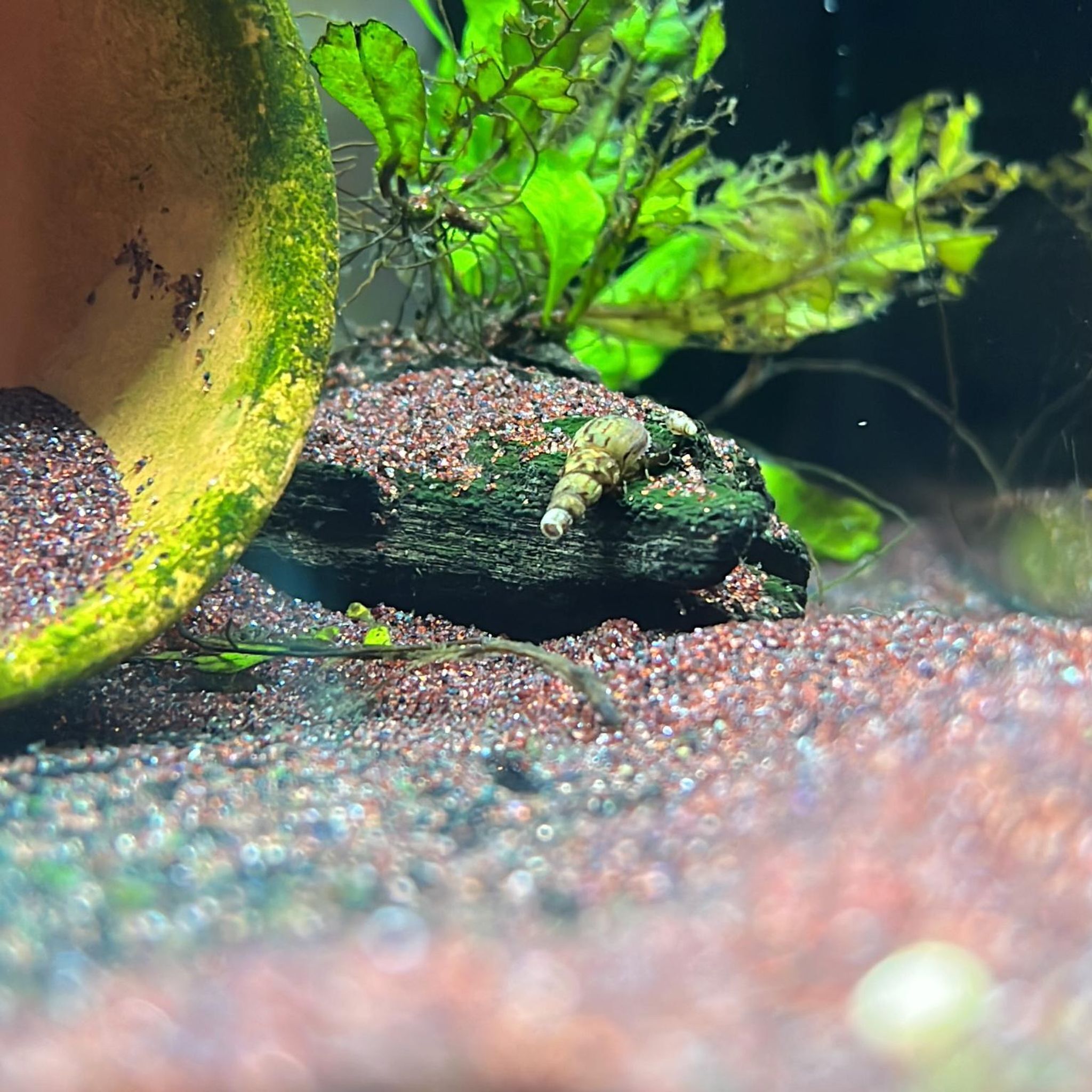

Best Tank Mates for Malaysian Trumpet Snail: Safe Fish and Invertebrate Companions
Malaysian trumpet snails (MTS) are nearly harmless to everything else in a tank, so compatibility questions almost always run the other way: which tank mates might eat or stress them. This guide breaks down safe companions, species to avoid, and how to use tank mates deliberately if your MTS colony has grown out of control.
What Makes Malaysian Trumpet Snails Different
MTS (Melanoides tuberculata) are small, cone-shelled, livebearing snails that spend daylight hours burrowed in the substrate and come out to feed at night. That nocturnal, burrowing habit is the core reason they get along with almost every peaceful community fish and invertebrate: they simply aren't active or visible when most daytime fish are cruising the tank, so there's little opportunity for conflict.
They pose zero threat to fish, plants, or other invertebrates. They don't nip fins, compete aggressively for food, or damage healthy plant tissue. The entire compatibility conversation is about what might eat or harass them, not the reverse.
Ideal Water Parameters for Stocking Decisions
MTS tolerate a wide range of conditions, but if you're choosing tank mates, aim for the tighter overlap that also suits nearly every common community species:
- Temperature: 68–80°F (20–27°C) for a shared community tank; MTS themselves can handle a wider swing, roughly 64–86°F (18–30°C)
- pH: 7.0–8.0
- Hardness: moderate, around 5–15 dGH
| Species group | Temp range | pH range | Overlaps with MTS? |
|---|---|---|---|
| Tetras, rasboras, danios | 72–78°F (22–26°C) | 6.5–7.5 | Yes |
| Livebearers (guppies, mollies, platies) | 72–80°F (22–27°C) | 7.0–8.2 | Yes |
| Corydoras & Otocinclus | 72–79°F (22–26°C) | 6.5–7.5 | Yes |
| Cherry, ghost, amano shrimp | 68–78°F (20–26°C) | 6.5–7.5 | Yes |
| Dwarf cichlids (rams, apistogramma) | 78–84°F (26–29°C) | 5.5–7.0 | Mostly, check upper pH end |
| Goldfish | 65–75°F (18–24°C) | 7.0–8.4 | Yes, but see predator note below |
If your existing stocking list falls inside these ranges, MTS will settle in without any special accommodation.
Safe Fish Tank Mates
Almost any small, peaceful fish that physically can't fit a snail in its mouth is a safe companion:
- Tetras, rasboras, and danios — completely ignore MTS
- Guppies, mollies, and platies — peaceful livebearers with no interest in snails
- Most barbs — community-friendly species leave MTS alone
- Corydoras and Otocinclus — bottom feeders that share the same detritus-and-algae niche without competing aggressively
- Small, peaceful dwarf cichlids (rams, apistogramma) — generally tolerate MTS well, since the snails are hidden in the substrate during the day when these fish are most active
You can browse a wide range of compatible options in Small Community Fishes or check Plecos, Corys & Bottom Dwellers for cleanup-crew fish that pair naturally with MTS.
Safe Invertebrate Tank Mates
MTS coexist peacefully with essentially every other non-aggressive invertebrate:
- Shrimp: cherry, ghost, amano, and bamboo (vampire filter) shrimp are all safe — MTS pose no risk to adult shrimp or shrimplets, and both groups fill the same peaceful detritivore role
- Other snails: nerite, mystery (apple), and ramshorn snails coexist without conflict
- Freshwater clams: generally compatible, sharing substrate space without competing for the same food sources
Because MTS and shrimp have nearly identical care requirements, MTS are often considered one of the safest snail species to add to a dedicated shrimp tank.
Fish and Invertebrates to Avoid
These will eat or actively harass MTS:
- Puffers (all types) — strong jaws built specifically for crushing snail shells
- Clown loach, yoyo loach, and most other loaches — natural snail hunters (more on this below)
- Larger or aggressive cichlids, including Oscars and larger New World cichlids
- Some larger gouramis
- Goldfish — will crunch smaller snails opportunistically, even though they're not dedicated predators
A common mistake is misjudging size: a juvenile loach or a young, small cichlid may look harmless next to an MTS colony, but as it grows, it can become an efficient predator. Stock with the adult size in mind, not the size at purchase.
Assassin Snails: The Standout Predator
Assassin snails deserve their own mention because they are commonly kept specifically to hunt MTS. Unlike loaches, which eat snails opportunistically among other foods, assassin snails are dedicated snail predators. If you add them expecting a light trim, understand that they will actively hunt down and can eliminate an entire MTS colony over time — not just reduce it to a manageable level. Only add assassin snails if population reduction, not coexistence, is your goal.
Loaches: It Depends on Your Goal
Loaches sit in a gray area. Some guides list them strictly as a threat to avoid; others recommend them specifically as population control. Both are correct depending on what you want:
- Avoid loaches if you want your MTS colony to persist as a long-term cleanup crew
- Add loaches on purpose (clown, yoyo, or dwarf chain loach) if your MTS population has grown out of control and you want a natural check on numbers
Keep in mind loaches will also eat other beneficial snails (nerite, mystery, ramshorn) and can stress shrimp, so weigh the tradeoff for your whole tank, not just the MTS.
Why MTS Are a "Cleanup Crew" Species, Not a Pest
MTS earn their keep as tank mates rather than just tolerating them:
- Substrate aeration: their constant burrowing turns over gravel and sand, preventing anaerobic pockets and gas buildup that can harm plant roots and beneficial bacteria
- Detritus and leftover food control: they consume waste that would otherwise decompose and spike ammonia
- Algae grazing: they graze algae films, complementing rather than competing with shrimp and bottom-dwelling fish
They become a problem only when the tank is overfed or overstocked relative to their population — the snails themselves aren't the root cause, excess food is.
Breeding Mechanics: Why "Just Get Males Only" Doesn't Work
MTS reproduce mainly through parthenogenesis, meaning a single unmated female can found an entire colony on her own — no male required. They give live birth to batches of young, and brood sizes are highly variable, reported anywhere from a few dozen to over 100 young per reproductive cycle, maturing in just a few months. Because of parthenogenesis, trying to control numbers by selecting only "male" snails is not a reliable strategy — you can't reliably sex them at a glance, and one already-fertile female is enough to restart the whole population.
Population Control: From Least to Most Invasive
If your MTS numbers have exploded, work through these options in order:
- Reduce feeding. Overfeeding is the single most common cause of MTS population explosions — excess food, not the tank mates, is usually the real problem. Cutting back often solves the issue without adding anything new.
- Manual removal or trapping. Bait a trap with a piece of blanched vegetable or a sinking food overnight, then remove and discard the snails that gather.
- Add a dedicated predator. Assassin snails or a loach species (clown, yoyo, dwarf chain) will reduce numbers naturally, with the tradeoffs discussed above.
- Chemical or copper-based treatments (last resort). These kill snails effectively but are non-selective — they will also kill shrimp and any other snail species in the tank. Never use copper-based treatments in a tank that houses shrimp or other invertebrates you want to keep.
A Practical Bioload Framework
There's no universal "snails per gallon" rule, but a simple approach works well: match your feeding to your existing fish and shrimp bioload, not to the snail population. If you're already feeding appropriately for the fish and shrimp you keep, a healthy MTS colony will self-limit — population growth slows once food and detritus become scarce relative to the number of snails competing for it. Only when feeding exceeds what your existing bioload calls for does the snail population tend to spiral upward.
MTS as a Water-Quality Indicator
Because they're nocturnal burrowers, unusual daytime surfacing — many snails suddenly visible crawling on glass or plants during the day — can signal a problem with substrate or water conditions, such as low oxygen or a buildup of waste in the substrate. Treat a sudden shift in their normal nighttime pattern as a cue to check parameters, not just a curiosity.
A Note on Hitchhikers
MTS frequently arrive uninvited, riding in on new plants or even on new fish shipments in bagged water. If you're adding new livestock or live plants to an existing MTS-free tank (or vice versa, trying to keep a tank MTS-free), quarantine new arrivals and rinse plants thoroughly — this is the most common accidental introduction route, and it works both ways whether you want more of them or none at all.
Frequently Asked Questions
Will Malaysian trumpet snails harm my fish or shrimp?
No. They're detritivores and algae eaters with no predatory behavior toward tank mates. Compatibility concerns are entirely about what might eat or stress the snails, not the other way around.
Do assassin snails kill Malaysian trumpet snails?
Yes. Assassin snails are a common, deliberate predator used to control MTS numbers, and they will actively hunt down the colony rather than just trimming it.
What fish eat Malaysian trumpet snails?
Puffers, loaches (clown, yoyo, dwarf chain), larger or aggressive cichlids, and some goldfish will eat MTS, especially smaller individuals.
Can I keep Malaysian trumpet snails with shrimp?
Yes. MTS are considered one of the safest snail species for a shrimp tank, since both share the same peaceful cleanup-crew role and neither preys on the other.
How do I stop my Malaysian trumpet snail population from exploding?
Start by cutting back feeding, since overfeeding is the most common cause. If that's not enough, remove excess snails manually, and only add a dedicated predator like an assassin snail or loach if you need a stronger, ongoing check.
Are Malaysian trumpet snails good or bad for my tank?
Generally beneficial — they aerate substrate and clean up waste and algae — unless left unchecked, where overpopulation from overfeeding can raise bioload and stress your filtration.
What water conditions do Malaysian trumpet snails need to match tank mates?
A wide, hardy range of roughly 68–82°F, pH 7.0–8.0, and moderate hardness, which overlaps comfortably with most common community fish and shrimp requirements.
Can Malaysian trumpet snails live with other snail species?
Yes. They generally coexist peacefully with nerite, mystery, and ramshorn snails, with no competition or aggression between species.
Whether you're building a peaceful community tank around a Malaysian trumpet snail cleanup crew or looking for a natural predator to manage their numbers, you can browse compatible fish and invertebrates in Freshwater Livestock on FishyHub.


