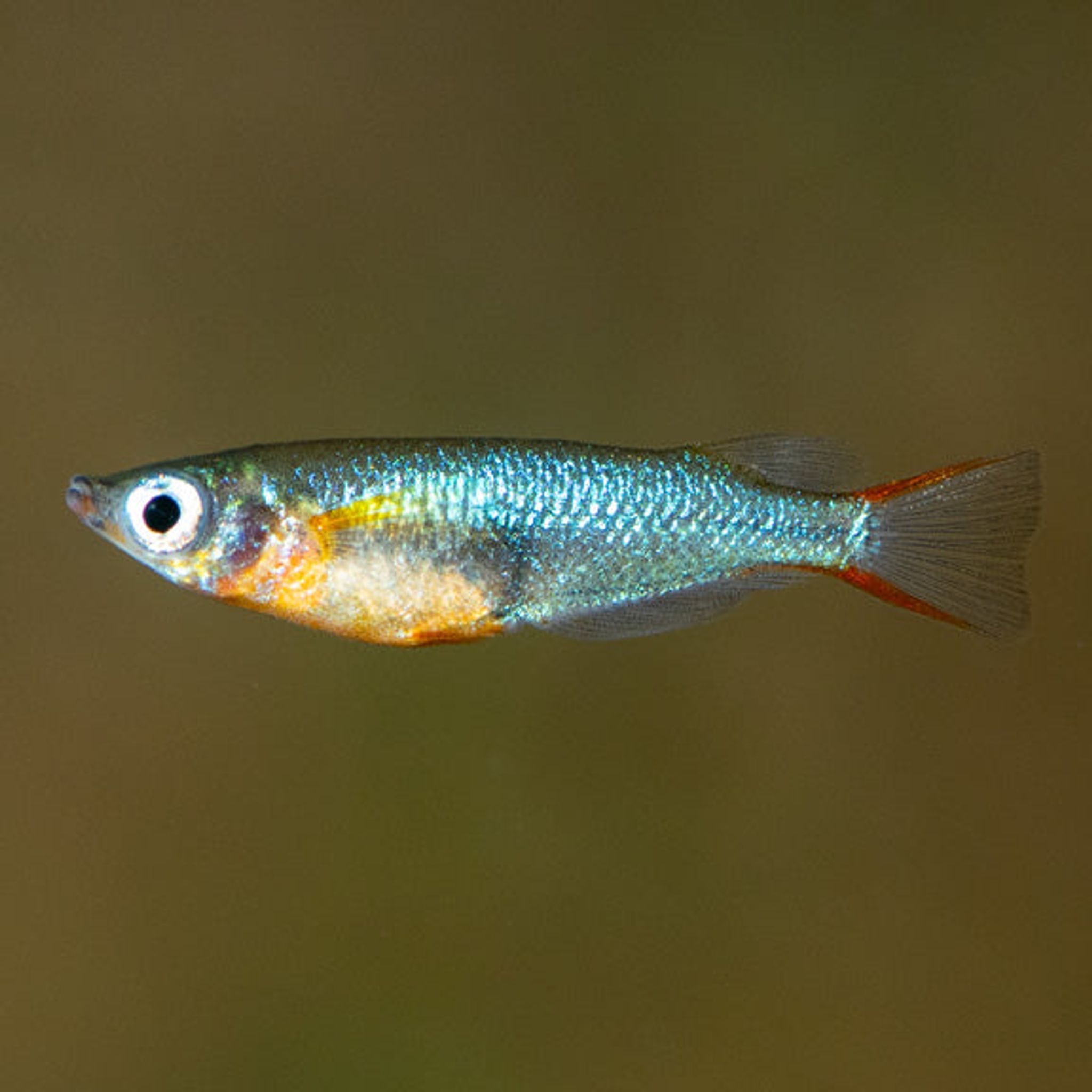
Best Tank Mates for Killifish: Compatible Fish and Species to Avoid
The best tank mates for killifish are peaceful fish that are too big to swallow, share soft, slightly acidic water, and spend their time below the surface where killies hunt. For a tiny clown killie that means embers, chili rasboras and pygmy corydoras; for a 4-inch golden wonder it means larger tetras, sturdy catfish and calm cichlids. Everything depends on which of the roughly 1,300 killifish species you actually have.
Start With the Size Rule
"Killifish" covers fish from about 1 inch to 5 inches (2.5–13 cm), so no single tank-mate list works for all of them. The first rule is simple: anything that fits in a killi's mouth is food. Sort your fish into a size class before you shop.
- Nano killies (~1–1.5 in / 2.5–4 cm): clown killie, lampeyes. Need nano mates.
- Small-to-mid killies (~2–2.5 in / 5–6 cm): Aphyosemion species, Fundulopanchax gardneri, two-stripe (rainbow) lyretail. Take small-to-medium community fish.
- Large killies (3–5 in / 7.5–13 cm): striped panchax and golden wonder (3–4 in), blue gularis types (4–5 in). Need mid-size mates they cannot swallow.
Killifish Compatibility Table by Size Class
| Killie size class | Good tank mates | Use caution | Avoid |
|---|---|---|---|
| Nano (clown killie, lampeye) | Celestial pearl danios, ember tetras, chili/phoenix/least rasboras, pygmy corydoras, otocinclus, Endler's livebearers, small blue-eyes (Pseudomugil), peacock gudgeons | Adult Neocaridina or bee shrimp with heavy moss | Anything large or boisterous, big cichlids |
| Small-to-mid (Aphyosemion, gardneri, lyretails) | Neon, cardinal and other small-to-medium tetras, rasboras, corydoras, adult guppies, Apistogramma or kribs in 20+ gal | Shrimp (babies get eaten), bettas | Tiger barbs, serpae tetras and other fin-nippers |
| Large (golden wonder, striped panchax, gularis) | Larger tetras, robust barbs, rams and dwarf cichlids, banjo and twig catfish, angelfish, severums | Barbs only with short-finned killies | Embers, CPDs, fry-sized guppies, any shrimp, oscars and big predators |
Temperament: Peaceful or Territorial?
Opinions split on this. Some keepers call killies peaceful community fish; others call most of them territorial. Both are partly right, because temperament is species-specific:
- Community-friendly: two-stripe lyretail (Aphyosemion bitaeniatum) and clown killies generally ignore other species.
- Predatory: golden wonders and gularis types will eat small fish and shrimp.
Across nearly all species, males spar with each other, and it gets worse when females are present or space is tight. In a community, keep a trio of one male to two females (or one male per 2–3 females). If you want several males, give them plenty of plants and broken sight lines.
Annual vs. non-annual killies
Non-annual killies (Aphyosemion, Epiplatys, Fundulopanchax, Aplocheilus) live for years and do well in communities. Annual killies such as Nothobranchius are a poor community fit: they have short lifespans, the males are very rough, and they are best kept in species-only tanks.
Match Water Before You Match Fish
Most popular killies (Aphyosemion, Epiplatys, Fundulopanchax) prefer:
- Temperature: about 72–79°F (22–26°C)
- pH: 6.0–7.5
- Hardness: roughly 5–15 dGH
The clown killie wants it warmer and softer: 75–80°F (24–27°C), pH around 6, and very low hardness. Choose tank mates whose ranges overlap these numbers.
Much of the US has hard, alkaline tap water. Soft-water killies kept in hard water often show faded color and shorter lives. You have two options:
- Blend reverse-osmosis (RO) water with tap to bring hardness down.
- Pick hardier species such as Fundulopanchax gardneri, which adapts to a wider range, and choose mates for the water you actually have.
Use Swimming Zones to Avoid Crowding
Killies hunt near the surface and cruise the top third of the tank. Fill the other zones:
- Bottom: pygmy and other corydoras, otocinclus, banjo catfish
- Middle: calm schooling tetras and rasboras, peacock gudgeons
- Top: the killies
This split keeps the surface from getting crowded, which is where most killie squabbles start. You can browse corydoras for the bottom layer and pair them with mid-water small community fishes sized to your killie.
Tank Setup for a Mixed Killie Community
- Tank size: 10 gallons (38 L) minimum for a nano group or a small killie trio; 20 gallons (76 L) or more for golden wonders or a true community. A long footprint beats a tall tank for surface dwellers.
- Lid: mandatory. Killies, lyretails and panchax in particular, are strong jumpers. Close every gap around cords and filters.
- Cover: floating plants and dense planting reduce male aggression and make timid tank mates bolder.
- Flow: keep surface current gentle. A sponge filter works well, or baffle a stronger filter outflow.
Feeding Killies and Their Tank Mates
Killies are micro-predators that do best on live and frozen foods such as bloodworms, daphnia and brine shrimp. That creates two feeding problems:
- Fast killies can outcompete slow, shy mid-water fish.
- Bottom dwellers can go hungry if everything is eaten at the surface.
Target-feed: offer floating or slow-sinking foods for the killies at one end, and drop sinking pellets or wafers for corydoras and otos at the other, ideally around lights-out. Frozen and freeze-dried options are available in FishyHub's food and supplements section.
Species Spotlights
Clown killie (Epiplatys annulatus)
Males reach about 1.5 in (4 cm) and live in the top 5–6 in (13–15 cm) of the water. They want floating plants, gentle flow and warm, soft water. Best mates: celestial pearl danios, embers, pygmy corydoras and otocinclus.
Lampeye (Aplocheilichthys normani)
Often sold as a "lampeye tetra," this is actually an African killifish. It grows to about 1.5–2 in (4–5 cm), schools best in groups of 6 or more, and is peaceful. Pair it with rasboras, pencilfish and hatchetfish; skip big cichlids.
Two-stripe or rainbow lyretail (Aphyosemion bitaeniatum)
Peaceful toward other species and a mop spawner, but a notorious jumper. It will pick off baby shrimp, and its fins make it a target for nippers.
Striped panchax and golden wonder (Aplocheilus lineatus)
At 3–4 in (7.5–10 cm), this fish is mildly aggressive and eats small fish and shrimp. Keep it at 72–79°F (22–26°C), pH 6–7.5, in 20 gallons (76 L) or more. Mates must be too big to swallow, and slow, long-finned fish should be avoided. In a tank of peaceful medium cichlids, a panchax can serve as a dither fish that encourages them to come out.
Peacock gudgeon
About 2–3 in (5–7.5 cm), peaceful, and happy at 72–79°F (22–26°C) in soft water. Keep 6–8. This is an excellent mid-level mate for Aphyosemion species and clown killies.
Bumblebee goby: looks cute, skip it
This roughly 1.5-inch (4 cm) bottom dweller does best in low-end brackish water (specific gravity about 1.002–1.006) and is a picky live-food eater. That is a poor match for most soft-water killies.
US desert pupfish and native alternatives
Devils Hole and Death Valley pupfish are endangered or protected and cannot legally be kept by hobbyists; captive populations exist only in refuge breeding programs for conservation. If you want a US native, look at American flagfish or the bluefin killifish, or sheepshead-type Cyprinodon from licensed sources where legal. Be aware that pupfish males are feisty.
Where Advice Conflicts
- Shrimp: Adult Neocaridina or bee shrimp can work with nano killies if there is heavy moss cover, but expect to lose shrimplets. Never keep shrimp with panchax or gularis.
- Zebra danios and tetras: Fine with small-to-mid killies, but small ones are prey for golden wonders. Size class decides.
- Barbs and tiger barbs: Acceptable only with robust, short-finned large killies. Avoid them with lyretails.
- Group size: Recommendations range from 3–5 killies up to species-only colonies. In a community, a 1M:2F trio is the practical choice.
- Black ghost knifefish: Sometimes suggested for gularis tanks, but it eventually needs 100+ gallons (380+ L) and will eat small killies. Skip it.
How to Stock the Tank
- Quarantine all new fish.
- Add peaceful tank mates first so they settle in.
- Add killies last, which reduces early territorial claims.
- Watch closely for two weeks for chasing, torn fins or missing fish.
Breeding caveat: any tank mate will eat killie eggs and fry. If you plan to raise fry seriously, use a species-only tank.
Common Mistakes and Fixes
- Buying "killifish" without checking the species and its adult size.
- Adding nano fish to golden wonders: embers, CPDs and fry-sized guppies simply disappear.
- Two males with no cover: torn fins. Add plants or rehome a male.
- Lyretails with fin-nippers such as tiger barbs or serpae tetras.
- Open tops or gappy lids: fish end up dried on the floor.
- Soft-water killies in hard, alkaline tap: faded color and a shorter life. Blend RO or choose different species.
- Starving fish: killies behind greedy eaters, or bottom dwellers under killies. Feed floating and sinking foods separately.
- Strong outflow: stresses surface dwellers. Baffle the filter.
Frequently Asked Questions
Can killifish live with bettas?
Sometimes, with calm nano killies in a 10-gallon (38 L) or larger tank. Both are surface fish, though, and they may squabble over the top layer. It is not a pairing recommended for beginners.
Can killifish live with shrimp?
Adult shrimp can live with nano killies if there is plenty of moss and cover. Baby shrimp will be eaten, so expect a smaller colony. Never add shrimp to panchax or gularis tanks.
Can you keep different killifish species together?
It is possible with species from different genera. However, females of many species look alike and can hybridize, especially within Aphyosemion, so avoid mixing if you plan to breed.
Are killifish good with guppies?
Yes, with small and mid-size killies, as long as the guppies are adults. Golden wonders will eat guppy fry and small males.
How many killifish can go in a 10-gallon tank?
One trio (one male, two females) of a nano or small species. That leaves room for a small school of peaceful nano tank mates.
Can killifish live with goldfish or cichlids?
Not with goldfish, which need cooler water and produce heavy waste. Large killies can live with peaceful medium cichlids such as angelfish or severums, but never with oscars or other big predators.
Find Your Killifish
Once you know your killie's size class and your tap water, choosing tank mates gets much easier. Browse the killifish collection on FishyHub to find a species that fits your tank and community plans.


