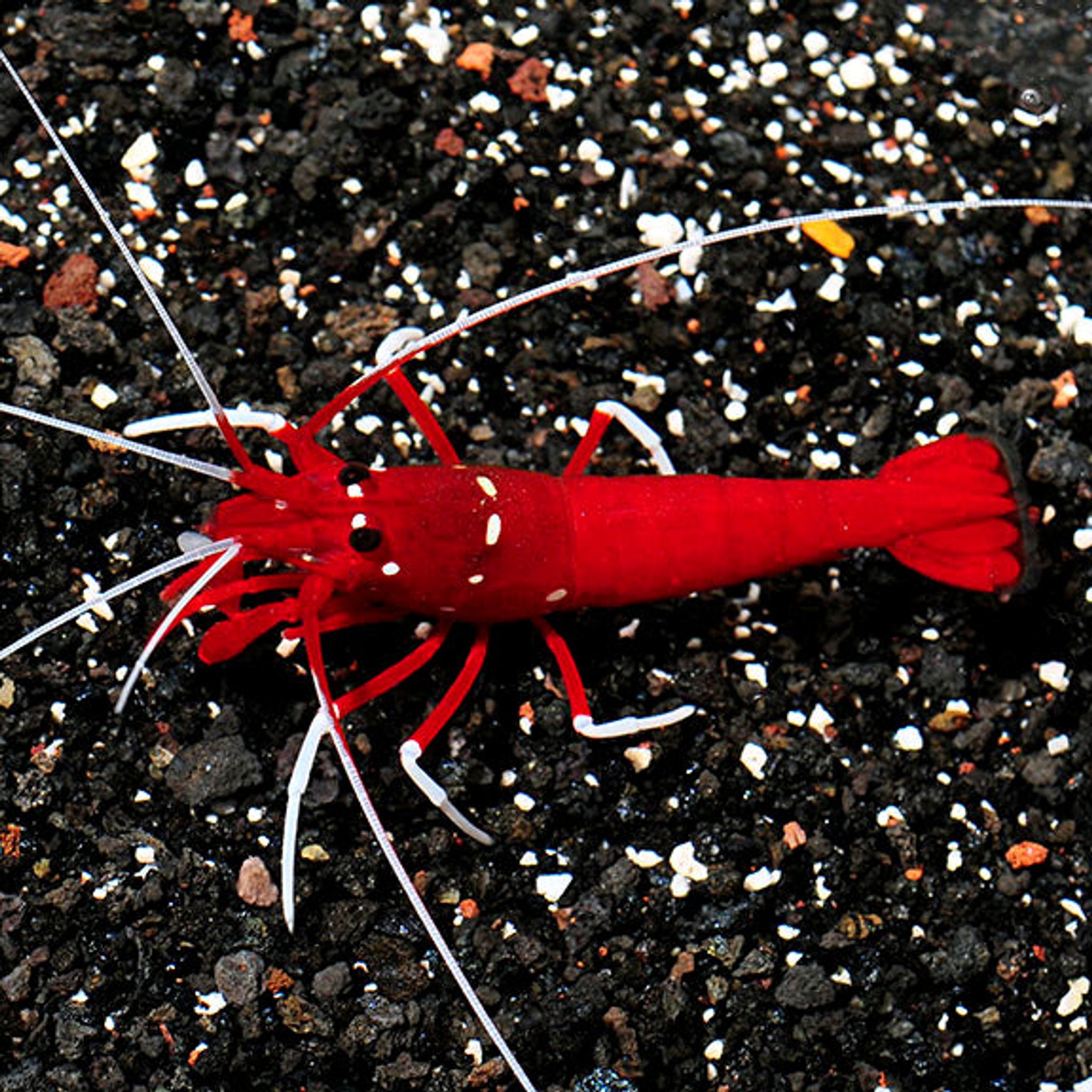

Best Tank Mates for Fire Shrimp in a Reef Aquarium
Fire shrimp (also sold as blood red fire shrimp or scarlet cleaner shrimp) are popular reef inhabitants, but a "reef-safe" label on a fish doesn't automatically make it shrimp-safe. This guide sorts realistic tank mates into safe, caution, and avoid tiers so you can build a stocking list that won't turn your fire shrimp into dinner.
Why "Reef-Safe" Isn't the Same as "Shrimp-Safe"
Fire shrimp (Lysmata debelius) are facultative cleaner shrimp — peaceful, mostly nocturnal, and generally left alone by fish that view them as helpful rather than edible. Most fish marketed as reef-safe won't touch corals or clams, but that rating says nothing about how they treat a small, defenseless crustacean.
Two moments create the real danger:
- Right after introduction, when a shrimp is exploring open water in an unfamiliar tank and hasn't found its cave yet.
- During and right after a molt, when the shrimp's new shell is still soft and it can't defend itself or flee quickly.
Any fish with an opportunistic, picking temperament can turn a curious nip into a fatal one during either window, even if it never bothers coral polyps.
Safe Tank Mates: Fish That Coexist Well
These groups are the standard, low-risk choices for a fire shrimp reef tank:
- Clownfish — a classic pairing; clownfish largely ignore shrimp and often share a rock cave.
- Gobies and blennies — bottom-dwelling and territorial toward their own kind, not toward shrimp.
- Most tangs and surgeonfish — grazers with no interest in crustaceans.
- Dartfish and cardinalfish — mid-water swimmers that stay out of the shrimp's space.
- Small basslets — generally peaceful toward inverts at typical reef stocking levels.
You can browse a wide range of compatible options, including clownfish, when planning your stock list.
Fish to Avoid
Certain fish are predatory enough that a fire shrimp is simply prey to them, regardless of tank size or aquascape:
| Fish group | Why it's risky |
|---|---|
| Triggerfish | Powerful jaws built to crush shelled/armored prey |
| Puffers | Will actively hunt and crush small crustaceans |
| Lionfish | Ambush predators that swallow shrimp-sized animals whole |
| Groupers | Large-mouthed predators that eat anything that fits |
| Moray eels | Nocturnal hunters that overlap with shrimp activity hours |
| Larger/aggressive wrasses (e.g., larger hogfish-type wrasses) | Strong bite force, forage rock crevices for inverts |
| Larger hawkfish | Perch-and-pounce hunters that target small tank mates |
| Marine bettas and dottybacks | Ambush small inverts despite a "reef-safe" fish rating |
If any of these are already established residents, adding a fire shrimp is a gamble even with excellent rockwork.
Same-Species and Cleaner-Shrimp Compatibility
Fire shrimp are territorial toward their own kind and toward other cleaner shrimp species, even though they're peaceful with fish. A single specimen is the safest default for a typical reef tank.
Keeping a pair is possible but demanding:
- Requires a tank of 75+ gallons (284+ liters) with multiple, physically separate rock caves.
- Works best when both shrimp are introduced simultaneously as juveniles or subadults, rather than adding a second shrimp to an established resident's territory.
- Even under good conditions, expect occasional posturing; one animal dominating or displacing the other is a realistic outcome in a tank that's too small.
Other cleaner shrimp — skunk/Pacific cleaner shrimp, peppermint shrimp, and sexy shrimp — are usually tolerated in a larger system where each animal can claim its own rock structure, though some initial squabbling is normal as territories get sorted out.
A rough heuristic: budget for one dedicated cleaner (shrimp, cleaner goby, or cleaner wrasse) per roughly 20–30 gallons of structured live rock, rather than per gallon of total water volume. Open sand bed doesn't count — what matters is how many separate caves and overhangs the rockwork actually offers.
Other Invertebrate Tank Mates
| Invertebrate | Compatibility |
|---|---|
| Peppermint shrimp | Generally compatible with separate territories |
| Skunk/Pacific cleaner shrimp | Compatible in larger tanks; minor early squabbling possible |
| Sexy shrimp | Compatible, low territorial overlap |
| Astrea, cerith, turbo, nassarius snails | Compatible, no predation risk |
| Reef-safe hermit crabs | Generally compatible |
| Pistol shrimp | Avoid — burrow-territory conflicts |
| Large aggressive hermit crabs | Avoid — can prey on a molting shrimp |
Anemones and Fire Shrimp
Fire shrimp are typically fine around common hosting anemones, but large carpet anemones and other species capable of capturing fish-sized prey can also engulf a cleaner shrimp. If your stocking plan includes a carpet-type anemone, keep the shrimp's cave well away from its reach and monitor early interactions closely.
Reef Safety with Corals
Fire shrimp are considered reef-safe as a general rule and won't damage most SPS, LPS, or soft corals. The one caveat worth flagging: occasional reports describe fire shrimp picking at zoanthids or newly placed coral frags, likely investigating mucus or feeding response rather than predation. It's not the norm, but it's worth watching for a week or two after adding new frags — a good excuse to browse LPS hard corals or soft corals with an eye on placement away from the shrimp's main cave.
Reef Tank Parameter Checklist
Fire shrimp are unusually sensitive to water chemistry swings, so confirm these before adding one:
- Temperature: 72–78°F (22–26°C)
- pH: 8.1–8.4
- Specific gravity: ~1.023–1.025
- Nitrates: under ~20 ppm
- Tank status: fully cycled and established — never add to a new or uncycled system
- Medications: no copper-based treatments anywhere in the display or a connected sump; copper is lethal to all shrimp
Cleaner Shrimp Behavior: What the "Cleaning Station" Means
Fire shrimp set up a cleaning station on a favored rock ledge and signal availability by waving their long white antennae. Fish that recognize the signal will hover or position themselves near the station, allowing the shrimp to pick off parasites and dead skin — a mutually beneficial relationship in the wild. In captivity, with a low parasite load and a small number of fish, that demand drops sharply, which is why target-feeding matters (see below).
Feeding Schedule
Don't rely on cleaning behavior alone to keep a fire shrimp fed in a typical display tank:
- Target-feed 2–4 times per week with a turkey baster or feeding tongs so the shrimp gets a fair share before faster fish clear the water column.
- Offer meaty frozen foods (mysis, brine shrimp), sinking pellets, flake, or a gel food.
- Expect the shrimp to supplement its diet by picking at reef detritus between feedings.
Molting Care
Molting is normal and should not be mistaken for illness:
- The shrimp typically hides for 1–3 days and may appear pale, inactive, or "gone."
- It eats its own shed exoskeleton to recover calcium — do not remove the molt.
- Avoid introducing new, especially territorial, tank mates right around a molt, since this is the shrimp's most vulnerable window.
- If the shrimp doesn't reappear after several days, check water parameters rather than assuming the worst immediately.
Acclimation and Introduction Order
- Drip acclimate slowly; fire shrimp are highly sensitive to rapid salinity and pH swings, which is a common cause of early losses.
- Add rock hiding spots and caves to the display before introducing the shrimp.
- Where possible, add the shrimp before more territorial fish are established, or introduce fish and shrimp at the same time — this avoids the shrimp facing already-territorial residents defending established turf.
- Before adding any new fish to a tank that already houses a fire shrimp, run a proper quarantine period for the new arrival. This reduces the chance of introducing disease that would force copper-based treatment later — a medication class the shrimp cannot survive.
A Note on Flow and Feeding Placement
In tanks that also house slow-moving feeders like seahorses or mandarin dragonets, position target-feeding away from strong flow so food doesn't get swept past before the shrimp — and other slow eaters — can reach it. Feeding in a lower-flow zone near the shrimp's cave gives it a fair chance against faster fish competing for the same frozen food.
Common Mistakes
- Adding a fire shrimp to an uncycled or newly set up tank — ammonia and nitrite spikes kill them quickly.
- Using copper-based medication anywhere in the display or a shared sump.
- Assuming a "reef-safe" fish label guarantees shrimp safety — predation risk peaks at introduction and during molts.
- Housing two fire shrimp (or a fire shrimp with another cleaner shrimp species) in a small tank without enough separate rockwork.
- Mistaking a molt for illness or death and removing a healthy shrimp or its shed shell.
- Skipping drip acclimation, causing fast salinity or pH shifts.
- Providing too little live rock structure, leaving the shrimp with nowhere to retreat from curious or aggressive tank mates.
Frequently Asked Questions
Can I keep two fire shrimp together?
Only in a large tank — 75+ gallons (284+ liters) — with multiple separate rock caves, ideally introduced together as a young pair. In smaller tanks, expect one shrimp to dominate or harass the other.
Will fire shrimp eat my corals?
Fire shrimp are generally reef-safe with corals. There are occasional reports of them picking at zoanthids or coral polyps, so it's worth monitoring newly placed frags for the first couple of weeks.
What fish will eat a fire shrimp?
Triggerfish, puffers, lionfish, moray eels, larger or aggressive wrasses, groupers, and larger hawkfish are the main predatory threats.
Can fire shrimp live with clownfish?
Yes. Clownfish and fire shrimp are commonly kept together peacefully and are considered a classic pairing.
Do fire shrimp get along with other cleaner shrimp, like skunk or peppermint shrimp?
Usually, in a larger tank with separate territories for each animal. Some initial squabbling as they establish their own space is normal and not a cause for concern.
Is a fire shrimp reef-safe with anemones?
Generally yes with typical hosting anemones. Large carpet or other predatory anemones capable of catching fish-sized prey can capture and eat a fire shrimp, so keep those species separated.
What tank size does a fire shrimp need?
A 10-gallon (38-liter) tank is the bare minimum, but 30+ gallons (114+ liters) is strongly preferred for long-term health and enough rockwork to establish a secure territory.
Why is my fire shrimp hiding and not moving — is it dead?
It's most likely molting. Leave it undisturbed for a few days, don't remove the shed exoskeleton, and avoid adding new tank mates until it's back to normal activity.
Ready to build out your reef stocking list? Browse marine invertebrates on FishyHub to find fire shrimp and compatible tank mates for your setup.


