Best Tank Mates for Figure 8 Puffer: Compatible Fish and Species to Avoid
The safest figure 8 puffer tank is one with no other fish in it. If you want company, the best tank mates are fast, short-finned, salt-tolerant fish such as mollies, bumblebee gobies and Indian glassfish, kept together in a low-end brackish tank of 30 gallons or more. Avoid anything slow, long-finned, small enough to swallow, or unable to handle a little salt.
Know Your Puffer First
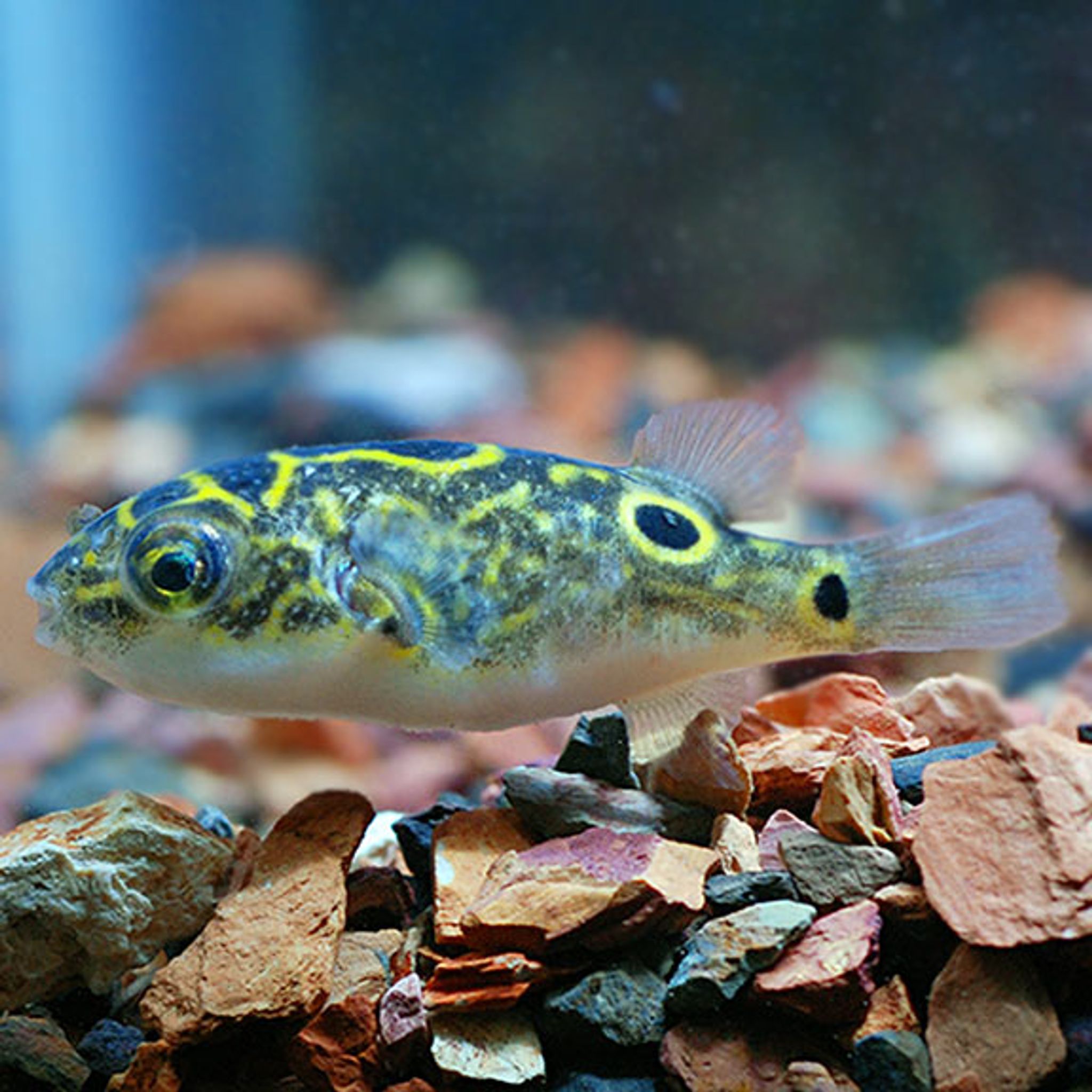
The figure 8 puffer is Dichotomyctere ocellatus, a species you may still see sold under its older name, Tetraodon biocellatus. It comes from estuaries and rivers in Southeast Asia, where fresh and salt water mix. Stores in the US often label it a "freshwater puffer," which is misleading: it survives in freshwater but does best in lightly salted water.
- Adult size: most reach about 3 inches (7.5 cm). Some keepers report up to 4 in (10 cm), but that is the exception.
- Size at sale: usually 0.5–1.5 in (1–4 cm). That cute juvenile hides how much appetite and attitude an adult has.
- Temperament: calmer than most puffers, but still an opportunistic predator and fin nipper. It can be territorial toward other figure 8s, and personality varies a lot from fish to fish. One individual may ignore its tank mates while another harasses them.
That variability is why the honest advice is: keep it alone if you are a beginner, and add tank mates only if you have some experience and a backup tank (or a way to rehome fish) ready in case aggression starts.
Tank and Water Requirements
Any tank mate has to thrive in the puffer's conditions, not the other way around.
| Parameter | Target |
|---|---|
| Tank size | 20 gal long (76 L) solo; 30 gal (114 L)+ with tank mates; 40 gal breeder (151 L) for a comfortable community |
| Temperature | 72–82°F (22–28°C), sweet spot 76–79°F (24–26°C) |
| pH | 7.5–8.3 |
| Hardness | GH 10+ dGH, KH 8–15 dKH |
| Salinity | Specific gravity (SG) 1.005–1.008 |
| Ammonia / nitrite | 0 ppm |
| Nitrate | Under 20 ppm |
| Filtration | 5–10x tank volume per hour |
Sources disagree on the minimum tank: some say 20 gallons, others 30. A 20 gallon long works for one puffer on its own; once you add any other fish, go to 30 gallons or larger. Figure 8s are messy eaters, so strong filtration and 15–25% weekly water changes are essential.
Aquascape with plenty of rock and plant sight breaks so fish can escape each other's view, but leave open swim lanes for your fast tank mates to use.
Rules for Choosing Figure 8 Puffer Tank Mates
Every candidate should pass all of these tests:
- Fast and active. Quick fish can get out of the way of a curious puffer.
- Short fins. Flowing fins invite nipping.
- Similar or slightly larger body size. Too small and it becomes food; much larger and it may bully the puffer or outcompete it for food.
- Brackish-tolerant at SG 1.005–1.008 for the long term.
- Uses a different water level. Bottom dwellers and mid/upper-water swimmers spread out the pressure.
- Not a pushy eater. Tank mates should not steal the puffer's food, and the puffer should not have to fight for it.
These Rules Apply to Most Puffers
The same criteria (speed, size match, short fins, shared water parameters) work across puffer species. But many puffers, including pea puffers, green spotted puffers and fahaka puffers, are best kept alone. The figure 8 is one of the more community-tolerant puffers, which is why it gets a tank mate list at all.
Best Tank Mates at SG 1.005–1.008
| Tank mate | Salt tolerance at SG 1.005–1.008 | Water level | Notes |
|---|---|---|---|
| Short-finned or sailfin mollies | Excellent, salt-loving | Mid to top | Sturdy and fast; choose adult-sized, short-finned fish |
| Bumblebee gobies | Good | Bottom | Keep a group; provide shells and caves |
| Indian glassfish | Good | Mid | A salt-tolerant chanda-type fish |
| Orange chromide | Good | Mid | Only in larger tanks |
| Other figure 8 puffers | Same needs | All | Experts only, 40 gal+, heavy scaping |
Mollies
Mollies are the classic partner. They handle brackish water well, grow big enough not to be bite-sized, and move quickly. Pick short-finned or sailfin types at adult size rather than tiny juveniles or fancy long-finned strains. You can browse mollies on FishyHub.
Bumblebee Gobies
These small, striped bottom dwellers claim caves and shells and stay out of the puffer's main swimming zone. Keep them in a group and give each one a hiding spot so squabbles stay minor.
Indian Glassfish and Orange Chromide
Indian glassfish are salt-tolerant mid-water fish that add movement without competing aggressively. The orange chromide is a brackish cichlid best reserved for larger setups, where there is room for both it and the puffer to hold territory.
Keeping More Than One Figure 8
Some keepers say groups of four or more spread out aggression; others report territorial fights. Only try this in a 40 gallon or larger tank with heavy scaping, and only if you have a spare tank ready.
The Freshwater Compromise
Quick schooling barbs, rasboras, danios and tetras can work if the tank is kept near SG 1.000–1.003 for a while. The catch: these fish do not suit long-term brackish water, and the puffer does not thrive long-term in freshwater. Choosing them forces a compromise that usually ends with one side losing out.
Species to Avoid
- Long-finned or slow fish: bettas, fancy guppies, angelfish, gouramis, fancy goldfish. Fins will be nipped, and most are freshwater-only.
- Ornamental shrimp and snails: these are food, not tank mates.
- Dwarf crabs and red claw crabs: they can pinch, escape the tank, and get harassed by the puffer.
- Corydoras and most plecos: salt-intolerant, slow, and stuck on the bottom where the puffer patrols.
- Larger brackish predators: monos, scats, archerfish once grown, and green spotted puffers. They outgrow the tank, bully the figure 8, or eat it.
- Any fish that fits in the puffer's mouth.
- Any fish that needs a very different salinity. Mixing fish with mismatched salt needs means one of them is always stressed.
Stocking Plans by Tank Size
| Tank | Suggested stocking |
|---|---|
| 20 gal long (76 L) | One figure 8 puffer, alone |
| 30 gal (114 L) | One puffer + 4–6 bumblebee gobies, or 3–5 mollies; one puffer + 4–6 gobies + 3–5 mollies is a reasonable ceiling |
| 40 gal breeder (151 L) | One puffer + mollies + bumblebee gobies + Indian glassfish |
Introduce tank mates first and the puffer last, so it does not treat the whole tank as its territory. If you add fish later, rearrange the decor first to reset territories. Quarantine every newcomer for 2–4 weeks at matching SG.
Brackish Aquariums for Beginners
A brackish tank sits between freshwater and marine, generally SG 1.005–1.012. Setup basics:
- Substrate: aragonite sand or crushed coral to hold pH around 7.8–8.4.
- Equipment: heaters, filters and fittings that are saltwater-safe.
- Stocking: mollies, bumblebee gobies, glassfish and a figure 8 form a classic beginner-friendly low-brackish combination.
- Don't mix in true freshwater fish long-term.
Salinity: Why Salt Matters and How Much to Use
| Water type | Specific gravity |
|---|---|
| Freshwater | 1.000 |
| Low brackish (figure 8 range) | 1.005–1.008 |
| High brackish | up to about 1.012+ |
| Marine | about 1.025 |
Use a marine salt mix, which contains trace elements and buffers. Never use table salt, and don't rely on plain aquarium salt, which is sodium chloride only and is meant for short medical dosing.
- Raise salinity slowly: no more than 0.002 SG per week.
- Mix salt in a bucket, never directly in the tank.
- Top off with fresh water only. Evaporation removes water, not salt, so topping off with salt water causes salinity creep.
- Match SG and temperature on every water change.
Refractometers for Testing Salinity
A refractometer is more accurate than a swing-arm hydrometer. To use one well:
- Calibrate with RO or distilled water to 1.000, or with 35 ppt calibration fluid.
- Choose a seawater-calibrated model. Models built for table salt (NaCl) solutions can read several percent off when measuring marine salt mixes.
- Check SG weekly and before every water change.
Feeding a Puffer Community
Figure 8s are carnivores. Offer frozen bloodworms, mysis and krill, plus live pest snails such as ramshorn and bladder snails several times a week. The crunching wears down the puffer's continuously growing beak. Stick to thin-shelled snails; hard-shelled trumpet snails are too tough. Pellets and flakes are usually refused. Feed juveniles daily and adults every day or two. Frozen foods and other diets are available in the food and supplements section.
In a community tank, feed tank mates separately or at the same moment on the opposite side of the tank. Target-feed the puffer with tongs or a feeding tube so the other fish get their share, and so the puffer isn't tempted to chase them.
Common Mistakes and Troubleshooting
- Buying a juvenile puffer with a betta or fancy guppy: expect nipped fins within days.
- Adding shrimp, snails or crabs as a "cleanup crew": they get eaten. Clean manually instead.
- Raising salinity too fast or mixing salt in the tank.
- Salinity creep from topping off with salt water.
- pH sliding toward 7.0: add crushed coral or aragonite.
- Overgrown beak (the puffer struggles to eat): feed more snails and hard foods. Trimming under sedation is a last resort.
- Warning signs: torn fins on tank mates, mates hiding near the surface, or the puffer glass-surfing (often boredom or lack of space). Add scaping, rehome the tank mates, or upgrade the tank.
Frequently Asked Questions
Can a figure 8 puffer live with other fish?
Yes, if you choose carefully: fast, short-finned, brackish-tolerant fish in a 30 gallon or larger tank. Solo is still the safest option, especially for beginners. Keep a backup tank ready in case one individual turns aggressive.
Can a figure 8 puffer live in freshwater?
It can survive in freshwater, but it thrives in low brackish water at SG 1.005–1.008. Long-term freshwater keeping may shorten its life and dull its color. Raise salinity slowly with marine salt mix.
Can a figure 8 puffer live with mollies, shrimp or snails?
Mollies are among the best matches; choose short-finned, adult-sized fish. Shrimp and snails are a different story: the puffer will eat them, so treat them as food rather than tank mates.
Can two figure 8 puffers live together?
It is possible in a 40 gallon or larger tank with lots of rock and plant cover. Watch closely for territorial fights, and separate the fish if fins get torn or one puffer hides constantly.
Can a figure 8 puffer live with a green spotted puffer, betta or guppies?
No. Green spotted puffers grow larger, become more aggressive and need full marine water as adults. Bettas and guppies are freshwater fish that are slow and long-finned, which makes them easy targets.
How many tank mates can go in a 30 gallon tank?
One figure 8 puffer plus a group of 4–6 bumblebee gobies and 3–5 mollies is a reasonable ceiling. Stock gradually, watch water quality, and stop adding fish if nitrate climbs or the puffer gets pushy.
Build Your Brackish Community
A figure 8 puffer community works when every fish shares the same salt level, stays out of reach and eats well. Start with the puffer's needs, add hardy tank mates first, and keep a backup plan. When you're ready to stock, browse the freshwater livestock collection on FishyHub for compatible fish.


