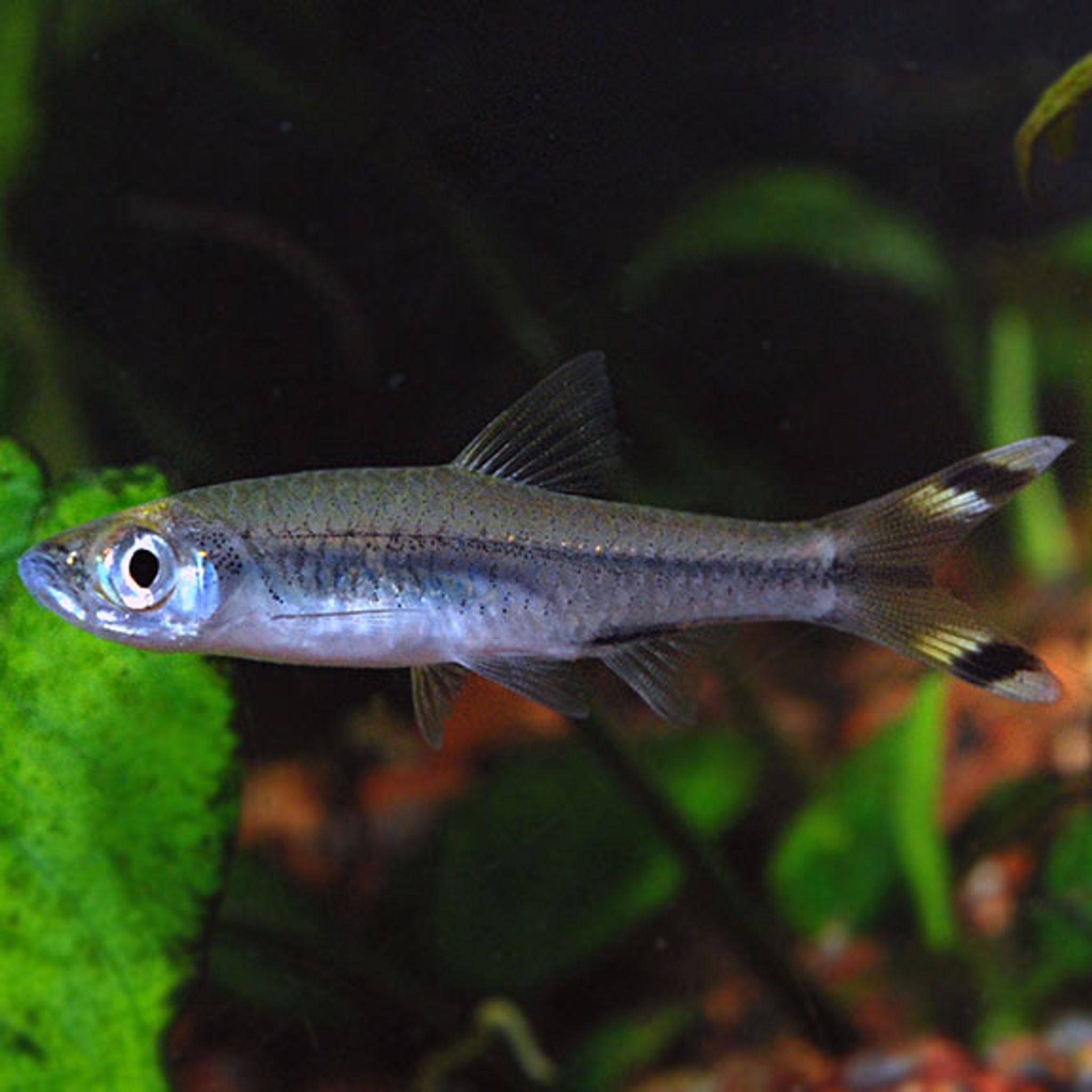

Best Tank Mates for Chili Rasbora: Compatible Fish and Species to Avoid
The best chili rasbora tank mates are tiny, calm, slow-feeding species such as ember tetras, celestial pearl danios, pygmy corydoras, otocinclus and dwarf shrimp. Avoid anything with a mouth big enough to swallow a 0.7-inch fish, anything fast and greedy at feeding time, and fin-nippers like pea puffers and tiger barbs. Below you'll find the selection rules, a safe list, a do-not-add list, and stocking plans for 5, 10 and 20 gallon tanks.
Meet the Chili Rasbora
The chili rasbora (Boraras brigittae, sometimes sold as the mosquito rasbora) comes from blackwater peat swamps in southwest Borneo. Adults reach only about 0.6–0.8 inch (1.5–2 cm). Care sheets often round that up to "about 1 inch," but most stay smaller. With good care they live 4–8 years.
What matters most for choosing companions:
- Very peaceful and shy, but not reclusive. A confident group swims loosely through the upper and middle water.
- Weak, slow feeders. Almost any active fish can beat them to food.
- Social. Keep at least 6. A group of 8–12 or more looks far better, and 15–20+ in a 10 gallon (38 L) or larger tank brings out the best color and boldness.
Plan the chili school first. Tank mates only get whatever space and bioload is left over.
Tank Size and Water Parameters
How big does the tank need to be?
Opinions range from 3 to 10 gallons. A sensible middle ground:
- 5 gallons (19 L): practical minimum for a chili-only tank.
- 10 gallons (38 L): realistic minimum once you add other fish.
- 20 gallons (76 L) or more: needed for larger, faster "maybe" species like harlequin rasboras or neon tetras.
What water do they need?
Tank mates must share the same water, so the overlap is what counts.
| Parameter | Chili rasbora range | Practical target for a community |
|---|---|---|
| Temperature | 72–78°F (22–26°C) ideal; tolerates 68–82°F (20–28°C) | About 74°F (23°C) |
| pH | 5.0–7.0 ideal; captive-bred fish often do fine at 6.0–7.5+ | 6.0–7.0 |
| GH | 1–10 | Soft to moderate |
| KH | 0–6 | Low to moderate |
Sources disagree here. The blackwater camp recommends pH 4.0–6.5 and GH 1–2. Keepers of captive-bred stock report success at pH 6.0–8.0, and some shrimp-focused keepers run them at 7.2–7.5. The safest approach is stable soft to moderate water, around pH 6.0–7.0 and 74°F, adjusted to suit the tank mates you choose.
Captive-bred chilis tolerate harder US tap water better than wild-caught fish. Ask the seller which you're getting.
How to Judge a Chili Rasbora Tank Mate
"Peaceful" on a store label isn't enough. Check compatibility on three things: mouth size, feeding competition, and water chemistry. A good companion should:
- Stay under about 2 inches (5 cm) as an adult.
- Have a mouth too small to swallow a 0.7-inch fish. A practical rule of thumb: if a fish is several times longer than a chili and has a noticeably wide mouth, assume it will eventually try. Angelfish are the classic example of a "peaceful" fish that eats micro fish.
- Be calm and not a fin-nipper.
- Not be a fast, greedy eater that clears the food before chilis get any.
- Share the same temperature and pH range.
- Ideally use a different part of the tank. Bottom dwellers are the best match because they never compete for the chilis' swimming space.
Water-level zoning chart
| Zone | Good options | Notes |
|---|---|---|
| Top / upper-middle | Chili rasbora, other Boraras, sparkling gourami | Keep top-level species few and small |
| Middle | Ember tetra, celestial pearl danio, neon green rasbora, Endler's livebearer | Choose slow, small feeders |
| Bottom | Pygmy, habrosus and dwarf corydoras, kuhli loach, rosy loach | Best category of tank mate |
| Surfaces and glass | Otocinclus, nerite snails, ramshorn snails, dwarf shrimp | Cleanup crew with no competition for midwater |
Compatible Tank Mates for Chili Rasbora
Best fish companions
- Ember tetra: similar size, color and temperament. Probably the most natural pairing.
- Celestial pearl danio (galaxy rasbora): small and calm. Males spar with each other but ignore chilis.
- Other Boraras: phoenix (merah), exclamation point, and dwarf/spotted rasboras.
- Neon green rasbora: tiny and peaceful, with a similar feeding style.
- Pygmy, habrosus and dwarf corydoras: ideal bottom dwellers. Keep them in groups of 6+ on sand.
- Otocinclus: peaceful algae grazers, but only for mature tanks with established biofilm and algae. They starve in new, spotless setups.
- Kuhli loach and rosy loach: gentle bottom and lower-water fish that stay out of the way.
- Sparkling gourami: a tiny, calm labyrinth fish that works well in planted nano tanks.
- Chocolate gourami: for experienced keepers only. It needs very soft water.
- Endler's livebearer: small and peaceful, though active at feeding time.
Use with caution
- Harlequin and lambchop rasboras: often listed as fine, but they are much larger and faster. Only in 20 gallons+.
- Neon tetras: workable in a larger, calm tank. Watch whether they take all the food.
- Cherry barbs: sometimes described as docile, but they can outcompete chilis for food. Add them only if you can target feed.
Invertebrate companions
- Neocaridina (cherry) and caridina shrimp
- Amano shrimp
- Nerite, ramshorn, mystery and bladder snails
- Bamboo (wood) shrimp in larger tanks with some current
If you're building a shrimp and micro-fish tank, you can browse freshwater shrimp on FishyHub.
Species to Avoid With Chili Rasboras
| Avoid | Why |
|---|---|
| Angelfish | "Peaceful" but large enough to eat chilis |
| Gouramis over 3 in (7.5 cm): dwarf, pearl (honey is borderline) | Size, mouth and territorial behavior |
| Most barbs (tiger, rosy) | Fin-nipping, fast feeders |
| Serpae and black skirt tetras | Nippy and boisterous |
| Larger danios (zebra, giant) | Too fast; stress chilis and win every feeding |
| Rainbowfish | Too big and too active |
| Adult guppies, mollies and swordtails in small tanks | Heavy food competition and bioload |
| Cichlids, including rams and apistogrammas in small tanks | Territorial; may hunt micro fish |
| Shark-type fish (redtail, bala) | Size and aggression |
| Goldfish | Different temperature needs and big mouths |
| Crayfish, large crabs, dwarf freshwater lobster (CPO) | Will catch and eat small fish |
| Pea puffers | Chase and nip |
| Anything whose mouth can fit a chili | It will eventually eat them |
What about bettas?
This is the most debated pairing. Some keepers report bettas living peacefully with chilis in a well-planted 10 gallon. Others avoid it entirely. It comes down to the individual betta. If you try it, do so only in 10 gallons (38 L) or larger with dense plants, and have a spare tank ready in case the betta starts hunting. Never try it in a 5 gallon.
Rasboras for Shrimp Tanks: The Micro-Rasbora Picks
Chili, phoenix (merah) and exclamation point rasboras are the classic shrimp-safe choices because their mouths are too small for adult shrimp.
- Phoenix/merah rasbora: the shyest of the three. It does best with tannins and leaf litter.
- Exclamation point rasbora: prefers more open swimming space.
- Kubotai and dwarf emerald rasboras: also good picks for shrimp tanks.
Adults leave grown shrimp alone, but any of these will eat some newborn shrimplets. Thick moss and dense cover give babies places to hide, and a planted colony keeps growing despite some losses.
Sample Stocking Plans
| Tank | Chilis | Companions |
|---|---|---|
| 5 gal (19 L) | 8–10 | Neocaridina shrimp plus nerite or ramshorn snails |
| 10 gal (38 L) | 12–15 | 6 pygmy corydoras plus shrimp |
| 20 gal long (76 L) | 20 | 10 ember tetras or celestial pearl danios, 6 habrosus corydoras, a few otocinclus, amano shrimp |
Treat these as upper limits for a planted tank with a mature filter. Scale back if your tank is newer or lightly planted.
Setting Up a Tank Where Tank Mates Work
A good layout does as much for compatibility as picking the right species.
- Heavy planting gives shy fish escape routes and breaks lines of sight.
- Floating plants dim the light, which calms chilis and brings out color.
- Leaf litter or botanicals add tannins and grow biofilm for shrimp and otos.
- Dark substrate (use sand if you keep cories) makes chilis look brighter.
- Gentle flow: a sponge filter or a baffled hang-on-back filter. Strong current wears them out.
- A tight-fitting lid. Chilis jump.
Feeding a Mixed Community
Chilis need tiny food and a fair chance to eat it. Good options include crushed flakes, micro pellets, baby brine shrimp, daphnia, microworms and cyclops.
- Feed small amounts twice a day.
- Drop some food where the chilis hang out, away from faster fish.
- Put sinking food down for bottom dwellers so they don't rise to compete.
Adding New Fish
- Quarantine new arrivals before adding them to the display tank.
- Add chilis before or together with other small fish, never after boisterous species have claimed the tank.
- Only stock a mature, stable tank. New setups with swinging parameters are hard on nano fish.
- Expect pale fish at first. Chilis are often sold as juveniles and look washed out for a few weeks after shipping. Give them time before judging their color.
Common Mistakes and Troubleshooting
- Trusting the "peaceful" label alone. Angelfish and larger gouramis are peaceful to their own size, not to a 0.7-inch fish. Check mouth size.
- Too few chilis. Small groups hide, fade and rarely come out. Aim for 8 or more.
- Chilis getting thin. Faster fish are eating everything. Target feed, or swap to slower tank mates.
- Exhausted fish in strong current. Baffle the outflow or switch to a sponge filter.
- Chilis stay pale. Common causes are stress, bright light, too little cover, bullying, or poor water. Add floating plants and tannins, then test ammonia, nitrite and nitrate.
- Fish going missing. Either they jumped or something ate them. Check the lid and take a hard look at your tank mates.
Frequently Asked Questions
Can chili rasboras live with bettas?
Sometimes. It can work in a 10 gallon or larger tank with dense plants if the betta has a calm temperament, but many bettas will hunt small fish. Always keep a backup tank ready, and never try it in a 5 gallon.
Will chili rasboras eat my cherry shrimp?
Adult cherry shrimp are safe. Chilis will pick off some shrimplets, but in a tank with plenty of moss and plants the colony usually keeps growing.
How many chili rasboras can go in a 5 or 10 gallon tank?
About 8–10 chilis on their own in a 5 gallon. In a 10 gallon, 12–15 chilis plus a small bottom group such as pygmy corydoras or otocinclus is a reasonable plan.
Can chili rasboras live with neon tetras or guppies?
Yes, in a larger, calm tank. Both are bigger and faster, so watch feeding time closely and make sure the chilis are still getting food. In small tanks, adult guppies usually win too much of the food.
What are the best bottom dwellers for chili rasboras?
Pygmy or habrosus corydoras, kuhli loaches and otocinclus. Cories need sand and a group of 6 or more, and otos need a mature tank with algae and biofilm to graze.
Can I mix chili rasboras with other Boraras species, or do they need tank mates at all?
You can mix them, but each species tends to school with its own kind, and hybridizing between close species is rare but possible. Chilis don't need other fish at all. A chili-only tank is often the best way to see them at their boldest.
Find Your Chili Rasbora Community
Start with a healthy chili school, then add one or two quiet companions that suit your tank size. You can browse chilis and other micro species in the rasbora collection, or look through FishyHub's small community fishes and corydoras for well-matched tank mates.


