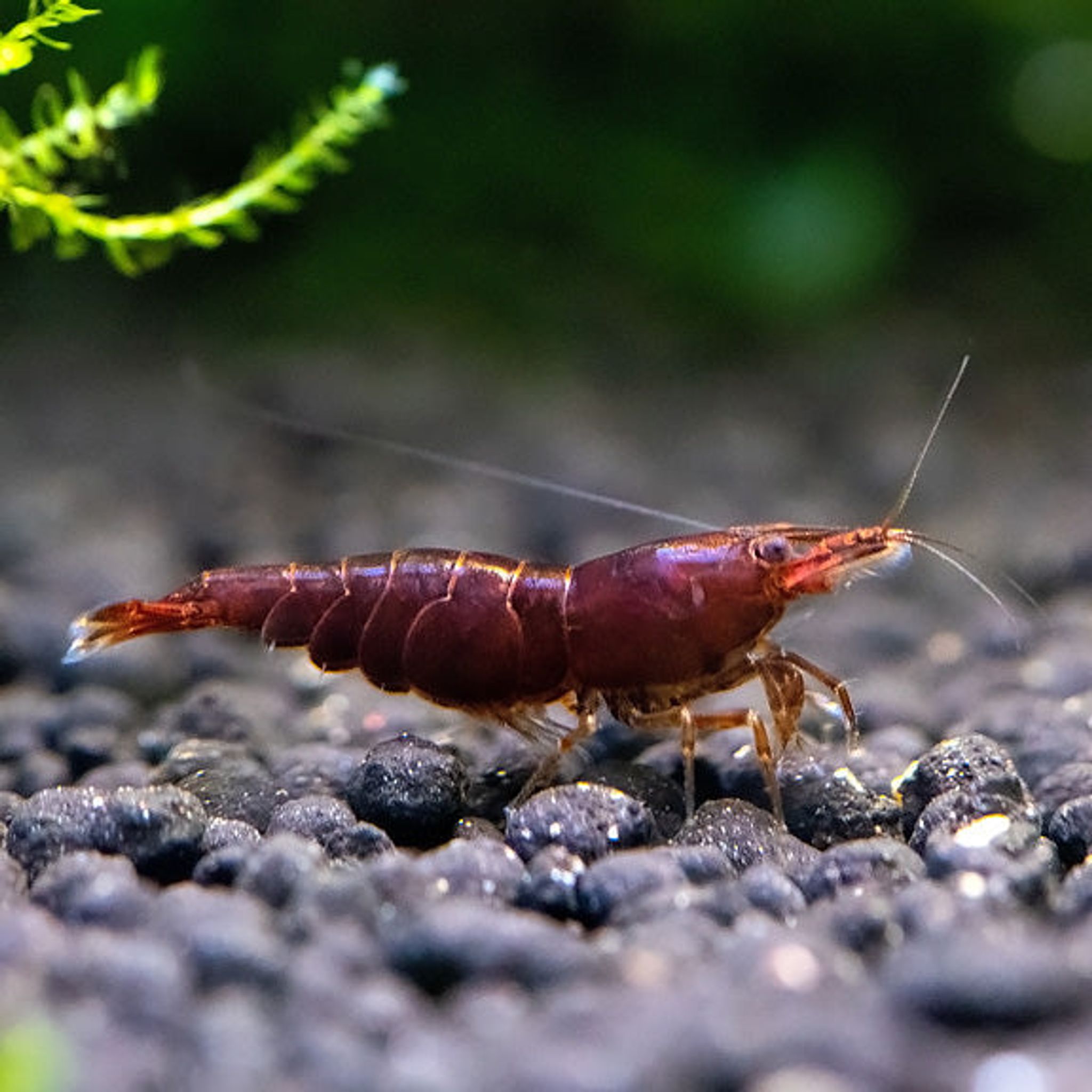
Best Tank Mates for Cherry Shrimp: Safe Fish and Invertebrate Companions
Cherry shrimp are easy to please, but most tank mate disasters happen because "shrimp-safe" gets treated as "shrimp-proof." This guide ranks fish, gobies, snails, and other shrimp by real predation risk and explains the biology behind each pick, so you can also judge species not listed here on your own.
The core risk: mouth size and appetite, not species labels
Any fish with a mouth wide enough to fit an adult cherry shrimp — roughly 1 to 1.5 inches (2.5–4 cm) — can eat one opportunistically if it's hungry or bored. That rules out very few fish outright. The real vulnerability is shrimplets, which measure only 2–3 mm at birth. Almost any fish, including species commonly marketed as shrimp-safe, will eat a shrimplet that swims into the open.
This means "safe" is a spectrum, not a binary label:
- Low risk: small mouth, peaceful temperament, feeds mid-water or at the surface, rarely forages in leaf litter or moss.
- Moderate risk: small enough to coexist with adults but will pick off shrimplets given the chance.
- High risk: actively hunts shrimp as a food source or is simply too large and predatory to trust.
Cover density decides how many shrimplets survive far more than which species you choose. A tank with dense moss, floating plants, and leaf litter will out-produce a bare tank with the "safest" fish on the market.
Setting up the tank for coexistence
Before picking tank mates, build the environment that lets shrimp hide:
- Dense planting: Java moss and similar mosses give shrimplets a maze to disappear into; floating plants add cover and biofilm at the surface.
- Hardscape and leaf litter: driftwood, rocks, and leaf litter create grazing surfaces and blind spots fish can't easily patrol.
- Sponge-covered filter intake: protects shrimplets from being pulled into intakes, which is a more common cause of early losses than predation.
Water parameters cherry shrimp and their tank mates need to share
| Parameter | Cherry shrimp range | Notes |
|---|---|---|
| Temperature | 65–82°F (18–28°C), ideal 72–78°F (22–26°C) | Stable mid-range temps support breeding activity more than any specific number |
| pH | 6.5–8.0 | Wide tolerance compared to Caridina species |
| GH | 4–8 | General hardness for shell development |
| KH | 0–4 | Buffering capacity |
| Ammonia/Nitrite | Near zero | Shrimp are less tolerant of spikes than most fish |
| Nitrate | Under 20 ppm | Keep on the low side for long-term health |
Any fish you add should tolerate this same range comfortably — don't stretch cherry shrimp parameters to accommodate a fish that really wants harder or softer water.
Shrimp-friendly nano fish
These species combine small mouths, calm temperaments, and feeding habits that keep them away from the substrate where shrimp hide:
- Chili Rasboras (Boraras brigittae): tiny mouths, mid-water feeders, rarely interested in hunting.
- Ember Tetras: peaceful schoolers that stay in open water rather than picking through cover.
- Pygmy and Habrosus Corydoras: small corydoras that forage on the substrate for leftover food but lack the size and drive to hunt shrimp.
- Otocinclus catfish: algae and biofilm grazers, essentially uninterested in shrimp.
- Harlequin and Lambchop Rasboras: slightly larger than chili rasboras but still peaceful and surface/mid-water oriented.
- Small Killifish: generally peaceful in community setups, though individual temperament varies.
- Celestial Pearl Danios: adults are safe with adult shrimp, but they are known to pick off very young shrimplets — better suited to colony maintenance than a dedicated breeding tank.
Gobies for shrimp tanks
Nano freshwater and brackish-tolerant gobies (Stiphodon- and Rhinogobius-type species) are a more advanced option gaining traction with shrimp keepers. They graze biofilm and algae with small, specialized mouths and generally ignore shrimp entirely.
Before adding one, research the specific species:
- Some want harder water or a touch of salinity rather than the softer, more neutral water cherry shrimp prefer.
- Many need stronger current than a typical planted shrimp tank provides.
- Nearly all are strong jumpers — a tight-fitting lid is non-negotiable.
Treat gobies as a niche upgrade for an experienced keeper, not a beginner default.
Invertebrate tank mates
Amano shrimp
Amano shrimp are larger and more assertive at feeding time than cherry shrimp, but they don't view cherries as prey — the risk is competition for food, not predation. Feed generously so smaller cherries aren't outcompeted. Amano won't interbreed with cherry shrimp because they belong to a different genus and their larvae need brackish water to develop, so a freshwater tank can't produce babies from either species mixing.
Other Neocaridina color varieties
Cherry shrimp are one color morph of Neocaridina davidi, and every other Neocaridina color — snowball, chocolate, blue dream, yellow, and more — shares the same temperament and parameter range. They coexist without conflict. The catch is genetic, not behavioral: they interbreed freely, and mixed-color offspring trend back toward the brown/wild-type coloration over a few generations. Keep only one Neocaridina color line per tank if maintaining a specific color grade matters to you.
Chocolate shrimp
A Neocaridina morph bred from red cherry lines, chocolate shrimp are hardy and share the same 65–82°F, pH 6.5–8.0 range. Fully compatible as tank mates, with the same interbreeding caveat as any other Neocaridina color.
Snowball shrimp
Another hardy Neocaridina color morph and a solid beginner choice. Snowball and cherry shrimp will interbreed and produce brown, wild-type offspring — keep them as separate colonies unless color mixing doesn't bother you.
Caridina species (crystal, tiger, bee shrimp)
Caridina shrimp generally shouldn't be mixed with Neocaridina like cherry shrimp. Caridina prefer softer water and a lower pH (roughly 6.2–6.8), while Neocaridina tolerate a much wider range (6.5–8.0). Housing them together usually means compromising on parameters that stress one group even if the two don't fight.
Good snails for a shrimp tank
| Snail | Why it works |
|---|---|
| Nerite | Top pick for algae control; can't reproduce in freshwater, so no population explosions |
| Mystery | Larger cleanup crew for waste and leftover food, but breeds in freshwater — watch numbers |
| Ramshorn | Efficient detritus cleaner; can overpopulate if the tank is overfed |
| Malaysian Trumpet | Burrows and aerates substrate while eating detritus; can also overpopulate with excess feeding |
Avoid predatory or aggressive snails if your priority is maximizing shrimp numbers — even species that mainly target other snails, like assassin snails, will occasionally take a weak or molting shrimp.
Species and animals to avoid
- Bettas: individual temperament varies wildly, but many hunt shrimp relentlessly — see the FAQ below.
- Larger gouramis and most cichlids, including dwarf species like rams in many cases.
- Angelfish and larger barbs such as tiger barbs.
- Goldfish: cold-water and messy, plus large enough to eat shrimp outright.
- Crayfish and larger freshwater crabs: opportunistic predators that will kill and eat shrimp regardless of size difference.
- Loaches over about 2 inches, including yoyo and clown loaches — many loaches are dedicated shrimp hunters, not occasional opportunists.
Cherry shrimp in a community tank
If you want shrimp alongside a general community, work with this framework rather than fighting it:
- Favor tanks that are under-stocked with fish relative to their size.
- Maximize plant cover — moss balls, dense stem plants, and leaf litter all help.
- Stick to species from the "shrimp-friendly" list above and skip known hunters entirely.
- Expect a population plateau, not explosive breeding, once fish share the tank — this is normal, not a sign of failure.
A simple stocking rule of thumb
There's no universal ratio, but a workable starting point for a shrimp-priority tank is one small nano fish per 2–3 gallons, or a small school of 6–8 nano fish in a 10–20 gallon tank. Stacking multiple "safe" species at once adds up — even low individual predation risk compounds when five or six species are all picking off shrimplets simultaneously.
Common mistakes to avoid
- Adding shrimp to an established fish tank without extra cover first. Shrimplets get picked off within days and the colony never gets started.
- Assuming "shrimp-safe" means zero predation. It means low, opportunistic predation — population growth will always be slower with fish present than in a shrimp-only tank.
- Mixing Caridina and Neocaridina expecting identical care. Differing water chemistry needs can stress one group even when the two behave peacefully toward each other.
- Overstocking with several "safe" species at once. Cumulative predation pressure adds up even if no single species is a serious threat.
- Skipping drip acclimation. Sudden parameter swings kill shrimp long before tank mates ever become a factor, and the die-off is often blamed on aggression instead of shock.
- Ignoring copper. Many fish medications and some tap water sources contain copper, which is lethal to shrimp. Always check any medication or fertilizer label before dosing a mixed tank.
What most guides leave out
- Tank maturity matters as much as tank mate choice. A young, low-biofilm tank gives fish fewer alternative food sources, which pushes them toward hunting shrimp more aggressively. A mature tank with established biofilm and algae reduces that pressure.
- Quarantine new fish before adding them. Pathogens and external parasites — and the copper-based treatments sometimes used against them — are often more dangerous to an established shrimp colony than the new fish's predation ever would be.
- Introduce shrimp to a mature, planted tank rather than the same week as new fish. Adding both at once means neither has established hiding spots or territory, which raises early predation losses.
- Substrate choice affects biofilm growth. A substrate that supports algae and biofilm gives fish more grazing options, indirectly reducing how much they target shrimp for food.
Frequently Asked Questions
Can cherry shrimp live with bettas?
It's a gamble, not a guideline. Some individual bettas ignore shrimp for years, but many hunt them relentlessly, and there's no reliable way to predict which type you'll get. Only attempt this in a heavily planted tank with a backup plan, and avoid it entirely if your goal is a breeding colony.
Will fish eat baby cherry shrimp?
Yes — almost any fish will eat a shrimplet given the chance, regardless of how "shrimp-safe" that species is generally considered. Population growth depends far more on cover density (moss, leaf litter, hardscape) than on which fish species you've chosen.
Can I keep cherry shrimp with Amano shrimp?
Yes. Amano shrimp coexist well with cherries and won't interbreed, since they're a different genus and their larvae require brackish water to develop. Amano are also excellent for algae control — just feed enough that the larger Amano don't outcompete smaller cherries at mealtime.
Can different color Neocaridina shrimp be kept together?
Yes, they're fully compatible in terms of temperament and water needs. The catch is genetic: they interbreed, and offspring trend back toward wild brown coloration over generations. Keep separate colonies if maintaining a specific color grade matters to you.
What snails are safe with cherry shrimp?
Nerite, Mystery, Ramshorn, and Malaysian Trumpet snails are all considered safe, beneficial cleanup crew additions. Nerites are the top pick since they can't reproduce in freshwater, while the others can overpopulate if the tank is overfed.
Do cherry shrimp need a heater?
Not strictly — they tolerate 65–82°F (18–28°C). The concern isn't room temperature itself but unheated rooms with large daily swings; stable mid-range temps around 72–78°F (22–26°C) support the best breeding activity.
Can cherry shrimp live with crayfish?
No. Crayfish are opportunistic predators that will kill and eat shrimp regardless of size difference. This isn't a safe pairing under any setup.
How many fish can I add without hurting my shrimp colony?
Keep stocking light — a small school of 6–8 nano fish in a 10–20 gallon tank, or roughly one small nano fish per 2–3 gallons in a shrimp-priority setup. Prioritize plant and hardscape cover over adding more fish species.
Ready to build out a shrimp-friendly community? Browse shrimp and compatible nano species on FishyHub to find tank mates suited to your setup.


