
Best Tank Mates for Celestial Pearl Danio: Compatible Fish and Species to Avoid
The best tank mates for celestial pearl danio are tiny, peaceful fish that like the same slightly cool, heavily planted water: chili rasboras, Boraras rasboras, ember tetras, pygmy Corydoras, kuhli loaches, Endler's livebearers, and adult dwarf shrimp. Skip anything that can swallow a 1-inch fish, nips fins, or eats fast and aggressively. Below you'll find a temperature-overlap check, stocking plans for 10, 20, and 29 gallon tanks, and the mistakes that make these shy fish disappear.
Know the Celestial Pearl Danio First
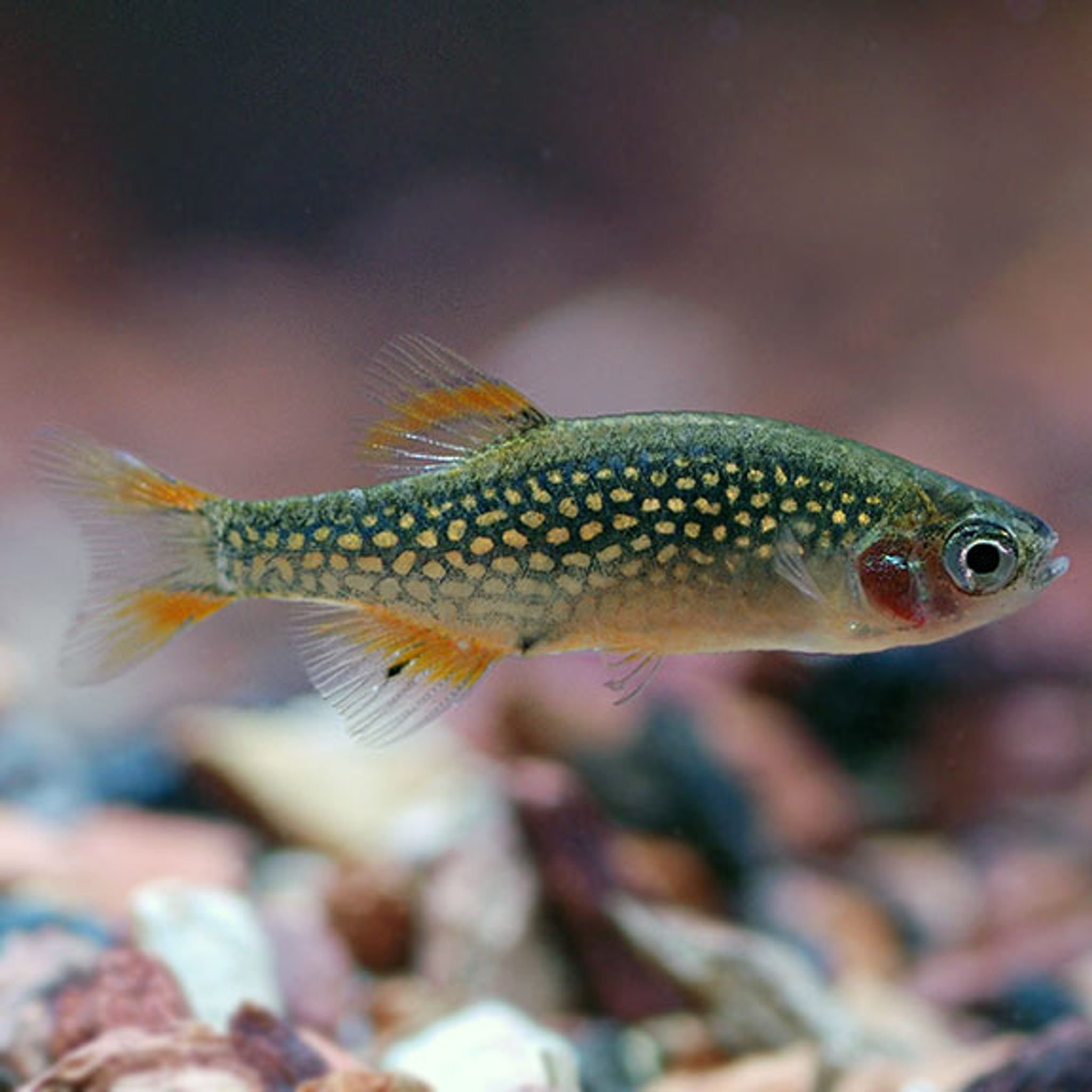
The celestial pearl danio (CPD), also sold as the galaxy rasbora (Danio margaritatus), was only described in 2006–07. It comes from small, shallow ponds packed with vegetation on a high plateau in Myanmar. That home explains almost everything about its needs: clear water, dense plants, and temperatures a little cooler than the typical tropical community.
- Adult size: about 0.75–1 inch (2–2.5 cm)
- Temperament: shy and peaceful toward other species
- Male behavior: males spar with each other, chasing, flaring fins, and sometimes nipping fins. This is normal, and it eases with more females and more plants.
- Group size: at least 6, ideally 10 or more, with more females than males
How to Sex CPDs
Males have a bluer body with bright red-orange fins. Females are duller, rounder in the belly, and less intensely colored. Aim for a female-heavy group so no single female gets chased constantly and males spread their displays around.
Water Parameters
| Parameter | Range | Target |
|---|---|---|
| Temperature | 70–78°F (21–26°C) | 72–76°F (22–24°C) |
| pH | 6.5–7.5 (tolerates up to ~8.0) | Around 7.0 |
| Hardness | GH 5–12, KH 2–10 dKH | Soft to moderate |
| Tank size | 10 gal (38 L) for CPDs alone | 20 gal (76 L)+ with tank mates |
Stable, clean water matters more than hitting any exact number. Sources disagree slightly on temperature (some say 72–76°F, others 73–79°F), so we recommend 72–76°F (22–24°C) and choosing tank mates whose range includes that band.
Rules for Choosing CPD Tank Mates
Before buying anything, run each candidate through these five checks:
- Adult size under about 2 inches (5 cm).
- No fin-nippers and no boisterous, fast feeders.
- A temperature range that overlaps 72–76°F. Many popular tropicals prefer 77–82°F, which is too warm for long-term CPD health.
- Comfortable with dense planting and gentle flow.
- A mouth too small to swallow a 1-inch fish.
This temperature-overlap check is where most generic "peaceful fish" lists go wrong. "Small and peaceful" isn't enough if the fish wants water several degrees warmer.
Best Tank Mates for Celestial Pearl Danios
| Species | Adult size | Temp overlap with 72–76°F | Notes |
|---|---|---|---|
| Chili / mosquito rasbora | ~0.75 in (2 cm) | Good | Ideal nano match; same Southeast Asian feel |
| Dwarf / spotted rasbora (Boraras) | ~0.75–1 in (2–2.5 cm) | Good | Calm, schooling, likes plants |
| Ember tetra | ~0.75 in (2 cm) | Good | Adds orange contrast mid-water |
| Pygmy, habrosus, hastatus Corydoras | ~1–1.5 in (2.5–4 cm) | Good | Keep in groups on soft sand |
| Kuhli loach | ~3–4 in (8–10 cm), very slim | Good | Harmless bottom dweller, no threat despite length |
| Otocinclus | ~1.5–2 in (4–5 cm) | Good | Only in a mature 20 gal+ tank with algae |
| Endler's livebearer | ~1 in (2.5 cm) | Good | Best livebearer size match |
| White cloud mountain minnow | ~1.5 in (4 cm) | Good at the cool end | Cool-leaning; keep near 72–74°F |
| Sparkling gourami | ~1–1.5 in (2.5–4 cm) | Good | Quiet, likes floating cover |
| Dwarf pencilfish | ~1 in (2.5 cm) | Good | Gentle, surface/mid-level |
| Pygmy hatchetfish | ~1 in (2.5 cm) | Good | Top dweller; use a tight lid |
Many of these are available among FishyHub's nano rasboras and Corydoras, which are two of the easiest groups to pair with CPDs.
Acceptable With Caveats
- Neon and green neon tetras: workable if you keep the tank around 74–76°F in a planted 20 gallon.
- Harlequin rasbora: larger and busier; only in 20 gallons or more.
- Honey gourami: can get territorial in small tanks; give it space and floating plants.
- Threadfin rainbowfish: delicate and warm-leaning; keep at the top of the CPD range.
- Bristlenose pleco: 20 gallons or more only, and it adds noticeable bioload.
- Guppies: acceptable, though Endler's are the better size match.
Invertebrates
- Amano, ghost, and cherry (Neocaridina) shrimp: adults are safe with CPDs.
- Shrimplets are not safe. CPDs will eat baby shrimp, so a breeding colony needs thick moss and dense cover, or a separate tank.
- Nerite and ramshorn snails: safe, useful cleanup crew.
Tank Mates to Avoid
- Predators: angelfish, oscars, most cichlids (including Jack Dempseys and convicts), and larger gouramis. Anything with a mouth big enough will eat CPDs.
- Fin-nippers: tiger barbs, serpae tetras, Buenos Aires tetras.
- Big, rowdy danios: giant danios and zebra danios outcompete CPDs at feeding and keep them hiding.
- Goldfish: too big, too much waste, and a poor environment match.
- Bettas: generally risky because of temperature mismatch and possible aggression. If you try, use only a 20 gallon or larger, heavily planted tank and a betta already known to be calm.
- Bamboo shrimp: need larger tanks with stronger flow than a typical CPD setup.
Where Popular Lists Disagree
- Cardinal and rummy-nose tetras show up on some lists but prefer roughly 77–82°F. They're poor temperature matches.
- Dwarf gourami is sometimes called compatible, but males can be pushy and the species is disease-prone. Skip it in nano tanks.
- Mollies prefer harder, warmer water and outgrow nano tanks. Not ideal.
- Shrimp get mixed reviews simply because adults do fine while fry get eaten. Both reports are true.
Stocking Plans by Tank Size
Sources range from 5–6 CPDs in a 10 gallon to 10–15 in a 20. These plans sit in the middle and assume a planted, cycled tank with gentle filtration.
| Tank | CPDs | Suggested companions |
|---|---|---|
| 10 gal (38 L) | 6–8 | One small group of a single nano species (such as 6 chili rasboras) or a cherry shrimp group, plus a few snails |
| 20 gal long (76 L) | 10–15 | 8–10 ember tetras or Boraras, 6 pygmy Corydoras, Amano shrimp, nerite snails |
| 29 gal (110 L) | 12–15 | 10 chili rasboras, 6 habrosus Corydoras or 5–6 kuhli loaches, a pair or trio of sparkling gouramis, shrimp and snails |
In a 10 gallon, keep the companions to one species. More mixing than that crowds the tank and pushes CPDs into hiding.
Feeding CPDs Alongside Other Fish
CPDs are slow, timid feeders that work the middle and lower levels. With competitors in the tank, they can quietly go hungry.
- Use tiny foods: crushed flake, micro pellets, baby brine shrimp, daphnia, cyclops, and microworms.
- Feed in two spots at once so faster fish can't guard it all.
- Let some food sink through the plants where CPDs feel safe.
- Watch the bellies. Sunken stomachs mean the tank mates are eating first.
CPDs are often sold stressed and underweight. Fatten new fish up for a couple of weeks before adding bolder tank mates. Frozen and freeze-dried foods from FishyHub's food and supplements range can help build them back up.
Setting Up a CPD Community Tank
- Plants: dense stem plants and mosses, plus floating plants to dim the light.
- Substrate: a dark substrate brings out their colors.
- Filtration: gentle flow; a sponge filter is ideal. Put a sponge guard on any other filter intake so nano fish and shrimp aren't pulled in.
- Lid: CPDs and hatchetfish can jump. Keep the tank covered.
Adding Tank Mates in the Right Order
- Cycle and plant the tank first.
- Quarantine all newcomers for 2–4 weeks.
- Add CPDs first, or at the same time as the other nano species, so they settle before bolder fish arrive.
- Add bottom dwellers and any "caveat" species last, once CPDs are eating confidently.
Building an Asian Biotope Tank
A community tank mixes compatible fish from anywhere. A biotope tank mixes only species from one region. Because CPDs are Southeast Asian, you can build a Myanmar/Southeast Asia themed tank with:
- Boraras rasboras
- Chili rasboras
- Kuhli loaches
- Sparkling or honey gouramis
Otocinclus, Corydoras, ember tetras, and pencilfish are South American, so leave them out if you want a true biotope. For a community tank, they're all fine.
Can You Keep CPDs Without a Filter?
It's possible, but only with a narrow margin for error:
- The tank must be heavily planted and very lightly stocked, well under normal stocking levels.
- Let it mature fully for 3–4 weeks before adding fish.
- Change 20–30% of the water weekly.
- Test ammonia, nitrite, and nitrate regularly.
Every tank mate you add increases the risk. For a community tank, a gentle sponge filter is the safer choice.
Aerating Without an Air Pump
If you don't run an air pump, you can still keep oxygen levels up:
- Aim the filter outflow at the surface to break it up.
- Use a powerhead or a venturi attachment on the filter.
- Rely on live plants for daytime oxygen.
- Choose a wide, shallow tank shape for more surface area.
Watch for fish gasping at the surface, especially at night (when plants stop producing oxygen) or during warm weather.
Common Mistakes and Troubleshooting
- Adding CPDs to a tank of bold feeders: they hide and starve. Target-feed or rehome the competitors.
- Too few CPDs, or mostly males: constant sparring and hiding. Increase the group and skew it female.
- Sparse aquascape: fish stay pale and skittish. Add plants and floating cover.
- Running the tank at 80°F+ for warm-water mates: this shortens CPD lifespan. Choose mates that fit their temperature, not the other way around.
- Expecting a shrimp colony to grow: shrimplets vanish. Add moss thickets or breed shrimp in a separate tank.
- Fish disappearing: check for predation by larger tank mates, jumping (use a lid), or an unguarded filter intake.
Frequently Asked Questions
Can celestial pearl danios live with bettas?
Usually it's not recommended. Bettas prefer warmer water than CPDs, and some will harass small fish. If you try it, use a 20 gallon or larger, heavily planted tank and a betta you already know is calm.
Will celestial pearl danios eat cherry shrimp?
Adult cherry shrimp are safe. Baby shrimp are not, since CPDs will eat shrimplets. If you want the colony to grow, add dense moss for cover or breed shrimp in a separate tank.
Can CPDs live with neon tetras?
Yes, if you keep the tank around 74–76°F in a planted 20 gallon. Neons sit at the warmer edge of the CPD range, so avoid pushing the temperature higher for them.
How many CPDs can go in a 10 gallon with tank mates?
About 6 CPDs plus a small group of one nano species, such as chili rasboras, or a group of shrimp. Keep the companions to a single species so the tank doesn't get crowded.
Are celestial pearl danios fin nippers?
Only among themselves. Males chase and sometimes nip each other while sparring, but they rarely bother other species.
Do celestial pearl danios need a heater?
They often do fine in a room that stays at 70°F or higher. A heater set around 74°F (23°C) keeps things stable, though, which matters more than the exact temperature. Zebra danios, by contrast, are bigger and hyperactive and generally aren't good tank mates, even though they tolerate similar temperatures.
Build Your CPD Community
Choose calm nano species that match the CPD's cooler 72–76°F range, give everyone dense plants and gentle flow, and make sure the danios get their share of food. Browse FishyHub's small community fishes to find celestial pearl danios and compatible nano companions for your planted tank.


