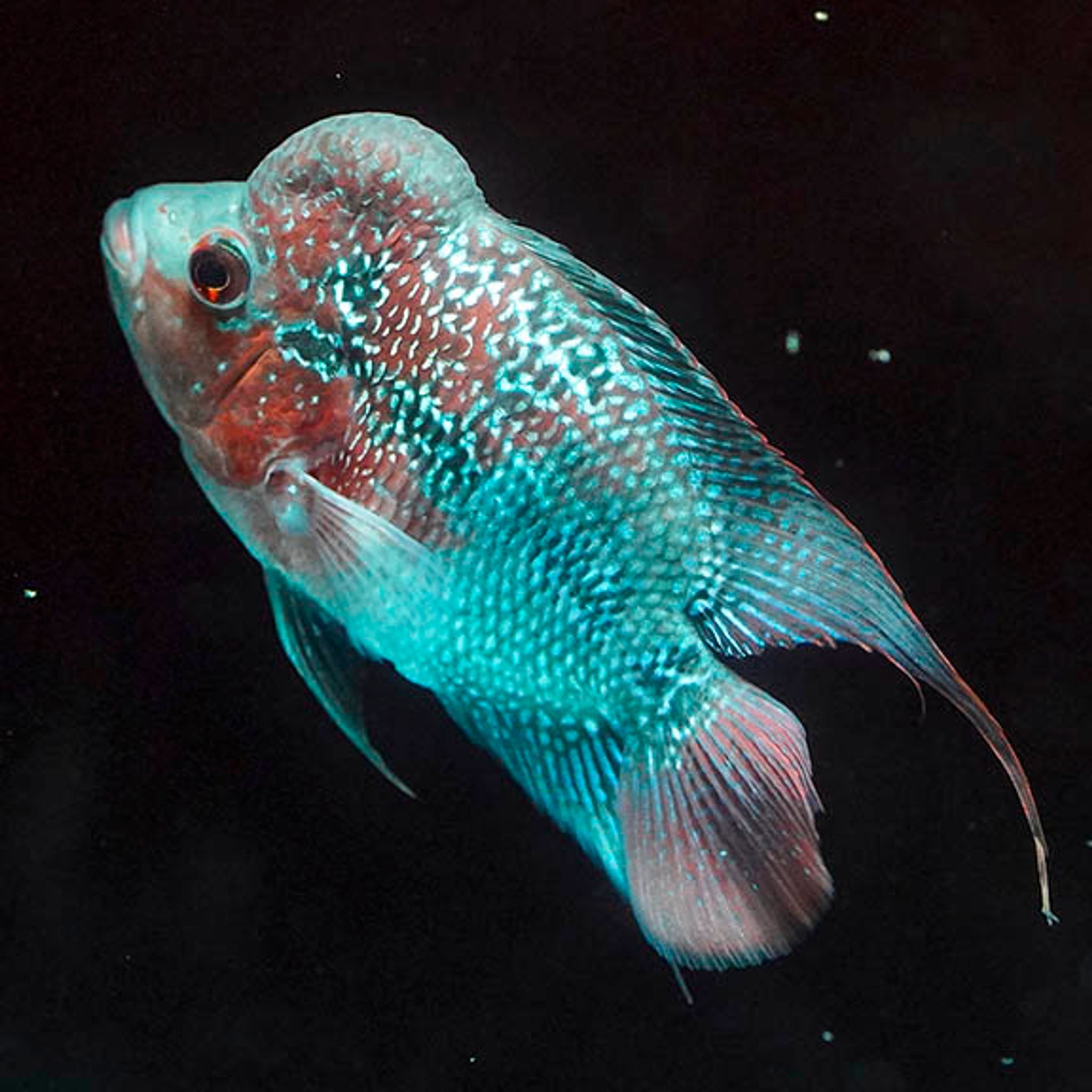

Best Tank Mates for Blood Parrot Cichlid: Compatible Fish and Species to Avoid
The best tank mates for a blood parrot cichlid are sturdy, peaceful-to-semi-aggressive fish of similar size, such as angelfish, firemouth cichlids, kribensis, emperor and black skirt tetras, gouramis, larger corydoras, bristlenose plecos and, in big tanks, clown loaches and silver dollars. Avoid aggressive cichlids the parrot cannot fight back against, and anything small enough to fit in its mouth. Below you'll find why those rules exist, sample stock lists by tank size, and a clear "do not add" table.
Why Blood Parrots Are Unusual Tank Mates
A blood parrot is not a wild species. It is a man-made hybrid, commonly believed to come from Central American parents such as a Midas or red devil crossed with a severum or a similar cichlid. The parents are known for aggression; the hybrid is usually mellow.
Its body shape explains most compatibility decisions:
- Small, vertically set mouth that may not close fully. A blood parrot cannot bite hard or lock jaws, so it loses any real fight with a truly aggressive cichlid.
- Often a deformed spine or swim bladder, which makes it a clumsy swimmer and slow at feeding time.
- Large, round body. Males reach about 7–8 inches (18–20 cm), females 6–7 inches (15–18 cm), and rare specimens hit 10 inches (25 cm). Expect a lifespan of 10–15 years.
Temperament is semi-aggressive but peaceful most of the time. Blood parrots pick a cave and defend it, and they get pushier when paired or "spawning" (females lay eggs; males are mostly sterile). Overcrowding raises aggression and nipping. In short: they bluster a lot, but they are poorly armed, so mates must be tough enough not to be bullied yet calm enough not to bully back.
Rules for Choosing Compatible Tank Mates
Use this checklist before buying any companion:
- Size: larger than a parrot's mouth, ideally similar in size.
- Build: robust or deep-bodied, or fast, or armored.
- Temperament: peaceful to semi-aggressive, never a true bully.
- Water: comfortable at 76–80°F (24–27°C), pH around 6.5–7.5 (parrots tolerate up to about 8.0) and roughly 6–18 dGH.
- Space: fits the tank's footprint and bioload once fully grown.
Sources differ on pH, with some favoring slightly acidic to neutral water and others neutral to alkaline. A stable 7.0–7.5 suits the parrot and every mate on the list below, and stability matters more than hitting an exact number.
Tank Size: How Many Gallons You Really Need
Recommendations range from 30 gallons to 125 gallons, because they describe different setups:
- 30 gallons (114 L): one blood parrot alone.
- 55 gallons (208 L): minimum for a parrot plus tank mates.
- 75 gallons (284 L): a pair of parrots with a community.
- 125 gallons (473 L) and up: needed for large mates like clown loaches and silver dollars.
Add roughly 10 gallons (38 L) for each extra parrot. Blood parrots are heavy waste producers, so plan weekly 20–30% water changes and filtration rated above your tank's volume.
Best Tank Mates for Blood Parrot Cichlids
Cichlids That Get Along
- Angelfish: Usually a good match in a tall tank of 55 gallons or more. Note that angels will eat very small fish themselves.
- Firemouth cichlid: One of the gentlest Central Americans, with enough presence to hold its own. Browse American cichlids on FishyHub for candidates.
- Kribensis: Small but spirited; kribs hold their own, though a breeding pair will guard a cave hard. Give them a separate one.
Schooling Fish
- Emperor tetras, black skirt tetras and other larger tetras: Big enough to avoid being swallowed, quick enough to stay out of trouble. Keep groups of six or more.
- Swordtails: Hardy, active livebearers that match the temperature range.
- Rosy barbs: Tough and fast, but they prefer the cooler end of the range, so aim for 76–77°F (24–25°C).
- Danios: Fast top-water swimmers that rarely cross paths with a parrot.
- Silver dollars: Great dither fish in 125-gallon-plus tanks.
Bottom Dwellers
- Corydoras (larger species): Armored and peaceful; choose bigger species over pygmies.
- Bristlenose and clown plecos: Armored, stay small, and help with algae. The plecos, corys and bottom dwellers category has good options.
- Clown loaches and yoyo loaches: Lively and bold. Clown loaches need groups and very large tanks.
Gouramis
Deep-bodied gouramis work well. Honey and dwarf gouramis are borderline (see below).
Where Keepers Disagree
- Tiger barbs: Some keepers list them as fine, but they are notorious fin nippers. Keep them only in a group of 6+ and only if no long-finned fish, such as angels or gouramis, share the tank.
- Honey/dwarf gouramis and small tetras: Add them only with an established, calm parrot and plenty of cover. When in doubt, pick the bigger option.
- Oscars and severums: Occasionally suggested, with mixed results. Treat them as advanced, large-tank experiments only.
At-a-Glance Compatibility Table
| Species | Compatibility | Minimum tank | Key note |
|---|---|---|---|
| Angelfish | Good | 55 gal (208 L), tall | Eats tiny fish itself |
| Firemouth cichlid | Good | 55–75 gal (208–284 L) | Gentle for a Central American |
| Kribensis | Good | 55 gal (208 L) | Guards caves when breeding |
| Emperor / black skirt tetra | Good | 55 gal (208 L) | Groups of 6+ |
| Swordtail | Good | 55 gal (208 L) | Hardy, active |
| Rosy barb | Good | 55 gal (208 L) | Cooler end of range |
| Larger corydoras | Good | 55 gal (208 L) | Needs sinking food |
| Bristlenose / clown pleco | Good | 55 gal (208 L) | Armored, stays small |
| Clown loach | Good (large tanks) | 125 gal (473 L) | Needs a group |
| Silver dollar | Good (large tanks) | 125 gal (473 L) | Schooling dither fish |
| Tiger barb | Conditional | 55 gal (208 L) | 6+, no long fins |
| Honey / dwarf gourami | Conditional | 55 gal (208 L) | Calm parrot, lots of cover |
| Oscar / severum | Risky | Large tanks only | Advanced keepers only |
Species to Avoid
| Species or group | Why to avoid |
|---|---|
| Red devil, Jack Dempsey, flowerhorn, convict, green terror | Aggressive; the parrot cannot bite back and gets beaten or starved |
| Large oscars | Size and power make them a serious risk |
| African mbuna | Aggressive and need harder, more alkaline water |
| Neon tetras, ember tetras, small rasboras | Small enough to be eaten |
| Guppies and endlers | Small enough to be eaten |
| Small shrimp and small snails | Treated as snacks |
| Fancy bettas | Slow and long-finned; easy targets |
| Fancy goldfish | Cold-water fish with slow, fancy bodies |
| Wild-caught altum angels | Shy and sensitive to disturbance |
Sample Stocking Plans by Tank Size
These plans keep bioload moderate. Treat them as upper limits, not starting points.
- 30 gallons (114 L): 1 blood parrot, no community.
- 55 gallons (208 L): 1 blood parrot, 6 emperor tetras, 5 corydoras, 1 bristlenose pleco.
- 75 gallons (284 L): 2 blood parrots, 1 pair of kribensis or firemouths, 8 black skirt or Congo tetras, 1 bristlenose pleco.
- 125 gallons (473 L): 3 blood parrots, 5–6 clown loaches, 5 silver dollars.
Aquascaping for Peace
- Give every territorial fish its own cave, using driftwood, rock or cave ornaments.
- Break sight lines so a fish can escape a stare-down.
- Leave open swimming lanes in the middle for tetras and dollars.
- Use sturdy or artificial plants, because parrots dig a little.
Feeding a Parrot With Its Tiny Mouth
The malformed mouth makes feeding the most overlooked compatibility issue. Fast mates can eat everything before the parrot gets a bite.
- Feed sinking cichlid pellets small enough for the parrot's mouth; slow-sinking pellets give it time to catch food.
- Offer frozen bloodworms or brine shrimp 2–3 times a week.
- Target-feed by dropping pellets near the parrot's cave while the schooling fish eat at the surface on the other side.
- Add sinking wafers for cories and plecos, and some vegetable matter for barbs.
How to Introduce New Tank Mates
- Quarantine new fish for 2–4 weeks.
- Add mates before or together with the parrot when you can, so no one owns the tank first.
- Rearrange decor when adding fish to reset territories.
- Watch closely for a week, especially at feeding time.
- Keep a backup tank or divider ready in case one fish won't settle.
Common Mistakes and Troubleshooting
- Keeping a parrot with its aggressive parent-type cichlids. It gets beaten and slowly starves.
- Adding tiny tetras or shrimp, then finding them gone overnight.
- Overstocking a 30-gallon tank, which brings aggression and nitrate spikes.
- Food competition: if the parrot hangs back, switch to sinking food and target-feed.
- Color fading, darkening or hiding: usually stress or bullying. Test your water and remove the aggressor.
- A spawning pair attacking everyone: add more decor breaks or temporarily remove the eggs.
A Note on Buying Ethically
When shopping at US stores, avoid dyed, tattooed or "heart" (tail-cut) parrots. These fish tend to be weaker and shorter-lived. Choose naturally colored fish with clean fins and a steady appetite.
Frequently Asked Questions
Can blood parrots live with other blood parrots?
Yes. Pairs or groups do well if you give them enough space and a cave for each fish. Add about 10 gallons (38 L) per extra parrot and use the 75- or 125-gallon plans above as a guide.
Can blood parrots live with oscars or flowerhorns?
Generally no. Both are far too aggressive, and a blood parrot's small mouth means it cannot defend itself. Oscars are occasionally kept with parrots, but only by advanced keepers with very large tanks.
Will blood parrots eat shrimp, snails or neon tetras?
Small ones, yes. Neons, cherry-size shrimp and small snails are likely to be eaten. Nerites and large mystery snails usually survive.
Can a blood parrot live alone?
Yes. A single parrot does fine solo in a 30-gallon (114 L) tank and is often more interactive with its owner when it has no tank mates.
Are blood parrots aggressive?
They are semi-aggressive, and it's mostly bluster. Aggression rises when they claim territory or guard eggs, and when a tank is overcrowded.
Can blood parrots live with goldfish?
No. Goldfish prefer cooler water than the 76–80°F (24–27°C) parrots need, and fancy goldfish are slow, delicate swimmers that easily get picked on.
Build Your Blood Parrot Community
With the right tank size, one cave per territorial fish and sinking food the parrot can actually eat, a blood parrot can anchor a calm, colorful community for years. When you're ready to stock up, browse freshwater livestock on FishyHub to find compatible tetras, cichlids, loaches and bottom dwellers.


