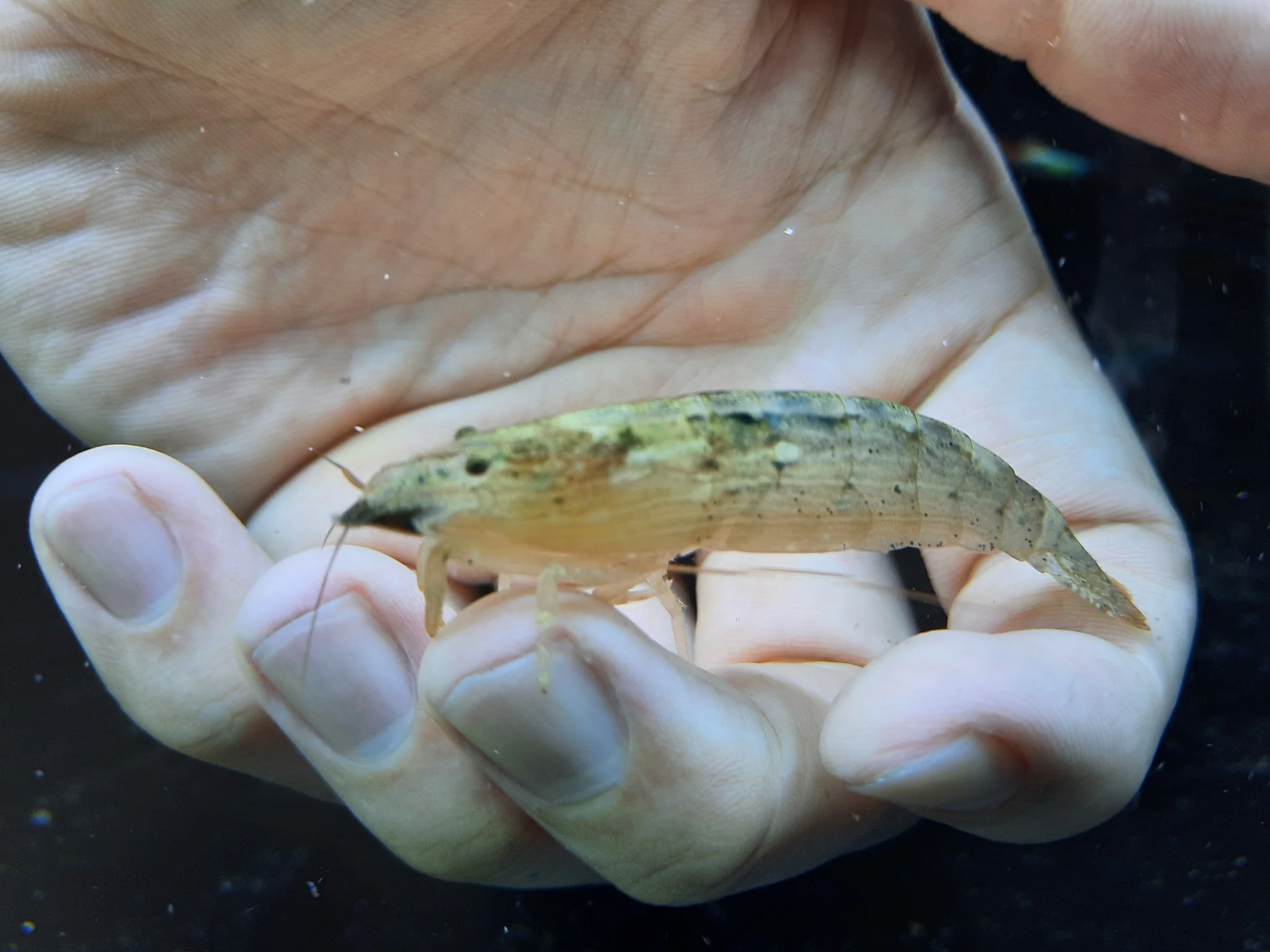
Best Tank Mates for Bamboo Shrimp: Safe Fish and Invertebrate Companions
Bamboo shrimp are large, harmless filter feeders, so the compatibility question isn't "will they hurt my other animals" — it's "will something hurt them, or accidentally starve them out." This guide sorts tank mates into safe, conditional, and avoid categories based on the shrimp's real vulnerabilities: no claws to fight back with, total dependence on water current for food, and soft, defenseless bodies right after a molt.
Why Bamboo Shrimp Compatibility Works Differently
Most shrimp-compatibility advice online is written for dwarf shrimp like neocaridina, where the concern is a fish's mouth being big enough to eat a half-inch grazer. Bamboo shrimp (also sold as fan, flower, wood, or Singapore shrimp) are a different animal — they reach 2-4 inches, have no grasping claws capable of hunting, and can't compete for sinking food because they physically can't pick up pellets or flakes.
That changes the whole calculus. A bamboo shrimp doesn't need protection from fish stealing its dinner the way a cherry shrimp colony might; it needs:
- A predator-free environment, since its size doesn't deter anything actually willing to grab and crush it.
- Steady water current, since it feeds by combing suspended particles out of moving water with its fan-like front legs.
- Calm neighbors during molting, when its new shell is soft and it's essentially defenseless for a day or two.
Tank Setup That Makes Any Stocking List Work
Before picking tank mates, the tank itself has to support a filter feeder:
- Size: 20 gallons (75 L) is the safer baseline, especially with a long, wide footprint rather than a tall one — horizontal space generates better cross-tank flow. A 10-gallon (38 L) tank can work short-term for a single shrimp, but 20 gallons per additional shrimp is the standard recommendation.
- Water parameters: 68-81°F (20-27°C), with the mid-70s ideal; pH 6.5-8.0; moderate GH (6-8) and KH (2-6); nitrate under 20 ppm; zero detectable ammonia or nitrite. Stability matters more than hitting an exact number — a slow drift is far less dangerous than a sudden swing.
- Flow: aim noticeably higher than the standard 4-6x tank-volume-per-hour turnover used for a typical community tank, with a powerhead or filter outflow angled horizontally across the tank rather than straight down. Stagnant water means starvation, regardless of how compatible the tank mates are.
- Décor: driftwood and rocks positioned in the flow give the shrimp a perch to filter-feed from, and dense planting or rock caves give it somewhere to hide during a molt.
- Maturity: add bamboo shrimp to a tank that's been cycled and running for several months, not a freshly set-up one — a new tank hasn't built up the suspended particulate matter and biofilm that supplement their diet.
You can browse current-generating filters to size flow correctly before stocking.
Safe Fish Tank Mates
The best fish companions are small, peaceful, and feed in the water column or on the substrate rather than grabbing at anything moving near a shrimp's antennae.
| Fish group | Examples | Why it works |
|---|---|---|
| Small tetras | Ember tetra, neon-type tetras | Tiny mouths, peaceful, mid-water feeders that don't compete for filter-fed particles |
| Rasboras | Chili rasbora, harlequin rasbora | Same profile as tetras — small, non-aggressive, upper/mid-water |
| Danios | Zebra danio, pearl danio | Active but not predatory; too small to threaten a bamboo shrimp |
| Livebearers | Guppies, endler's | Peaceful, easy-going, won't bother a stationary filter feeder |
| Small gouramis | Sparkling gourami, pearl gourami | Calm temperament in most individuals; small mouths |
| Otocinclus and cory catfish | Various species | Bottom feeders that don't compete for suspended food; effectively ignore the shrimp |
| Larger tanks only | Yoyo loach | Workable in bigger, well-decorated setups; avoid in small or sparsely planted tanks |
You can browse small community fish sized correctly for a bamboo shrimp setup.
The Betta Question
Betta fish come up constantly in bamboo shrimp compatibility discussions, and sources genuinely disagree. Several list betta as workable specifically because a bamboo shrimp is too large to be seen as prey. Others lump betta in with species to avoid around shrimp in general — which is really a dwarf-shrimp warning, since bettas do actively hunt small shrimp.
The honest answer: individual temperament varies enormously. Some bettas ignore a bamboo shrimp entirely; others will harass anything that moves, including something too big to eat. Treat betta as a "proceed with caution" pairing rather than a default recommendation — introduce them in a well-decorated tank, watch closely for the first couple of weeks, and have a backup tank ready if the betta starts nipping at legs or antennae. You can look at bettas if you want to try the pairing.
Safe Invertebrate Tank Mates
Invertebrates are largely stress-free additions, since none of them threaten a bamboo shrimp and several actually help feed it.
- Dwarf shrimp (cherry/neocaridina, amano, ghost): these graze surfaces and biofilm rather than filter-feeding, so there's essentially no food competition. Their waste and detritus can even supplement a bamboo shrimp's diet. This is one of the strongest pairings available.
- Nerite snails and mystery snails: algae grazers that never interact aggressively with a bamboo shrimp. Considered ideal, low-risk companions.
You can browse other shrimp species to plan a mixed invertebrate stocking list.
Housing Multiple Bamboo Shrimp Together
Two or more bamboo shrimp in the same tank generally coexist fine, but they can spar mildly over the best flow spots — a prime perch near a filter outflow is a limited resource. This rarely causes real injury, just some pushing and repositioning. Give each shrimp its own current source (a second powerhead, or spacing them along a wide outflow) to reduce the squabbling.
Fish and Animals to Avoid
Anything with a mouth built to crush or grab, or large enough to swallow a several-inch shrimp, is off the list — full stop:
- Cichlids, including dwarf cichlids
- Goldfish
- Larger gouramis
- Crayfish and crawfish — active, determined predators that will attack a shrimp regardless of its size
- Pea puffers and other puffers
- Larger loaches and barbs known for nipping
- Any confirmed fin-nipper, since a species that nips fins will also test a molting shrimp's legs and antennae
A bamboo shrimp's size deters casual nipping, not a determined predator. Housing it with a crayfish or a cichlid on the assumption that "it's too big to eat" is one of the most common and costly stocking mistakes — size alone doesn't stop an animal built to crush shells.
Fin-nippers and bottom feeders that compete for biofilm are risky for two distinct mechanical reasons worth separating: nippers physically target the antennae and walking legs a shrimp needs to feed and move, while aggressive bottom feeders can strip the same biofilm and suspended particles the shrimp relies on, effectively starving it out even without any direct aggression.
Feeding: The Real Compatibility Bottleneck
Bamboo shrimp can't eat sinking pellets, wafers, or flakes — they have no way to grab solid food. They need either:
- Powdered or micro foods (spirulina powder, crushed flake, fry food) suspended in the current, fed directly into the flow near the shrimp's perch, or
- Sufficient bioload and natural detritus for passive filter-feeding, which a mature, moderately stocked tank usually provides.
This is where tank mate choice actually matters most. A tank overcrowded with active, fast-eating fish or aggressive bottom feeders can strip fine particulates out of the water column before the shrimp gets a turn — a tank can look "fully stocked" and still be quietly starving a bamboo shrimp. Placing the shrimp's preferred perch away from high-traffic swimming lanes, closer to the outflow, reduces both this competition and general stress from constant disturbance.
Molting and Tank Mate Risk Timing
Bamboo shrimp molt roughly every 4-9 weeks depending on growth stage, and risk from tank mates isn't constant — it spikes specifically in the 24-48 hours around a molt, when the new shell is still soft. This is when rock caves, driftwood, and dense plant cover matter most. A fish that otherwise ignores the shrimp entirely can suddenly find a freshly molted, motionless shrimp an easy target.
It's also worth noting that long stretches of stillness are normal behavior, not illness — bamboo shrimp perch motionless for hours while filter-feeding. True cause for concern is a shrimp lying on its back, showing no movement for days, or hiding well beyond the normal post-molt window; that warrants a water quality check, not a tank mate check.
A Word on Medication
Bamboo shrimp, like all invertebrates, are highly sensitive to copper. Copper-based medications used to treat fish for ich or other parasites will kill shrimp in the same tank. If a tank mate needs treatment, move it to a separate hospital tank rather than dosing the display tank. You can find copper-free treatment options and medications formulated for invertebrate-safe tanks.
Bamboo Shrimp vs. Other Popular Aquarium Shrimp
Understanding how bamboo shrimp differ from other commonly kept shrimp explains why their tank-mate logic is unique:
| Shrimp | Feeding style | Typical temp range | Notes |
|---|---|---|---|
| Bamboo shrimp | Filter feeder (current-dependent) | 68-81°F (20-27°C) | Large, harmless, needs strong flow |
| Ghost shrimp | Scavenger/grazer | 70-80°F (21-27°C) | Cheap, sometimes semi-predatory toward smaller shrimp |
| Cherry/neocaridina shrimp | Grazer | 65-80°F (18-27°C) | Peaceful, colorful, beginner-friendly |
| Amano shrimp | Grazer, top-tier algae eater | 65-80°F (18-27°C) | Larger, hardy, excellent algae control |
| Caridina shrimp (crystal, tiger, bee) | Grazer | 65-75°F (18-24°C) | Delicate, soft-water specialists |
Every other shrimp on this list grazes surfaces for algae and biofilm. Bamboo shrimp are the outlier — they filter suspended particles from moving water instead — which is exactly why food competition with dwarf shrimp isn't a concern, but low flow and fine-particulate competition from fish is.
Frequently Asked Questions
Can bamboo shrimp live with betta fish?
Usually fine, since the shrimp is too large for a betta to view as prey, but individual bettas vary widely in temperament. Monitor closely for the first couple of weeks and have a backup tank ready in case the betta starts nipping.
Can bamboo shrimp live with cherry or dwarf shrimp?
Yes — this is one of the best pairings available. Bamboo shrimp filter-feed from the water column while dwarf shrimp graze surfaces, so they don't meaningfully compete for food.
Do bamboo shrimp eat fish or other shrimp?
No. They have no ability to hunt or grasp prey and pose zero threat to any tank mate; they're purely filter feeders.
What fish will eat or kill a bamboo shrimp?
Large cichlids, goldfish, crayfish, puffers, and other predatory or aggressive species with mouths built to grab or crush are the main threats, especially right after a molt when the shrimp is soft-shelled.
How much water flow do bamboo shrimp need, and does that limit tank mate choice?
They need moderate-to-strong current well above a standard community tank's turnover rate, angled horizontally past their chosen perch. This suits most active community fish fine and only rules out species that specifically need very still, slow-moving water.
How long do bamboo shrimp live compared to other shrimp?
Typically 2-4 years, with reports ranging from about 1 year to 6-plus years depending on care quality and whether the shrimp was wild-caught or captive-raised. That's comparable to or longer than amano shrimp (roughly 2-5 years) and generally longer than neocaridina/cherry shrimp (roughly 1-2 years) or ghost shrimp (roughly 1-3 years). Cooler stable temperatures tend to slow metabolism and extend lifespan, at the cost of slower growth.
Can bamboo shrimp be kept with snails?
Yes. Nerite and mystery snails are considered ideal, non-competing, low-risk companions that never interact aggressively with a bamboo shrimp.
Ready to plan your stocking list? Browse freshwater shrimp species on FishyHub to find compatible companions for your setup.


