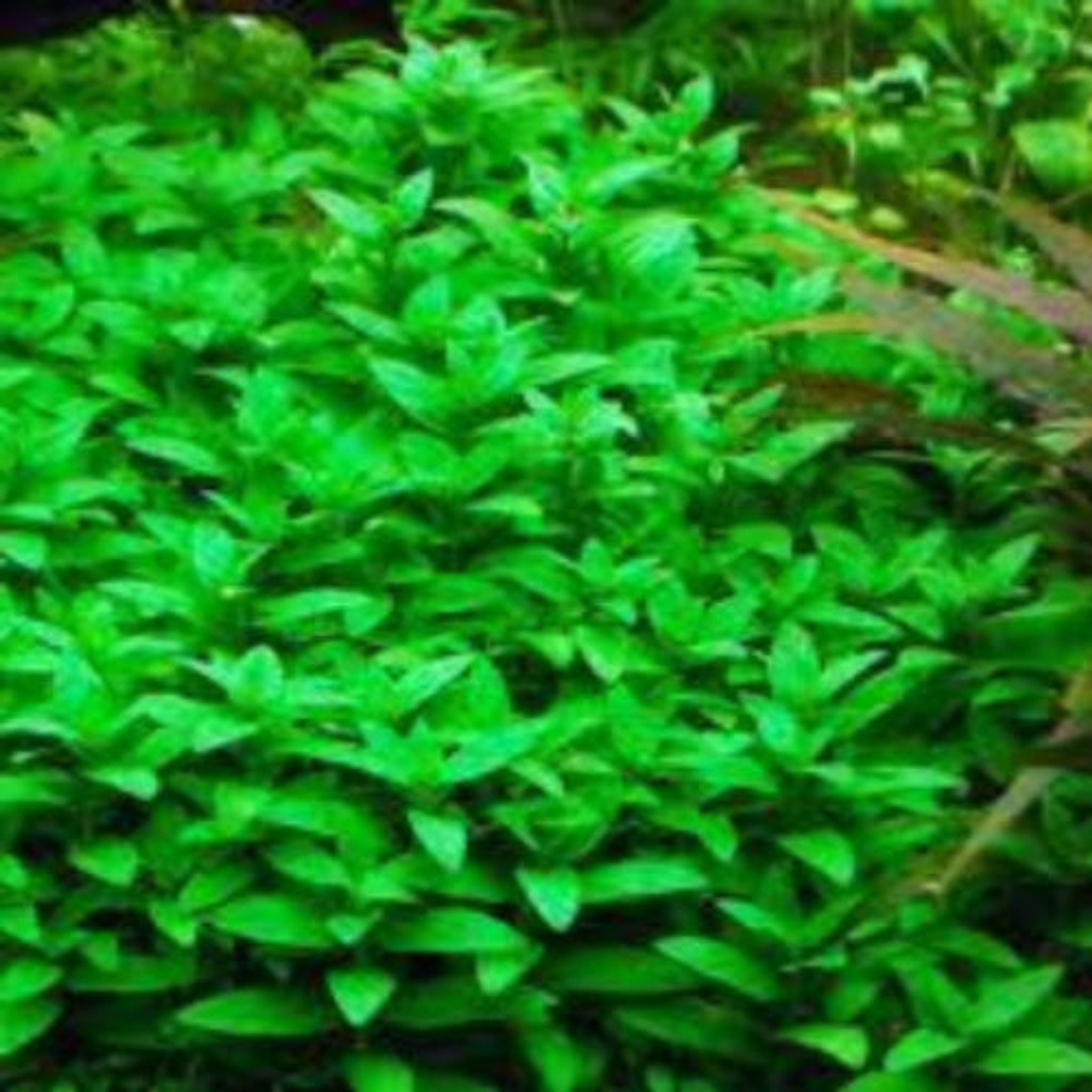

Best Tank Mates and Aquascaping Uses for Staurogyne Repens
Staurogyne repens is one of the most forgiving foreground plants a freshwater hobbyist can stock, but choosing the wrong tank mates can shred it faster than any lighting mistake. This guide covers exactly which fish and invertebrates work well with it, which ones to avoid, and how to use the plant to build a carpet, an accent clump, or a Dutch-style meadow.
What Staurogyne Repens Actually Is
Despite its reputation as a "carpet plant," Staurogyne repens is technically a creeping stem plant, not a true low-growing carpeting species like dwarf hairgrass or Monte Carlo. It spreads horizontally through runners that root along the substrate, which is why it forms a carpet-like mat when kept trimmed — but it will grow upright and leggy if light is too low or trimming is neglected. Understanding this distinction explains most of the "why is my carpet not staying flat" questions hobbyists run into.
The plant is native to South American waters and is typically sold in one of two forms:
- Emersed-grown (nursery pots): stiffer, waxier leaves grown out of water for faster commercial production.
- Submersed-grown: softer, more translucent leaves already adapted to life underwater.
Because most retail stock is grown emersed, expect a transition period after planting — more on that below.
Tank Requirements Before You Stock It
Getting the plant established well makes it far more resilient to tank mates nibbling or grazing near it. Key parameters:
| Parameter | Range | Notes |
|---|---|---|
| Tank size | 10 gal (38 L) and up | Also works well in nano tanks |
| Temperature | 68–86°F (20–30°C) | Mid-70s°F (~24°C) is ideal |
| pH | 6.0–8.0 | Wide tolerance |
| Hardness | 3–10 dKH | General/carbonate hardness |
| Lighting | Medium to fairly high (~20–50+ PAR at substrate) | 8–10 hours/day photoperiod |
| CO2 | Optional but recommended | Denser, lower carpet with CO2; more upright growth without it |
Medium light plus CO2 will give acceptable ground cover for most community tanks. If the goal is a tight, fast-filling carpet, aim for the higher end of that PAR range along with consistent CO2 injection. Photoperiod recommendations vary by source from 8 to 11 hours; 8–10 hours is a practical default that limits algae while still supporting growth.
Substrate matters more than most people expect. Because the roots stay shallow, a fine, nutrient-rich substrate — aqua soil, fine gravel, or sand capped with root tabs — lets runners spread freely. Large or sharp gravel makes it harder for the plant to anchor and can damage the shallow root network. Pair root tabs with a liquid all-in-one or micro/macro fertilizer, with attention to iron, since iron deficiency is the most common cause of yellowing new growth.
Best Tank Mates for Staurogyne Repens
The plant's shallow roots and soft leaves make it vulnerable to diggers and grazers, but it thrives alongside peaceful, non-destructive species. Below is a stocking list organized by the type of setup you're building.
Nano and Shrimp Tanks
This is where Staurogyne repens genuinely shines. Cherry shrimp and Amano shrimp are considered ideal tank mates — they graze biofilm and algae off the leaves without damaging the plant tissue, and their constant movement through a low carpet looks great in a nano scape. Otocinclus catfish are another strong pick for algae control on the plant's slower-growing leaves without harming it.
Assassin snails are the one snail worth adding on purpose: instead of eating the plant, they hunt down pest snails, which helps keep a shrimp or nano tank's snail population in check.
Community Tanks
For a standard 20–40 gallon (76–151 L) community setup, good companions include:
- Small tetras (neon, ember, and similar)
- Rasboras
- Small barbs, such as cherry barbs
- Guppies and mollies
- Small danios
- Dwarf gouramis
- Corydoras and other small, peaceful catfish
Bottom-dwellers benefit the most from having this plant in the tank. Corydoras, loaches, and shrimp all use a dense Staurogyne carpet as cover and a soft, substrate-adjacent zone to forage in, which reduces stress compared to bare substrate. Anyone stocking a bottom-dweller-heavy tank can browse corydoras that pair naturally with a planted foreground.
Betta Tanks
Bettas are a good match: they don't dig or graze on plants, and the low, soft profile of a trimmed Staurogyne carpet gives them a natural-looking foreground to swim over and rest near without snagging fins. A single betta over a well-established carpet is one of the most popular small-tank aquascapes for exactly this reason.
Tank Mates to Avoid
Some commonly recommended fish will destroy a Staurogyne carpet within weeks. Steer clear of:
- Goldfish and silver dollars — large, herbivorous, or plant-grazing species that will eat the leaves outright.
- Large or numerous apple/mystery snails — they can shred soft leaves, especially in groups.
- Large cichlids and other substrate-diggers — their digging habit uproots shallow-rooted carpets faster than the plant can recover.
- Crayfish — opportunistic diggers and grazers that treat carpeting plants as both cover and food.
A Note on Cichlids Specifically
Cichlid compatibility is where sources disagree most. Some listings include African cichlids as compatible tank mates, but this is generally poor advice: standard African rift lake cichlids are known diggers and typically need harder, more alkaline water than the plant's comfortable range. If you want to keep cichlids alongside Staurogyne repens, stick to select dwarf South American species in a community setup that is documented as non-digging and non-herbivorous, and treat rift lake cichlids as a mismatch on both behavior and water chemistry.
Aquascaping Uses
As a Carpet Alternative
Compared to true carpeting plants like dwarf hairgrass or Monte Carlo, Staurogyne repens is considerably easier to keep dense without CO2, making it a practical entry point for hobbyists who want a carpet effect in a CO2-optional setup. It won't fill in quite as uniformly as those species under low-tech conditions, but it tolerates a wider swing in light and nutrients while still looking intentional.
As an Accent or Transition Plant
Beyond a full carpet, the plant works well as:
- An accent clump around the base of driftwood or rock, softening the hard transition between hardscape and substrate.
- A gap-filler between larger stem or rosette plants in mixed plantings.
- A texture contrast plant next to dwarf sagittaria, Anubias nana petite, or mosses in nature-style or Dutch-style scapes, where its rounded leaf shape reads differently from grassy or feathery foliage nearby.
Planting Technique for Faster, Even Fill-In
Rather than trying to lay down a solid mat immediately, plant small clumps spaced 1–2 inches (2.5–5 cm) apart. Runners spread from each clump over the following weeks and merge into a continuous carpet — this uses fewer plants per tank and produces more even coverage than a few large, unevenly spaced clumps. Aquascaping tweezers make precise placement much easier, especially in tight foreground spaces around hardscape.
Emersed and Paludarium Use
Because the plant tolerates growing out of water, it's a solid choice for paludariums, riparium shelves, or an emersed nursery tray used to bulk up stock before moving plants fully underwater. Emersed growth tends to be faster and hardier, which is part of why so much retail stock ships in that form.
Propagation
Propagating Staurogyne repens is straightforward:
- Cut healthy stem sections 1–4 inches (2.5–10 cm) long, keeping leaves intact.
- Replant the cutting roughly 0.5–0.75 inch (1.3–1.9 cm) deep in substrate — shallow enough to avoid burying the crown.
- New roots typically form within days to a few weeks, even on cuttings with no existing roots, as long as the leaves remain attached and photosynthesizing.
Regular trimming of runners and top growth keeps the plant low and dense; replant healthy cuttings elsewhere in the tank to fill gaps rather than discarding them.
Common Problems and Troubleshooting
| Problem | Likely Cause | Fix |
|---|---|---|
| Melting or browning after planting | Normal emersed-to-submersed transition | Keep parameters stable, wait 2–4 weeks |
| Rot at the base | Planted too deep, crown buried | Replant shallow, roots just covered |
| Yellowing new growth | Nutrient deficiency, often iron | Add root tabs and a liquid fert with iron |
| Leggy, upright growth | Light too low or trimming skipped | Increase PAR and trim runners regularly |
| Algae on leaves | Poor flow or CO2 distribution creating dead spots | Improve gentle flow at substrate level |
| Carpet won't fill in / gets shredded | Overstocked with grazers or diggers | Audit stocking list before adding fish |
The single most common mistake is giving up during the post-planting melt. This transition is expected, not a sign of failure — as long as water quality stays stable, most plants recover and begin new submersed growth within a few weeks.
Closing Thoughts
Staurogyne repens rewards a bit of planning: get the substrate, lighting, and fertilization right, choose tank mates that graze gently or stay out of the substrate entirely, and trim consistently. Do that, and it fills in as one of the most reliable low-maintenance carpets available to freshwater keepers. Browse small community fishes and dwarf shrimp on FishyHub to start stocking a tank built around it.
Frequently Asked Questions
Does Staurogyne repens need CO2 to grow a carpet?
No. It will grow without CO2, but injection speeds growth and produces a denser, lower carpet. Without CO2, expect slower growth that trends slightly more upright.
Can it grow in low light?
It survives in low-to-medium light but grows slowly and less densely, often looking thin rather than carpet-like. Medium-to-high light gives the best carpet result.
Is it good for shrimp tanks?
Yes. Cherry shrimp and Amano shrimp are considered ideal tank mates, using the plant for grazing biofilm and cover without damaging the leaves.
What fish will eat or destroy it?
Large herbivorous or plant-grazing fish like goldfish and silver dollars, some large snails in numbers, and substrate-digging cichlids are the main threats.
How do I propagate it?
Cut healthy stem sections a few inches long and replant them shallowly in substrate. New roots typically develop within days to weeks as long as the leaves stay attached.
Why is my new Staurogyne repens melting or turning brown?
This is a normal adjustment as the plant converts from its emersed (grown-out-of-water) form to submersed growth. Maintain stable water parameters and wait several weeks rather than replacing it immediately.
Can it be used in a betta tank?
Yes. Its low, soft profile makes it safe and attractive ground cover for bettas, which typically don't dig or graze on plants.
How long does it take to fill in as a carpet?
Generally several weeks to a few months, depending on light intensity, CO2 use, fertilization, and how densely the initial cuttings were spaced.


