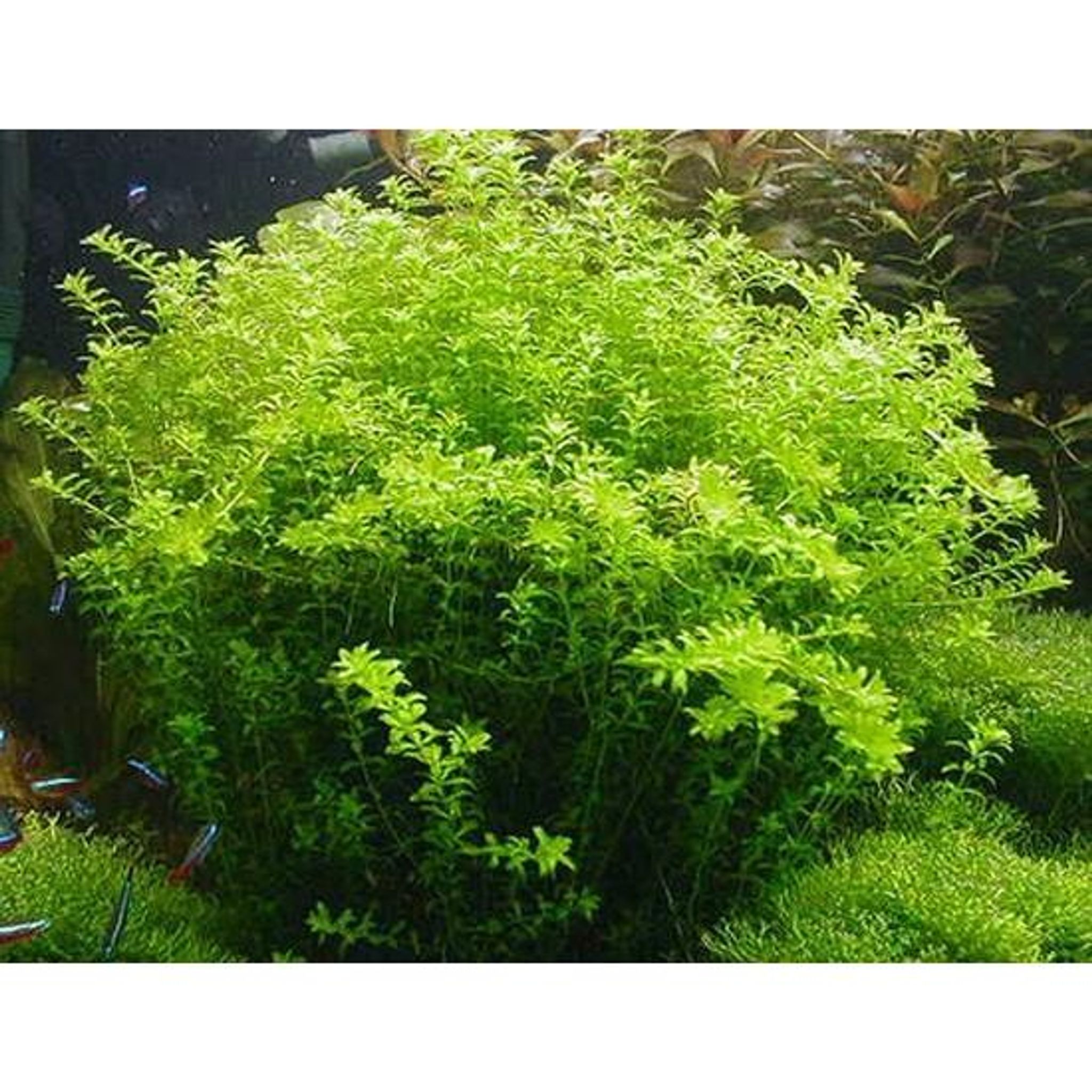

Best Tank Mates and Aquascaping Uses for Pearl Weed
Pearl weed is one of the easiest small-leaved stem plants to turn into a carpet, a bushy midground clump, or a background jungle — but picking the wrong neighbors or lighting setup can undo weeks of work. This guide covers exactly which fish, shrimp, and snails pair well with it, how to plant and trim it for each aquascaping style, and the mistakes that most often cause it to melt or thin out.
What Pearl Weed Actually Is
Pearl weed (Micranthemum micranthemoides, occasionally still labeled Hemianthus micranthemoides under older taxonomy) is a small, delicate stem plant with tiny rounded to oval bright-green leaves growing along thin, creeping stems. It roots along its length and spreads horizontally, which is what makes it so useful as ground cover.
It's frequently confused with two other small foreground plants sold under similar "carpet plant" marketing:
| Plant | Leaf size | Difficulty | Growth speed | Best use |
|---|---|---|---|---|
| Pearl weed (Micranthemum micranthemoides) | Larger, rounder | Easy | Fast | Beginner carpets, bushes, jungle backgrounds |
| Dwarf baby tears (Hemianthus callitrichoides) | Very tiny, pinhead-sized | Hard | Slow to moderate | Tight, low-profile carpets in high-tech tanks |
| Monte Carlo (Micranthemum tweediei) | Small, rounded, slightly larger than dwarf baby tears | Moderate | Moderate | Low-to-medium light carpets, more forgiving than dwarf baby tears |
If a listing shows a plant with leaves noticeably bigger than a pinhead and describes it as beginner-friendly, that's almost certainly pearl weed rather than true dwarf baby tears. Buying the wrong one is the single most common mix-up new planted-tank keepers run into.
Lighting & CO2 Setup
Pearl weed survives in low-to-medium light, but a genuinely dense, compact carpet needs more than survival-level light.
- Light: Medium to high is preferred — roughly 20–35+ PAR, or the equivalent of 2–4+ watts per gallon under older fluorescent-style benchmarks. Under low light it still grows, but stems stretch upward and become leggy and sparse rather than forming a tight mat.
- CO2: Not required. Pearl weed grows without supplemental CO2, but injected CO2 or a liquid carbon supplement noticeably speeds growth and produces a denser, lower-profile carpet. Treat CO2 as an accelerant rather than a requirement — a loose, slower carpet is achievable without it, a tight lawn is much easier with it.
- Balance matters: Pushing light higher without matching CO2 and nutrients is the most common cause of algae taking hold on a young carpet. Increase light only after fertilization and (ideally) carbon are already dialed in.
Water Parameters and Substrate
Pearl weed adapts to most community tank conditions:
- Temperature: ~72–82°F (22–28°C)
- pH: ~6.5–7.5
- Hardness: Soft to moderately hard water
For substrate, a nutrient-rich planted substrate paired with root tabs gives the best results, though pearl weed is flexible enough to grow loose, floating, or tied to hardscape. Its roots are weak and fine, so however it's planted, it establishes best when left undisturbed for the first 2–3 weeks.
Planting Technique
- Plant small bunches or an entire nursery pot rather than separating individual stems right away — pulling fragile sprigs apart immediately after purchase is a leading cause of early melt and die-off.
- For a carpet, space cuttings roughly 1 inch (2.5 cm) apart to encourage faster mat formation as runners fill the gaps.
- Add root tabs beneath carpet sections and dose a liquid all-in-one fertilizer, keeping nitrate in the 20–50 ppm range. Yellowing or browning leaves usually signal a nutrient deficiency, most often nitrogen or iron.
Trimming & Propagation
Pearl weed spreads via runners and side shoots and grows quickly under good light and nutrients, which means it needs regular maintenance to stay tidy:
- Carpet trimming: Cut low and flat roughly every 1–2 weeks to keep the mat compact and prevent upper growth from shading out lower leaves.
- Bush/jungle pruning: For midground clumps or background walls, trim less frequently and focus on shaping — pinching back tall stems to encourage branching rather than mowing the whole patch flat.
- Using cuttings: Save trimmed tops and replant them into bare or thin spots to fill in a carpet faster or start a second patch elsewhere in the tank.
- Left unchecked, pearl weed's fast growth can smother slower carpet plants nearby or clog water flow — stage your trims so it doesn't outcompete neighboring, slower-growing species.
Common Aquascaping Styles
Pearl weed's growth habit changes dramatically depending on how it's trimmed and positioned:
- Foreground carpet/lawn: Kept short and trimmed hard, it forms a dense green mat across the substrate — a classic beginner alternative to dwarf baby tears.
- Midground bushy clumps: Allowed to grow a bit taller and trimmed less aggressively, it forms soft, rounded mounds that fill gaps between hardscape.
- Background jungle wall: Left largely uncut, stems grow tall and dense, creating a natural-looking backdrop or screen.
- Moss-like hardscape cover: Tied or wedged onto driftwood or rock, it creeps over the surface similarly to moss, softening hard edges.
- Paludarium, emersed, and riparium use: Pearl weed adapts well to growing out of water as a groundcover, making it a popular low-maintenance choice for paludarium and vivarium-adjacent builds where fully aquatic carpet plants would struggle.
Ideal Tank Size and Placement
Pearl weed suits nano tanks and large community setups equally well. In a nano shrimp tank, a small carpet section provides ample cover; in a larger aquascape, it can carpet a whole foreground or wrap around hardscape. The main placement caution is proximity to slower carpeting species — plant pearl weed a little further from them, or plan to trim it back regularly, so it doesn't shade out or crowd a plant that spreads at half its speed.
Choosing Tank Mates for Pearl Weed
Because pearl weed has delicate stems and a shallow root system, the main compatibility question is simple: will this animal dig, uproot, or graze on soft plant tissue?
Good Tank Mates
- Small peaceful community fish: tetras, rasboras, small livebearers such as guppies and platies, and dwarf gouramis
- Corydoras and similar bottom dwellers that forage at the substrate surface without digging it up
- Otocinclus catfish, which graze biofilm without touching the plant itself
- Nerite and mystery snails, which clean surfaces without disturbing roots
- Cherry shrimp and other neocaridina shrimp, and amano shrimp — these are arguably the best pairing of all. A dense pearl weed mat gives shrimp fry a place to hide from predators and a biofilm-rich grazing surface, which is a real, practical advantage for anyone specifically breeding shrimp rather than just decorating a tank.
You can browse suitable stocking options for a planted community setup among FishyHub's small community fishes or add cover-loving shrimp to a nano carpet build.
Tank Mates to Avoid or Use Cautiously
| Animal type | Why it's risky |
|---|---|
| Large or aggressive digging cichlids | Uproot stems while excavating substrate |
| Goldfish | Cold-water diet regularly includes soft plant leaves |
| Larger plecos | Rasp at leaves and disturb substrate while foraging |
| Crayfish | Dig, clip stems, and may eat soft tissue |
| Some large barbs and silver dollars | Herbivorous tendencies target soft-leaved plants |
Even non-herbivorous bottom dwellers that dig constantly can uproot a freshly planted carpet before its weak roots have anchored, so it's worth quarantining aggressive diggers — or planting first and adding livestock a few weeks later.
Common Mistakes and Troubleshooting
- Separating stems into single sprigs right after purchase. This causes unnecessary stress and melt. Plant in small clumps instead.
- Adding digging fish or shrimp before roots anchor. Give new plantings 2–3 undisturbed weeks, or add livestock first and plants after acclimation, whichever order limits disturbance.
- Low light with no fertilization. This combination produces leggy, sparse growth instead of a carpet. Pair medium-high light with root tabs and liquid fertilizer.
- Letting growth run unchecked. Pearl weed can smother slower neighbors or clog flow through the tank. Stick to a trimming schedule.
- Mistaking acclimation melt for disease. Yellowing or melting lower leaves shortly after planting is usually just adjustment to new water parameters and lighting, not an illness. Stable dosing and patience typically resolve it within a couple of weeks.
- Algae appearing on the carpet. This is most often a sign light was increased without matching CO2 and nutrients. Balance all three before pushing light further.
A Quick Decision Checklist
- Nano shrimp tank: Medium light, root tabs, weekly light trims, no CO2 required — prioritize shrimp-safe tank mates and dense cover.
- Large community tank: Medium-high light, liquid fertilizer, biweekly trims, stock peaceful small fish and avoid diggers.
- Aquascaping-focused layout: Medium-high light plus CO2/liquid carbon, root tabs, weekly trims, and staged pruning around slower carpet species to prevent it from taking over.
Frequently Asked Questions
Does pearl weed need CO2 to carpet?
No. It carpets without CO2, but growth is slower and less dense. Liquid carbon or injected CO2 speeds up mat formation and produces a tighter lawn.
Is pearl weed the same as dwarf baby tears?
No. Pearl weed (Micranthemum micranthemoides) has noticeably larger, rounder leaves and is easier to grow than true dwarf baby tears (Hemianthus callitrichoides), which needs more light and CO2 for a tight carpet.
Will shrimp and fish eat pearl weed?
Generally no — it isn't a preferred food source for most community species. Very hungry or herbivorous fish may occasionally nibble new shoots, but established plants are usually left alone.
Can pearl weed grow floating or emersed?
Yes. It adapts well to floating mats, emersed and paludarium setups, and can even be grown fully out of water as a groundcover.
How often should pearl weed be trimmed?
Roughly every 1–2 weeks under good light and CO2 to maintain a tidy carpet or bush shape and keep lower growth from being shaded out.
What fish will uproot or damage pearl weed?
Larger cichlids, goldfish, big plecos, crayfish, and other aggressive diggers pose the most risk. Small peaceful community fish and most shrimp and snails are safe tank mates.
Why is my pearl weed melting or turning brown after planting?
This is usually transplant shock or a nutrient deficiency rather than disease. Keep water parameters stable, dose fertilizer consistently, and avoid disturbing the roots for the first couple of weeks.
Can pearl weed be used as a background plant instead of a carpet?
Yes. Left untrimmed, it grows tall and bushy, making it useful as jungle-style background planting or as dense midground filler.
Ready to stock a pearl weed layout? Browse compatible, cover-friendly fish and shrimp in FishyHub's freshwater livestock selection to find peaceful tank mates suited to a planted setup.


