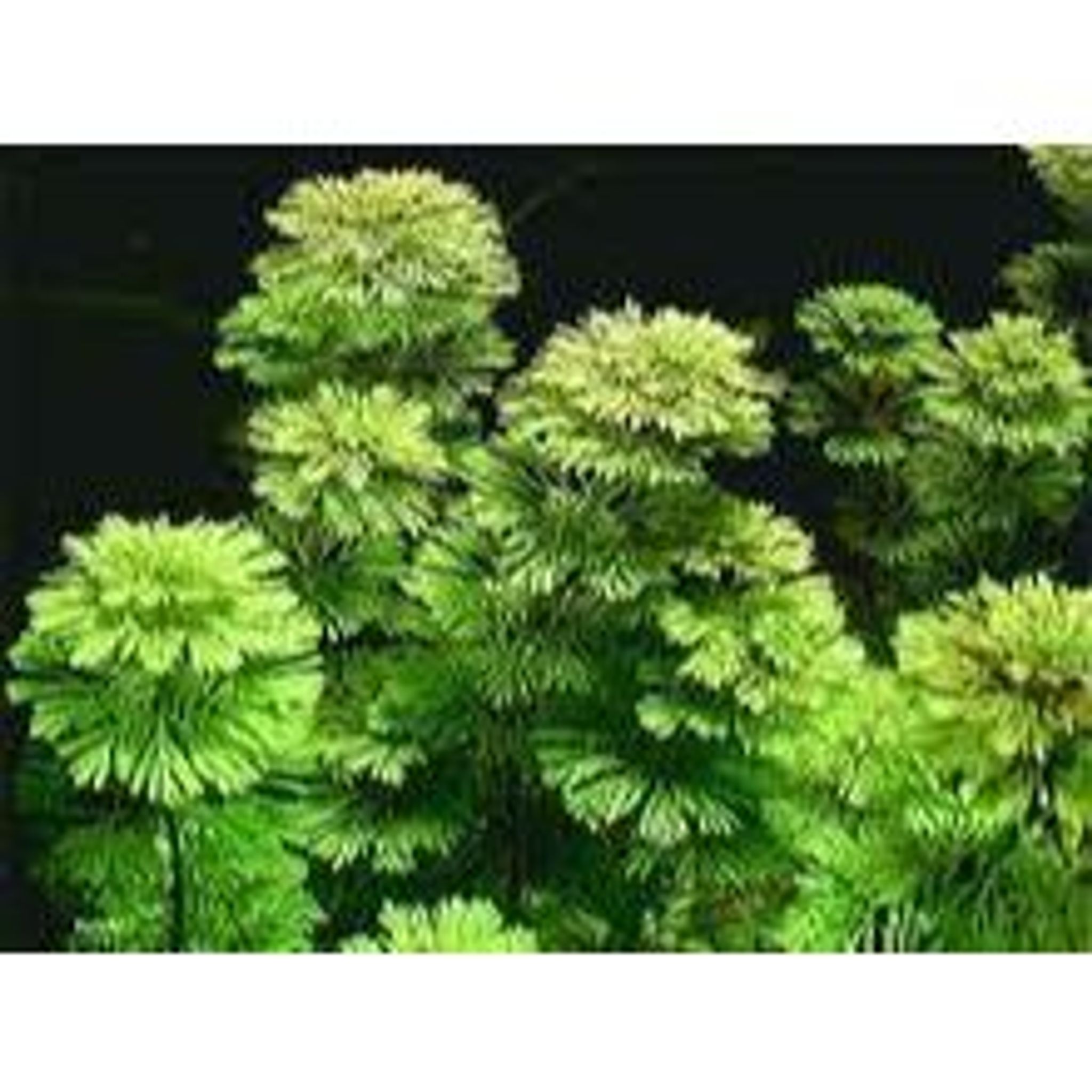
Best Tank Mates and Aquascaping Uses for Limnophila Sessiliflora
Limnophila sessiliflora, sold as ambulia, dwarf ambulia, or Asian marshweed, is a fast-growing, feathery stem plant that fills a background wall in weeks and pairs well with almost any peaceful community fish. This guide covers exactly which tank mates work, how to place and trim it for the best aquascape effect, and a US buying restriction most care guides skip entirely.
What Is Limnophila Sessiliflora?
This stem plant is native to Southeast Asia and grows in fine, whorled, needle-like leaves along upright stems. It's prized for the soft, feathery texture it adds behind broader-leaved plants, and for how quickly it establishes in a new tank.
Basic water parameters:
| Parameter | Range |
|---|---|
| Temperature | 68–82°F (20–28°C) |
| pH | 5.5–8.5 tolerated; 6.0–7.5 recommended |
| Hardness (GH) | Soft to moderately hard, roughly 1–10 |
| Light | Low to high, adaptable |
| Photoperiod | 10–12 hours |
The pH figure varies by source — some list a narrower 5.5–8 band, others stretch it to 5.0–8.5. In practice, the plant does best in the 6.0–7.5 middle ground, even though it can tolerate outliers for a while without dying back.
Tank Mates: What Actually Works With It
Most competitor guides just say "compatible with many fish" without naming names. Here's a more specific breakdown by tank type.
Community Fish Tanks
Limnophila's dense, fine foliage suits calm swimmers that won't shred delicate leaves:
- Tetras and rasboras — schooling fish that use the plant mass for cover without damaging it
- Livebearers — guppies, mollies, and platies browse around it and use it as a fry refuge
- Gouramis — appreciate the surface-adjacent stems as resting spots
- Corydoras — bottom-dwellers that leave rooted stems alone since they don't dig aggressively
You can browse compatible schooling species under small community fishes, and bottom-dweller options like corydoras round out a peaceful mixed tank nicely.
Shrimp and Snail Tanks
Fine, dense foliage is close to ideal for invertebrates:
- Cherry shrimp and Amano shrimp graze biofilm off the leaves and use the stem thicket as a molting hideout
- Nerite and mystery snails move through it without tearing it apart, unlike sharp-edged rockwork
Because the plant offers cover without hard edges, it's a solid pick for a dedicated shrimp setup where fry and juveniles need somewhere to hide from adults.
Nano Tanks
Ambulia can start in a nano tank, but its growth rate quickly outpaces small footprints. Expect to trim aggressively or move it to a larger tank once it starts crowding the water surface.
Planted Cichlid Tanks
Dwarf cichlids such as rams can coexist with it since they're not heavy diggers or plant eaters. Avoid this plant with fish and species that disturb substrate or shred vegetation:
- Goldfish and larger silver dollars, which graze soft leaves down to bare stems
- Adult plecos that uproot stems while foraging
- Large, substrate-digging cichlids and big loaches that unearth root systems
- Any species known as a heavy plant-shredder
Tank Mate Compatibility at a Glance
| Tank Type | Good Fit | Avoid |
|---|---|---|
| Community | Tetras, rasboras, livebearers, gouramis, corydoras | — |
| Shrimp/snail | Cherry shrimp, Amano shrimp, nerites, mystery snails | Aggressive shrimp predators |
| Dwarf cichlid | Rams and similarly peaceful dwarf cichlids | Large, digging cichlids |
| Avoid entirely | — | Goldfish, large silver dollars, adult plecos, big loaches |
Aquascaping Uses
Background Hedge or Equipment Screen
Because it grows tall and dense, a row of ambulia stems is one of the simplest ways to hide a heater, filter intake, or other hardware. Space healthy 4–6 inch cuttings about 1 inch apart along the back wall for a full "hedge" effect within a few weeks.
Texture Contrast
The fine, feathery leaves create strong visual contrast against broad-leaved plants like Amazon sword or Anubias. Pairing the two textures side by side is an easy way to add depth to an otherwise flat layout.
Dutch-Style Stem Rows
In Dutch-style aquascapes, ambulia works well as one row in a series of contrasting stem plants, trimmed flat across the top to keep the classic terraced look.
Temporary Midground Accent
Most aquascapers treat this as a strict background plant, since a mature clump will tower over midground neighbors. That said, a few keepers use it as a short-term midground accent while it's young and low, then either trim it hard to hold that height or transplant it back before it outgrows the spot. This takes more attention than treating it as background from the start, so it's really an advanced-keeper technique.
Planting and Growth
- Placement: Push stems about 1–1.5 inches into the substrate, upright with leaves facing up. Plant in bunched groups roughly 1 inch apart — single stems look sparse and thin.
- Substrate: Not picky, but a nutrient-rich substrate produces stronger roots and a fuller look. Browse substrate options if you're setting up a new planted tank.
- Growth rate: Extremely fast — up to about 0.5 inches per day under strong light and CO2 — and it can reach 16–20+ inches tall in-tank.
- CO2 and fertilizer: Not required, but the plant responds strongly to CO2 injection and liquid fertilizer. Dosing frequency should track your light and CO2 level, not a fixed schedule: high-light, CO2-injected tanks may need liquid fertilizer 2–3 times a week, while low-tech tanks with weaker light can get by on occasional dosing — roughly 1 mL per 10 gallons twice weekly to twice monthly as a starting reference point.
- Tank size: It survives short-term in a nano tank, but a 20-gallon or larger tank suits its adult size and growth rate better long-term.
Propagation
Propagating ambulia is straightforward:
- Cut a healthy stem tip, about 2–3 inches long.
- Push the cut end directly into the substrate.
- Roots typically form within about a week.
This makes a simple "trim and replant" cycle realistic as ongoing maintenance rather than a special project.
Trimming and Maintenance Routine
Because of its growth rate, plan on topping the plant roughly weekly to keep height in check and prevent it from shading neighboring plants. When trimming:
- Replant healthy tops from each cut
- Discard leggy, bare lower stems rather than replanting them
- Handle leaves gently — they're delicate and bruise or break easily
- Re-anchor any trimmed stems firmly; loose cuttings can float to the surface if not pushed back into the substrate
Common Growth Problems
| Symptom | Likely Cause |
|---|---|
| Browning or melting lower leaves | Usually nutrient deficiency, not insufficient light |
| Leggy, thin growth | Low light or nutrient stress |
| Stems collapsing or floating after trimming | Cuttings not re-anchored into substrate |
| Slow root establishment | Normal in the first week or two after planting |
Common Mistakes to Avoid
- Planting single stems instead of bunches. Isolated stems look sparse; cluster them about an inch apart for a fuller hedge.
- Skipping regular trims. Untrimmed growth shades out shorter plants and blocks light to the substrate below the canopy, which often triggers algae or die-off underneath.
- Pulling stems to relocate them. This damages roots and the rest of the plant. Cut near the base and replant instead.
- Blaming lighting for browning leaves. Nutrient deficiency is the more common culprit — check your fertilizing routine before adjusting light.
- Overcrowding it with slow-growing background plants. Ambulia will outcompete and shade out slower species planted nearby.
- Skipping the legal check. Not confirming state rules before purchasing or shipping it across state lines.
Legal Status: Read This Before You Buy
This is the part most care guides leave out or bury in a footnote, and it matters for US buyers specifically.
Limnophila sessiliflora is classified as a federal noxious weed and is restricted or prohibited in several states, notably Florida and California. It's also listed as invasive in Florida, Georgia, and Texas.
The concern is ecological: in the wild, this plant forms dense mats that outcompete native aquatic vegetation and can cause oxygen-depletion fish kills if it escapes into natural waterways.
Before buying, shipping, or transporting this plant across state lines:
- Check your state's current rules on possessing or selling it
- Never release trimmings, cuttings, or whole plants into ponds, ditches, lakes, or any natural waterway
- Dispose of unwanted trimmings in the trash — not down a drain and not outdoors, even in a compost pile near water
This single check can save you a fine and, more importantly, keeps a genuinely invasive plant out of local waterways.
Limnophila Sessiliflora vs. Similar Fine-Leaved Stems
If legality or maintenance level rules this plant out for you, a few alternatives fill a similar visual role:
| Plant | Care Level | Legal Notes |
|---|---|---|
| Limnophila sessiliflora | Easy, very fast growth | Restricted/invasive in several US states |
| Other Limnophila species | Easy to moderate | Check species-specific state rules |
| Cabomba | Moderate, more fragile stems | Some regional restrictions exist; verify locally |
| Myriophyllum (parrot feather types) | Easy to moderate | Several species are also regulated invasives in the US |
The pattern across this whole group is the same: fine-leaved, fast-growing stem plants are frequently regulated somewhere in the US, so checking local rules is a habit worth building regardless of which one you choose.
Frequently Asked Questions
Is Limnophila sessiliflora good for beginners?
Yes. It's easy to grow and tolerant of a wide range of water conditions, and it doesn't require CO2 injection to survive. The main commitment is consistent trimming, since it grows fast enough to need regular attention.
Does it need CO2?
No. It grows fine in a low-tech setup without supplemental CO2, but adding CO2 and stronger light substantially speeds up growth and produces denser, fuller stems.
What fish and shrimp can I keep with it?
Most peaceful community fish, shrimp, and snails do well with it, including tetras, rasboras, livebearers, gouramis, corydoras, cherry and Amano shrimp, and nerite or mystery snails. Avoid large plant-eating fish and heavy substrate diggers.
Is it legal to buy and own in the US?
It's federally listed as a noxious weed and restricted in some states, notably Florida and California, and considered invasive in Florida, Georgia, and Texas. Check your specific state's regulations before purchasing or transporting it.
How do I stop it from taking over my tank?
Trim it weekly or every other week, replant the healthy cuttings, and discard the excess rather than letting it spread unchecked through the tank.
Why are the bottom leaves turning brown or falling off?
This is usually a nutrient deficiency or natural shedding as the stem lengthens and self-shades its lower leaves, not a lighting problem. Check your fertilizing routine before adjusting your light.
Can it be used as a floating or midground plant?
It's normally grown rooted as a background plant rather than floating. Some advanced keepers use it briefly as a midground accent while it's young, but broken stem fragments will float and keep growing if they aren't removed, so it's not typically kept as a floating species on purpose.
How fast does it grow, and how often should I trim it?
Under strong light and CO2, it can grow up to about half an inch per day. Most tanks need a trim every 1–2 weeks to keep it in proportion with the rest of the layout.
Ready to stock the tank mates that pair well with a fast-growing background hedge like this one? Browse compatible species in small community fishes on FishyHub.


