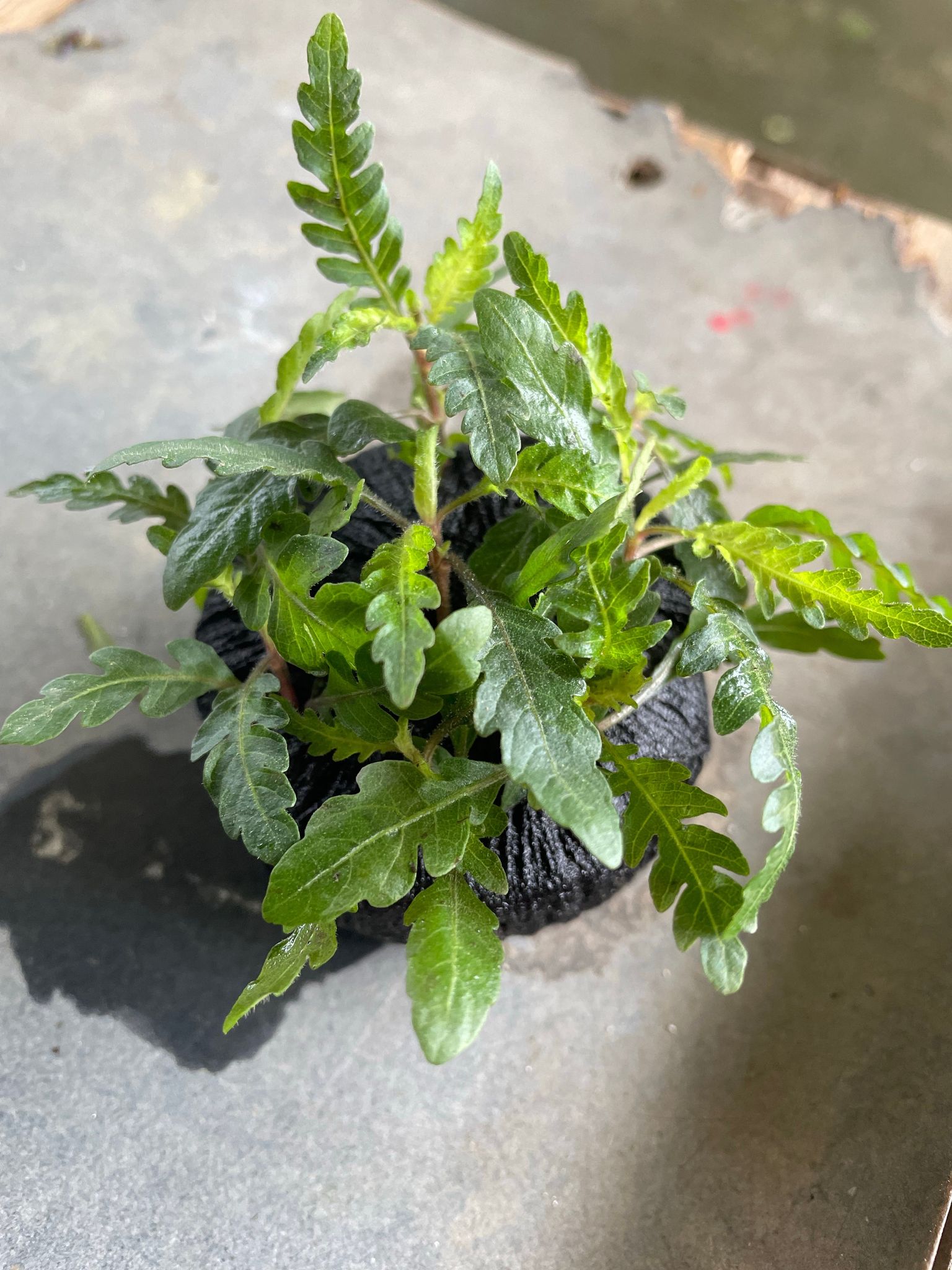
Best Tank Mates and Aquascaping Uses for Hygrophila Pinnatifida
Hygrophila pinnatifida rewards aquascapers with green-topped, bronze-backed leaves and a flexible growth habit, but choosing the wrong tank mates or placement can leave it shredded, leggy, or dislodged. This guide breaks down exactly which livestock to pair it with and how to use its dual growth forms in real layouts.
Why This Plant Behaves Differently From Other Stems
Hygrophila pinnatifida is a rheophyte native to fast-flowing streams in India's Western Ghats, where it naturally clings to rock and wood surfaces in current rather than rooting in loose sediment. That origin explains its unusual dual growth habit:
- Attached to hardscape (wood or stone): stays low, creeps sideways, and develops a bushy, layered look some hobbyists compare to a miniature palm canopy.
- Planted in substrate: grows more upright, reaching 5–10 inches (13–25 cm) in height.
Both forms show the same signature coloring — deep green leaf tops with a reddish-bronze underside — which is what makes it valuable as a textural break in a planted layout.
Water Parameters and Difficulty
This plant is rated easy-to-medium. It survives in a wide range of conditions but needs specific inputs to reach its best color and compact form.
| Parameter | Range |
|---|---|
| Temperature | 68–82°F (20–28°C) |
| pH | 6.0–7.5 (tolerates up to 8.0 in some setups) |
| Hardness | Soft to moderately hard |
| Light | Low light for survival; medium-high for color and density |
| CO2 | Optional for survival; strongly recommended for the aquascaped look |
Sources disagree somewhat on the upper pH limit and on how essential CO2 really is. In practice, aim for a 6.5–7.5 middle band for the best growth and coloration — the plant tolerates wider swings, but vigor and pigment intensity drop off outside that range. On light and CO2: it will survive under low light with no supplemental carbon, but it stays mostly green and leggy. Medium-to-high light paired with CO2 injection (or at least liquid carbon) is what actually produces the compact, reddish-bronze form most aquascapers are chasing. Treat CO2 as strongly recommended, not mandatory.
Lighting and CO2 Setup for US Tanks
For a typical US all-in-one nano tank or standard LED fixture, target medium light — roughly 30–50 PAR at the substrate, or a fixture running at 50–70% intensity on tanks under 20 gallons (76 L). Pushing much higher without CO2 tends to trigger algae on this plant's slower-growing leaves before the plant itself can use the extra light.
Two practical CO2 paths for hobbyists:
- Liquid carbon dosing: simplest option, no pressurized equipment, gives a visible color boost over several weeks. Best for low-tech nano setups.
- Pressurized CO2: delivers the most consistent bronze-red coloration and the tightest, bushiest growth, especially useful if you're running higher light or a full Dutch-style layout.
Either way, keep light, CO2, and fertilization moving together — bumping one without the others is the most common cause of algae on this species.
Substrate and Fertilization by Growth Form
Because Hygrophila pinnatifida can grow with or without root access to substrate, its feeding needs change depending on how it's placed:
- Substrate-rooted specimens: benefit from root tabs pushed near the base, or a nutrient-rich planted substrate. Roots pull in potassium and iron directly.
- Hardscape-mounted specimens: have no root access to substrate, so they depend on liquid fertilizers or water-column dosing for everything, including potassium and micronutrients.
This plant is also a well-known potassium-deficiency indicator. Pinholes appearing in older leaves are a strong signal to add potassium, not more nitrogen — a genuinely useful diagnostic that applies to the whole tank's nutrient balance, not just this one plant.
How to Attach It to Wood or Stone
Mounting on hardscape is the more forgiving method for tanks with active fish, since the plant isn't anchored loosely in substrate where it can be dug up.
- Select a piece of driftwood or a porous rock such as lava rock or seiryu stone with a flat or crevassed surface.
- Separate the plant into small clumps with a few nodes each.
- Tie the clumps against the surface using fishing line, cotton thread, or a small dab of aquarium-safe plant glue.
- Position the mounted piece in low-to-moderate flow so the plant isn't constantly battered.
- Leave the ties in place for about 3–4 weeks, checking periodically for new root growth gripping the surface.
- Once roots have visibly taken hold, thread or cotton can be trimmed away; glue can simply be left in place.
Growth Habit Comparison: Epiphytic vs. Substrate-Rooted
| Factor | Hardscape-Mounted (Epiphytic) | Substrate-Planted |
|---|---|---|
| Growth form | Low, bushy, creeping | Upright, taller |
| Typical height | Stays compact, hugs the surface | 5–10 in (13–25 cm) |
| Nutrient source | Water column / liquid ferts only | Root tabs + substrate + water column |
| Best use | Foreground-to-midground hardscape accent | Midground or background stem |
| Fish compatibility | Safer with diggers and burrowers | Risky with substrate-disturbing species |
| Removal/rescape | Easy — lift the whole mounted piece | More disruptive to relocate |
Aquascaping Placement Ideas
Hygrophila pinnatifida's two growth forms make it genuinely versatile across scaping styles:
- Iwagumi-style accent: tie a small clump to a secondary stone off to the side of the main iwagumi rocks for a color break without competing with the classic grass-carpet foreground.
- Dutch-style row: plant it upright in the midground-to-background as a stem row, trimmed regularly to keep a dense wall of texture and color contrast against finer-leaved neighbors.
- Nature aquarium centerpiece: mount a larger clump across a spider wood branch or stacked stone as a focal point, letting it spread sideways as it matures.
Its green-on-top, bronze-underneath coloring works especially well as a textural break next to fine-leaved plants. Good companion choices include Bucephalandra, Anubias, Java fern, Rotala, and Staurogyne — all of which contrast in leaf shape or color without competing for the same light tier.
Trimming and Maintenance
This is a relatively slow-to-medium grower, so avoid crowding it with fast growers that can shade it out before it establishes. A general schedule:
- Trim every 2–4 weeks once established to maintain a compact, bushy shape.
- For hardscape-mounted clumps, pinch back lateral shoots that start reaching upward instead of spreading.
- For substrate-planted stems, top the plant periodically to encourage branching lower down rather than letting it run tall and leggy.
- Replant or re-tie cut sections rather than discarding them — see propagation below.
Propagation
Propagation is straightforward: cut stem sections or lateral shoots and either replant them in substrate or re-tie them to a new piece of hardscape. The plant also produces plantlets or side shoots off runners, somewhat similar to how Vallisneria spreads. Under CO2 and adequate light, new cuttings typically root within 1–2 weeks.
Tank Mate Compatibility
Because this plant has soft leaves and can be either loosely rooted or surface-mounted, tank mate choice matters more than with tougher-leaved plants like Anubias.
Fish, Shrimp, and Snails to Pair With It
- Small tetras and rasboras: peaceful, don't disturb foliage.
- Dwarf gouramis: compatible community fish that leave plants alone.
- Corydoras and otocinclus: bottom-dwellers that graze biofilm without uprooting plants.
- Dwarf shrimp (Neocaridina, Caridina/CRS): thrive among the dense stems and root mats, which offer grazing surface and shelter for molting and fry.
- Nerite and mystery snails: compatible tank cleaners that won't damage the leaves.
Fish and Animals to Avoid
- Large cichlids and goldfish: prone to uprooting substrate-planted specimens and tearing soft foliage.
- Silver dollars and some larger barbs: known leaf-shredders that will strip soft-leaved plants like this one.
- Digging or burrowing species (certain loaches, substrate-sifting cichlids): fine around hardscape-mounted plants, but likely to dislodge substrate-rooted ones before roots establish.
Quick Compatibility Reference
| Category | Safe Choices | Avoid |
|---|---|---|
| Fish | Small tetras, rasboras, dwarf gouramis, corydoras, otocinclus | Large cichlids, goldfish, silver dollars, some large barbs |
| Invertebrates | Neocaridina/Caridina shrimp, nerite snails, mystery snails | — |
| Substrate disturbers | Fine if plant is hardscape-mounted | Risky for substrate-planted specimens (loaches, digging cichlids) |
If your tank includes diggers or burrowers, mounting this plant to hardscape instead of the substrate avoids most conflict, since it isn't anchored where digging fish can reach it.
Tank Size
Hygrophila pinnatifida works in tanks starting around 10 gallons (38 L) and scales up well into larger aquascapes, where a mature mounted clump or stem row can serve as a substantial background feature. Community tank stocking should still be sized to the tank itself — for species pairing ideas across a range of setups, browse small community fishes or dwarf shrimp that fit the compatibility notes above.
Common Mistakes to Avoid
- Burying the crown: plant only the bottom node in substrate; burying the growth point causes rot.
- Expecting red color in low light with no CO2/ferts: without those inputs, the plant stays plain green and leggy.
- Loose hardscape ties: current or curious fish can dislodge a mounted clump before roots grip — tie it firmly and check weekly.
- Ignoring pinholes: pinholes in older leaves signal a potassium shortage — add potassium, not extra nitrogen.
- Overcrowding with fast growers: since this plant grows slowly to moderately, faster neighbors can shade it out if planted too close.
- Planting with diggers: substrate-rooted specimens in tanks with digging fish get uprooted repeatedly — mount to hardscape instead.
- Unbalanced light/CO2/ferts: high light with lagging CO2 or fertilizer invites algae on the slower-growing leaves.
Frequently Asked Questions
Is Hygrophila pinnatifida shrimp-safe?
Yes. It has no chemical defenses, and its dense stem structure and root mats are a favorite grazing and hiding spot for shrimp, particularly during molting and for fry. It's compatible with both Neocaridina and Caridina species.
Can it grow without CO2?
Yes, it survives fine in low-tech setups without CO2, but growth will be slower, greener, and less compact. Adding CO2 (or at minimum a liquid carbon supplement) boosts both color intensity and density.
Does it need to be planted in substrate, or can it just attach to hardscape?
Either works. Attaching it to wood or stone produces a low, bushy look, while rooting it in substrate produces taller, more upright growth. It does not do well floating long-term, so pick one of the two anchored methods.
What fish will eat or damage it?
Most community fish leave it alone. The main risks are large cichlids, goldfish, and some larger barbs, which may shred the soft foliage or uproot substrate-planted specimens.
How do I get the red or bronze coloration?
Increase light intensity into the medium-to-high range and add CO2 along with an iron-rich fertilizer. Under low light alone, the plant tends to stay mostly green.
How fast does it grow, and how often should I trim it?
It's a medium-growth-rate plant. Trimming every 2–4 weeks keeps a bushy, compact shape, and this is especially important for the substrate-rooted upright form, which can get leggy if left untrimmed.
Can it be grown emersed, like in a paludarium or riparium?
Yes. It adapts to emersed growth and develops a sturdier, more terrestrial-looking leaf form above the waterline, making it a useful plant for paludarium or riparium builds.
What's the best way to attach it to driftwood or rock?
Tie small clumps to the surface with thread, fishing line, or aquarium-safe glue, positioned in mild-to-moderate flow. Roots typically grip the surface within about 3–4 weeks, after which any thread or line can be removed.
Ready to build out the rest of your stocking list around this plant? Browse freshwater livestock on FishyHub to find compatible fish, shrimp, and snails sized to your setup.


