Best Tank Mates and Aquascaping Uses for Frogbit
Amazon frogbit is one of the easiest floating plants to love, but pairing it with the wrong tank mates or equipment setup can undo all that easy-growing potential. This guide covers which fish, shrimp, and snails genuinely thrive with frogbit, plus practical aquascaping layouts and the maintenance habits that keep the plant healthy long-term.
What Frogbit Is and Why It Behaves Differently From Duckweed
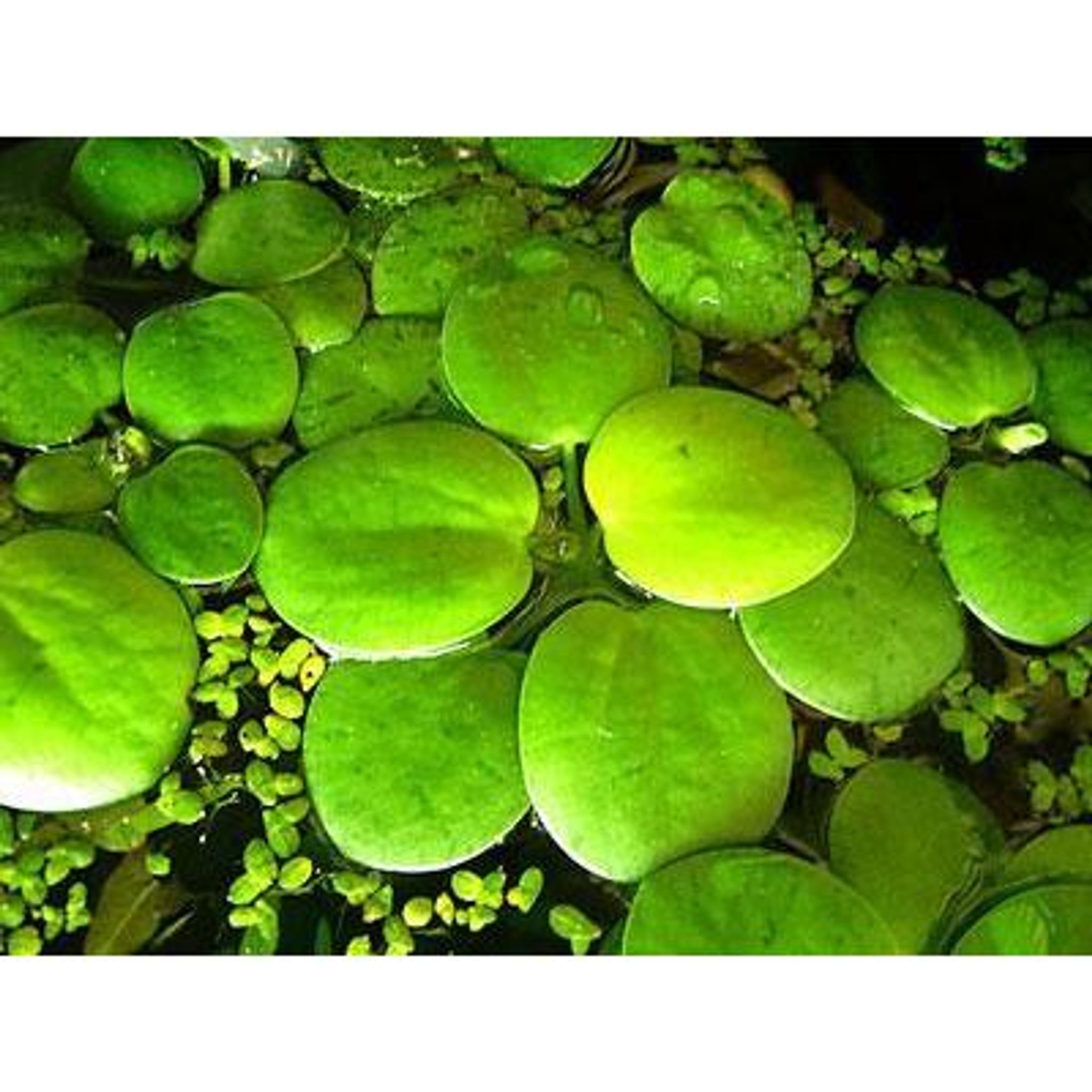
Amazon frogbit (Limnobium laevigatum) is a rosette-forming floating plant with round, lily-pad-like leaves and long, trailing roots that can reach several inches into the water column. It's frequently mentioned in the same breath as duckweed, but the two behave very differently in a tank:
- Frogbit grows as individual plants a few inches across, connected loosely by runners. A single plant is easy to scoop out by hand.
- Duckweed multiplies into thousands of pinhead-sized fronds that slip through nets and colonize every gap in equipment.
For aquascaping purposes, this distinction matters: frogbit reads as a deliberate design element, while duckweed usually reads as an accident.
Water Parameters and Lighting
Frogbit is forgiving on water chemistry, which is part of why it pairs with so many community setups:
- Temperature: roughly 64–86°F (18–30°C)
- pH: 6.0–7.5
- Nutrients: tolerant of a wide nitrate/phosphate range, and it actually does better in nutrient-richer water, since it uses excess nitrate and phosphate as food
Lighting is where opinions diverge a bit. Some hobbyists describe frogbit as low-light tolerant, while others insist it needs strong light to perform. Both are partly right: frogbit survives in low-to-moderate light but grows slowly and shows pale leaf color. For faster surface coverage and deeper green leaves, aim for medium-to-high light for 7–10 hours a day, with the fixture positioned a few inches above the water surface. Lights mounted too close can scorch the exposed tops of the leaves.
Water Movement: The Real Deciding Factor for Tank Mates
More than any single fish species, surface flow determines whether frogbit and its tank mates will get along. Frogbit's roots and leaf undersides need calm water to stay afloat; anything that repeatedly pushes leaves under will cause them to rot.
The nuance here is agitation versus current. A little surface ripple from a sponge filter or an air-powered outflow is generally fine and even helps gas exchange. What frogbit doesn't tolerate is direct, forceful outflow — a hang-on-back filter waterfall, a powerhead aimed across the surface, or an airstone positioned right under the plant mat. If you run CO2 injection and need overnight surface agitation for oxygen levels, angle the outflow away from the frogbit patch rather than eliminating movement altogether.
This is why frogbit's "compatibility" with a given fish is really a compatibility question about your filter and flow setup, not just the fish itself.
Frogbit Tank Mate Compatibility Chart
| Tank Mate | Compatibility | Notes |
|---|---|---|
| Bettas | Excellent | Classic pairing; roots offer security, leaves reduce jumping, calm surface suits labyrinth breathing |
| Gouramis | Excellent | Same labyrinth-organ benefits as bettas; appreciate shaded cover |
| Tetras, rasboras, danios | Very good | Peaceful community fish that don't disturb the surface |
| Livebearers (guppies, mollies, platies, swordtails) | Very good | Fry benefit from root cover; adults don't bother the plant |
| Corydoras and other bottom dwellers | Very good | Stay near the substrate, no interaction with floating leaves |
| Shrimp (all common species) | Excellent | Roots provide biofilm grazing and molting cover |
| Killifish | Workable | Compatibility depends more on the individual species' temperament than the plant |
| Apple/mystery snails | Minor risk | May graze leaf undersides, occasionally leaving holes; usually cosmetic |
| Goldfish | Risky | Often uproot or eat frogbit; frogbit can sometimes outgrow light grazing |
| Large or messy cichlids | Poor | Tend to shred roots and leaves faster than the plant regrows |
| Large crayfish | Poor | May climb into and tear apart dense root mats |
Best Community Pairings
Bettas and gouramis are the standout matches. Both are labyrinth-organ fish that breathe atmospheric air at the surface, and frogbit's floating canopy gives them a shaded, secure spot to rest near the top of the tank without feeling exposed. It's also one of the most commonly recommended plants specifically for betta tanks because the leaf cover discourages jumping and softens harsh overhead lighting.
Community fish like tetras, rasboras, corydoras, and livebearers coexist with frogbit with essentially no downsides — they don't interact with the surface layer at all, so the plant just quietly does its job of exporting nutrients and providing shade.
Shrimp and fry get an outsized benefit from frogbit's root system. The long, dense roots are prime real estate for biofilm — a natural, always-available food source — and they double as cover for molting shrimp and newly hatched fry that would otherwise be vulnerable in open water.
Frogbit for Shrimp Tanks
If you keep shrimp, frogbit deserves consideration as a top floating-plant pick, not just an incidental fish-tank plant. Alongside water lettuce, it's specifically valued in shrimp keeping for two reasons:
- Surface area for biofilm growth, which shrimp graze on continuously and which supplements or replaces some prepared feeding
- Physical cover during molting, when shrimp are soft-shelled and most vulnerable to being picked at by tank mates
A shrimp tank with a healthy frogbit mat typically shows more visible shrimplets surviving to adulthood, simply because there's more places for them to hide from adult shrimp and any fish sharing the tank.
Pairings That Need Extra Management
Goldfish and large fish are the most commonly asked-about mismatch. Goldfish will eat, uproot, and generally treat frogbit as a snack rather than décor. It's not an absolute incompatibility — frogbit regrows fast enough that some keepers maintain a thin, constantly-replenished layer specifically as goldfish grazing material — but expect to add and thin far more often than in a typical community tank.
Snails, particularly apple and mystery snails, will sometimes graze the undersides of frogbit leaves, occasionally leaving visible holes or weakening a leaf enough that it yellows and drops. This is worth flagging but shouldn't be treated as a hard incompatibility — in most tanks it's a minor cosmetic issue rather than something that threatens the plant population.
Killifish are a case where the fish, not the plant, is the variable. Many killifish species are territorial or best kept in species-only setups; frogbit itself poses no problem for them, so compatibility comes down to normal killifish stocking research.
Aquascaping Uses Beyond "Floating Plant"
Frogbit earns its place in an aquascape for more than shade. Consider it for:
- Natural light diffuser: softens intense overhead lighting for shade-loving plants, mosses, and shrimp living below the canopy.
- Nutrient export and algae control: a vigorously growing frogbit mat competes directly with algae for nitrates and phosphates, often visibly reducing green water or film algae within a few weeks.
- Breeding tank surface cover: reduces stress and gives fry somewhere to hide in betta, gourami, and livebearer breeding setups.
- Jungle or blackwater-style layouts: pairs naturally with driftwood and tannin-releasing leaf litter for a low-tech, Amazonian look.
- Dutch-style or nature aquascape accent layer: adds a textured surface layer above stem plants and hardscape without taking up any substrate footprint.
- Quarantine and hospital tanks: cheap, fast-growing, and easy to remove entirely in one pass, making it a convenient temporary nutrient sponge for tanks under treatment.
Sizing Coverage to Your Tank
A rule of thumb most sources skip: match frogbit coverage to bioload, not just tank size. A lightly stocked 10-gallon (38 L) betta tank can often run 50–60% surface coverage without issue, since gas exchange demand is low. A heavily stocked 40-gallon (150 L) community tank should be kept closer to 30–40% coverage, because more fish means more oxygen demand and more surface area needed for exchange — even though the same raw square inches of frogbit might look similar in both tanks.
DIY Containment Ideas
Because frogbit drifts with any current, a simple floating ring or frame — cut from plastic canvas, PVC pipe, or an airline-tubing loop — keeps it corralled in one display zone and away from filter intakes and overflow boxes. This is especially useful in tanks with a return pump or sump, where an uncontained mat will eventually get pulled toward the intake and clog it.
Growth Rate and Thinning Schedule
Under good light and nutrient-rich water, frogbit populations can multiply several-fold within a couple of weeks via runners that sprout daughter plantlets. Left unmanaged, it will fully blanket the surface, cutting off light to anything growing below and slowing gas exchange for the whole tank.
Thin weekly, or as needed, removing enough to keep roughly 40–60% of the surface open. This keeps light reaching submerged plants, keeps oxygen exchange healthy, and prevents the plant from smothering itself — inner leaves in an overcrowded mat get shaded out by outer ones and start to yellow and rot.
Common Mistakes and Troubleshooting
| Problem | Likely Cause | Fix |
|---|---|---|
| Leaves flipping, submerging, melting | Direct filter outflow, powerhead, or HOB waterfall hitting the mat | Redirect flow or relocate the frogbit patch to a calmer corner |
| Full surface coverage, plants below struggling | Frogbit left unthinned | Remove excess weekly, target 40–60% coverage |
| Spotting or localized rot on leaf tops | Condensation dripping from a closed lid | Vent the lid slightly or wipe condensation regularly |
| Yellowing leaves | Iron/potassium deficiency or insufficient light | Increase light duration/intensity, or dose a liquid fert lightly |
| Small holes in leaves | Snail grazing | Usually cosmetic; not typically a reason to remove snails |
A Note on Disposal
Amazon frogbit is not native to large parts of the United States and is restricted or banned in a handful of states as an invasive aquatic species. Never release excess frogbit into ponds, rivers, lakes, or storm drains. Instead, compost it, bag and trash it, or trade/give it to another hobbyist. Check your state's aquatic invasive species list if you're unsure of local rules before disposing of or transporting live plant material.
Frequently Asked Questions
Is frogbit safe with bettas?
Yes — it's one of the most commonly recommended plants for betta tanks. It provides shade and a sense of security, reduces jumping, and won't shred or irritate fins the way some rigid décor can.
Will frogbit block too much light for my other plants?
Only if it's left to grow unchecked. Thin the mat regularly and keep coverage around 40–60% of the surface so light and gas exchange still reach the plants and fish below.
Does frogbit need substrate or fertilizer?
No substrate is needed since it's a floating plant, and fertilizer is usually unnecessary because it pulls nutrients directly from the water column. Very clean, low-nutrient tanks may benefit from a light dose of liquid fertilizer.
Can I keep frogbit with goldfish or larger fish?
It's possible but risky. Goldfish frequently eat or uproot frogbit, so expect to replace or thin it much more often than in a typical community tank if you attempt this pairing.
Why is my frogbit melting or turning brown?
This is almost always caused by surface agitation from a filter or powerhead, condensation dripping from a closed lid, or a sudden change in lighting or water parameters. Check equipment placement and lid ventilation first before assuming a nutrient problem.
Is frogbit invasive — can I release extras outside my tank?
No. Treat it like any nonnative aquatic plant and never release it into ponds, rivers, or drains — it's restricted in some US states. Compost it, bag and trash it, or give it away to another hobbyist instead.
What's the difference between frogbit and duckweed for aquascaping?
Frogbit has larger, more decorative leaves and long trailing roots, and it's easy to remove in whole sheets when thinning. Duckweed spreads into thousands of tiny fronds that are far harder to fully clear out once established.
Can shrimp live under frogbit safely?
Yes — frogbit is considered one of the better floating plants for shrimp tanks. Its root system offers biofilm for grazing and cover for shrimp during molting, when they're most vulnerable.
Browse freshwater livestock on FishyHub to find fish and shrimp that pair well with a frogbit-topped tank.


