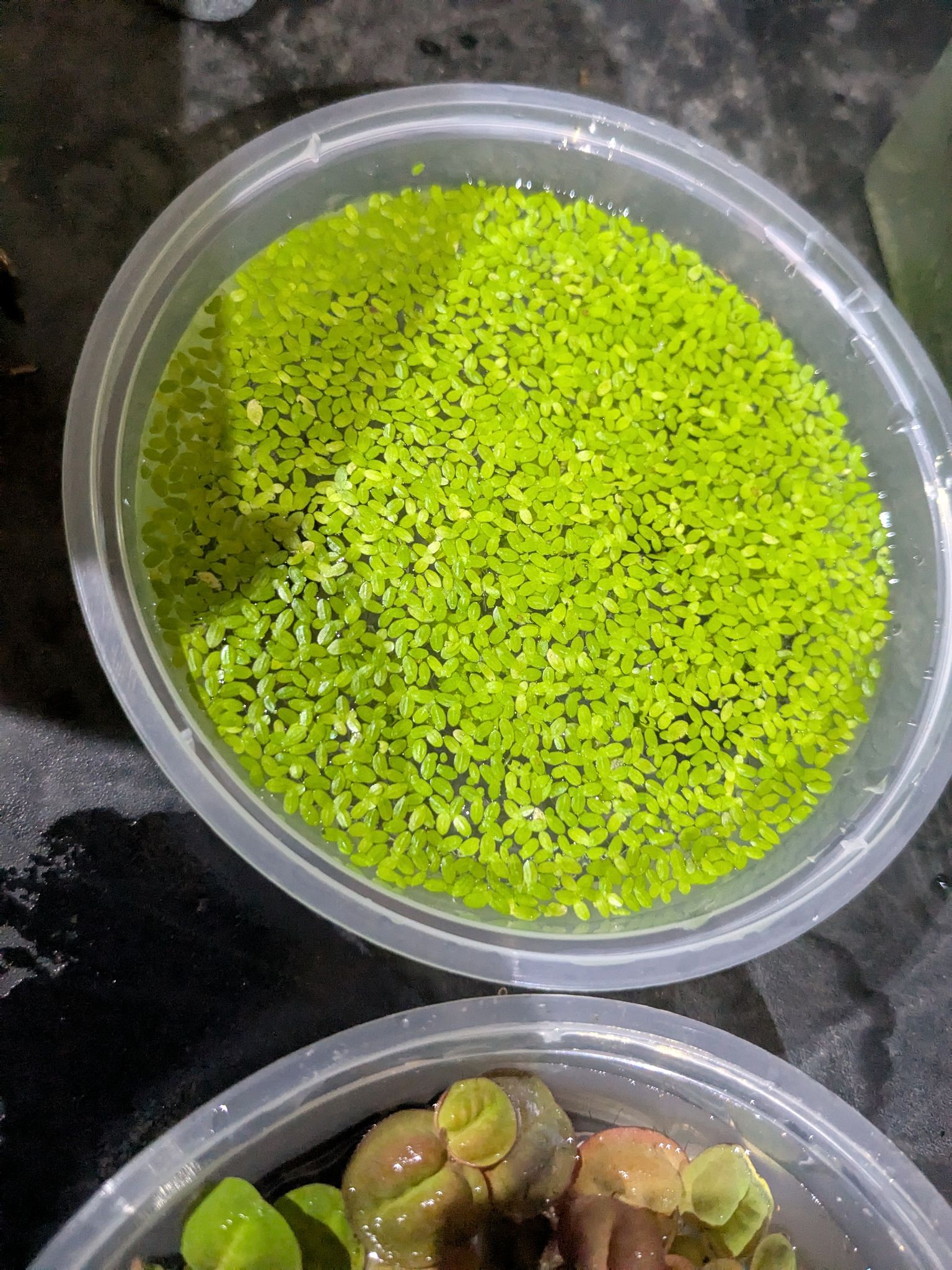
Best Tank Mates and Aquascaping Uses for Duckweed
Duckweed splits the hobby right down the middle: some aquarists net it out on sight, others deliberately stock it for nutrient control and breeding tanks. The truth is it can be either a nuisance or a genuinely useful tool, and the deciding factor is almost always which fish you keep with it and how well you contain it.
What You're Actually Looking At
"Duckweed" usually covers several genera of tiny, free-floating flowering plants, and telling them apart matters before you decide what to do with them.
- Lemna – the classic duckweed, oval leaf-like fronds (called thalli) about 1/8 to 1/4 inch (3-6 mm) across, each trailing a single fine root.
- Spirodela (giant duckweed) – noticeably larger fronds, often with several roots per plant, easier to net because the fronds are bigger.
- Wolffia (watermeal) – not true duckweed at all. These are rootless, seed-sized green grains, the smallest flowering plants on earth. Watermeal slips through nets that catch Lemna and is considerably harder to remove.
If your "duckweed" problem won't stay in a net, check for watermeal specifically — the control strategy differs because there's no frond to skim, only a fine green dust on the surface that often needs a fine-mesh scoop or surface skimmer run continuously.
Don't confuse either with Salvinia or red root floater, which have visible leaf structure and hair-like undersides rather than a single root — those are larger, slower-spreading floaters with different care needs.
Ideal Conditions for Growing It on Purpose
Duckweed is forgiving, which is exactly why it gets out of hand. If you want to cultivate it deliberately, these are the parameters that keep it thriving without a substrate:
| Parameter | Range |
|---|---|
| Temperature | 60-90°F (15-32°C) |
| pH | 6.5-7.5 |
| Water hardness | Soft to moderately hard |
| Lighting | 6+ hours/day, bright |
| Surface flow | Still to low-flow only |
| Tank size | 2-5 gallon (7.5-19 L) nano tanks up to full ponds |
| Substrate | None required |
Surface agitation is the detail most people overlook. Strong output from a hang-on-back filter, powerhead, or spray bar doesn't spread duckweed evenly — it shreds fronds and pushes them into a corner where they mat up and can starve themselves of gas exchange. If you want even coverage, aim filter and skimmer output away from the surface, or diffuse it below the waterline.
Given good light and nutrients, duckweed biomass can double in roughly 1 to 4 days. That doubling time is the number to keep in mind: a light dusting on Monday can be a solid mat by Friday, especially in a tank with strong lighting and a heavy fish bioload feeding it nitrate and phosphate.
Why Some Aquascapers Add It on Purpose
Duckweed is one of the most efficient nutrient scrubbers available to freshwater keepers. It pulls ammonia, nitrate, and phosphate directly from the water column, no substrate or dosing required, and out-competes algae for the same nutrients while shading the water below it. That combination — nutrient export plus light-blocking of algae-prone water — is why some hobbyists intentionally float a patch in a heavily stocked tank, a fry-rearing setup, or an outdoor tub.
The catch is that the same shading effect that suppresses algae will also suppress your carpet and stem plants if duckweed fully covers the surface. A full mat cuts off both light and CO2 exchange at the surface, which can stall or reverse growth in plants that were doing fine before the duckweed showed up. In CO2-injected, high-tech planted tanks, this trade-off usually isn't worth it — carpet plants there need intense, uninterrupted light, so most high-tech aquascapers skip duckweed entirely and choose floaters that spread less aggressively, if they use a floater at all.
Best Tank Mates for Duckweed
Fish That Help Control It
Reliable duckweed control comes from fish that will actually eat it in quantity, not just peck at it occasionally:
- Goldfish and koi – the classic duckweed controllers, especially effective in ponds and larger tanks.
- Tilapia – aggressive grazers where climate or setup allows keeping them.
- Silver dollars – strong herbivores that make a visible dent in surface coverage.
- Some gouramis (genus Trichogaster) – will graze duckweed steadily, though usually not fast enough alone in a well-lit, well-fed tank.
Smaller fish are worth having but shouldn't be your control plan. Livebearers — guppies, mollies, platies, and swordtails — nibble at duckweed and pick off dying fronds, and rainbowfish and some smaller cichlids will do the same, but none of them reliably slow an outbreak in a bright, nutrient-rich tank on their own. Treat them as supplemental grazers, not a fix.
Bettas are a special case: they rarely eat duckweed in any meaningful amount, but they benefit from what it does to the tank. The dimmer light and surface cover it provides suits a fish that naturally lives under dense floating vegetation. Just keep coverage partial — a betta is a labyrinth-organ breather and needs open surface to gulp air.
Invertebrate Tank Mates
Shrimp — cherry, Amano, and similar species — are excellent duckweed companions. They graze the biofilm that builds up on the trailing roots and pick off dying or decaying fronds, which helps keep the mat healthier without harming the living plant. Snails generally ignore duckweed or take only occasional nibbles, so they're neutral tank mates rather than a control method.
You can browse compatible grazers, including shrimp and species like betta fish, directly on FishyHub when stocking a duckweed setup.
Plants That Pair Well With Duckweed's Shade
Because duckweed dims the water below it, pair it with plants that already tolerate low or indirect light rather than sun-loving carpets:
- Java fern
- Java moss
- Anubias
- Cryptocoryne
- Marimo moss balls
Avoid combining duckweed with high-light carpeting or stem plants unless you're confining the duckweed to part of the surface — otherwise you're setting those plants up to fail slowly as coverage creeps toward 100%.
Aquascaping Uses Beyond "Just a Floater"
- Cover for shy species – killifish and wild-type bettas often become bolder and more visible day-to-day with dappled surface cover mimicking their natural habitat.
- Light diffusion – a partial mat softens harsh overhead lighting, useful in tanks that otherwise look starkly lit.
- Breeding and fry tanks – duckweed gives fry places to hide from parents and other tank mates, and adult fish are less efficient at hunting through a broken surface.
- Blackwater and biotope-style scapes – a natural, jungle-like look that suits South American or Southeast Asian biotope setups.
- Quarantine tanks – nutrient uptake helps buffer water quality swings while a new fish settles in.
- Outdoor tubs and ponds – widely used in backyard stock tanks and ponds for nutrient management and as a natural check on mosquito larvae, since the surface mat interferes with larvae reaching air.
How to Contain Duckweed Without Removing It Entirely
Full eradication is genuinely difficult — a single missed frond can regrow an entire population within days, so treat elimination as a long, unlikely project rather than a weekend task. Containment is the more realistic goal for most tanks, and it lets you keep the benefits while protecting the plants and fish that need open water.
DIY containment options:
- Airline tubing loop – tie a length of flexible airline tubing into a ring; cheap, invisible, and easy to resize.
- Foam pool noodle ring – cut a cross-section of pool noodle and float it as a barrier; very buoyant and long-lasting.
- Plastic canvas ring – craft-store plastic canvas cut into a circle or square frame, rigid and easy to clean.
Size the ring to cover no more than a third to half of the surface, leaving open water for feeding, viewing, and light to reach plants below.
A realistic weekly routine:
- Net or skim any duckweed that has drifted outside the containment ring.
- Once a week, thin the contained patch back by roughly half if it's grown to fill the ring.
- During an active outbreak (new introduction, high light, heavy feeding), net loose fronds daily rather than weekly — missed patches regrow explosively, and daily removal for 2-3 weeks is what actually brings a bloom back under control.
- Check filter intakes and skimmer boxes regularly; loose duckweed clogs both and reduces flow.
A simple trick for getting rid of a stray mat fast: lay a paper towel flat on the surface for a few seconds. Duckweed sticks to it and lifts away cleanly, which is faster than chasing fronds with a net for stray patches.
Quarantining New Duckweed
Duckweed is a common hitchhiker on new plants, and it brings passengers of its own: snails, hydra, and algae spores can all ride in on a small clump. Before adding any duckweed to a display tank:
- Quarantine it in a separate container for 1 to 2 weeks, watching for hydra or snail eggs.
- Some hobbyists rinse or briefly dip new duckweed in a very dilute bleach solution — roughly 1:20 to 1:25 bleach to water for under a minute — followed by a thorough rinse in dechlorinated water. This can knock back hitchhikers, but treat it as an optional extra step: getting the dilution or rinse wrong risks killing the duckweed or introducing chlorine to your tank, so only use it if you're confident in the ratio and rinse process.
Feeding Duckweed to Your Fish
Nutritionally, duckweed is a legitimate supplemental food, not just a byproduct of nutrient export. It runs roughly 30-40% crude protein on a dry-matter basis and is high in fiber, making it a good fit for herbivorous and omnivorous species. Goldfish, koi, and other vegetable-matter grazers benefit most, treating it as a live-food-adjacent snack they can pick at continuously rather than a scheduled meal. If you're stocking fish specifically to graze it down, pairing them with a quality prepared diet from FishyHub's food & supplements selection keeps their nutrition balanced alongside the duckweed itself.
Common Mistakes to Avoid
- Letting it fully carpet the surface. A complete mat blocks light and CO2 exchange for plants below and can reduce surface oxygen exchange enough to stress labyrinth-organ fish like bettas and gouramis.
- Skipping quarantine. Untreated duckweed is one of the most common ways snails, hydra, and algae spores enter a display tank.
- Removing it only occasionally. Sporadic netting lets missed patches regrow explosively; consistency matters more than intensity.
- Assuming goldfish or koi will self-regulate it. A heavy bioload with strong lighting can outpace what even dedicated grazers eat.
- Blocking filter intakes. Loose duckweed pulled toward an intake reduces flow and filtration efficiency.
- Adding it to a tank with strong surface agitation. HOB filters, powerheads, and spray bars push duckweed into corners and shred fronds instead of letting it spread evenly.
Frequently Asked Questions
Will duckweed take over my tank?
Yes, under bright light and available nutrients it can double in biomass every 1 to 4 days. Left alone it will eventually cover the surface, so active thinning or a containment ring is necessary if you want to keep it in check.
What fish eat duckweed?
Goldfish, koi, silver dollars, tilapia, and some gouramis are the most reliable at reducing duckweed populations. Smaller fish like livebearers and tetras will nibble at it but rarely control an outbreak on their own.
Is duckweed good or bad for a planted tank?
Both, depending on how it's managed. It's excellent for nutrient export and algae suppression, but a full mat can starve carpet and stem plants of light — containment rings let you get the benefits without the downside.
Can duckweed live with bettas?
Yes. Bettas typically don't eat much duckweed but benefit from the dimmer lighting and surface cover it provides, as long as coverage stays partial so they can still access the air above the waterline.
How do I get rid of duckweed completely?
Full eradication is difficult since a single missed frond can regrow the population. Combine daily netting or skimming for 2 to 3 weeks, a floating-plant-eating fish, and reduced nutrient and light input; laying a paper towel on the surface also lifts fronds off quickly.
Does duckweed need substrate or fertilizer?
No. It draws nutrients directly from the water column and thrives even in fertilizer-free tanks running on fish waste alone.
Is duckweed safe to feed my fish?
Yes. It's commonly fed to goldfish, koi, and other herbivorous or omnivorous species as a protein- and fiber-rich supplement.
Can I keep duckweed with shrimp?
Yes. Shrimp benefit from grazing biofilm that grows on the roots and won't damage the plant itself.
Whether you're using duckweed for nutrient control, fry protection, or just a natural-looking surface, matching it with the right tank mates makes the difference between a useful plant and a runaway one. Browse compatible grazers and community fish in FishyHub's freshwater livestock selection to build out a tank that keeps duckweed working for you.


