Best Tank Mates and Aquascaping Uses for Crinum
Crinum is a bulb plant that rewards patience with some of the boldest leaf shapes in the freshwater hobby, but it needs the right neighbors and the right placement to shine. This guide covers which fish and invertebrates are safe around it, which ones will shred or uproot it, and how to build a layout around its size and slow, long-term growth.
What Is Crinum, Exactly?
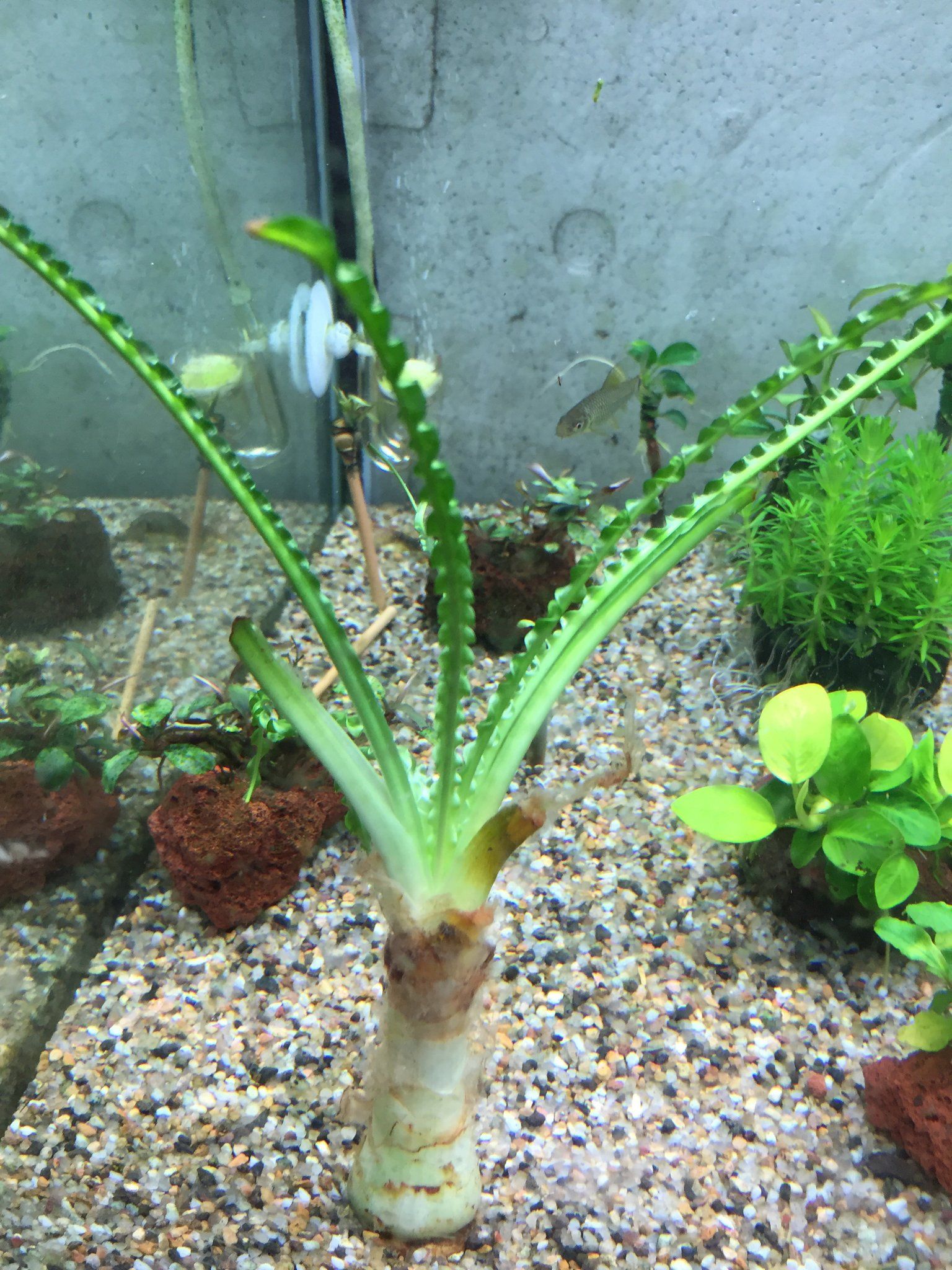
Crinum belongs to the Amaryllidaceae family and grows from a true bulb rather than a rooted crown, which is part of why it behaves so differently from stem plants and rosette plants. Three species dominate the aquarium trade, and they are frequently mislabeled, so it helps to know the distinguishing leaf traits before buying.
Species Snapshot
| Species | Leaf shape | Typical leaf length | Best tank size |
|---|---|---|---|
| Crinum calamistratum | Narrow, ribbon-like, distinctly crinkled/wavy edges | 20-30+ inches (51-76+ cm) | 20 gallon (76 L) and up |
| Crinum thaianum ("water onion") | Long, smooth strap leaves from an onion-shaped bulb | 30-40+ inches (76-100+ cm) | 40 gallon (151 L) and up |
| Crinum natans | Broader, wavy-margined leaves, more substantial than calamistratum | 20-35 inches (51-89 cm) | 40 gallon (151 L) and up |
All three can trail across the water surface in tall aquariums once mature, so measure tank height, not just footprint, before choosing a species.
Water Parameters and Basic Care
Crinum is not fussy, but it does best within a fairly wide comfort zone:
- Temperature: 72-82°F (22-28°C)
- pH: 6.0-7.5
- Hardness: soft to moderately hard water is tolerated
- Light: moderate to high light produces compact, dense growth; low-to-medium light is survivable but leads to slower, leggier leaves that stretch toward the surface
Light and CO2 are best thought of as a spectrum rather than a strict requirement. A low-tech tank with modest lighting will keep a Crinum alive and growing, just more slowly and with thinner leaves. Add stronger light or pressurized CO2 and liquid fertilizers, and the same plant fills out with denser, more colorful foliage. Neither is mandatory — treat them as accelerators, not prerequisites, when deciding whether this plant fits your setup.
Planting and Propagation
Because Crinum grows from a bulb, planting technique matters more than with typical rooted plants.
- Bury the lower half to two-thirds of the bulb, leaving the neck and crown exposed above the substrate line. A fully buried crown is the single most common cause of bulb rot.
- Use a nutrient-rich substrate or push root tabs near the bulb — Crinum is a heavy root feeder, and potassium and iron supplementation noticeably improves leaf quality.
- Give it room to spread: leave 4-6 inches (10-15 cm) of clearance from neighboring plants and hardscape so the fanning leaves don't crowd out slower growers.
- Expect slow establishment. New plantings can take weeks to months before visible growth resumes, and disturbing or moving the bulb repeatedly only resets the clock.
Propagation happens through bulb offsets, or "pups," that form at the base of a mature bulb over time. Once a pup has developed a few roots and a couple of its own leaves, it can be separated with a clean cut and planted independently.
Crinum is commonly sold in both emersed (grown above water) and submersed form. New leaves grown underwater often look and feel different from the emersed leaves the plant arrived with — expect some melt and leaf loss during the transition. This is a normal adaptation response, not a sign the plant is dying.
Tank Mates: Who's Safe and Who's a Risk
Crinum's tough, fibrous leaves and buried bulb make it more resilient than many plants, but a handful of fish and invertebrates will still damage it.
Generally Safe Tank Mates
- Tetras, rasboras, danios, and other small community fish
- Livebearers such as guppies, mollies, platies, and swordtails
- Dwarf and small gouramis, plus rainbowfish
- Corydoras and other small bottom-dwelling catfish
- Dwarf cichlids like rams and apistogramma
- Shrimp and nerite or mystery snails, which use the broad leaves for grazing and cover
Browsing options for peaceful additions like tetras, rasboras, and other small community fishes or grazing shrimp can round out a Crinum-planted tank without putting the plant at risk.
Risky or Incompatible Tank Mates
| Animal | Problem |
|---|---|
| Goldfish, koi, grass carp | Actively graze on and uproot bulb plants; not compatible with Crinum at all |
| Large digging cichlids (some New World and African species) | Excavate pits and uproot bulbs while digging |
| Silver dollars and other large leaf-eating characins | Strip soft leaf tissue |
| Crayfish | Shred leaves and can damage the exposed bulb neck |
| Some larger plecos | Rasp at soft leaf surfaces |
If your stocking plans lean toward larger, more destructive species, browse plecos, corydoras, and other bottom dwellers carefully by size and temperament rather than by category alone — many corydoras are fine, but some larger pleco species are not.
Aquascaping Placement Ideas
Crinum's height and shape make it more versatile than a typical "background plant" label suggests:
- Background specimen in tanks 40 gallons (151 L) and up, where the tall leaves fill vertical space behind shorter plants.
- Focal centerpiece in a Dutch-style layout, using a single well-grown bulb as the visual anchor a scape builds around.
- Surface-trailing accent in tall tanks, letting mature leaves drape across the water surface for a natural, overgrown look.
- Foreground-to-background transition plant, using its mid-height growth to bridge low carpeting plants and taller background stems.
- Emersed accent in a paludarium or riparium, where Crinum adapts readily to growing partly or fully above the waterline.
Compatible Plant Companions
Crinum's tall canopy can shade out anything planted directly beneath it, so pair it with low-growing foreground species that don't need strong direct light and won't compete for the same visual space: dwarf hairgrass, small crypts, and mosses all work well planted around, rather than under, its leaf spread. Leaving that 4-6 inch buffer mentioned earlier keeps the canopy from smothering these companions as it matures.
Maintenance and Troubleshooting
| Symptom | Likely cause | Action |
|---|---|---|
| Leaves melt shortly after planting | Normal transition stress | Wait 3-6 weeks before judging; new growth should follow |
| Bulb feels mushy or smells foul | Actual rot, often from burying the crown | Trim affected tissue; replant with neck exposed |
| Yellowing leaves despite water-column ferts | Root-level nutrient deficiency | Add root tabs; Crinum feeds heavily through roots |
| Slow or stalled growth | Low light, no CO2, or a recent move | Increase light/CO2 if desired, and avoid disturbing the bulb |
| Leaves flopping over the water surface | Normal growth reaching tank height, not disease | Trim individual leaves at the base if needed |
A quick decision path helps here: if leaves are melting but the bulb itself is firm and odor-free, it's transitional stress — leave it alone. If the bulb is soft, discolored, or smells bad, it's rot, and the fix is trimming back to healthy tissue and re-planting with the crown above the substrate.
Individual leaves can be trimmed at the base at any time if they're damaged or have grown too long, but never cut into the bulb crown itself, since that's the plant's only growth point.
One more note worth flagging for households with pets: like other Amaryllidaceae, Crinum bulbs contain alkaloids that are mildly toxic if ingested by mammals. This isn't a fish-safety concern, but it's worth keeping curious cats or dogs from chewing on trimmed leaves or a bulb pulled out during maintenance.
Common Mistakes to Avoid
- Burying the bulb too deep or covering the neck entirely, which invites rot
- Judging the plant as dead during normal post-purchase melt instead of waiting several weeks
- Planting a large species like thaianum in a small tank where it quickly outgrows the space
- Skipping root tabs because liquid ferts are already being dosed
- Housing Crinum with goldfish, crayfish, or large digging cichlids and blaming the plant when it's actually being eaten or uprooted
- Repeatedly digging up and relocating the bulb to fine-tune placement, which sets back growth each time
Frequently Asked Questions
How big does Crinum get and will it outgrow my tank?
It depends on the species. Crinum calamistratum stays relatively modest and can work in 20-gallon (76 L) tanks, while thaianum and natans can produce leaves 30-40+ inches (76-100+ cm) long and are better suited to 40-gallon (151 L) tanks and larger. Matching species to tank size upfront avoids having to rehome an overgrown plant later.
Does Crinum need CO2 to survive?
No. Crinum survives fine in low-tech setups without CO2, just with slower and less dense growth. Pressurized CO2 and liquid fertilizers speed growth and produce fuller, more colorful leaves, but they're an upgrade, not a requirement.
Will my fish eat or destroy it?
Most peaceful community fish, dwarf cichlids, shrimp, and snails leave Crinum alone. The real risks are goldfish, crayfish, large leaf-eating characins, and large digging or herbivorous cichlids, which can uproot the bulb or shred its leaves.
Why did all the leaves melt after I planted it?
This is normal transition stress, especially when a plant sold in emersed form adjusts to fully submersed growing conditions. As long as the bulb stays firm and odor-free, new leaves should appear within three to six weeks.
Can I trim Crinum like other plants?
Yes. Trim individual leaves at the base if they're damaged, yellowing, or too long for the tank. Avoid cutting into the bulb crown, since that's the plant's growth point.
How do I propagate Crinum?
Wait for the parent bulb to produce offsets, or "pups," at its base. Once a pup has grown a few roots and a couple of its own leaves, separate it with a clean cut and plant it on its own.
Ready to plan a Crinum-anchored layout? You can browse compatible community fish and other freshwater stock in FishyHub's freshwater livestock category to round out a tank built around this bulb plant's bold, trailing shape.


