
Best Tank Mates and Aquascaping Uses for Bucephalandra
Bucephalandra ("Buce") is a slow-growing epiphyte that clings to rock and wood instead of rooting in substrate, which makes it nearly indestructible once it's attached correctly. This guide covers which tank mates leave it alone, how to mount it so it actually stays put, and how to use it to build a natural-looking aquascape.
What Makes Bucephalandra Different From Other Aquarium Plants
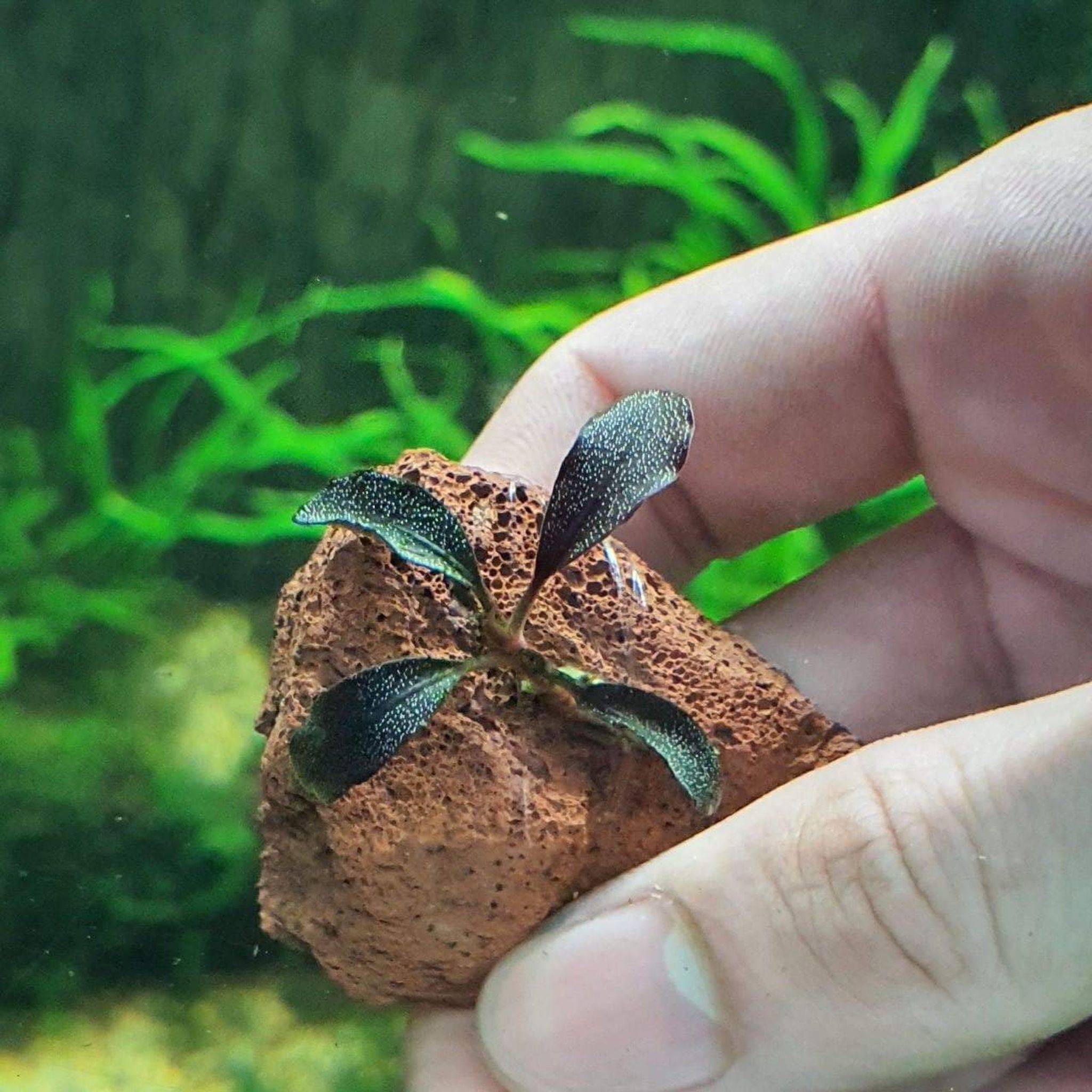
Buce belongs to the same functional group as Anubias and Java fern: it's an epiphyte, meaning it grows on the surface of hardscape rather than in soil. Its roots grip wood and rock naturally, while the thick, creeping stem — the rhizome — should never be buried in substrate. A buried rhizome typically rots within weeks, even in an otherwise healthy tank.
Basic parameters are forgiving once the plant is established:
| Factor | Range |
|---|---|
| Temperature | 71–82°F (22–28°C) |
| pH | 6.0–8.0 |
| Hardness | Soft to moderately hard |
| Lighting | Low to medium |
| CO2 | Optional (speeds growth, not required) |
| Height | 1–4 in. typical; some cultivars reach 6–10 in. |
Growth is measured in weeks, not days — often a single new leaf every few weeks. That slow pace is a feature for low-maintenance scapes: trimming is rarely necessary beyond removing old or melted leaves.
Lighting: Where Sources Disagree
Some care guides call for strictly low light, while others say Buce handles medium-to-high intensity fine. Both are partly right. The real issue is placement, not just intensity: direct, unshaded high light causes algae and leaf burn on Buce faster than it does on quick-growing plants, because Buce can't outgrow the algae the way a stem plant can. The safer approach is low-to-medium light overall, or medium-high light with the Buce clump shaded under taller plants or positioned lower in the water column, away from the direct beam.
CO2: Helpful, Not Required
Supplemental CO2 and liquid fertilizer will noticeably speed growth and deepen leaf coloration, but neither is necessary for the plant to survive. Treat CO2 as an accelerant for hobbyists chasing color and density, not a requirement for a healthy, low-tech tank.
Best Tank Mates for Bucephalandra
Because Buce grows slowly and can't regenerate quickly after damage, the safest tank mates are peaceful species that don't dig, graze on tough leaves, or uproot hardscape.
Fish
- Good matches: neon and ember tetras, rasboras, dwarf gouramis, guppies, corydoras, and small livebearers such as platies and swordtails
- Avoid: large cichlids, goldfish, silver dollars, and other fish known to dig or shred plant matter
Small schooling fish from FishyHub's small community fishes selection pair especially well, since they stay near the water column and leave hardscape-mounted plants undisturbed.
Invertebrates
Cherry shrimp, Amano shrimp, and nerite or mystery snails all benefit from Buce rather than threaten it. The plant's broad leaf surface and dense rhizome mat host biofilm, which these grazers feed on, and the mat itself provides cover for shrimp molting or hiding from fish. Dedicated shrimp keepers often build entire nano scapes around a Buce-covered rock for exactly this reason. Crayfish and larger crabs are the exception — both will shred leaves or physically pull clumps loose.
A Caution on Bottom-Dwellers
Loaches and many catfish species are generally plant-safe and won't eat Buce, but they forage along the substrate and hardscape base. A shallow-mounted or newly attached clump — one that hasn't rooted in yet — can get knocked loose by a foraging loach or catfish simply bumping past it. Mount new Buce firmly and give it the full attachment window before adding active bottom-dwellers to that section of the tank.
Companion Plants
Buce pairs naturally with other epiphytes sharing the same hardscape — Anubias, Java fern, and mosses all create layered texture without competing for substrate space. For contrast, pair a Buce-covered rock with substrate-rooted, fine-leaved carpeting plants like dwarf hairgrass or Monte Carlo in the foreground; the mix of textures reads more natural than either style alone.
How to Attach Bucephalandra to Hardscape
Attachment is the single most important technique for growing Buce successfully, and it's where most of the common mistakes happen.
- Choose your anchor. Seiryu stone, dragon stone, spiderwood, and Malaysian driftwood all work well; rough or porous surfaces give roots more to grip.
- Secure the rhizome only. Tie the rhizome to the hardscape with cotton thread or fine fishing line, or apply a small dab of cyanoacrylate (super glue) gel directly to the rhizome. Never glue or tie over the leaves or the growth point — squeezing or gluing them causes bruising and melt.
- Wait it out. Roots typically take hold within 4 to 8 weeks. Leave thread or glue in place during this period; thread can be trimmed away once roots are visibly gripping the surface, and glue gel degrades harmlessly on its own.
- Check for "take." Gentle new root growth visible at the rhizome, plus the clump resisting a light tug, means it has attached. Relocating an established clump is possible — cut it free with sharp scissors close to the anchor point rather than pulling, which tears roots and the rhizome.
Water flow matters during this stage, too. Stagnant spots encourage algae and biofilm buildup on leaves before shrimp and snails can graze it down, so position new Buce somewhere with gentle, even circulation.
Aquascaping Uses for Bucephalandra
Classic Nature-Aquarium Layouts
In naturalistic, Iwagumi-inspired layouts, Buce works best as accent clumps rather than a carpet, since true Iwagumi favors hairgrass as the dominant foreground. Use odd-numbered stone groupings, keep negative space open, and let small Buce clusters fill the gaps between hardscape and substrate-rooted plants — this reads as an intentional design choice rather than clutter.
Rock-and-Wood Aquascapes
This is Buce's signature use case. Mount it to seiryu stone, dragon stone, spiderwood, or driftwood, and let it colonize crevices over several months until it looks like it grew there naturally rather than being placed. Mixing 2–3 cultivars with different leaf color and size on the same piece of hardscape adds texture variety without needing additional plant species.
The Dramatic Look of Branchy Driftwood
Branchy driftwood — spiderwood or Manzanita-style pieces — makes an effective vertical focal point. Buce and moss growing along the branches mimic a jungle or rainforest canopy look, and the tannins these woods release suit Buce's preference for soft, slightly acidic water.
Aquascaping on a Budget
Because Buce is slow-growing and propagates easily, one starter clump can fill an entire tank over time instead of buying multiple pots upfront:
- Propagate by division: cut the rhizome cleanly, leaving 2–3 leaves per section, and reattach each division to a new spot
- Pair with low-cost hardscape: local rock and budget driftwood work as well as premium stone for Buce's purposes
- Skip the extras: no CO2 or fertilizer dosing is required for survival, which avoids recurring costs
Why Aquascapers Favor Rimless Tanks
Rimless, low-iron glass tanks are popular in the aquascaping hobby generally — not specific to Buce — because seamless edges give an unobstructed, diorama-style view, and low-iron glass avoids the green tint that standard glass adds to plant and rock colors. They're commonly paired with open tops and lily-pipe filtration. A rimless tank isn't necessary for Buce to thrive; it performs the same in any well-run, framed tank.
Common Mistakes to Avoid
| Mistake | Result | Fix |
|---|---|---|
| Burying the rhizome in substrate | Rot | Keep rhizome exposed on or above hardscape |
| Placing under intense light with no acclimation | Algae (BBA, green spot) | Start under moderate light or shade with taller plants |
| Gluing or tying over leaves/growth point | Bruising, melt | Attach the rhizome only |
| Buying without knowing the cultivar | Mismatched size expectations | Check cultivar name for expected height and leaf form |
| Judging health by growth speed | False alarm | Expect one new leaf every few weeks; melt after transport is normal if the rhizome stays firm |
One point worth flagging separately: older Buce leaves naturally develop a more matte, textured, almost "pinnate" surface after several months. New keepers sometimes mistake this aging pattern for disease — it's a normal sign of a mature, established clump.
Frequently Asked Questions
Can Bucephalandra be planted directly in substrate?
No. Buce should be attached to hardscape with only the roots reaching into substrate or crevices — the rhizome itself must stay exposed, or it will rot.
Does Bucephalandra need CO2 to grow?
No. It grows fine without CO2, but supplemental CO2 speeds up growth and improves leaf coloration if you want faster results.
What fish will eat or damage Bucephalandra?
Large cichlids, goldfish, silver dollars, and other digging or herbivorous species are the main risks. Peaceful community fish generally leave the leaves and rhizome alone.
Is Bucephalandra good for shrimp tanks?
Yes. Its broad leaves and dense rhizome mat provide biofilm for grazing and plenty of hiding spots, which is why it's a favorite in dedicated shrimp and nano setups.
How do you attach Bucephalandra to rock or driftwood?
Tie the rhizome with cotton thread or fine fishing line, or use a small dab of cyanoacrylate super glue gel on the rhizome — never on the leaves. Roots typically take over within 4 to 8 weeks, after which thread can be removed and glue degrades on its own.
Is a rimless tank necessary to aquascape with Bucephalandra?
No. Rimless, low-iron tanks are popular for unobstructed viewing in aquascaping generally, but Buce grows the same in any well-maintained tank regardless of rim style.
Ready to build out a Buce-based aquascape? Browse freshwater livestock on FishyHub for compatible tank mates to complete the setup.


