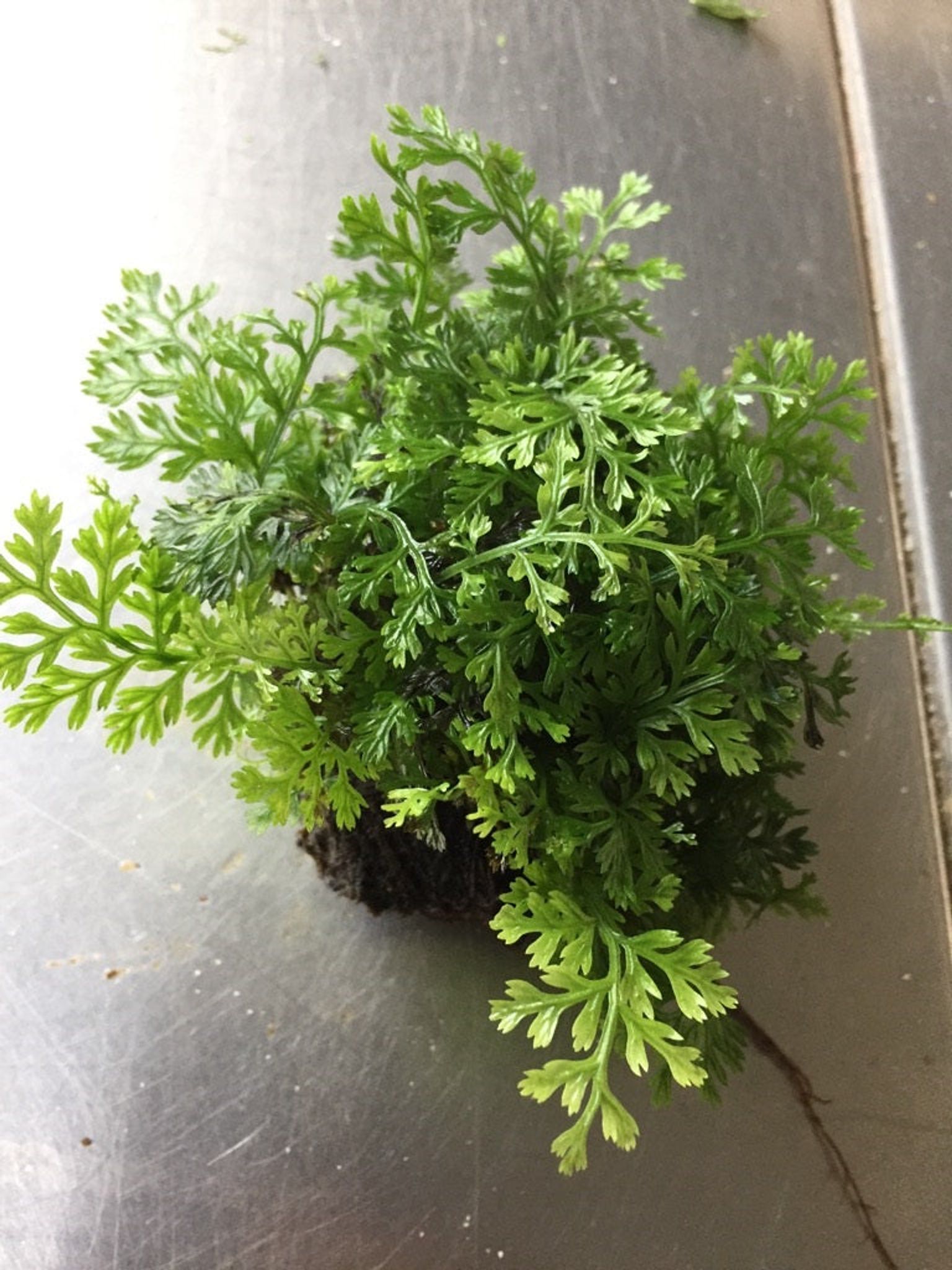

Best Tank Mates and Aquascaping Uses for Bolbitis
Bolbitis is one of the most reliable aquarium ferns for hobbyists who want a lush, low-light layout without babysitting a plant every week. This guide covers exactly which fish, shrimp, and snails work well alongside it, plus the attachment methods and layout roles that let its dark, ruffled fronds do the most visual work in your tank.
What Bolbitis Actually Is
Bolbitis heudelotii, commonly called the African or Congo water fern, is the full-size species most hobbyists picture when they hear "Bolbitis." A smaller relative, Bolbitis difformis (mini or dwarf Bolbitis), scales the same look down for foreground and midground work. Both are rhizomatous ferns rather than stem or rosette plants, and both grow epiphytically — attached to hardscape rather than rooted in substrate.
Size expectations differ a lot between the two:
| Trait | Bolbitis heudelotii | Bolbitis difformis (mini) |
|---|---|---|
| Mature height | ~16–22 in (40–55 cm) | ~4 in (10 cm) |
| Typical use | Background wall, focal accent | Foreground/midground texture |
| Growth rate | Slow | Slow |
| Attachment | Wood, rock (never substrate) | Wood, rock (never substrate) |
The single rule that governs everything else with this plant: never bury the rhizome. Contact with substrate traps the rhizome in low-oxygen, high-bacteria conditions and causes rot and melting. A couple of general plant databases loosely describe Bolbitis as something that "can be grown in substrate" — that's a common misconception, not a valid alternative method. Treat any such advice as wrong and tie the rhizome to hardscape instead.
Best Tank Mates for Bolbitis
Because Bolbitis attaches externally and grows slowly, its biggest vulnerability isn't water chemistry — it's physical damage from fish or invertebrates that dig, graze, or uproot.
Fish That Work Well
- Small community fish — tetras, rasboras, danios, and similar schooling species ignore plant matter entirely and appreciate the cover.
- Corydoras and other peaceful bottom dwellers — they forage in substrate, not on hardscape, so they leave the fronds alone.
- Bettas — a classic pairing; Bolbitis gives resting perches and cover without crowding swimming space.
- Gouramis and rainbowfish — peaceful mid-water fish that won't bother attached plants.
- Small, non-digging dwarf cichlids — this is where sources disagree. Most compatibility lists broadly exclude cichlids, but dwarf types such as rams and Kribensis-style dwarf cichlids are a workable exception because they don't dig substrate or graze on plant tissue the way larger New World or African rift cichlids do.
Fish and Animals to Avoid
- Goldfish — cold-water omnivores that graze on soft plant tissue and frequently shred fronds.
- Large or substrate-digging cichlids — bigger New World and African rift species uproot hardscape decorations while digging, which dislodges the whole rhizome.
- Silver dollars and large barbs — known plant grazers that will strip leaves.
- Goldfish tank setups generally aren't a good match for any epiphyte fern, since consistent nibbling outpaces Bolbitis's already-slow regrowth.
Shrimp and Snails
Bolbitis is a strong choice for invertebrate-focused tanks:
- Shrimp (cherry, Amano, and similar dwarf species) use the dense frond structure as both shelter and a grazing surface for biofilm.
- Snails move over the leaves without damaging them and help keep detritus down.
- Because Bolbitis has no roots drawing from substrate fertilizer, there's less concern about dosing conflicts in shrimp-sensitive setups.
You can browse suitable community and shrimp species directly, including options from FishyHub's small community fishes and shrimp selections.
Aquascaping Roles for Bolbitis
Bolbitis's dark, almost leathery ruffled fronds give it more design versatility than most low-light plants. Four layout roles come up most often:
- Background wall — tie several rhizome pieces across a branching driftwood network so the fronds knit together into a dense backdrop.
- Focal accent — attach a single rhizome clump to one large, striking root or rock as a centerpiece rather than a filler plant.
- Mid/foreground texture — use the mini form (B. difformis) closer to the front glass, where its smaller fronds don't overwhelm the scale of the scape.
- Cave and crevice softener — drape fronds over rockwork openings to blur hard edges while creating shelter that also benefits fry and shrimp.
Building a Bolbitis Wall vs. a Single Accent
For a wall effect across branching wood, space individual rhizome pieces roughly 2–3 inches (5–7.5 cm) apart at the time of attachment. Because growth is slow, pieces placed too close together won't visibly crowd each other for months, but planning the spacing up front prevents an uneven, patchy fill-in later. For a single accent piece, one larger rhizome section on a prominent root reads as a focal point faster than trying to spread a wall's worth of growth over one spot.
Layering With Other Epiphytes
Bolbitis pairs naturally with other non-substrate plants that share its "don't bury the rhizome" care model and low-light tolerance:
- Fine-leaved moss low on the hardscape, near the base.
- Anubias at a similar low-to-mid height, offering a contrasting broad, glossy leaf next to Bolbitis's fine, dark fronds.
- Bolbitis itself placed slightly higher, so its ruffled texture reads as the top layer of an epiphyte stack.
This layering approach builds a cohesive, textured hardscape rather than treating Bolbitis as an isolated specimen plant.
Hardscape Pairing
Bolbitis's dark green, ruffled fronds contrast well against lighter materials:
- Spiderwood or Manzanita — thin, branching shapes give lots of surface area for a wall-style layout.
- Dragon stone — its light, textured surface makes a strong visual contrast with dark fronds.
- Pale substrate underneath further emphasizes the contrast, since Bolbitis itself contributes almost no substrate-level color or texture.
Attaching Bolbitis to Hardscape
Attachment is straightforward but takes patience:
- Position the rhizome against porous hardscape (driftwood or lava rock work best) with the roots making direct contact.
- Secure it with cotton thread, fishing line, or a small dab of aquarium-safe cyanoacrylate (super glue) gel.
- Leave the ties in place for several weeks while the roots grip the surface on their own.
- Once attachment is firm, threads or line can be removed — the plant will hold itself in place indefinitely.
Pick the final spot before attaching. Moving or replanting Bolbitis frequently triggers leaf melt, so treat placement as a one-time decision rather than something to adjust later.
Water Parameters and Growing Conditions
Bolbitis tolerates a fairly wide range, but stability matters more than hitting an exact number:
| Parameter | Range |
|---|---|
| Temperature | 68–80°F (20–27°C) |
| pH | 5.5–7.5 (most reliable near neutral, 6.5–7.0) |
| General hardness | 1–8 dGH |
| Lighting | Low to moderate, roughly 25–50 PAR, 6–8 hrs/day |
| Water flow | Moderate to higher |
On pH specifically, sources vary: some cite a tighter 6.5–7.5 band, others a wider 5.5–7.5. The wider range is tolerated, but growth is most predictable in the middle of it, around neutral.
Lighting shapes leaf appearance more than survival — lower light produces darker green fronds and slower growth, while brighter light gives lighter, more translucent leaves with slightly faster growth but a higher risk of algae forming on the leaf surface.
Flow deserves more attention than it usually gets. In its native fast-flowing stream habitat, Bolbitis is constantly bathed in moving water, and replicating that in the aquarium both mimics natural conditions and discourages algae and biofilm from settling on the fronds. A hang-on filter or added powerhead pointed across the plant can make a noticeable difference in leaf cleanliness.
CO2 and fertilization aren't required but speed things up. A liquid all-in-one or micro fertilizer works well since Bolbitis has no substrate roots to draw from — root tabs are pointless here. Liquid carbon (Excel-type products) can be used, but dose conservatively, since some ferns are more sensitive to it than others.
Low-Tech and Blackwater Suitability
Despite being native to West African rivers, Bolbitis adapts well to soft, tannin-stained blackwater setups and low-tech tanks generally. Its low-light tolerance and modest nutrient needs make it a fit for South American or Southeast Asian biotope-style aquariums even though it doesn't originate from either region — the growing conditions overlap closely enough that the plant doesn't need a geographically "matched" tank to thrive.
Bolbitis vs. Java Fern and Anubias
These three plants get grouped together constantly because they share an attachment method and light tolerance, but they aren't interchangeable:
| Trait | Bolbitis | Java Fern | Anubias |
|---|---|---|---|
| Growth speed | Slow | Slow to moderate | Slow to moderate |
| Availability | Less common, often pricier | Widely available | Widely available |
| Algae risk on leaves | Higher under strong light | Moderate | Lower |
| Leaf texture | Fine, ruffled | Broad, ribbed | Broad, glossy |
Bolbitis generally grows slower and shows up less often in stock than the other two, and it's more prone to developing algae film on its leaves under high light. That's exactly why the flow recommendation above matters so much for this plant specifically.
Propagation and Maintenance
Once a rhizome section carries several healthy leaves on each side of a chosen cut point, sever it cleanly with a sharp blade or scissors and re-attach the new piece to hardscape using the same thread-or-glue method. Ongoing care is minimal:
- Gently rinse or swish the fronds during water changes to knock loose settled detritus.
- Trim only dead or melted fronds at the base — don't cut healthy tissue preemptively.
- Avoid relocating the plant once it's established; even a well-anchored piece can melt back if disturbed.
Common Mistakes and Troubleshooting
- Burying the rhizome in substrate — the single most common error; always keep it tied above the substrate line on hardscape.
- High light without enough flow — produces an algae film on the delicate fronds. Add flow or introduce shade from taller plants or hardscape to compensate.
- Frequent moving or replanting — triggers leaf melt every time. Choose a permanent spot before attaching.
- Mistaking normal post-purchase melt for plant death — some melt during acclimation is expected. If the rhizome itself stays firm, new growth typically follows within weeks.
- Housing with goldfish, large barbs, silver dollars, or aggressive/large cichlids — these graze on or uproot the plant, shredding leaves and dislodging the rhizome.
- Skipping fertilization entirely in a nutrient-poor tank — growth stalls even further beyond the plant's already-slow baseline.
Buying and Acclimating Bolbitis
Most retail Bolbitis arrives already attached to a small piece of wood or grown out in a tissue-culture cup rather than as a bare, potted stem plant. That changes how you should handle it on arrival:
- If it's pre-attached to wood, you can often place the whole piece directly into the tank rather than re-tying it yourself.
- If it comes from a tissue-culture cup, gently rinse the gel medium from the roots before attaching to hardscape — don't try to plant the gel-coated base in substrate.
- Expect some melt-back in the first few weeks regardless of source; check that the rhizome itself remains firm rather than judging health by leaf count alone.
Frequently Asked Questions
Can Bolbitis be planted in gravel or substrate?
No. Bolbitis is an epiphyte and needs to be tied or glued to hardscape above the substrate line. Burying the rhizome traps it in low-oxygen conditions and causes rot.
How fast does Bolbitis grow?
It's slow compared to most aquarium plants, with gradual fill-in over months rather than weeks. Adding CO2, moderate light, and good flow will speed things up, but it will never be a fast grower.
Is Bolbitis good for shrimp tanks?
Yes. Its dense fronds provide shelter and a grazing surface for biofilm, and since it doesn't need substrate fertilizers, there's less risk of dosing conflicts in shrimp-sensitive setups.
Can Bolbitis go with goldfish or cichlids?
Generally no for goldfish and most cichlids, since they graze on or uproot plants. Small, non-digging dwarf cichlids such as rams or Kribensis-type species can be a workable exception.
Does Bolbitis need CO2 or special fertilizer?
No, it survives without either, but both speed growth and deepen leaf color. Use a liquid fertilizer rather than root tabs, since Bolbitis has no roots in the substrate to absorb them.
How do you attach Bolbitis to driftwood?
Tie it with cotton thread or fishing line, or use a small amount of aquarium-safe super glue gel, then leave it in place for several weeks while the roots grip the surface on their own.
What's the difference between Bolbitis heudelotii and Bolbitis difformis?
Heudelotii is the larger classic species, reaching 16–22 inches (40–55 cm), and works best for background walls or focal accents. Difformis is a compact form around 4 inches (10 cm), suited to foreground and midground placement.
Why is my Bolbitis melting or turning black?
Usually it's acclimation stress, a buried rhizome, unstable water parameters, or too little flow combined with too much light causing algae to smother the leaves. Check the attachment point and water stability first before assuming the plant is dying.
Ready to build a tank around this fern? Browse compatible tank mates in FishyHub's freshwater livestock selection and pick species suited to your Bolbitis layout.


