
Best Tank Mates and Aquascaping Uses for Bacopa
Bacopa is one of the most forgiving stem plants in the freshwater hobby, but knowing which animals to keep with it and where to plant it makes the difference between a leggy stalk and a full, healthy hedge. This guide covers safe tank mates by species type, the animals to avoid, and practical layout and pruning steps for getting the most out of Bacopa.
Species Snapshot: Caroliniana vs. Monnieri
"Bacopa" in the aquarium trade usually refers to one of two distinct species, and telling them apart matters for both care and placement.
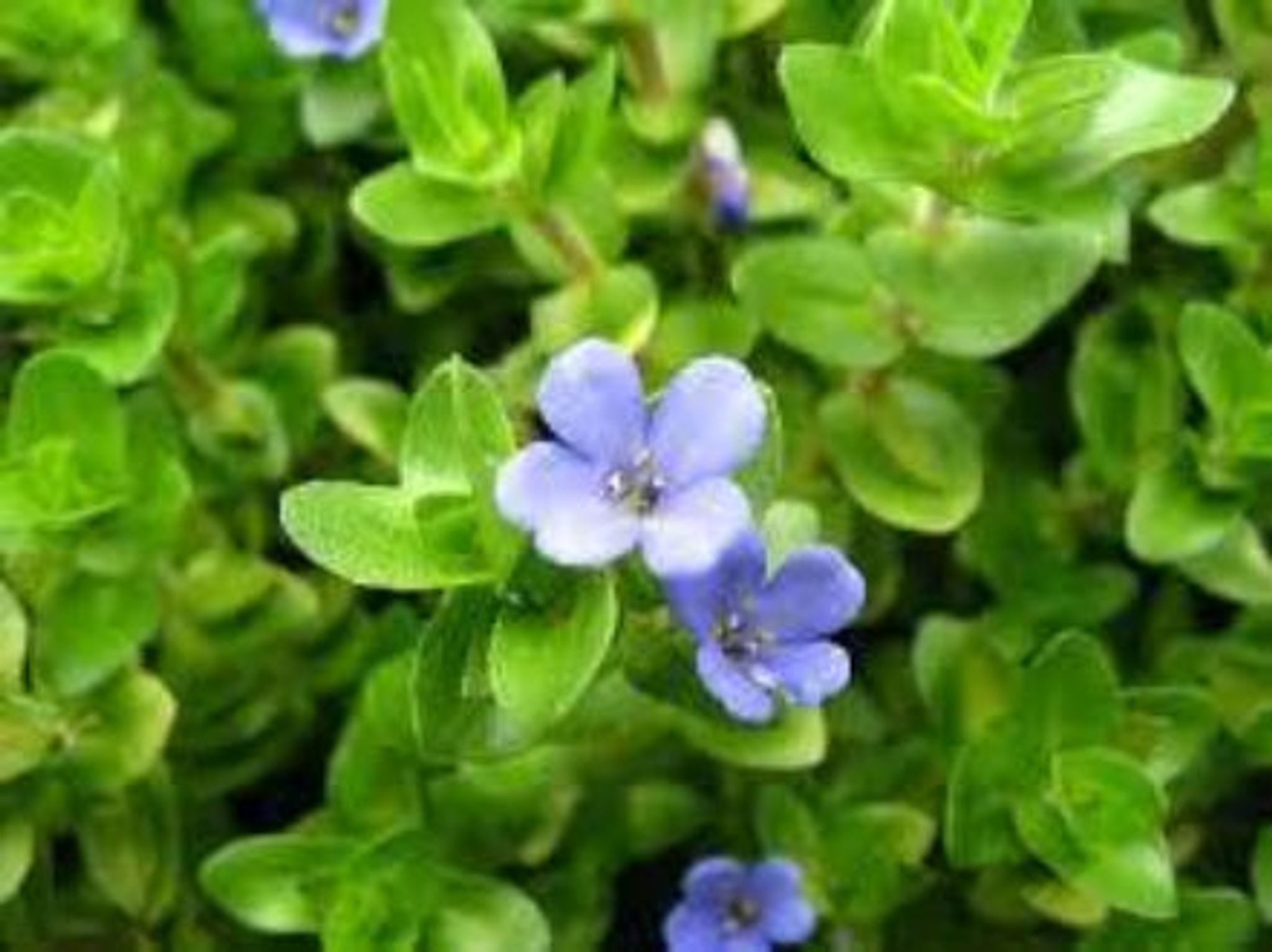
Bacopa caroliniana has rounder, thicker leaves that release a faint lemon scent when crushed between your fingers. It grows upright and can reach 12–16+ inches, making it a classic background stem plant.
Bacopa monnieri ("water hyssop") has smaller, more delicate creeping leaves and a low, spreading growth habit. It stays short enough to work as a midground or foreground groundcover when trimmed regularly.
| Feature | Bacopa caroliniana | Bacopa monnieri |
|---|---|---|
| Leaf shape | Rounded, fleshy | Small, oval, creeping |
| Scent when crushed | Lemon-like | None notable |
| Growth habit | Upright, tall | Creeping, low |
| Typical height | 12–16+ in (30–40+ cm) | 2–6 in (5–15 cm) when trimmed |
| Best tank position | Background | Midground/foreground |
Both species share the same basic care requirements, but their growth habits mean you'll use them very differently in a layout.
Water Parameters and Care Basics
Bacopa tolerates a wide parameter range, which is part of why it shows up so often in beginner setups:
- Temperature: 68–82°F (20–28°C)
- pH: 6.0–8.0
- GH: roughly 2–15 (soft to moderately hard water)
- Tank size: a minimum of about 10 gallons is commonly recommended, mainly because caroliniana needs vertical room to grow, not because of any bioload concern
Many US municipal water supplies run on the harder, higher-pH side of the ideal range, and Bacopa handles that well — it's one of the more forgiving stem plants for hobbyists who aren't remineralizing or softening their tap water.
Light and Color
Bacopa does fine under low-to-medium light, staying green with looser, more relaxed growth. Under moderate-to-high light it produces denser stems and, in caroliniana especially, a reddish or bronze tint. Sources disagree on how much light it "needs" — treat it as a spectrum rather than a hard requirement: Bacopa survives on low light, but it rewards more light with color and compactness. It doesn't strictly need strong light or CO2 to live; those inputs only push the deepest color and tightest growth.
CO2 and Fertilizer
CO2 injection and liquid fertilizer are optional, not mandatory. Bacopa grows reasonably well on fish waste and root tabs alone in a low-tech setup. Hobbyists chasing the reddish, compact look typically pair moderate-to-high light with light CO2 or liquid carbon plus root tabs or an all-in-one fertilizer.
Best Fish Tank Mates
Bacopa is compatible with essentially any peaceful community fish. The general rule: avoid animals that dig, uproot, or eat plants, and almost everything else works.
Good fish tank mates include:
- Tetras and rasboras — small, peaceful, and use the stems for cover
- Danios — active swimmers that stay out of the substrate
- Guppies and mollies — livebearers that appreciate the shelter Bacopa's stems provide
- Corydoras — bottom-dwelling but sift substrate rather than dig up root systems
- Small peaceful cichlids like rams or kribensis, which can coexist with sturdy stem plants when not actively spawning
A tetra shoal in particular pairs well visually with a Bacopa background hedge, using the stems for security and cover as they move through the tank.
Can Bacopa Live in a Betta Tank?
Yes. Bettas are peaceful toward plants and benefit from the cover and surface interest Bacopa provides, whether planted or left floating. The main thing to watch is handling — trim and rearrange gently near a betta's long fins to avoid snagging.
Best Invertebrate Tank Mates
Most freshwater invertebrates are excellent companions for Bacopa:
- Cherry shrimp and Amano shrimp graze biofilm and algae off the leaves without harming the plant itself
- Nerite and mystery snails do the same, cleaning leaf surfaces while leaving the plant structure intact
The main invertebrate risk comes from crayfish and crabs, which physically shred and uproot plants rather than simply grazing them — these are best kept in hardscape-only or artificial-plant setups instead.
Animals to Avoid
Some species will treat Bacopa as either lunch or an obstacle to bulldoze:
- Goldfish — cold-water omnivores that nibble soft plant leaves and dig
- Silver dollars — known plant-shredders in planted tanks
- Larger cichlids, including oscars and most Central American cichlids, which uproot plants while digging or rearranging substrate
- Plecos that rasp on leaves, damaging soft-leaved stems over time
- Crayfish and turtles — both dig and eat vegetation aggressively
Can Goldfish or Cichlids Be Kept With Bacopa?
Not reliably. Most goldfish and larger cichlids will dig it up or eat it outright. Bacopa is much better suited to a peaceful community setup than a goldfish or large-cichlid tank.
Aquascaping Layout Ideas
Bacopa's two growth habits open up different design roles depending on the species.
Background hedge: Plant tall caroliniana stems in odd-numbered clusters — groups of 3, 5, or 7 — rather than a single sparse row. A cluster reads as a natural stand of vegetation, while a single row tends to look thin and artificial once the stems mature. Spacing each cluster roughly 2–3 inches (5–7 cm) apart along the back glass gives enough density to hide equipment like a filter intake or heater without crowding the roots.
Color contrast: Bronze-toned caroliniana grown under high light pairs well with green foreground plants — the contrast in leaf color adds visual depth that a single-tone layout lacks. This coloration angle is worth planning intentionally rather than treating as an accident of lighting: pick a substrate and foreground planting that will set off the bronze tone rather than compete with it.
Floating cover: Left untethered, Bacopa stems float with roots dangling in the water column. This gives quick surface shade and cover, which shy or fry-raising tanks benefit from, and it's a low-effort way to add greenery without planting at all.
Midground/foreground creeper: Bacopa monnieri works as a low mat when trimmed regularly, but it's worth setting expectations — it does not form a dense, uniform lawn the way true carpeting plants like dwarf hairgrass or monte carlo do. Without heavy, frequent trimming and good light, it stays looser and more irregular than a true carpet.
Planting and Propagation
Propagating Bacopa is straightforward and a good way to fill out a layout without buying more stock:
- Cut a healthy lateral stem 3–6 inches (7.5–15 cm) long.
- Strip the lower leaves from the portion that will sit in the substrate.
- Push the stripped end into the substrate at the desired spot.
- Roots typically form within days to about 1–2 weeks.
Trimmed cuttings are also a practical way to quickly stock a new tank or share plants with another hobbyist, rather than buying fresh stems every time — a cost-saving habit worth building into your routine once an established stand is producing regular trimmings.
How Often Should I Trim Bacopa?
Roughly every 2–4 weeks, or whenever stems near the surface or start looking leggy. Regular top-trimming encourages bushier growth from side shoots instead of one long, thin stem, and it's what keeps a background hedge full rather than sparse.
Common Mistakes and Troubleshooting
- Planting too close together at the start. Stems need room to bush out after trimming; overcrowding from day one causes leggy, weak growth as stems compete and reach for light.
- Skipping trims for months. Untrimmed Bacopa gets tall and leggy and drops its lower leaves, leaving a bare stalk topped with a leaf cluster. Trimming every few weeks prevents this look.
- Panicking over melting or yellowing lower leaves after replanting. This is normal transition shock as the plant shifts from emersed (nursery-grown, out-of-water) form to submersed growth. New growth should look healthy within 1–3 weeks — don't pull the plant during this window.
- Assuming it needs strong light and CO2 to survive. It doesn't. Those inputs are for maximizing color and density, not keeping the plant alive.
- Expecting monnieri to carpet like a true lawn plant. Without heavy trimming and strong light, it stays looser than dedicated carpeting species.
- Housing it with known diggers or plant-eaters. Being surprised when a goldfish or crayfish shreds a carefully placed hedge is avoidable by matching tank mates to the plant from the start.
A quick dip or rinse for new stems before planting is also worth doing, since Bacopa is frequently sold bare-root or potted and can carry hitchhiking pest snails or algae from its growing conditions.
Frequently Asked Questions
Is Bacopa a good beginner plant?
Yes. It tolerates a wide range of water parameters, thrives in low-tech setups, and doesn't require CO2 injection or heavy fertilizing to grow.
Does Bacopa need to be planted in substrate, or can it float?
Both work. Planting anchors it and lets you control exact placement in a layout, while floating gives fast surface cover and shade with no substrate work at all.
Will shrimp eat or hide in Bacopa?
Shrimp graze biofilm and algae off the leaves and use the stems for cover, but they won't damage the plant itself. A shrimp colony and a Bacopa stand are a low-maintenance combination.
Can Bacopa live in a betta tank?
Yes. Bettas are peaceful toward plants and benefit from the cover Bacopa provides. Just handle stems carefully during trimming or rearranging to avoid catching a betta's fins.
How often should I trim Bacopa?
About every 2–4 weeks, or once it nears the surface or starts looking leggy, to keep it bushy rather than sparse and stalky.
Why is my Bacopa losing its lower leaves?
Usually insufficient light reaching the lower stem, transplant shock after replanting, or a nutrient deficiency. Trim off the bare lower section and replant the healthy top portion to restart clean growth.
Browse freshwater fish on FishyHub to find peaceful community species that pair well with a Bacopa-planted layout.


