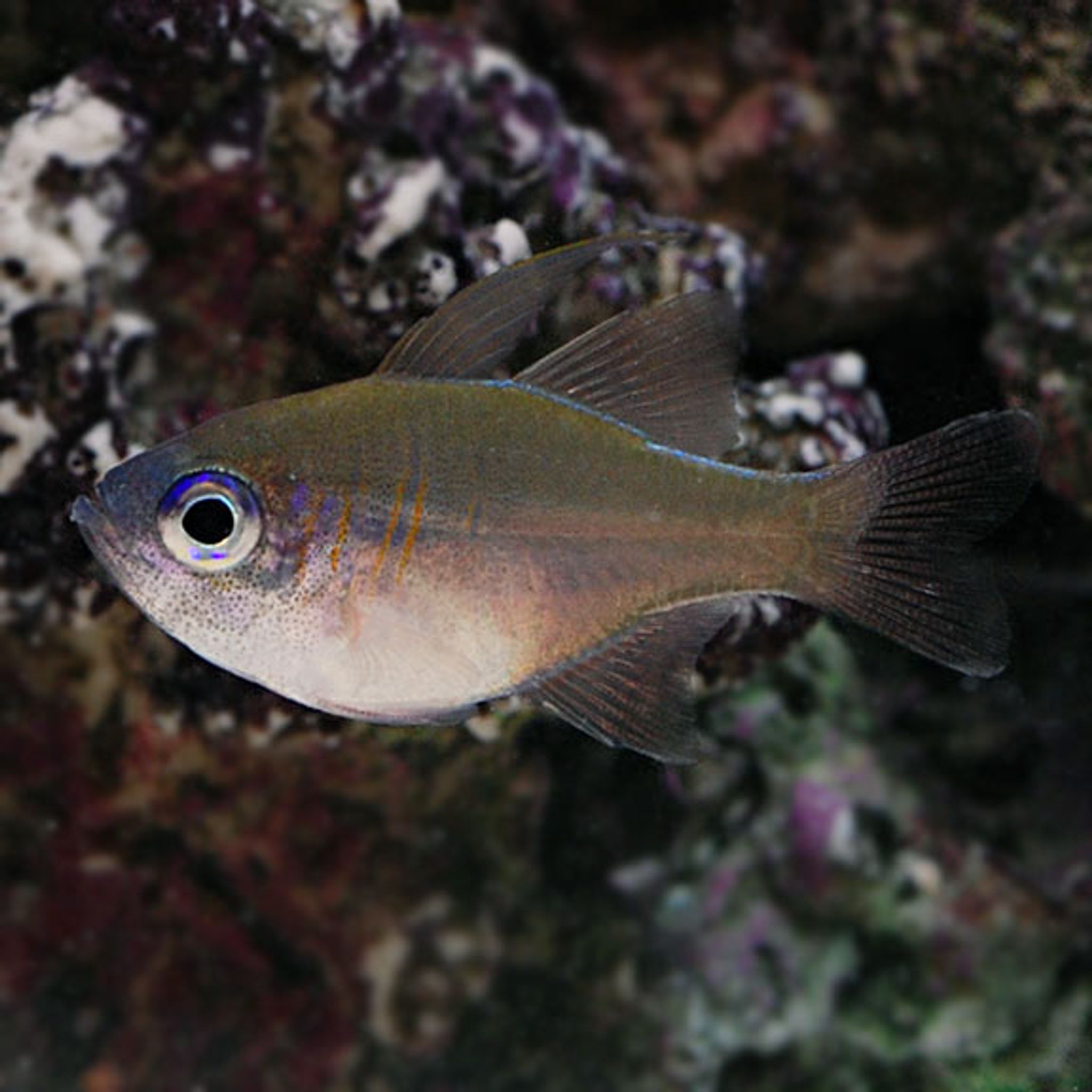
Banggai Cardinalfish Care Guide: Tank Size, Diet, Compatibility and Reef Safety
The Banggai cardinalfish (Pterapogon kauderni) is one of the few marine fish that is genuinely 100% reef safe, but it is not the "set and forget" beginner fish it's often sold as. This guide covers exact tank size numbers for singles, pairs and groups, what it eats, which tankmates work, and why sourcing captive-bred stock matters for a species with an unusually small wild range.
Species Snapshot
The Banggai cardinalfish belongs to the cardinalfish family (Apogonidae) and is native only to the Banggai Archipelago off Sulawesi, Indonesia — an extremely restricted natural range compared to most reef fish, which are spread across whole ocean basins. That narrow distribution is central to how this species should be sourced, covered below.
- Adult size: about 3 inches (7.5–8 cm) body length, with elongated fin filaments that make it look larger
- Growth rate: slow
- Lifespan: 3–5+ years in captivity, with some keepers reporting 8+ years under good care
- Body markings: vertical black stripes, silver body, white-spotted fins, and long trailing dorsal, anal and caudal fin rays
Minimum Tank Size
Sources disagree somewhat here — some list 20 gallons as acceptable for a single fish or pair, while others recommend 30 gallons as a safer baseline for long-term water stability. A sensible middle ground:
| Stocking goal | Minimum tank size | Notes |
|---|---|---|
| Single fish | 20 gallons long (75 L) | More floor space, less climbing water column |
| Bonded pair | 30 gallons (115 L) | Gives each fish room to hold a territory near shelter |
| Group of 4–6 | 55–75+ gallons (210–285+ L) | Group behavior needs a 6-foot-plus footprint |
Regardless of headcount, this species needs structure to hover near rather than open swimming room. Live rock, branching coral, or a long-spine urchin all work as a "host" the fish can shelter beside. A tank with bare sand and open water will leave a Banggai stressed even if the gallon count is technically adequate.
Water Parameters
Banggai cardinalfish don't need anything beyond standard reef parameters, and they aren't unusually delicate once acclimated:
- Temperature: 72–78°F (22–26°C)
- Specific gravity: 1.020–1.025
- pH: 8.1–8.4
- Alkalinity: 8–12 dKH
- Nitrate and phosphate: kept low, as with any reef system
The main risk isn't sensitivity to a specific parameter — it's that poor water quality invites bacterial or fungal issues over time, so consistency matters more than chasing perfect numbers.
Diet and Feeding
Banggai cardinalfish are carnivores that do best on a rotation of meaty frozen foods:
- Frozen mysis shrimp
- Enriched frozen brine shrimp
- Chopped fresh or frozen seafood
- Quality marine pellets or flake as a supplement
Feed small amounts twice daily rather than one large feeding. These are slow, deliberate feeders — they don't dart and snap the way damsels or clownfish do, so in a tank with fast eaters they can simply miss meals. Watch feeding time directly for the first few weeks to confirm each fish is actually getting food.
Temperament and Tankmate Compatibility
Banggai cardinalfish are peaceful toward other species and rarely bother anything outside their own kind. Males can become territorial toward other male Banggais when space is tight, which is the root cause of most "aggression" reports for this species.
Good tankmates include peaceful, non-frantic feeders such as clownfish, gobies, blennies, small wrasses, and firefish.
Avoid pairing with:
- Large or aggressive predatory fish
- Fast, boisterous swimmers that dominate the water column
- Anything that consistently beats them to food, since chronic feeding competition leads to slow starvation rather than an obvious injury
Is a Banggai Cardinalfish Reef Safe?
Yes — this is one of the species' strongest selling points. It will not pick at coral polyps, clams, or the clean-up crew inverts most reef keepers rely on. The one caveat: very small ornamental shrimp fry or copepods can occasionally be picked off opportunistically. Reef safety doesn't mean the fish ignores everything smaller than itself — it means it won't damage your corals or adult invertebrates.
Keeping One, a Pair, or a Group
There isn't a single "right" answer, but the tradeoffs are clear:
- Single fish: simplest option, fits a 20-gallon setup, no risk of in-species aggression.
- Bonded pair: the most popular route for a 30-gallon tank. Sexing Banggai cardinalfish externally is very difficult, so pairs typically self-select rather than being picked by appearance.
- Group of 5+: the reliable way to end up with a stable social unit and natural-looking behavior, but it requires buying juveniles together and a tank in the 55–75+ gallon range.
The mistake to avoid is landing in between: putting 2–4 unrelated adults in a small tank almost always results in one or two fish chasing the rest, leaving a stressed, underfed subordinate. If you want more than one fish and don't have room for a real group, a juvenile group purchase that you later thin down (or that self-pairs) is safer than combining adults from different sources.
Why Cardinalfish Hide
New owners often assume a hiding fish is sick, but shelter-seeking is completely normal for this species. In the wild, Banggai cardinalfish hover near sea urchins, branching coral, or dock pilings as a defense against predators — they aren't open-water swimmers by nature. In an aquarium, hiding gets worse with:
- New-tank stress after introduction
- Bright, unshaded lighting
- Lack of physical structure to shelter beside
- Intimidating or fast-moving tankmates
Given consistent feeding and adequate cover, most fish settle in and become visible within days to a few weeks. A fish that stays glued to one corner indefinitely usually needs more rockwork or fewer boisterous tankmates, not medication.
Sourcing: Captive-Bred vs. Wild-Caught
This is the point most retail-style guides skip, and it matters for a purchase decision, not just as trivia. The Banggai cardinalfish is listed by the IUCN as Endangered in the wild, a direct result of overcollection for the aquarium trade combined with its extremely limited native range — it exists naturally only around the Banggai Islands, nowhere else on Earth. A localized population can't absorb sustained collection pressure the way a wide-ranging species can.
The good news: captive-bred Banggai cardinalfish are now widely available, thanks in part to how easy this species is to breed compared to most marine fish (more on that below). Choosing captive-bred stock over wild-caught:
- Reduces pressure on a genuinely vulnerable wild population
- Typically means a fish already acclimated to prepared frozen foods
- Often results in hardier, less stressed specimens at purchase
Banggai Cardinalfish Breeding
Unusually for a marine fish, Banggai cardinalfish are relatively approachable to breed at home. They are paternal mouthbrooders: the male carries fertilized eggs, and later the hatched fry, in his mouth for roughly 20–30 days without eating during that period. Broods are modest, typically 20–60 eggs with fewer surviving to release.
The key advantage over most marine species is that Banggai fry emerge as fully formed miniature adults with no pelagic larval stage. That means no rotifers or phytoplankton cultures are needed — juveniles can be raised in a simple, bare rearing tank on baby brine shrimp. This direct-development trait is a major reason captive-bred stock has become so accessible.
One common mistake: disturbing the mouthbrooding male once he's carrying eggs or fry. Moving him, netting him, or otherwise stressing him can cause him to spit or even eat the brood, undoing weeks of effort in seconds.
Marine Fish Breeding Basics
Across marine species generally, reproductive strategies fall into a few buckets: mouthbrooding (as with Banggais), egg-scattering into open water, and live-bearing. Successful home breeding projects for any of these tend to share the same foundations — a rich, varied broodstock diet, stable water quality, and a separate rearing tank away from adult tankmates that might eat eggs or fry.
Banggai vs. Pajama vs. Dwarf Cardinalfish
If you're comparing cardinalfish species before buying, here's how the three most commonly available options stack up:
| Species | Adult size | Body/fins | Temperament | Best fit |
|---|---|---|---|---|
| Banggai cardinalfish | ~3 in (7.5–8 cm) | Elongated fins, vertical stripes, white-spotted fins | Peaceful, site-specific, slightly delicate as a juvenile | Reef tanks with shelter, singles/pairs/groups |
| Pajama cardinalfish | ~3 in (7.5–8 cm) | Rounder body, spotted rear half, shorter fins | Hardier, more tolerant of mixed groups and lower light | Community reef tanks, easier mixed grouping |
| Dwarf cardinalfish | Under 2 in (5 cm) | Compact, plain coloration | Peaceful, same shelter-seeking habits, scaled down | Nano reef tanks |
Both Banggai and Pajama cardinalfish are mouthbrooders and reef safe, so the deciding factor usually comes down to tank size, whether you want the Banggai's signature long fins, and how much mixed-group flexibility you need. For nano setups, the Cardinalfish category is worth browsing for dwarf options that follow the same husbandry principles at a smaller scale.
Cardinalfish as a Family
Beyond the Banggai, cardinalfish as a group share a few traits worth knowing: large eyes suited to low-light feeding, a nocturnal or crepuscular feeding tendency in many species, and mouthbrooding reproduction across numerous genera. As a family, they're generally peaceful and reef-compatible, which is why several species beyond the Banggai show up regularly in reef tank stocking lists.
A Contrast Point: Seahorses and Pipefish
If you're weighing a Banggai cardinalfish against a seahorse as a "first small marine fish," the two aren't really comparable in difficulty. Seahorses need low-flow, usually species-only tanks, slow live or frozen mysis feeding, and are considerably more sensitive to water quality swings and faster tankmates. Pipefish share similar constraints. Neither mixes well with typical reef community fish, including Banggais, because both are outcompeted by faster feeders. If ease of care and mixed-tank compatibility matter to you, the Banggai cardinalfish is the more forgiving choice by a wide margin.
Common Mistakes and Troubleshooting
- Buying a wild-caught fish that won't eat prepared food. Always confirm a fish is actively eating frozen or prepared food before you buy it, particularly with wild-caught individuals not yet acclimated.
- Mixing 2–3 unrelated adults in a small tank. This almost guarantees constant chasing and a starved subordinate.
- No hiding structure. A fish glued to a corner or hovering behind the heater often looks "sick" when it's really just stressed and exposed.
- Housing with fast, aggressive feeders like tangs or larger damsels, which will out-compete a Banggai at every feeding.
- Leaving the tank uncovered. Banggai cardinalfish are known jumpers, especially when startled — a secure lid is not optional.
- Assuming reef-safe means harmless to everything small. Pod populations and tiny shrimp fry can still get picked off opportunistically.
- Disturbing a mouthbrooding male. Handle the tank as normally as possible while he's carrying eggs or fry.
Frequently Asked Questions
Is the Banggai cardinalfish reef safe?
Yes. It will not harm coral, clams, or most invertebrates. The only real risk is to very tiny ornamental shrimp fry or pods, which it may pick off opportunistically.
What is the minimum tank size for a Banggai cardinalfish?
A single fish can work in a 20-gallon tank, a bonded pair does better in 30 gallons, and a real group of 4–6 needs 55–75+ gallons with a longer footprint.
Can you keep more than one Banggai cardinalfish together?
Yes — either as a bonded pair or as a group of 5 or more purchased together as juveniles. Combining 2–4 unrelated adults in a small tank usually leads to persistent fighting instead.
What do Banggai cardinalfish eat?
Meaty frozen foods such as mysis shrimp and enriched brine shrimp, along with quality marine pellets, fed in small amounts twice a day since they're slow, deliberate feeders.
Why is my Banggai cardinalfish hiding all the time?
It's normal shelter-seeking behavior rooted in wild predator-avoidance habits. New-tank stress, bright lighting, lack of cover, or intimidating tankmates all make hiding worse; it typically improves with consistent feeding and adequate structure.
Are Banggai cardinalfish easy to breed at home?
Relatively, yes. They're paternal mouthbrooders whose fry hatch as fully formed miniature adults, skipping the difficult planktonic larval stage that makes most marine fish hard to breed.
What's the difference between Banggai and Pajama cardinalfish?
The Banggai has long, flowing fins and bold vertical stripes, while the Pajama cardinalfish is rounder-bodied, spotted toward the tail, and generally hardier and more sociable in mixed groups.
Should I buy wild-caught or captive-bred Banggai cardinalfish?
Captive-bred is strongly preferred. The species is IUCN-listed as Endangered due to its extremely limited native range and a history of overcollection for the aquarium trade, and captive-bred stock is now widely available.
Ready to stock your reef tank the right way? Browse captive-bred marine fish on FishyHub to compare Banggai cardinalfish against compatible tankmates before you buy.

