Aquarium Fish Losing Popularity: What the Data Shows
FishyHub's US marketplace data does not yet show any aquarium fish group clearly losing popularity: every livestock category tracked in the US is rising, because the market is young and listings are still growing across the board. What the data does show is where sellers list less, such as crowntail and veiltail bettas, oranda and ryukin goldfish, and big, inexpensive fish like oscars and silver dollars, while halfmoon plakat bettas draw the strongest buyer interest. Those gaps are early signs worth watching, not proof of decline.
Key Findings
- FishyHub data shows new listings rising in every tracked US livestock category over the period from October 2024 to October 2026, so no fish group is yet cooling on the US marketplace.
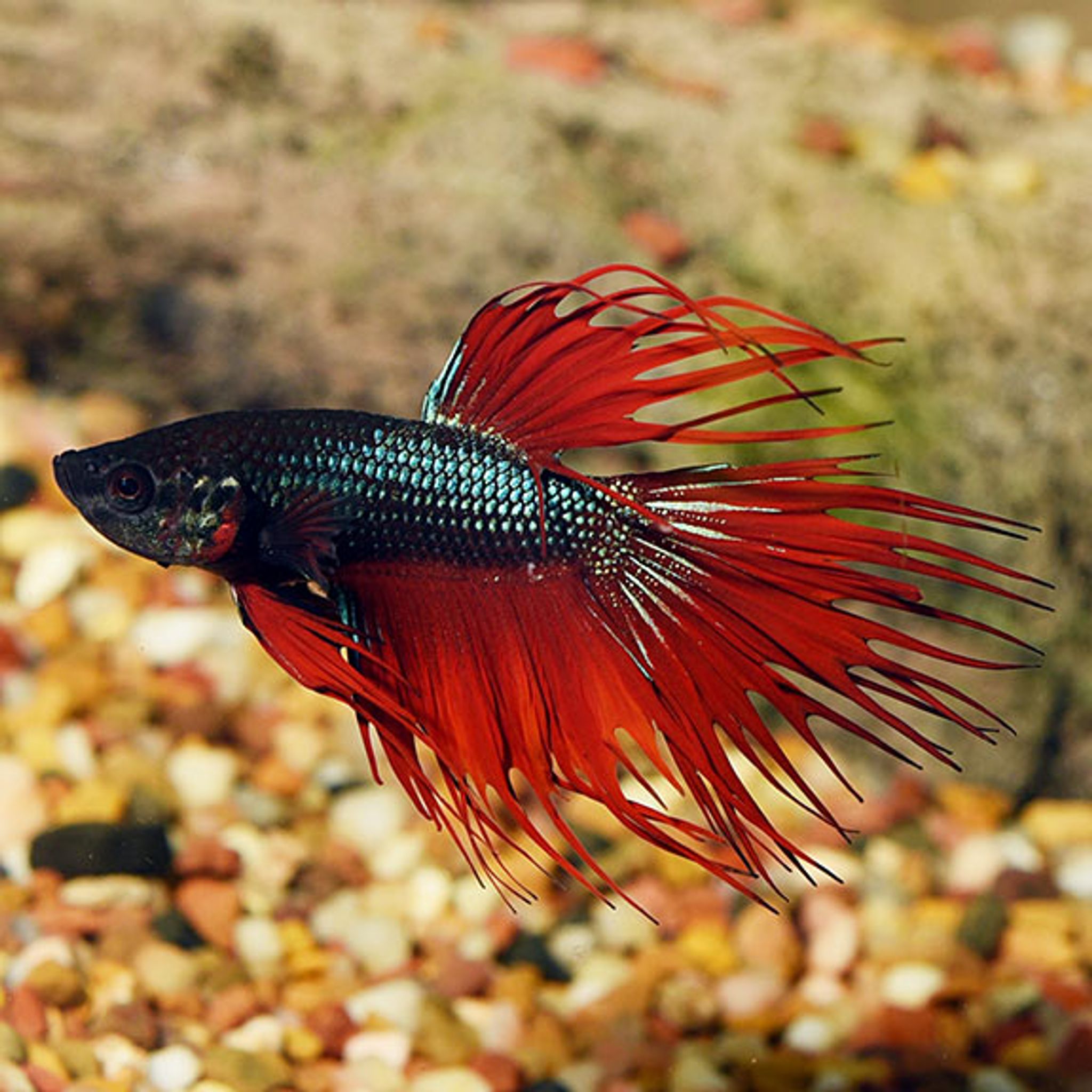
- FishyHub marketplace data shows crowntail bettas have limited supply in the US and sit in the entry-level price tier, while halfmoon and halfmoon plakat bettas have high supply.
- FishyHub data shows halfmoon plakat bettas draw very high buyer interest from US users, with demand ahead of supply, which marks where betta tastes have moved.
- FishyHub data shows dumbo and veiltail bettas also have limited supply in the US.
- FishyHub marketplace data shows oranda and ryukin goldfish have limited supply in the US, even though goldfish as a whole have very high supply.
- FishyHub data shows oscars and silver dollars have limited supply in the US and sit in the entry-level price tier.
- FishyHub data shows freshwater livestock holds the larger share of US listings, with marine fish, invertebrates and corals the smaller share.
Why the US Data Cannot Yet Show a Decline
FishyHub measures momentum by comparing new listings and orders in the most recent year with the year before. In a marketplace that opened recently, almost everything grows from a small base, so a fish that is fading in the wider hobby can still show rising listings here. The US data also has no order history yet, and buyer interest (wishlists, likes and "my tank" saves) is only strong enough to report for a few betta varieties.
That means a headline such as "fish X is losing popularity in America" cannot be supported from FishyHub's US numbers. What can be supported is a comparison of supply: when merchants list one fish sparsely while listing its close relatives heavily, it usually reflects what they expect to sell.
Where US Sellers Are Listing Less
Older betta forms
| Betta variety | US supply | US price tier |
|---|---|---|
| Crowntail | Limited | Entry-level / budget |
| Dumbo | Limited | Mid-range |
| Giant Halfmoon Plakat | Limited | Upper mid-range |
| Halfmoon | High | Upper mid-range |
| Halfmoon Plakat | High | Mid-range |
| Veiltail | Limited | Mid-range |
The veiltail was the standard pet-store betta for generations, and the crowntail had its own boom. Breeders have since put most of their effort into halfmoons and short-finned plakats. Plakats are hardier, less prone to fin damage, and easier to keep looking good in a small tank, which helps explain why halfmoon plakats lead US buyer interest.
The giant halfmoon plakat is a useful contrast. Its supply is limited too, but FishyHub data shows demand clearly outpacing supply. Thin listings there mean scarcity, not fading interest.
Fancy goldfish varieties
Goldfish as a whole have very high supply in the US, with a very wide price spread, yet named fancy varieties such as orandas and ryukins have limited supply. Deep-bodied fancy goldfish are among the harder fish to ship well, since they are sensitive to stress and temperature swings in transit. Many American keepers also buy goldfish in person at a local fish store, or keep hardier single-tail types in outdoor ponds, so fewer fancy fish reach online listings.
Big, inexpensive fish
Oscars and silver dollars both have limited supply and sit in the entry-level price tier; knifefish follow the same pattern. These fish start small and cheap but grow into large adults that need very big tanks. Two things work against them online. Shipping a larger fish costs more than the fish itself, and the hobby has grown more aware of "tank-busters" being bought on impulse and later rehomed. Many are still sold as juveniles in local stores, where no courier is involved.
What Is Holding Up Well
Groups with very high supply on FishyHub in the US include, in alphabetical order:
- American cichlids
- Barbs
- Catfish
- Discus
- Goldfish (category as a whole)
- Guppies
- Other cichlids
- Plecos
- Shrimps
- Tetras
On the marine side, butterflyfish, clownfish, gobies, LPS hard corals, polyps, SPS corals, tangs and wrasses all have very high supply. None of these looks like a group in retreat.
How to Read "Losing Popularity" Claims
For a fish to be genuinely losing popularity on a marketplace, three signals usually line up:
- Cooling momentum: fewer new listings and orders than the year before.
- Supply ahead of demand: sellers list more than buyers want.
- Easing prices: sellers cut prices to move stock.
In the US, FishyHub sees none of these yet for any group. Limited supply on its own can mean a fish is out of fashion, hard to ship, or simply scarce, and the giant halfmoon plakat shows how different those can be. FishyHub will be able to say more once the US market has a fuller order history over the coming years.
Shipping and Local Stores Shape What Gets Listed
Outside FishyHub's data, general hobby knowledge helps explain the gaps. Live fish travel by overnight courier in insulated boxes, with heat packs in winter for the Midwest & Central and East Coast & Northeast zones and extra care in summer heat across the South & Southeast. Deliveries to Alaska, Hawaii & territories cost more and take longer. Small, inexpensive fish ship economically in numbers, and premium fish justify the cost. Large, cheap fish fall in between, so they tend to stay local-store fish rather than online listings.
Methodology
This page is based on FishyHub's US marketplace activity over the period from October 2024 to October 2026. We looked at active listings by category, listed price tiers and price spread, new listings over time, and buyer interest (wishlists, likes and "my tank" saves) where it was strong enough to report. All findings are reported as tiers and directions, not figures.
The US market is new, so it has no order history in this data, and momentum is rising for every tracked category. FishyHub cannot measure how many Americans keep a given fish, what they spend, or how popularity differs by state; it does not report state-by-state figures. Shipping context is general hobby knowledge, not FishyHub data.
Frequently Asked Questions
What aquarium fish are losing popularity in the US?
FishyHub's US data does not yet show any group in decline, because all categories are rising. Sellers do list crowntail, dumbo and veiltail bettas, orandas, ryukins, oscars and silver dollars less than their close relatives.
Are bettas losing popularity?
No. Bettas have high supply in the US and halfmoon plakats draw very high buyer interest. Interest has shifted between betta types, away from older long-finned forms.
Are goldfish going out of style?
Not on FishyHub. Goldfish as a whole have very high US supply. Named fancy varieties are listed less, partly because they are harder to ship.
Why are oscars hard to find online?
On FishyHub in the US, oscars have limited supply and entry-level prices. A low-priced fish that grows large is costly to ship relative to its price, so many are sold locally instead.
How to Cite This Page
Source: FishyHub, "Aquarium Fish Losing Popularity: What the Data Shows" (2026), https://fishyhub.com/us/blogs/blog-detail/aquarium-fish-losing-popularity-what-the-data-shows


