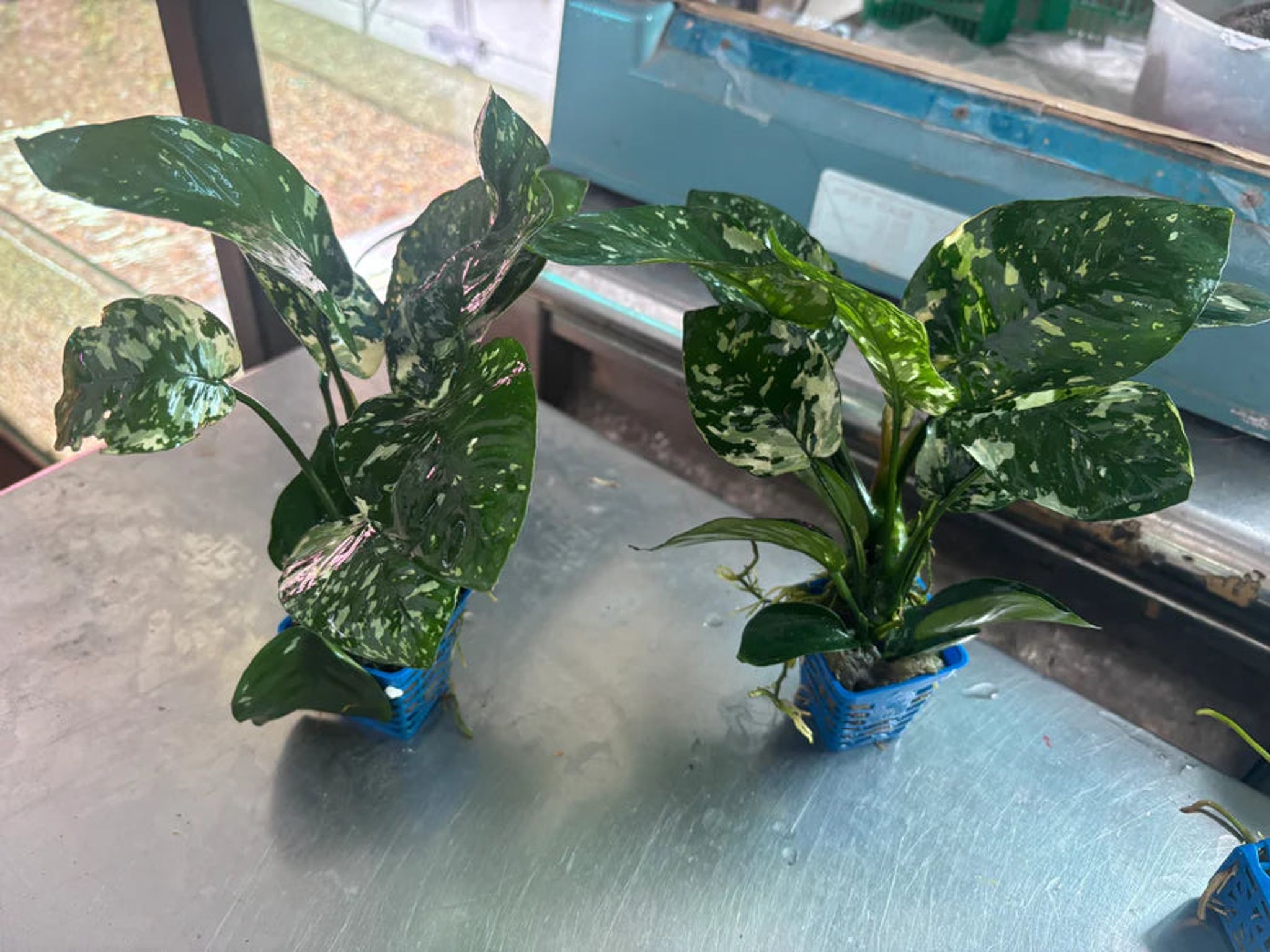

Anubias Care Guide: Light, CO2, Substrate and Growth Tips
Anubias care comes down to a few rules: keep the rhizome above the substrate, give it low to moderate light, and be patient with its slow growth. It does not need CO2 injection or a rich soil, and it tolerates a wide range of water conditions, which is why it shows up in so many beginner tanks and aquascapes alike. The details below explain what actually makes anubias thrive, and the few mistakes that kill it.
What Makes Anubias Different
Anubias is a genus of rhizome plants from West and Central Africa, where many species grow along riverbanks, often partly out of the water. In the aquarium they are grown fully submerged, and they adapt well.
Three traits shape how you care for them:
- The rhizome is a thick horizontal stem that stores energy. Leaves grow from its top, and roots grow from its underside. Burying it is the most common way anubias die.
- Thick, waxy leaves resist nibbling, so most plant-eating fish leave them alone. Goldfish and some large cichlids may still uproot or chew them.
- Slow growth is normal. Many varieties add one new leaf every one to three weeks. That slow pace is also why the leaves can collect algae.
Popular Varieties
| Variety | Typical height | Good placement | Notes |
|---|---|---|---|
| Anubias barteri var. nana | 2–4 in (5–10 cm) | Foreground, rocks, wood | The most common type; very forgiving |
| Nana 'Petite' | 1–2 in (2.5–5 cm) | Small tanks, tight wood crevices | Dwarf form, even slower |
| Anubias barteri (standard) | 6–12 in (15–30 cm) | Midground, background | Broad leaves, larger rhizome |
| Anubias coffeefolia | 6–10 in (15–25 cm) | Midground | Ridged leaves; new growth is reddish-brown |
| Anubias heterophylla / congensis | 8–16 in (20–40 cm) | Background | Long, narrow leaves |
Heights vary with tank conditions and light, so treat these as rough guides.
Water Parameters
Anubias is one of the least fussy plants in the hobby. Commonly accepted ranges:
| Parameter | Acceptable range | Comfortable target |
|---|---|---|
| Temperature | 72–82°F (22–28°C) | 74–78°F (23–26°C) |
| pH | 6.0–7.5 | 6.5–7.2 |
| General hardness (GH) | 3–15 dGH | 4–10 dGH |
| Tank size | Any; nana 'Petite' fits nano tanks under 5 gallons (19 liters) | — |
Stability matters more than hitting an exact number.
Light: Less Is Usually More
Anubias is a low-light plant. It grows under basic hood lights and stays healthy in shaded spots where faster plants struggle.
How much light to give
- Low to moderate light is ideal. A standard hobby LED fixture on a tank of normal depth is usually plenty.
- 6–8 hours per day is a reasonable photoperiod. Going beyond 8–10 hours mostly feeds algae, not the plant.
- Shade is a tool. Tuck anubias under driftwood branches, beside rocks, or beneath floating plants. This is its natural niche.
Why strong light causes problems
Because anubias grows slowly, each leaf sits in the tank for months. Under bright light, green spot algae and black beard algae can settle on the leaf surface faster than the plant produces new leaves. The plant itself does not "burn," but heavily coated leaves photosynthesize poorly and look shabby.
If you run a high-light planted tank, place anubias in the lowest-light areas: under overhangs, in corners, or low on the hardscape. For a new setup, a modest LED aquarium lamp with adjustable intensity makes it easier to find a level that suits both anubias and any faster plants.
CO2: Optional, Not Required
Anubias does not need injected CO2. It grows well in low-tech tanks relying only on the CO2 produced by fish and decomposing organic matter.
What CO2 injection does:
- Speeds growth modestly and can produce larger, more frequent leaves.
- Can reduce algae in high-light tanks by helping plants outcompete it, though this depends on the whole system being balanced.
What it does not do: it will not turn anubias into a fast grower. If you are considering CO2 only for anubias, it is rarely worth the cost and monitoring. Liquid carbon products are an alternative some keepers use, but note that they can harm certain sensitive plants, and dosing opinions vary.
Substrate and Planting
Here is the key point: anubias does not need substrate at all. It feeds largely through its leaves and roots from the water column, and it is happiest attached to hardscape.
Attaching to wood or rock
- Choose a spot with some crevice or texture for roots to grip.
- Secure the rhizome with cotton thread, fishing line, or a small dab of cyanoacrylate gel superglue (the gel type is widely used and considered aquarium-safe once cured).
- Keep the rhizome pressed lightly against the surface, with roots touching it.
- Within a few weeks to a couple of months, the roots grip on their own. Thread can then be removed or left to rot away.
Planting in the substrate
You can plant anubias in the ground if you like the look. Push only the roots into the substrate and leave the entire rhizome exposed above it. A buried rhizome tends to rot, starting with yellowing leaves and a mushy, foul-smelling stem.
For substrate choice, plain aquarium gravel or sand works well. Nutrient-rich aqua soil is not necessary for anubias, although it benefits root-feeding plants you may keep alongside it. Root tabs placed near the roots can help rooted anubias, especially larger varieties.
Fertilizer and Nutrients
In a stocked tank with regular feeding, fish waste supplies much of what anubias needs. Still, a light dose of a comprehensive liquid fertilizer can improve leaf color and growth rate, particularly in tanks with few fish or very clean water.
Signs of nutrient shortage:
| Symptom | Likely cause | What to try |
|---|---|---|
| Older leaves yellowing evenly | Nitrogen or general nutrient shortage | Light, regular liquid fertilizer |
| Yellowing with green veins | Iron or micronutrient shortage | Fertilizer with trace elements |
| Pinholes or melting new leaves | Potassium shortage is often suspected | Fertilizer containing potassium |
| Soft, mushy rhizome | Rot, usually from burial or damage | Cut away the rotten section |
Diagnosing plant deficiencies by eye is not exact, and keepers often disagree on causes. Change one thing at a time and give anubias several weeks to respond, since it grows slowly.
Growth, Trimming and Propagation
Trimming
Remove old, damaged or algae-covered leaves at the base of the stem with sharp scissors. Anubias does not grow back from a cut leaf, but new leaves will emerge from the rhizome tip.
Propagation by rhizome division
- Wait until the rhizome has at least 5–6 leaves and is 2–3 inches (5–8 cm) or longer.
- Cut it into sections with a clean blade, keeping three or more leaves on each piece.
- Attach each piece to wood or rock as you would a new plant.
Side shoots may also form on their own. Once a shoot has a few leaves and roots, it can be separated.
Flowering
Healthy anubias sometimes produces a small white or cream flower (spadix) on a stalk, even underwater. It is a harmless sign the plant is doing well. You can leave it or trim it off.
Tankmates and Placement Ideas
Because the leaves are tough and the light needs are modest, anubias works in many setups:
- Community tanks with tetras, rasboras and livebearers.
- Shrimp tanks, where the broad leaves offer grazing surfaces for biofilm. It pairs well with freshwater shrimp, and the plant needs no special care that would disturb a shrimp colony.
- Cichlid and larger-fish tanks, attached firmly to rock so digging fish cannot uproot it.
Avoid tanks with goldfish or large plant-eating species if you want leaves to stay intact, and keep the rhizome clear of strong direct current that can tear leaves.
Frequently Asked Questions
Why are my anubias leaves turning yellow?
The most common cause is a buried rhizome that is starting to rot, so check that first. Other causes include nutrient shortage in a lightly stocked tank, or old leaves naturally dying back. If only the oldest leaves yellow slowly while new ones look healthy, it is usually normal aging.
How do I get rid of algae on anubias leaves?
Reduce light intensity or duration, shade the plant, and keep up with water changes. Heavily coated leaves can be wiped gently or removed. Algae-eating animals like nerite snails and some shrimp can help keep leaf surfaces clean.
Can anubias grow floating or in a gravel-free tank?
Yes. Anubias can float freely, though it grows best when attached to something so its roots have a surface to grip. Bare-bottom tanks are no obstacle, since the plant draws most nutrients from the water.
How fast does anubias grow?
Slowly. A typical rate is a new leaf every one to three weeks, with higher light, CO2 and fertilizer speeding it up somewhat.
Is anubias safe for shrimp and snails?
Yes. Anubias is widely kept with dwarf shrimp and snails, which graze on its leaves without harming them. As with any new plant, rinse it well and consider a quarantine period to avoid bringing in pests or pesticide residue.
Getting Started
Anubias rewards a hands-off approach: attach the rhizome to wood or rock, keep the light modest, and let it grow at its own pace. With the right placement it can last for many years in the same tank. If you are building or refreshing a planted layout, browse substrate options on FishyHub to set up the foundation for anubias and its tankmates.


