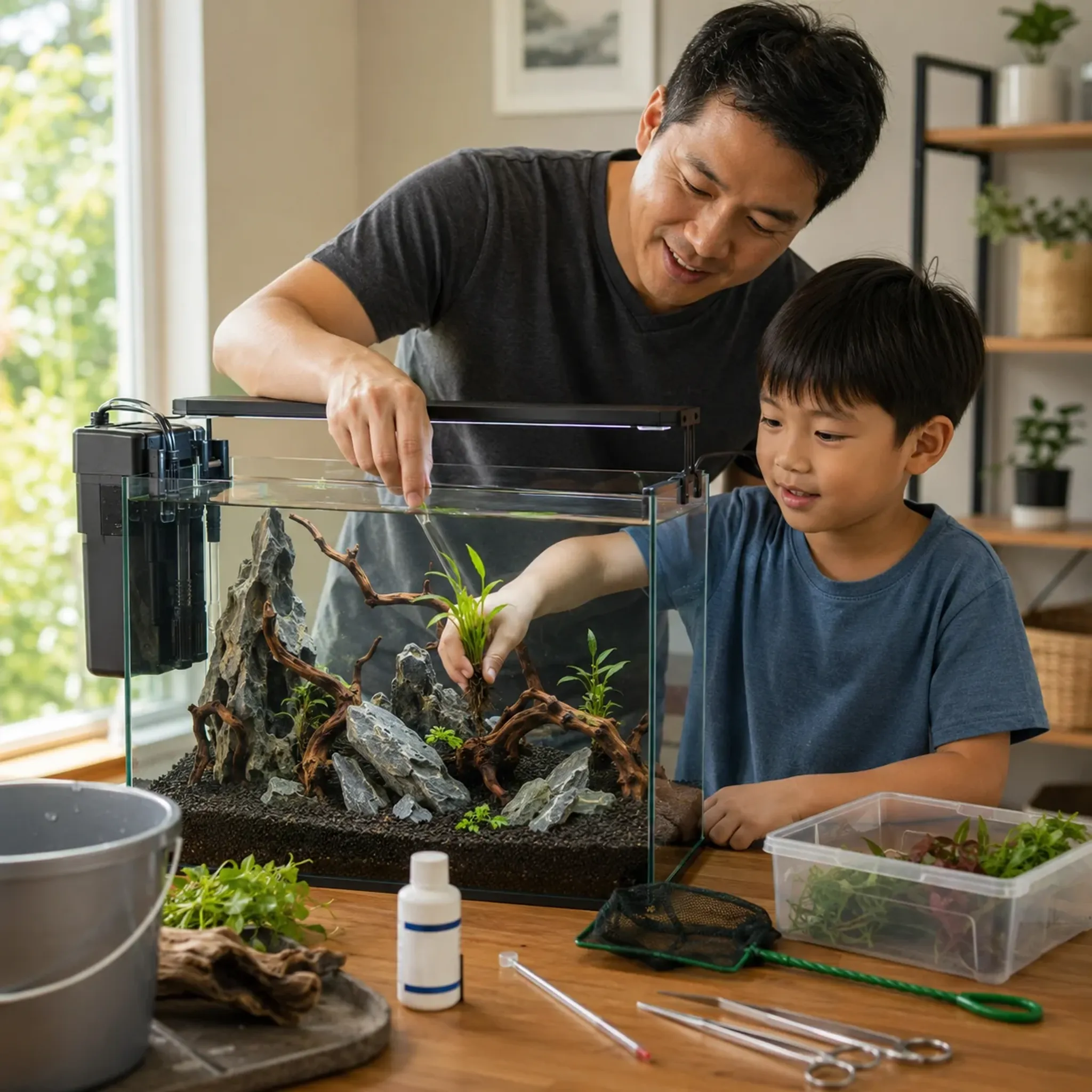

The Complete Freshwater Aquarium Setup Guide for Beginners
Starting a freshwater aquarium is one of the most rewarding hobbies you can pick up. The sight of fish gliding through crystal-clear water, plants swaying gently, and the soft hum of a filter — it is calming, educational, and endlessly fascinating. Whether you have a compact HDB flat or a landed property with room to spare, there is a tank size and setup that fits your lifestyle.
This guide walks you through every stage of a proper freshwater aquarium setup, from picking your first tank to adding your first fish.
Step 1: Choose the Right Tank Size
For beginners, a 20 to 40 litre tank is often recommended as a starting point. However, there is a counterintuitive truth in the hobby: larger tanks are actually more stable and forgiving than small ones. A 60-litre or 90-litre tank maintains water temperature and chemistry far more consistently than a 10-litre nano tank.
In Singapore's warm tropical climate (average ambient temperature 27–31°C), water temperature stability matters. Nano tanks heat up and cool down rapidly, stressing fish. A larger volume buffers these fluctuations naturally.
Common starter tank sizes:
| Tank Volume | Suitable For |
|---|---|
| 20–40 litres | Nano fish, shrimp, single betta |
| 60–90 litres | Small community tanks |
| 120–180 litres | Medium community setups |
| 200+ litres | Cichlids, larger species |
Step 2: Pick the Right Location
Before filling a tank with water, decide where it will live. A filled aquarium is extremely heavy — water weighs approximately 1 kilogram per litre. A 90-litre tank with substrate and decor can weigh over 100 kg.
Location checklist:
- Place on a sturdy, level surface rated for the weight
- Avoid direct sunlight (promotes algae growth)
- Keep away from air-conditioning vents (temperature swings stress fish)
- Ensure easy access to a power socket for equipment
- Leave space behind the tank for filter tubing and cables
Step 3: Gather Your Equipment
A functional freshwater aquarium needs a few key components:
Filtration
A good filter is the backbone of a healthy tank. It performs three functions: mechanical (removing particles), biological (housing beneficial bacteria that process waste), and chemical (removing dissolved compounds). For most setups, a hang-on-back (HOB) or canister filter works well.
Heater
Most tropical freshwater fish thrive between 24°C and 28°C. In Singapore, ambient temperatures often keep tanks warm enough during the day, but overnight air-conditioning can chill the water unexpectedly. A reliable adjustable heater prevents these drops.
Substrate
Gravel, sand, or plant-specific substrates each have their place:
- Fine sand: Ideal for bottom-dwelling fish like corydoras
- Gravel: Easy to clean, widely available
- Aqua soil / planted substrates: Nutrient-rich, essential for live plants
Lighting
For a fish-only tank, standard LED lighting works well. If you plan to keep live plants, invest in a full-spectrum planted tank light with sufficient PAR (photosynthetically active radiation).
Step 4: Rinse Everything Before Adding It
Never add substrate, decorations, or equipment to a tank without rinsing them first. Rinse with clean water only — no soap or detergents, as residue is toxic to fish.
Step 5: Set Up and Fill the Tank
- Add your rinsed substrate (5–7 cm depth is typical)
- Add any hardscape (rocks, driftwood, decorations)
- Fill slowly — place a plate on the substrate and pour water onto it to avoid disturbing your layout
- Install filter, heater, and any other equipment
- Add a dechlorinator to neutralise chlorine and chloramine in tap water
Singapore tap water contains chlorine and sometimes chloramine, both of which are lethal to fish and beneficial bacteria. Always treat tap water with a quality dechlorinator before adding it to the tank.
Step 6: Cycle the Tank
This is the most important — and most often skipped — step. Cycling establishes the nitrogen cycle: a colony of beneficial bacteria that converts toxic ammonia (produced by fish waste and uneaten food) into less harmful nitrite, then into relatively safe nitrate.
A tank that has not been cycled will experience dangerous ammonia spikes that can kill fish within days.
Cycling takes approximately 4–6 weeks. For a detailed walkthrough, see our guide: How to Cycle a Fish Tank.
Step 7: Add Plants (Optional but Recommended)
Live plants are not just decorative — they actively absorb ammonia and nitrate, compete with algae for nutrients, and provide fish with shelter and enrichment. Low-maintenance options for beginners include java fern, anubias, and java moss, all of which thrive in low-light conditions without CO₂ injection.
For a full guide to easy aquarium plants, see: Low-Maintenance Aquarium Plants for Beginners.
Step 8: Add Fish Gradually
After your tank has cycled, introduce fish slowly — a few at a time over several weeks. Overstocking too quickly overwhelms the biological filter and causes water quality crashes.
A useful stocking guideline for beginners: 1 cm of adult fish per litre of water. This is a rough rule, and fish body shape, activity level, and waste production all matter, but it prevents severe overstocking.
For fish recommendations, see: Best Freshwater Fish for Beginners.
Essential Water Parameters to Monitor
| Parameter | Ideal Range for Tropical Community Fish |
|---|---|
| Temperature | 24–28°C |
| pH | 6.5–7.5 |
| Ammonia | 0 ppm |
| Nitrite | 0 ppm |
| Nitrate | Under 20 ppm |
| GH (hardness) | 4–12 dGH |
Invest in a basic liquid test kit (more accurate than test strips) and check parameters weekly during the first month.
Frequently Asked Questions
How long should I wait before adding fish after setting up a new tank? At minimum, let the tank cycle fully — typically 4 to 6 weeks. Adding fish to an uncycled tank nearly always results in ammonia poisoning and fish deaths.
Do I need a heater in Singapore? For most tropical fish, ambient temperatures in Singapore are sufficient during daytime. However, if you use air-conditioning at night, a heater set to 26°C prevents dangerous temperature drops.
How often should I do water changes? For a new tank, 25–30% weekly water changes help keep nitrate levels in check. Once the tank matures (3–6 months), you can assess based on test results. See our full maintenance guide: Aquarium Maintenance Schedule for Beginners.
Can I use rainwater instead of tap water? Rainwater is soft and often acidic, which can work for certain species but requires careful pH monitoring. Singapore tap water, properly dechlorinated, is perfectly suitable for the vast majority of freshwater tropical fish.
What is the cheapest way to start a freshwater aquarium? A second-hand all-in-one starter kit with a built-in filter and LED light is often the most cost-effective entry point. Focus your budget on a reliable test kit and quality fish — do not skimp on water quality monitoring.
Summary
A successful freshwater aquarium setup comes down to patience, planning, and understanding the nitrogen cycle. Take your time with each step, cycle the tank before adding livestock, and keep up with regular maintenance. The hobby rewards those who resist the urge to rush.
For your next step, explore Best Freshwater Fish for Beginners to find out which species are most forgiving and rewarding for new aquarists.


