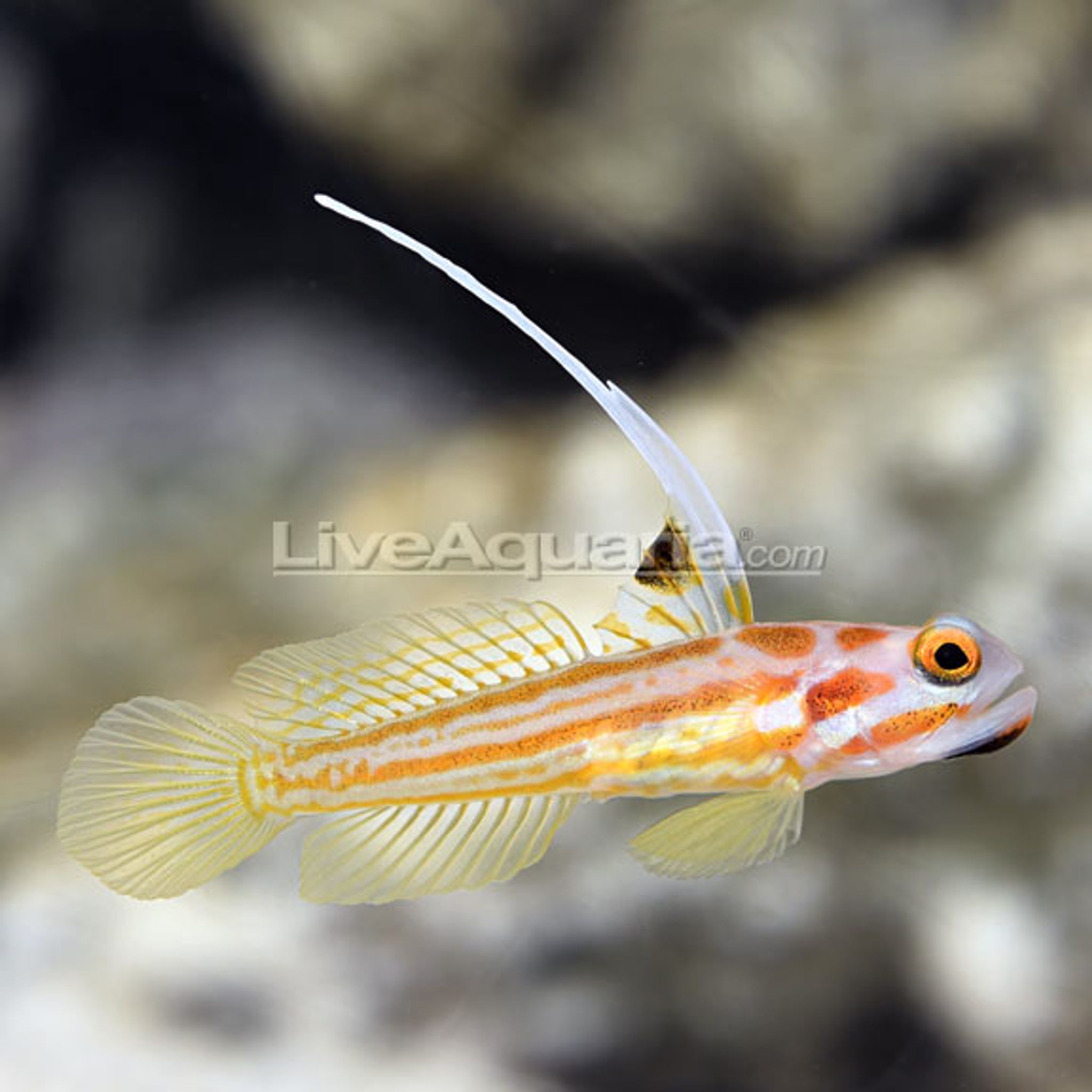
Yellow Watchman Goby Care Guide: Tank Size, Diet, Compatibility and Reef Safety
The Yellow Watchman Goby (Cryptocentrus cinctus) is a small, hardy reef fish best known for its famous partnership with a pistol shrimp, but it does just as well kept solo. This guide covers the tank size, sand depth, diet, tankmate choices, and reef-safety facts you need before bringing one home, plus how it stacks up against similar nano gobies.
Species Snapshot
Also sold as the yellow prawn goby or yellow shrimp goby, this species has a pale yellow to golden body with faint blue speckling concentrated on the head and dorsal fin. It's a bottom-dweller that perches near a burrow entrance rather than swimming freely around the tank.
- Scientific name: Cryptocentrus cinctus
- Adult size: roughly 3–4 inches (7.5–10 cm)
- Temperament: peaceful, shy, non-aggressive toward fish, corals, and invertebrates
- Lifespan: commonly 3–5+ years with stable care
- Diet: carnivore (meaty foods)
- Reef safe: yes
Tank Size and Setup
Minimum Tank Size
30 gallons is the safe minimum for a single Yellow Watchman Goby. Some smaller, similarly named gobies get away with 10–20 gallon nano setups, but this species is larger-bodied, patrols a wider territory around its burrow, and is frequently paired with a pistol shrimp that needs real digging room. If you're planning to add other fish or a shrimp partner, staying at 30 gallons or larger reduces stress and territorial conflict.
Substrate Depth
Substrate is the single most important setup detail for this fish. Provide at least 3–4 inches of fine-to-medium sand — many keepers prefer sugar-fine sand specifically because it lets a pistol shrimp excavate and reinforce a stable tunnel. Deeper sand (4+ inches) is better when housing a shrimp-goby pair; a shallower 3-inch bed is fine if you're keeping the goby without a shrimp partner.
Insufficient depth is the top cause of failure with this species: the burrow collapses, the shrimp is left exposed, and the pair becomes chronically stressed.
Aquascape and Flow
- Place a piece of live rock or rubble near the sand bed so the pair has something solid to anchor the burrow entrance against.
- Leave open sand patches nearby for excavation.
- Keep flow moderate at the sand bed — too much turbulence right at the burrow mouth destabilizes it, while too little flow lets detritus accumulate around the entrance. Aim for gentle, indirect current over that specific spot.
Water Parameters
| Parameter | Recommended Range |
|---|---|
| Temperature | 74–80°F (23–27°C) |
| Specific gravity (salinity) | 1.023–1.025 |
| pH | 8.1–8.4 |
| Nitrates | Low and stable |
| Tank maturity | Fully cycled before adding |
This is a small-bodied fish, so it has little tolerance for swings in temperature, salinity, or ammonia/nitrite. Only add it to a mature, fully cycled system — never a newly set-up tank still finishing its nitrogen cycle.
Lid Requirement
Like many gobies, the Yellow Watchman can jump when startled. A tight-fitting lid or cover isn't always emphasized in every care sheet, but it's standard best practice across goby-keeping in general — well worth adding even for a fish that seems calm day to day.
Diet and Feeding
This species is strictly carnivorous. In the wild it picks zooplankton and small crustaceans off the sand; in the aquarium, offer:
- Mysis shrimp (frozen or gel-based)
- Frozen brine shrimp
- Chopped fresh or frozen seafood
- Marine pellets sized small enough for its mouth
Feeding Technique
Because this goby rarely strays far from its burrow, target- or spot-feed near the burrow entrance using a turkey baster or feeding tube. If food is only dropped at the surface or mid-water, faster swimmers like wrasses or damsels will grab it all before the goby ever leaves cover. Feed small amounts 1–2 times per day.
The Pistol Shrimp Partnership
One of the most-asked-about behaviors in the species: pairing with a pistol shrimp (often an Alpheus species, such as A. randalli) is optional, not required — a solo Yellow Watchman Goby thrives on its own. When a partnership does form:
- The nearly-blind shrimp digs and maintains the shared burrow.
- The goby, with much better eyesight, stands guard at the entrance.
- The shrimp keeps an antenna in constant contact with the goby, feeling for the goby's flick signal that means "danger" — both retreat into the burrow instantly.
Bonding between a newly introduced pair can take anywhere from days to a few weeks; buying a pre-bonded pair shortcuts this adjustment period. Don't expect instant teamwork from individuals introduced separately — that's a common source of disappointment for new keepers.
Compatibility and Tankmates
The Yellow Watchman Goby is peaceful toward everything except other bottom-dwelling gobies competing for the same burrow space or shrimp partner.
Good tankmates:
- Clownfish
- Dartfish
- Firefish
- Small, non-aggressive wrasses
- Basslets
- Gobies from a different genus/body shape
Avoid:
- Large or aggressive predatory fish
- Aggressive triggerfish or large wrasses that may bully or eat it
- Other burrowing gobies likely to compete for the same shrimp or burrow
Housing this goby with pushy or oversized tankmates leads to a fish that hides constantly, stops eating, and slowly wastes away — choose calm neighbors over showy ones. You can browse suitable options in FishyHub's wrasse and clownfish selections when planning a peaceful reef community.
Reef Safety
The Yellow Watchman Goby is fully reef safe. It does not touch, host on, or damage coral, and it won't bother ornamental shrimp or snails in a cleanup crew. The one minor caveat: a very small, newly molted shrimp could theoretically be seen as an opportunistic snack by a hungry goby, though this is rare in a well-fed tank.
How It Compares to Similar Nano Gobies
Readers often land on the Yellow Watchman while actually trying to decide between several small goby species. Here's a quick decision point:
| Species | Min. Tank Size | Adult Size | Pistol Shrimp Pairing | Notes |
|---|---|---|---|---|
| Yellow Watchman Goby | 30 gal | 3–4 in | Common, optional | Larger and more space-needing than most "nano" gobies |
| Yasha Goby | 20–30 gal | ~2.5 in | Common, expected | Needs fine sand bed and stable low nitrates, same target-feeding routine |
| Court Jester Goby | 10–20 gal | ~2 in | Not typical | Extremely passive; grazes algae/detritus plus meaty foods |
| Green Banded Goby | 10 gal (pair) | 1.5–2 in | None | Can breed in captivity; male guards eggs |
| Neon Goby | 10 gal (pair) | 2–3 in | None | Famous cleaner fish; removes parasites from other fish |
| Clown Goby (incl. green clown goby) | 10–30 gal | ~1–1.5 in | None | Claims a coral head as territory; tiny mouth needs finely crushed food |
Gobies for Nano Tanks
If your tank is smaller than 30 gallons, the Yellow Watchman isn't the right fit. Better nano candidates include the clown goby, neon goby, and green banded goby, all comfortable at 10 gallons. The Yasha Goby sits in between — it can work in a 20–30 gallon nano reef but still wants the same fine sand and stable water quality as the Yellow Watchman.
What Do Clown Gobies Eat?
Clown gobies have tiny mouths, so food particle size matters more than food type. Offer frozen mysis, copepods, and finely crushed pellets, and let them supplement by grazing live rock and sand for microfauna.
General Goby Care Principles
Across nearly every goby species — Yellow Watchman included — the same husbandry rules apply: a soft sand substrate, target feeding near where the fish actually spends its time, calm non-bullying tankmates, a secure lid, and awareness that similar-looking bottom-dwelling gobies will compete over burrow space if housed together.
Buying and Quarantine
When selecting a specimen, look for clear eyes, full and undamaged fins, and active guarding behavior at the point of sale — a goby that's alert and perched near cover rather than listless on the sand bottom is a good sign. Both captive-bred and wild-caught individuals are available; captive-bred stock is often somewhat hardier during the initial adjustment period, though both can do well with proper acclimation.
As with any new marine fish, quarantine before adding to a display reef is good general practice, giving you time to watch for disease or parasites without risking your established livestock.
Introducing a Shrimp-Goby Pair
If you're building a pair rather than buying one pre-bonded, add the goby first and let it settle into a burrow site for a few days before introducing the shrimp — or vice versa. Watch for the shrimp beginning to excavate near the goby's chosen spot and the goby tolerating the shrimp's antenna contact; a bonded pair will start sharing one burrow within days to a couple of weeks. Persistent avoidance or aggression after several weeks suggests the pairing hasn't taken.
Frequently Asked Questions
Is the Yellow Watchman Goby reef safe?
Yes. It ignores coral tissue entirely and does not disturb ornamental shrimp or snails, making it a safe choice for a reef tank.
Does it need a pistol shrimp?
No. It thrives kept alone; the shrimp partnership is optional but a rewarding, natural behavior to watch if you choose to add one.
What is the minimum tank size?
30 gallons is the generally recommended minimum, especially important if you're pairing it with a pistol shrimp that needs burrowing room.
What do Yellow Watchman Gobies eat?
Meaty foods such as mysis shrimp, brine shrimp, and small marine pellets, ideally target-fed near its burrow entrance rather than dropped at the surface.
Can it live with other gobies?
Yes, as long as they aren't other bottom-dwelling or burrowing gobies competing for the same territory. It coexists well with dartfish, small wrasses, clownfish, and firefish.
Will it jump out of the tank?
It can when startled, so a tight-fitting lid is a recommended precaution even though not every source flags it.
How long do Yellow Watchman Gobies live?
Typically 3–5 years or more under stable reef conditions.
What sand should I use?
Fine-to-medium sand, at least 3–4 inches deep, so the fish (and any pistol shrimp partner) can maintain a stable burrow.
Ready to add one to your reef? Browse available specimens and other compatible species in FishyHub's marine goby collection, and check the marine shrimp selection if you're planning to build a classic shrimp-goby pair.

