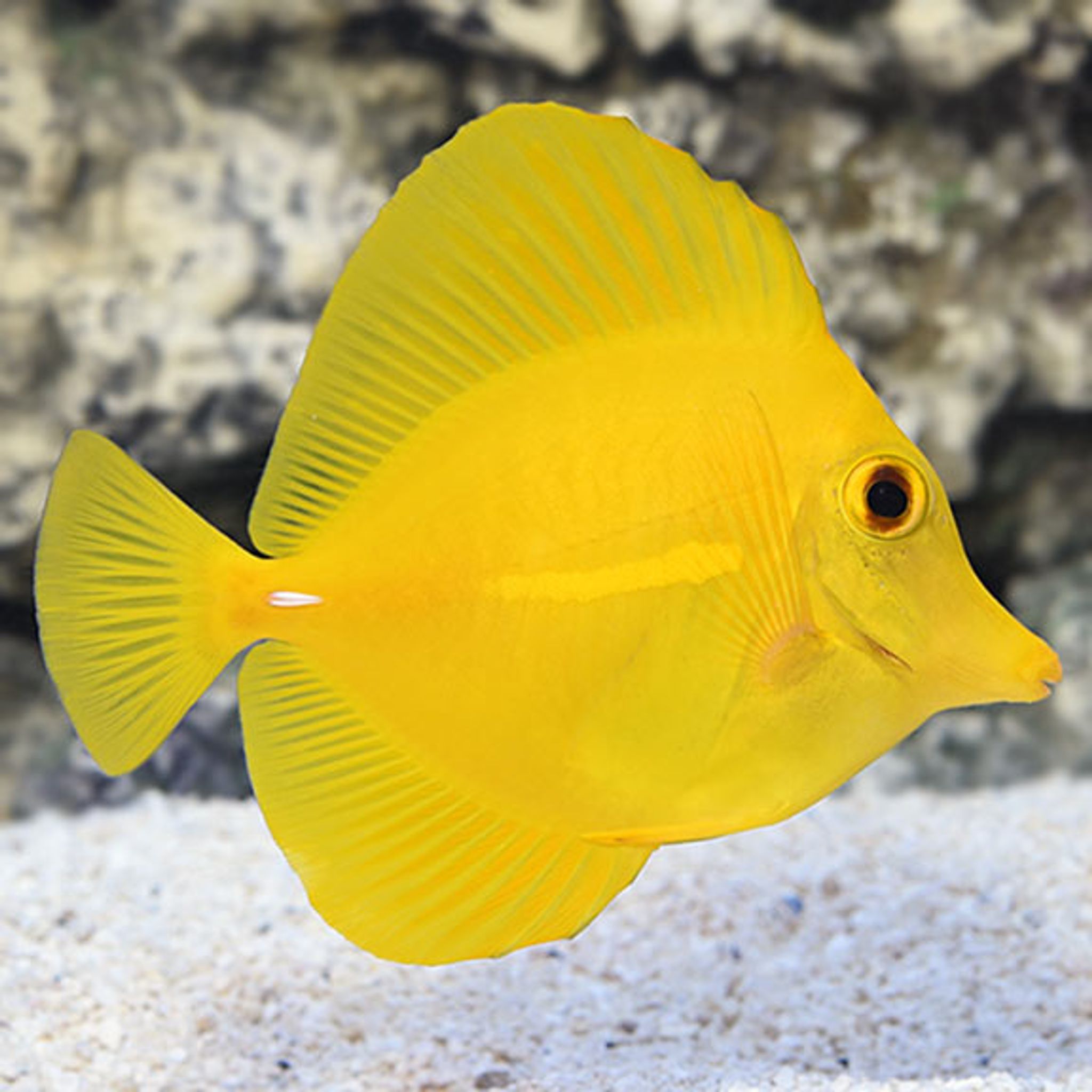
Yellow Tang Care Guide: Tank Size, Diet, Compatibility and Reef Safety
The yellow tang (Zebrasoma flavescens) is one of the most recognizable saltwater fish sold in the United States, and also one of the most frequently rehomed because it outgrows the tank it was bought for. This guide gives the tank-size reality, a practical feeding routine, and clear answers on reef safety and tankmates before you buy.
What Is a Yellow Tang?
The yellow tang belongs to the family Acanthuridae — the surgeonfish and tang family, named for the sharp, scalpel-like spine folded against each side of the tail base. This spine is a defensive weapon the fish flicks outward when threatened, and it's capable of cutting other fish, nets, or a handler's hand. Most Acanthuridae species, including the yellow tang, are primarily herbivorous reef grazers, which is why care advice for one tang species largely transfers to others in the family.
Yellow tangs are native to Pacific reefs, historically collected in large numbers around Hawaii. Today, aquacultured (captive-bred) Hawaiian yellow tangs are increasingly common in the US trade, which has reduced pressure on wild populations.
Tank Size: The Number That Matters Most
This is where most yellow tang problems start. Juveniles are commonly sold at 1–2 inches and look harmless in a small tank, but adults reach 7–8 inches with a disc-shaped, laterally compressed body built for constant horizontal swimming.
- 75 gallons (284 L) is the absolute floor, and it applies only to a young juvenile with a firm plan to upgrade — not a lifetime home.
- 100–125+ gallons (379–473+ L) is the responsible long-term minimum for an adult.
- Tank shape matters as much as volume. A 6-foot-plus (183 cm+) tank length is strongly preferred over a tall, narrow footprint, since yellow tangs cruise back and forth rather than up and down.
If you're shopping for one now, decide on the adult-size tank first. Yellow tangs and other members of the group are stocked in FishyHub's Tangs & Surgeons category, where you can compare species before committing.
Tank Size at a Glance
| Life stage | Minimum footprint | Notes |
|---|---|---|
| Juvenile (temporary) | 75 gal (284 L) | Bare minimum; upgrade plan required |
| Adult, single tang | 100–125+ gal (379–473+ L) | 6 ft+ length preferred over tall tanks |
| Multiple tangs | 150+ gal (568+ L) | Only with careful species/shape planning |
Lifespan: A Long-Term Commitment
Yellow tangs are exceptionally long-lived for an aquarium fish. Expect 20+ years in good care, with some individuals reaching 30 years or more under excellent conditions. Buying one is closer to adopting a large dog than a typical community fish — factor that into both the tank size and the years of feeding and water care ahead.
Diet and Feeding Routine
Yellow tangs are primarily herbivorous grazers. In the wild they pick at algae almost constantly throughout the day, so a single daily meal isn't enough.
Core diet:
- Dried seaweed or nori sheets, clipped into the tank daily
- Herbivore-formula pellets or flakes containing spirulina
- Occasional frozen mysis or brine shrimp for variety and protein
Feeding frequency: feed 2–3 times a day at minimum, and supplement with a standing grazing source such as an algae clip left in most of the day or macroalgae growing in a refugium. A tang that doesn't get enough vegetable matter will start picking at rock excessively, lose weight along the flanks, and become more stressed and aggressive.
Because yellow tangs eat so much plant matter, they also produce a real bioload. Plan your nutrient export accordingly: a protein skimmer, a macroalgae refugium, and a consistent water-change schedule matter more for a tang-heavy reef tank than for a lightly stocked one. Herbivore foods and frozen variety options are available in FishyHub's Food & Supplements category.
Yellow tangs do best in an established tank with existing algae growth on rock and glass to graze on. Avoid adding one as the first fish in a brand-new, uncycled system — there's nothing yet for it to pick at, and immature water chemistry adds unnecessary stress.
Reef Safety and Water Parameters
Yellow tangs are reef safe. They ignore corals and most invertebrates, making them one of the most common herbivores in reef tanks specifically because they help control nuisance algae without touching coral tissue.
Water requirements are standard reef parameters — no special accommodations needed beyond stability:
| Parameter | Target range |
|---|---|
| Temperature | 72–82°F (22–28°C) |
| pH | 8.0–8.4 |
| Specific gravity | 1.020–1.025 |
| Water flow | Strong |
Compatibility: What Can Live With a Yellow Tang
Yellow tangs are semi-aggressive, particularly toward other tangs and fish that share a similar shape or bright coloration — other yellow or brightly colored surgeonfish, angelfish, and butterflyfish can all trigger territorial disputes.
Generally compatible tankmates:
- Clownfish
- Gobies
- Blennies
- Wrasses
- Dartfish
Species like clownfish, gobies, and wrasses are all browsable if you're planning tankmates around a yellow tang — see FishyHub's Wrasse selection and Gobies selection for smaller, peaceful options that won't compete for territory.
Stocking order matters. Add a yellow tang as one of the last fish in the tank, after other species are already established. Introducing it early lets it claim the whole tank as its territory, making later additions much harder.
Mixing Multiple Tangs
Keeping more than one tang, including two yellow tangs, only works reliably in 150+ gallon (568+ L) systems. Best practices:
- Add all tangs to the tank at the same time, rather than one at a time
- Choose species with very different body shapes and colors — never two of the same or similar-looking tangs
- Provide plenty of rockwork to break sightlines and reduce ongoing territorial disputes
Disease Risk and Quarantine
Yellow tangs are notably prone to marine ich (Cryptocaryon irritans). A fish can carry the parasite without visible symptoms until shipping stress — especially the long transit many US buyers face from Pacific collection points to inland stores — triggers a visible outbreak.
Quarantine for a minimum of 2–4 weeks before adding any yellow tang to a display tank, regardless of source. A basic protocol:
- House the new fish alone in a bare quarantine tank with a sponge filter and heater.
- Watch closely for the first week for white spots, clamped fins, rapid breathing, or scratching against surfaces — early signs of ich.
- If symptoms appear, treat with copper (dosed carefully per the product's instructions) or a hyposalinity protocol rather than dosing the display tank.
- Keep the fish in quarantine for the full period even if it looks healthy the whole time, since ich has a life cycle that can reappear after an apparent lull.
Reef-safe medications and treatment supplies for quarantine setups are available in FishyHub's Medication category.
Choosing a Healthy Specimen
Before buying, check for:
- A rounded, not sunken, belly
- Active grazing or swimming, not hiding in a corner
- No clamped or torn fins
- An intact, undamaged tail spine
Handling the Scalpel Spine
When netting or bagging a yellow tang, move slowly and avoid crowding it into the net — the caudal spine can catch in mesh and injure the fish, or nick a hand during bagging. After adding a tang to a tank with other fish, check tankmates over the following days for small cuts, which can indicate a territorial run-in.
Aquacultured vs. Wild-Caught
Aquacultured (tank-raised) yellow tangs are increasingly available and generally preferable:
- Hardier and more disease-resistant on average
- Adjust to prepared foods more quickly during acclimation
- Reduce collection pressure on wild Hawaiian reef populations
Whichever source you choose, quarantine is still required — captive breeding reduces risk but doesn't eliminate it.
Common Mistakes to Avoid
- Buying a juvenile for a 20–40 gallon tank with no upgrade plan — the single most common yellow tang mistake.
- Skipping quarantine, which can let an ich outbreak spread through an entire display tank.
- Underfeeding vegetable matter, leading to visible weight loss, faded color, and food-driven aggression.
- Adding a second tang too soon, or into too small a tank, which can escalate to fatal fighting.
- Introducing the tang before enough algae or biofilm has developed in a new tank for it to graze on.
- Rough handling during transport, risking spine injuries to both fish and handler.
- Ignoring head and lateral line erosion (HLLE) — a condition sometimes linked to poor diet, water quality, or activated carbon use. Watch for small pits or erosion around the head and lateral line, and address diet and water quality if it appears.
Similar Tangs You May Be Comparing
- Convict tang — striped pattern, needs roughly 75–100+ gallons, semi-aggressive toward its own kind, generally reef safe with occasional coral nipping.
- Chocolate (scopas) tang — calmer temperament, similar care needs.
- Doctorfish tang — larger-growing relative with similar grazing habits.
- Clown tang — larger and notably more aggressive, needs a bigger tank than a yellow tang.
- Gem tang — a rare, high-end species for experienced keepers with larger budgets.
- Lemon tang and black tang — color variants/relatives with broadly similar husbandry.
Frequently Asked Questions
What size tank does a yellow tang really need?
Seventy-five gallons is a bare minimum, and only for a juvenile with a clear upgrade plan. For an adult long-term, 100–125+ gallons in a tank at least 6 feet long is the responsible minimum.
Are yellow tangs reef safe?
Yes. Yellow tangs ignore corals and most invertebrates, which is why they're one of the most commonly kept herbivores in reef tanks.
What do yellow tangs eat?
Primarily dried seaweed or nori and herbivore-formula pellets or flakes, with occasional frozen mysis or brine shrimp for variety. Feed 2–3 times a day, plus a standing grazing source when possible.
How long do yellow tangs live?
Typically 20 or more years, with some individuals reaching 30 years under excellent care. This is a long-term commitment on the scale of decades, not years.
Can I keep two yellow tangs, or multiple tangs, together?
Only in very large tanks of 150+ gallons. Add all tangs at the same time, choose different body shapes and colors, and avoid pairing two similar-looking tangs to reduce fighting.
Why do yellow tangs get ich so easily?
They're highly susceptible to Cryptocaryon irritans and often carry it without symptoms until shipping stress triggers an outbreak. Quarantining every new yellow tang for 2–4 weeks catches this before it reaches the display tank.
What fish are compatible tankmates for a yellow tang?
Clownfish, gobies, blennies, wrasses, and dartfish generally do well. Avoid other tangs or surgeonfish and any similarly bright or similarly shaped fish unless the tank is large enough to diffuse territorial disputes.
Is a wild-caught or aquacultured yellow tang better?
Aquacultured (tank-raised) specimens tend to be hardier, adjust to prepared foods faster, and put less pressure on wild reef populations. Either way, quarantine is still necessary.
Ready to plan your reef stocking list? Browse current availability in FishyHub's Tangs & Surgeons category and size your tank before you buy.

