

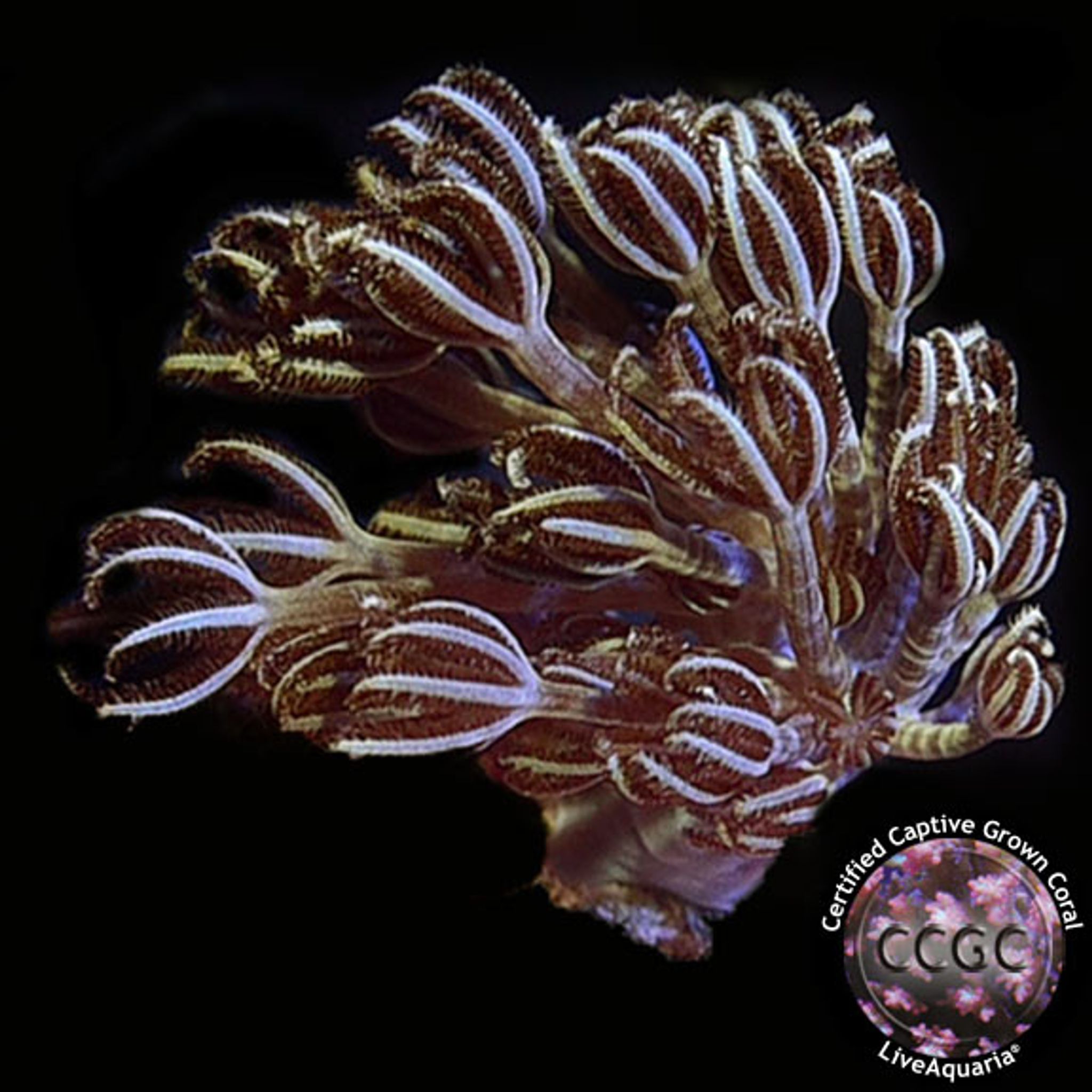

Xenia Care Guide: Lighting, Flow, Feeding and Placement
Pulsing xenia (Xenia spp.) is one of the fastest-growing, most forgiving soft corals a US reef keeper can buy, but its two quirks — sudden "crashes" and aggressive overgrowth — trip up a lot of first-time owners. This guide covers exactly how much light and flow xenia needs, whether you need to feed it, where to place it, and how to tell a normal rest period from real trouble.
What Is Pulsing Xenia?
Xenia is a soft coral genus sold under names like "pulsing xenia," "pom-pom xenia," and "red-stem xenia." Its polyps open and close in a rhythmic pulsing motion that seems to mix the thin layer of water sitting against the coral's tissue, which appears to boost photosynthetic efficiency. Not every xenia variety pulses — some, sold simply as xenia or "non-pulsing" forms, hold their polyps open without the rhythmic motion — but overall care (light, flow, feeding, water quality) is essentially the same across pulsing and non-pulsing varieties. The pulsing rate itself varies by lighting, flow, and even time of day, and it is not a reliable health indicator on its own.
Why Xenia Is a Popular Beginner Coral
Xenia is usually grouped with the small handful of soft corals recommended to brand-new reef keepers because it tolerates a range of conditions and shows visible growth within weeks rather than months.
| Coral | Growth speed | Light needs | Beginner-friendliness |
|---|---|---|---|
| Pulsing xenia | Very fast | Moderate–high | Excellent, but needs regular trimming |
| Toadstool leather | Fast | Moderate | Excellent |
| Zoanthids | Moderate | Low–moderate | Excellent |
| Green star polyps | Fast | Moderate | Excellent, also spreads aggressively |
| Bubble coral | Slow–moderate | Moderate | Good, needs space to inflate |
| Bird's nest coral | Fast (SPS) | High | Moderate, less nutrient-tolerant |
Xenia's main advantage over most of this list is speed: a healthy frag can visibly grow and start pulsing within its first couple of weeks, which makes it a satisfying coral for tracking progress in a new tank.
Lighting
Xenia does well under T5 fluorescent, LED, or metal-halide reef fixtures, and it adapts across a fairly wide light range rather than needing one specific setup.
- Moderate-to-high intensity is the general target — roughly 100–200 PAR at the coral's placement point is a reasonable starting range for most home LED and T5 systems.
- Some keepers report the fastest growth and strongest pulsing under stronger, historically metal-halide-style lighting (older references cite roughly a 5.5–6.5K color temperature), but a modern LED reef fixture at moderate-high PAR grows xenia perfectly well.
- Avoid the dimmest, deepest part of the tank. Insufficient light causes lanky, "reaching" growth and weak, infrequent pulsing as the colony stretches toward the light source instead of spreading naturally.
- More light generally speeds growth and pulsing, but it is not all-or-nothing — treat higher PAR as a bonus, not a requirement.
Whatever fixture you use, acclimate a new colony gradually. Sudden exposure to intense light after shipping or a tank move can bleach or shock xenia just as it would an SPS coral. If you're shopping for a fixture, FishyHub carries LED reef lighting suitable for a range of tank sizes.
Flow
Xenia wants gentle-to-moderate, indirect or randomized turbulent flow — not a direct laminar jet from a powerhead.
- The coral's own pulsing motion already helps move water and gases across its tissue, so it doesn't need strong forced current to stay healthy.
- Direct blasting from a powerhead can damage or stress the polyps, causing the colony to retract, stop pulsing, or even detach from its base.
- Aim for flow that moves the polyps softly and randomly rather than laying them flat in one direction.
As a rough starting point, many reef tanks run a combined total flow of roughly 10–20 times tank volume per hour from all pumps, with xenia placed somewhere that flow is diffused rather than aimed directly at it — behind rockwork, off to the side of a return, or in the wake of a wave-maker's random pattern.
Placement
Put xenia in upper-to-mid rockwork where light is strong but current is gentle. Avoid the tank bottom and shaded overhangs, both of which combine weak light with reduced water movement.
Just as important: give xenia open space of its own. It spreads aggressively, so wedging a frag between slow-growing LPS or SPS corals is a common mistake — even without stinging tentacles, xenia can smother or outcompete neighbors for light and space simply by growing over or around them. Better neighbors are other fast, vigorous growers like torch or hammer corals that can hold their own footprint; browse LPS hard corals if you want a similarly tough tankmate rather than a delicate one.
Containing the Spread
If you want xenia's fast growth without letting it take over the display, a few containment options work well:
- Isolated rock islands — a single rock or frag plug set apart from the main aquascape, so runners have nowhere to spread except back onto themselves.
- Dedicated frag racks — keep colonies on individual plugs in eggcrate, physically separated from other corals.
- Sump or refugium growing — some keepers grow xenia in a sump section purely for nutrient export and frag stock, away from the display entirely.
Feeding
Xenia is primarily photosynthetic, drawing most of its energy from the zooxanthellae algae living in its tissue, and it also absorbs dissolved organic and inorganic nutrients directly from the water column. Unlike LPS corals, it does not need target feeding of meaty foods such as mysis or a gel food.
In fact, xenia often does better in water with slightly elevated nitrate and phosphate compared to the near-zero nutrient levels many SPS-focused tanks aim for. It is not calcium-demanding like SPS, but very aggressive nutrient export — oversized skimming, heavy carbon dosing, or excess GFO use — can strip the water of the trace dissolved nutrients xenia relies on and cause it to stop pulsing or decline. That said, "dirty" water is not a requirement either; the sensible target is stable, moderate nutrients rather than an extreme in either direction.
Water Parameters
Xenia does fine within standard reef ranges and does not need SPS-level chemistry precision:
| Parameter | Target range |
|---|---|
| Salinity | 1.023–1.026 SG |
| Temperature | 75–80°F (24–27°C) |
| pH | 8.0–8.4 |
| Alkalinity | 8–11 dKH |
| Calcium | 380–450 ppm |
| Nitrate / phosphate | Low but detectable rather than undetectable |
Stability matters more than hitting an exact number — sudden parameter swings are more likely to trigger stress than a slightly elevated nitrate reading.
Growth and Propagation
Xenia spreads through several natural mechanisms:
- Pedal laceration — leaving small pieces of tissue behind as the base "walks" across a surface, each piece capable of growing into a new polyp.
- Branch drifting — pieces breaking off and settling elsewhere in the tank.
- Free-floating fragments — small pieces released into the water column that can colonize new rock.
This same trait makes xenia one of the easiest corals to hobbyist-frag: cut a healthy branch, attach it to a frag plug or rubble with cyanoacrylate gel glue or a rubber band, and place it in moderate light and flow. It typically attaches to the surface within a few days.
First 30 Days With a New Frag
- Days 1–3: Acclimate to tank water slowly (drip or gradual water exchange), then place in moderate (not maximum) light and gentle flow.
- Days 4–10: Watch for polyp extension and the start of pulsing; avoid moving the frag once it begins attaching.
- Days 11–20: If lighting is on the higher end of your fixture's range, gradually increase intensity/duration rather than jumping straight to full settings.
- Days 21–30: Confirm firm attachment to the plug or rock; begin planning where excess growth will go, since visible spread often starts by this point.
The Xenia "Crash": What It Is and How to Respond
A xenia "crash" is a well-documented event where an entire established, healthy-looking colony suddenly stops pulsing, deflates, and dies off over the course of days — often with no obvious trigger. Some sources describe it as a natural life-cycle or reproductive event, while others tie it to fluctuating parameters or nutrient starvation. Both are likely part of the picture: a crash can occur even in a well-run tank, but stable parameters and avoiding sudden nutrient swings appear to reduce the odds.
Early warning signs versus normal cycling:
- Normal: brief rest periods where pulsing slows or pauses entirely for a few hours; polyps still look plump and firm.
- Warning signs: gradual deflation over multiple days, tissue receding from the base, or a foul smell.
If a crash appears to be starting:
- Remove dead or dying tissue promptly to limit ammonia and toxin release into the tank.
- Perform a water change to dilute any released compounds.
- Frequent small water changes during and after the event can help limit the crash from spreading to neighboring colonies.
- Don't assume you did something wrong — a crash is a recognized phenomenon that isn't always preventable.
Common Mistakes
- Blasting it with direct flow from a powerhead, causing retraction, stopped pulsing, or detachment.
- Placing it too low or in shade, leading to weak, lanky growth reaching for light.
- Over-purifying the water with excess GFO, carbon, or an oversized skimmer, starving it of trace nutrients.
- Letting it spread unchecked into neighboring corals' space instead of trimming proactively.
- Panicking at a brief pulsing pause instead of watching for real crash signs like deflation or a foul smell.
- Reacting too slowly once a crash starts, instead of removing dead tissue and changing water right away.
- Skipping acclimation when introducing a new frag to stronger light or flow than it shipped in.
Frequently Asked Questions
Why did my xenia stop pulsing?
Most often it's a normal rest period, or a response to low light, weak flow, or a shift in nutrients — none of which are emergencies on their own. A true "crash" looks different: the colony deflates fully and doesn't recover over the following days, which can happen even in well-maintained tanks.
Do I need to feed xenia?
No target feeding is needed. It gets most of its energy from light through its zooxanthellae and absorbs dissolved nutrients directly from the water column, unlike LPS corals that need regular meaty feedings.
What flow and light does pulsing xenia need?
Moderate, indirect and turbulent flow paired with moderate-to-high light works well under T5, LED, or metal-halide fixtures. Avoid direct powerhead jets and avoid deep, shaded rockwork.
Why is my xenia taking over my tank?
It's one of the fastest-spreading soft corals available, growing through pedal laceration, branch drifting, and free-floating fragments. Regular trimming or fragging, plus giving it a dedicated rock or frag rack away from slower corals, keeps it in check.
Can xenia sting other corals?
It isn't highly aggressive or toxic the way some LPS corals are, but its rapid overgrowth can still smother or outcompete slower neighbors for light and space. Keep a buffer zone between xenia and delicate corals rather than relying on stinging behavior as the risk to manage.
How do I propagate xenia?
Cut a healthy branch, attach it to a frag plug or piece of rubble using cyanoacrylate gel glue or a rubber band, and place it in moderate light and flow. It usually attaches to the surface within a few days.
Is a xenia crash my fault?
Not necessarily. It's a recognized, sometimes unexplained die-off event that can occur even with good husbandry, though stable parameters and avoiding sudden nutrient swings appear to lower the risk.
What water parameters does xenia need?
Standard reef parameters work: salinity 1.023–1.026 SG, temperature 75–80°F, pH 8.0–8.4, alkalinity 8–11 dKH, and calcium 380–450 ppm. It's not calcium-demanding the way SPS corals are, so precision there matters less.
Ready to add pulsing xenia or a similarly hardy tankmate to your reef? Browse soft corals on FishyHub to compare available colonies and frags.