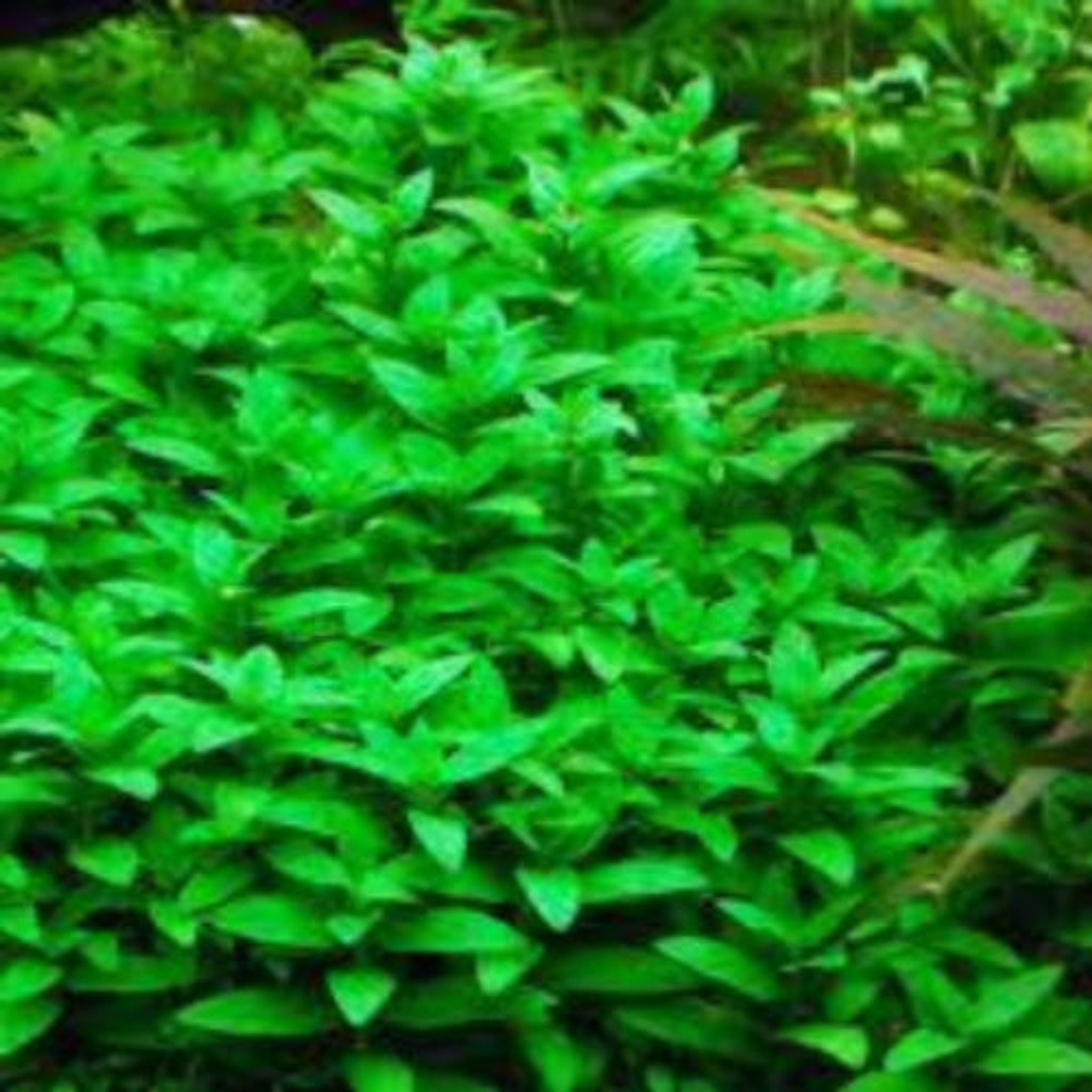

Why Is My Staurogyne Repens Melting or Turning Brown? Causes and Fixes
If your newly planted Staurogyne repens is browning, dropping leaves, or turning to mush, you're probably watching a normal adjustment period rather than a dying plant. This guide walks through how to tell harmless "conversion melt" from a real parameter or nutrient problem, and gives a prioritized checklist to fix each cause.
Getting to Know Staurogyne Repens First
Staurogyne repens is a low-growing, rosette-forming plant native to South America, popular as a foreground carpet in aquascapes and as a compact midground stem plant in simpler setups. Its natural tendency to send out runners and side shoots makes it fill in low, dense mats over time rather than growing tall and stringy.
Most Staurogyne repens sold to hobbyists is farm-grown emersed — meaning it's cultivated out of water on rockwool or in pots, above the waterline. This matters a lot for diagnosing melt, because emersed leaves and submersed leaves look genuinely different:
- Emersed leaves (the ones on the plant when you buy it): thicker, waxier, darker green, often with a slightly leathery texture.
- Submersed leaves (the new growth after planting): lighter green, more rounded, softer, and smaller.
Knowing which leaf type you're looking at is the first step in figuring out whether browning is expected or a warning sign.
Conversion Melt: The Most Common Cause, and It's Not Failure
The single biggest reason newly planted Staurogyne repens melts or browns is that the old emersed leaves simply aren't built for life underwater. Once submerged, those leaves lack the internal structure to function in water and gradually die back while the plant redirects energy into growing new submersed leaves.
What to expect during this transition:
- Partial melt lasting roughly 2 to 4 weeks after planting.
- Old leaves yellowing, browning, or going translucent and mushy at the edges.
- New leaves emerging lighter green, more compact, and more rounded than what was there before.
- Melt concentrated on lower and older leaves first, while new growth points stay healthy.
This is a normal, temporary phase — not a sign the plant is failing. The mistake most people make here is panicking and uprooting the stem to "check the roots" within the first one to three weeks. That disturbs the fine new roots that are just starting to anchor, setting the plant back further. Patience, not replanting, is the correct response to early melt.
Conversion Melt vs. a Genuine Problem
| Sign | Conversion melt (normal) | Real problem (needs a fix) |
|---|---|---|
| New growth | Lighter green, rounded leaves appearing at growth tips | No new leaves appearing anywhere |
| Stem base | Firm, white or tan roots visible | Mushy, black, or slimy at the base |
| Smell | None, or mild plant-decay smell | Foul, sulfurous, or rotten-egg smell |
| Timeline | Improves within 2-4 weeks | Gets worse past 4 weeks with no new growth |
| Leaf color | Old leaves brown/yellow, new ones green | All leaves yellowing or browning, including new ones |
If your plant is putting out new, lighter leaves even as older ones die back, it's converting normally. If there's no new growth at all and the stem base is turning black and slimy, that's true bacterial stem rot rather than transition melt — trim the affected section back to firm, healthy tissue and remove it from the tank promptly, since decaying plant matter fouls water and encourages further rot and algae.
Other Causes of Browning That Aren't Transition Melt
Once a plant is past its first month, ongoing browning usually points to one of the following.
Lighting Problems
Staurogyne repens needs medium to high light, roughly 20-50+ PAR, for 8-11 hours a day to stay compact and carpet-like.
- Too little light: stems stretch upward (legginess), lower leaves drop, and older leaves brown from shading as the plant prioritizes new growth near the light source.
- Too much light without matching CO2 and nutrients: this "high-light trap" accelerates algae growth and leaf stress that looks a lot like browning, without actually helping the carpet fill in faster.
CO2 and the High-Light Mismatch
Staurogyne repens doesn't strictly need injected CO2 to survive, but it grows noticeably slower, taller, and less compact without it. The real risk shows up when high light is paired with low or no CO2: the plant can't keep up with the light energy it's absorbing, growth turns weak and melt-prone, and algae moves in to fill the gap. If you're running high-intensity lighting for a tight carpet, treat CO2 supplementation as strongly recommended. In a low-tech background or midground setup with moderate light, it's optional and mainly affects growth speed rather than survival.
Nutrient Deficiencies
Staurogyne repens is both a root feeder and a column feeder, so it needs nutrition from the substrate and the water column simultaneously.
- Nitrogen deficiency shows up as overall yellowing or browning and stalled growth, even under otherwise good lighting. A useful dosing target, if test results run low, is roughly 20-50 ppm nitrate, adjusted for your tank's bioload and other plants — treat this as a range, not a fixed rule.
- Root-zone starvation happens when a tank relies only on liquid fertilizer with no root tabs or nutrient-rich substrate underneath. Since this species pulls a meaningful share of its nutrition through its roots, water-column dosing alone often isn't enough, and browning shows up at the base even with a well-fertilized water column.
Water Clarity and Flow
Cloudy water or accumulating detritus blocks light from reaching a low-growing carpet plant, contributing to browning that has nothing to do with the plant's own health. Improving filtration and mechanical clarity — and keeping decaying leaves cleaned off the substrate — removes one more variable that can mask or worsen genuine issues.
Sudden Parameter Swings
A large water change that shifts temperature, pH, or hardness abruptly can trigger stress-browning on its own, separate from planting-related melt. Staurogyne repens tolerates a fairly wide range (68-86°F, pH 6.0-8.0, roughly 3-10 KH water hardness), but sudden swings within that range still stress the plant more than gradual ones. Matching new water closely to tank conditions before large changes reduces this risk.
Substrate Compaction in Established Tanks
In carpets that have been running for many months, gradual browning can appear even without any recent disturbance. Over time, substrate can compact and reduce oxygen and nutrient exchange at the root zone, slowly starving established plants. This is a distinct cause from new-planting transition melt — it shows up as a slow decline in older, mature carpets rather than a burst of melt right after planting, and the fix is gently loosening or refreshing the substrate near the roots rather than adjusting light or dosing.
Algae Mimicking Browning
Diatoms and green spot algae commonly colonize new plantings before a tank has fully matured, coating leaves in a brownish or dusty film that's easy to mistake for the plant itself browning. This usually clears up on its own as light, nutrients, and the tank's biology stabilize — patience plus normal maintenance is generally enough, rather than treating it as a plant health issue.
Ideal Tank Setup for Healthy Growth
Getting the setup right from the start prevents most of the ongoing browning causes above.
- Substrate: a fine-grain, nutrient-rich planted substrate works best for root access; an inert substrate like sand or gravel can work if supplemented with root tabs near the roots.
- Tank size: a minimum of 10 gallons for a proper carpet, giving enough surface area for the plant to spread via runners.
- Tankmates and companions: it pairs well in low-light community setups with small, calm fish and shrimp that won't uproot a shallow-rooted carpet, and it sits comfortably alongside other foreground and midground plants in higher-tech aquascapes.
- Setup style: works as a slow-growing background/midground stem in a low-tech tank with moderate light and no CO2, or as a dense, trimmed carpet in a high-tech tank with strong light and CO2 injection.
How to Plant Stems So They Don't Rot or Float Away
Planting method has a direct effect on early melt and rot risk.
- Separate stems individually rather than planting dense clumped bunches. Clumping blocks light and flow to inner leaves and encourages rot at the base — space stems generously, roughly one stem per 3 gallons or a few inches apart as a starting rule of thumb.
- Match planting depth to the stem: shorter or rootless cuttings should be barely covered (around 0.5-1 inch), while longer, already-rooted stems can go deeper for better anchorage, up to 2-3 inches in some cases.
- Root-side down, gently pressed into the substrate rather than jammed in stem-first.
- Stems without visible roots can be floated near the surface for a short period to let roots develop before planting, or gently weighted down until they anchor themselves.
Quarantining and rinsing new stems before planting — checking for hitchhiker snails and rinsing off visible algae — also reduces the chance of introducing problems that indirectly stress the plant later.
Propagation and Trimming
Staurogyne repens propagates readily through runners and side shoots, and also from stem cuttings replanted elsewhere in the tank. Regular trimming of the tops encourages the plant to branch out laterally rather than stretch upward, which is what produces a dense, carpet-like mat over time. Left untrimmed, stems tend to get leggy and thin, especially under lower light.
Early Warning Signs Before Full Browning
Watch for these signals before a plant reaches full melt or browning, since catching them early makes fixes faster:
- Droopy leaves that lose their normal firmness.
- Faded or pale coloring instead of the expected deep or medium green.
- Stunted growth, where the plant sits without producing new leaves for an extended period.
Any of these on their own is a cue to check light duration, CO2, and root-zone nutrition before the plant progresses to visible browning or melt.
For root-zone nutrition, a nutrient-rich substrate paired with root tabs is worth having on hand, and you can browse substrate options suited to planted tanks. If your setup needs stronger, more even lighting to hit that 20-50+ PAR range, check the available LED lighting built for planted aquariums.
Frequently Asked Questions
Is melting normal when I first plant Staurogyne repens?
Yes, especially with emersed-grown stock. Expect roughly 2 to 4 weeks of old-leaf dieback while new, lighter-colored submersed growth appears — this is a normal transition, not a sign of failure.
How do I tell if my plant is dying vs. just converting?
A converting plant shows new, lighter-colored leaves emerging at growth points even as older leaves brown and drop. A dying plant shows no new growth at all, with stems turning mushy or black at the base, often accompanied by a foul smell.
Why are the leaves turning yellow instead of brown?
Yellowing more often points to nitrogen or micronutrient deficiency than to the physical light-transition melt that emersed-to-submersed conversion causes. Check dosing and root-zone nutrition rather than assuming it's normal adjustment.
Does Staurogyne repens need CO2 to survive?
No, it can survive without injected CO2, but it grows slower and less compact. Running high light without matching CO2 raises the risk of melt and algae, since the plant can't use all the light energy it's absorbing.
What substrate is best to stop it from browning at the roots?
A nutrient-rich planted-tank substrate works well, or an inert substrate like sand or gravel supplemented with root tabs, since this species feeds through its roots as much as through the water column.
How much light does it need, and can too much light cause browning?
It needs medium to high light, roughly 20-50+ PAR, for 8-11 hours daily. Too much light without matching CO2 and nutrients doesn't just fail to help — it drives algae growth and leaf stress that can look like browning.
How do I plant the stems so they don't just float or rot?
Insert stems individually rather than in clumps, root-side down, at a depth matched to stem length and root development. Stems lacking roots can be floated briefly to grow roots first, or gently weighted until they anchor on their own.
Can algae make Staurogyne repens look brown?
Yes, diatom films and green spot algae on new plantings are commonly mistaken for the plant itself browning. This typically clears up as the tank matures and light and nutrient levels stabilize.
Ready to set up or restock your planted tank? Browse aquarium substrate and planted-tank lighting on FishyHub to give your Staurogyne repens carpet the root and light support it needs to thrive.


