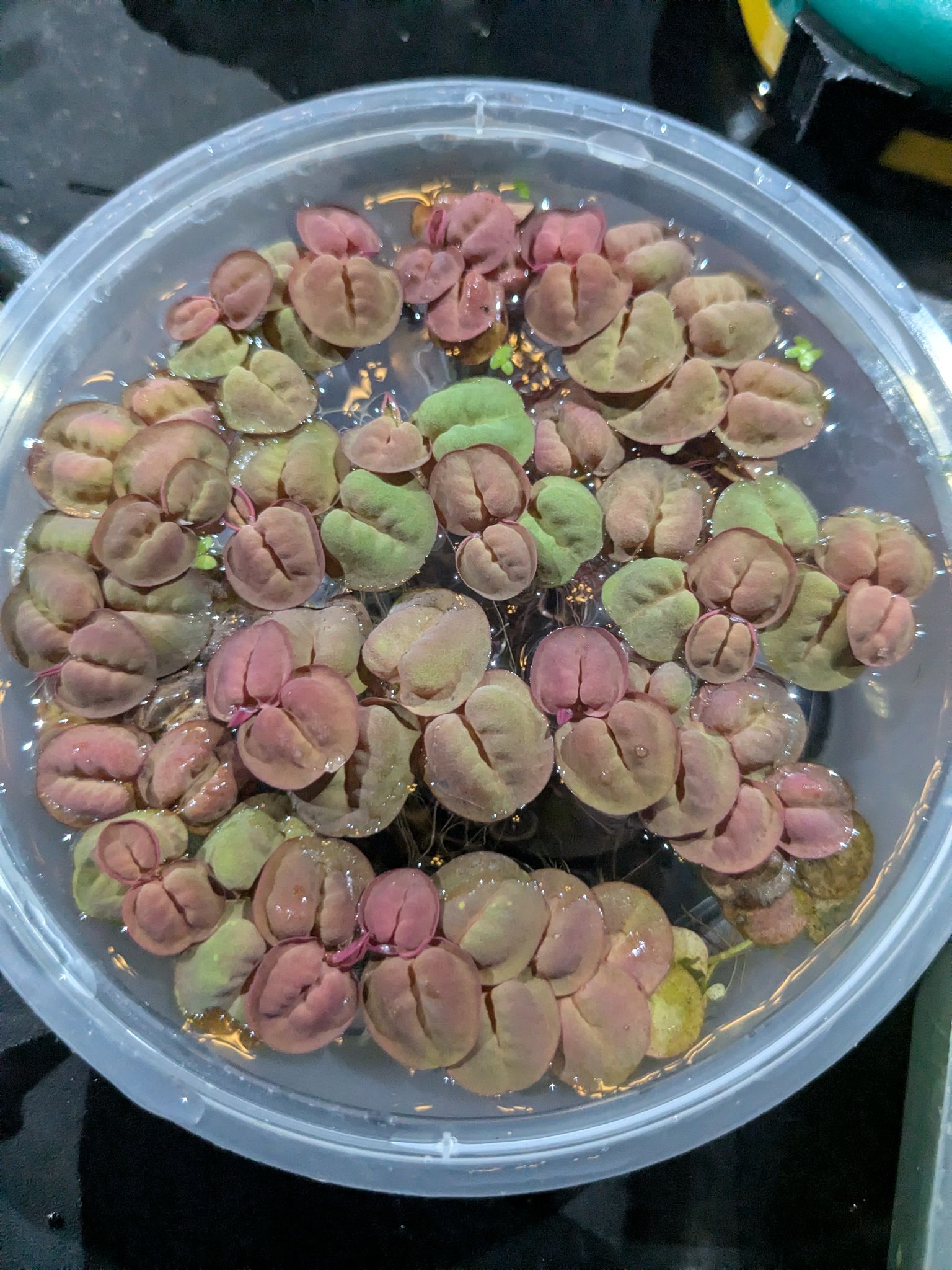
Why Is My Red Root Floater Melting or Turning Brown? Causes and Fixes
Brown patches, translucent leaves, or roots that seem to be dissolving on your Red Root Floaters usually point to one of a handful of well-known triggers, not a mystery disease. Most of the time the fix is mechanical (flow, light, or a thinning pass) rather than chemical, and some melting after a purchase is completely normal. Work through the causes below in order, starting with the one most likely to be the culprit.
Start Here: Triage in the Right Order
Red Root Floater (Phyllanthus fluitans) problems almost always trace back to one of four categories, and they aren't equally likely. Checking them in this order saves time and stops you from throwing fertilizer or water changes at a problem that's actually about flow.
- Surface water movement — by far the most common cause, and the first thing to check.
- Light exposure — too little or too intense/too close.
- Nutrient supply — the plant feeds entirely from the water column.
- Water quality and stability — swings in temperature, pH, or ammonia/nitrite.
If the plant is newly purchased, add a fifth consideration first: transplant shock, which mimics several of the above but resolves on its own.
Water Movement: The #1 Cause of Melting
Red Root Floaters evolved on still, shaded backwaters, and their leaf surfaces have almost no tolerance for splashing or ripple. A filter return, an airstone plume, a hang-on-back waterfall, or a powerhead aimed across the surface can cause visible browning and rot within just a few days.
Signs it's flow-related:
- Browning and mushiness concentrated on the side of the mat closest to the filter outlet or airstone
- Leaves that look "bruised" or waterlogged before they brown
- The problem reappears quickly after you remove damaged leaves, because the cause is still there
Practical fixes for small and nano tanks:
- Angle the filter outlet downward or toward the glass instead of across the surface
- Add a foam baffle or filter-flow diffuser to break up the outflow before it reaches the surface
- Use a floating barrier or foam ring to corral floaters in the calmest corner of the tank
- Switch a splashy hang-on-back to a lower-flow option, or add a sponge/mechanical filter with gentler output instead of a powerhead-driven design
- Lower the water level slightly under a HOB filter so the waterfall lands with less splash, or add a spray bar aimed at the glass
Once flow is fixed, expect existing damaged leaves to stay damaged — trim them — but new growth should come in clean.
Lighting: Too Little vs. Too Much
Both extremes cause problems, and they look different enough to tell apart.
| Symptom | Likely cause | Fix |
|---|---|---|
| Leaves stay green, growth is slow and leggy | Too little light (under ~6 hours/day) or fixture too far away | Increase photoperiod toward 10–12 hours; raise light output gradually |
| Leaves look pale, bleached, or develop crispy brown patches on top | Light too intense or fixture too close to the surface | Raise the fixture, dim intensity, or add floating cover/shade |
| Good red color but slow to reach it | Normal — reddening takes time and is confirmed by consistent light | Be patient; check iron dosing too |
Aim for a 6–8 hour minimum photoperiod, 10–12 hours as an ideal range. The practical guidance from experience is that intensity and proximity matter more than raw hours: a moderate LED fixture mounted a reasonable distance above the water, watched and adjusted gradually, beats guessing at "more light is always better." If leaves look scorched rather than simply pale, that's a strong sign to back off intensity or raise the light before doing anything else.
Nutrient Deficiency
Unlike substrate-rooted plants, Red Root Floaters pull essentially all of their nutrition straight from the water column through their roots. That makes them vulnerable in two specific situations: bare or ultra-low-tech tanks with little bioload, and heavily planted tanks where root-feeding plants are absorbing most of the available nutrients first.
Deficiency signs:
- Pale or yellow new growth (general nutrient shortage)
- Stunted growth or a mat that stalls out
- Small holes in leaves (often potassium)
- Leaves staying green instead of developing red coloration (often iron)
Fix: Dose a liquid all-in-one or micro-nutrient fertilizer containing iron and potassium, 1–3 times a week, at a reduced, floater-safe dose. Whether you need to dose at all depends heavily on your tank:
- Lightly stocked or newer tanks with little fish waste and few other plants competing for nutrients: light, regular dosing is usually needed.
- Mature, heavily stocked tanks with established bioload and other plants: the floaters may be largely self-sufficient, and extra dosing risks feeding algae instead.
Watch the plant's actual color and growth rate rather than dosing on a fixed schedule. Resist the urge to overdose when trying to "fix" melting quickly — a nutrient spike more often fuels algae than it saves a struggling floater.
Water Parameters and Stability
Red Root Floaters are fairly forgiving of a range of water chemistry, more so than they are of flow or light extremes:
- Temperature: roughly 70–82°F (21–28°C)
- pH: 6.5–7.5, with some tolerance either side
- Hardness: soft to moderately hard, roughly 0–30 dGH
What causes real trouble isn't the exact number so much as a sudden swing — a large water change with mismatched temperature, a heater failure, or new tank syndrome where ammonia and nitrite spike before the biological filter matures. If your tank is cycling or you've recently done a big water change, that's a more likely trigger than the parameters themselves. Testing water quality and stabilizing temperature is worth doing before adjusting anything else if flow and light both check out.
Is It Just Transplant Shock?
Newly purchased Red Root Floaters commonly melt back noticeably in the first one to two weeks after shipping and introduction to a new tank. This is a normal transition, not a sign the plant is dying, and it's one of the most common reasons people panic and discard a plant that would have recovered.
Quick timeline check:
- Week 1–2 after purchase: some browning, leaf drop, or root dieback is expected. Watch for new leaf growth or fresh white/pink root tips as a recovery signal.
- Still melting with zero new growth after 3 weeks: treat it as an ongoing problem and work through the flow → light → nutrients → water quality checklist above.
Don't respond to acclimation melt by dosing extra fertilizer or making more water changes than usual — let the plant settle and re-root before intervening further.
Overcrowding: When a Thick Mat Shades Itself
Red Root Floaters multiply steadily, and a thick, multi-layer mat blocks light and gas exchange from reaching the lower leaves even while the colony overall looks healthy. Lower leaves yellow, brown, and die back simply from being shaded by the layer above them.
Compared with duckweed or frogbit, Red Root Floaters are comparatively slow-growing and less invasive, so this is usually a matter of periodic thinning rather than daily maintenance. Skim off excess floaters every week or two, especially in warm, well-lit, nutrient-replete tanks where growth is fastest.
A dense, unthinned mat has a secondary effect worth flagging: it can meaningfully reduce oxygen exchange and gas transfer at the surface for the fish and other plants below, on top of shading the floaters themselves. That's another reason to keep the mat at a single, breathable layer rather than letting it build up.
Heat and Humidity Under a Closed Lid
In small or nano tanks with a tight-fitting lid and a light mounted close above it, heat and humidity can build up enough to effectively cook the floating leaves, especially the ones pressed against the glass or lid. If browning is worse right under the light and along the lid seam, this is worth checking even if flow and light intensity both look fine.
Fix: Crack the lid slightly, add a small vent, or raise the light to increase airflow between the water surface and the fixture.
Algae, Biofilm, and Pest Buildup
A layer of algae or biofilm on leaves and roots, along with pest pressure from snails or ammonia released by decaying tankmates, adds ongoing stress that shows up as the same browning and root dieback described above. Regular partial water changes and general tank cleanliness reduce this load. A UV sterilizer can help here as a supporting tool — it clears green water and reduces free-floating algae and pathogens competing with your floaters for light and nutrients — but it's an ancillary water-quality aid, not a direct treatment for melting. Units with longer contact/dwell time handle pathogens more effectively, while cheaper, shorter units mainly improve clarity; either way, it won't fix an actual flow, light, or nutrient problem on its own.
What CO2 Has to Do With It (Nothing)
Red Root Floaters draw carbon dioxide directly from the air above the water surface, not from what's dissolved in the water. A lack of CO2 injection is never the cause of melting or browning, so there's no need to add or increase CO2 to solve this problem — spend that effort on flow, light, and water quality instead.
Common Mistakes to Avoid
- Placing floaters directly under a splashy hang-on-back waterfall or powerhead output
- Assuming CO2 injection will help — it won't, since floaters use atmospheric CO2
- Discarding a newly purchased plant during normal 1–2 week acclimation melt instead of waiting for new growth
- Overdosing fertilizer to "fix" melting quickly, which risks an algae bloom instead
- Letting the mat grow too thick without thinning, shading and browning the lower leaves
- Sealing a lid tightly over strong lighting, trapping heat and humidity against the leaves
- Focusing only on leaves and ignoring root health — brown, mushy, or vanishing roots usually signal water quality or flow problems more advanced than simple light issues
Frequently Asked Questions
Is it normal for Red Root Floaters to melt after I first add them to my tank?
Yes. Mild transplant shock and melting in the first one to two weeks after purchase is common and not usually a sign of a bigger problem. Watch for new leaf growth and healthy, light-colored root tips as your signal that the plant is recovering.
Can too much light kill Red Root Floaters?
Yes. Intense light positioned very close to the water surface can bleach or burn the leaves, producing pale or crispy brown patches. Raise the fixture or dim the intensity and watch how new growth responds before making further changes.
Do Red Root Floaters need CO2?
No. They take carbon dioxide directly from the air above the surface, so CO2 injection isn't necessary and a lack of it is never the cause of melting.
Why are my Red Root Floaters green instead of red?
This is usually due to insufficient light duration or intensity, or a lack of iron. Increase the photoperiod and intensity gradually rather than all at once, and consider dosing a liquid fertilizer with iron.
Why are the roots turning black or disappearing?
This typically points to poor water quality, excess surface flow, or decay-driven ammonia and nitrite spikes rather than a lighting issue. Test your water parameters and address flow or filtration before anything else.
Should I remove brown or melting leaves?
Yes. Trimming off dead or dying tissue prevents it from fouling the water as it decomposes and helps the plant redirect energy toward new growth.
How much water flow is too much for Red Root Floaters?
Any visible ripple or constant agitation at the surface where the plants sit is too much. They need a nearly still surface, so even moderate flow that looks fine for fish can be excessive for floaters.
Can overcrowding cause browning?
Yes. A thick, multi-layer mat blocks light and gas exchange from reaching the lower leaves, causing them to brown and die back even while the colony as a whole is healthy. Thin the mat regularly to prevent this.
Once flow, light, nutrients, and water stability are all in order, Red Root Floaters are a fairly low-maintenance plant that recovers quickly. You can browse water conditioners and treatment products on FishyHub to help stabilize parameters while your floaters settle in.


