Why Is My Limnophila Sessiliflora Melting or Turning Brown? Causes and Fixes
Watching a newly planted Limnophila sessiliflora turn to mush or go brown is alarming, but most of the time it's a predictable adjustment reaction, not a dying plant. This guide walks through how to tell normal transition melt apart from lighting, nutrient, algae, and water-quality problems, and exactly what to do about each one.
What "Melting" and "Browning" Actually Mean
These two words describe different failure modes, and knowing which one you're looking at narrows the diagnosis considerably.
- Melting: cell walls break down and leaves turn translucent, slimy, and mushy before detaching from the stem. Often has a faint rotten smell.
- Browning: leaf tissue dies and discolors without necessarily going to mush. Usually starts at leaf tips or on the lower, older leaves first.
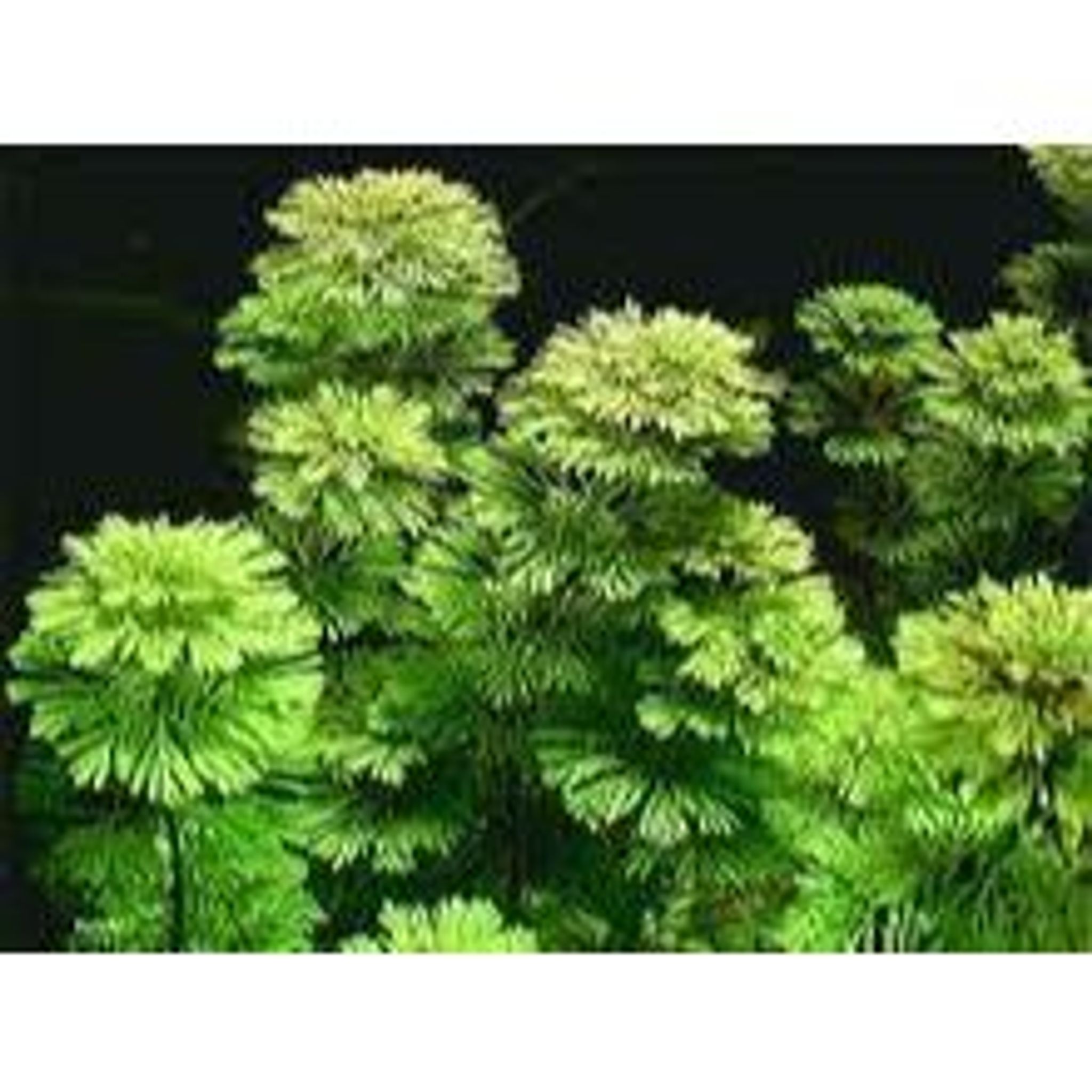
Limnophila sessiliflora is a fast-growing whorled stem plant — its narrow, feathery leaves grow in rings of several per node — commonly sold under the trade name "Ambulia." It's typically kept fully submerged but can also grow emersed along pond or paludarium margins, and that dual life history is exactly why melt is so common right after purchase.
Is This Normal Transplant Melt?
Most stem plants sold in stores, including Limnophila, are farm-raised emersed — grown out of water where leaves are thicker and built to retain moisture. Submerged leaves are thinner and optimized for gas exchange underwater instead. When you plant emersed-grown stock into an aquarium, the original leaves usually can't survive the switch and melt away within 1 to 3 weeks, while finer submerged leaves emerge from the growing tip and nodes at the same time.
This is adjustment, not disease, but it's easy to confuse with a real problem. Use this distinction:
| Sign | Normal adjustment melt | Ongoing/problem melt |
|---|---|---|
| Which leaves are affected | Only the original (older, thicker) leaves | New growth is also melting or browning |
| Timing | Limited window, usually resolves in 1–3 weeks | Continues or spreads past 3 weeks |
| New growth | Emerging concurrently from tips/nodes | Absent, stunted, or also dying |
| Direction of spread | Localized to original foliage | Spreading from base upward through the whole stem |
If new growth keeps failing alongside the old leaves, the cause is environmental (light, CO2, nutrients, or water quality), not a normal transition.
Why Cutting Off Old Leaves Helps
Emersed leaves are structurally different tissue that will never re-adapt to underwater life. Trimming them off, rather than waiting for them to recover, redirects the plant's energy into producing new submerged growth faster.
A Quick Self-Diagnosis Table
Beyond transplant melt, four other patterns account for nearly all Limnophila melting and browning cases. Match your symptoms against these before assuming the worst:
| Cause | Where it starts | Speed | Smell/slime | New growth affected? |
|---|---|---|---|---|
| Adjustment melt | Original (oldest) leaves only | 1–3 weeks | Sometimes | No — new growth appears |
| Nutrient deficiency | Lower/older leaves, tips can yellow first | Gradual, days to weeks | No | No — top growth stays healthy |
| Chemical/ammonia burn | Random, across many stems at once | Rapid, hours to a day or two | No | Yes — sudden and widespread |
| Algae smothering | Under a visible algae film/coating | Gradual once coated | No | Only the coated leaves |
Light: The Biggest Driver of Shape and Color
Limnophila sessiliflora needs medium to high light — roughly the equivalent of 2–3+ watts per gallon in older lighting terms, or about 30–50+ PAR — to hold its tight whorled form and develop vivid green-to-red coloring. Sources disagree on exactly how much it needs: some call it a low-to-medium light plant that survives without CO2, others insist it needs medium-high light plus CO2 to look good. Both are right depending on your goal.
- Under low light: the plant survives but stretches, with long internodes, thin sparse leaves, and lower leaves yellowing and dropping from lack of energy.
- Under medium-high light with CO2: it stays compact, bushy, and colorful.
In practical terms: it's easy to keep alive, but moderate difficulty to keep looking good long-term. Set expectations based on your actual lighting setup rather than assuming it will look bushy under a basic low-output fixture — if your current light is underpowered, browsing aquarium lighting options is a reasonable first step.
Photoperiod
Run a 6–8 hour photoperiod. Less causes weak, leggy growth and leaf drop; significantly more — especially without matching CO2 and nutrients — invites algae blooms that then smother the plant itself, creating a second problem on top of the first.
CO2 and Nutrients
Limnophila sessiliflora does not require supplemental CO2 to survive, but it grows measurably better with it. A target of roughly 20–30 ppm dissolved CO2 supports tighter growth and stronger color. Without CO2, expect legginess and faster lower-leaf loss, especially under brighter light where the plant's demand for carbon outpaces what's dissolved naturally in the water.
It's also a heavy feeder from both the substrate and the water column, needing nitrogen, phosphorus, potassium, and micronutrients like iron. A dual feeding routine works best: root tabs pushed into the substrate near the base for the fine roots at each lower node, plus a liquid all-in-one or NPK+micro fertilizer dosed into the water column for the fast-growing top portion.
Don't assume a fast grower "must" be getting enough from fish waste alone — that assumption is a common mistake that leads to chronic lower-leaf yellowing even in an otherwise healthy tank. Check substrate options if your current setup is inert gravel with no root-tab routine.
Reading Deficiency Symptoms
- Lower/older leaves yellowing or browning while new top growth looks fine: classic nitrogen, potassium, or iron deficiency.
- Browning starting at the growing tip instead: points to calcium, boron, or a different issue — not a typical NPK deficiency pattern.
Non-Disease Causes of Sudden Melt or Browning
Several triggers cause melt that has nothing to do with the plant's health and everything to do with a sudden change: shipping stress combined with the emersed-to-submersed switch, sudden tank changes (a new tank, a large water change, a dosing change, or a light upgrade) that cause the plant to "reset" and shed old leaves before regrowing adapted foliage, algae fouling (diatoms, black beard, hair algae) that blocks light and gas exchange until the tissue underneath dies and browns, and physical damage or snapping at the fragile nodes during handling.
Algae as a Hidden Cause
Limnophila's fine, feathery leaves are especially prone to trapping algae film, and it's easy to mistake the resulting die-back for a disease or nutrient problem. If you see a visible coating before symptoms appear, treat it as the primary cause: manually remove algae by gently rubbing leaves between your fingers or trimming affected stems, improve water flow so debris and spores stop settling on the leaves, and rebalance photoperiod — too many hours of light without matching CO2/nutrients is often what fed the outbreak. Ignoring an algae outbreak on the plant itself usually just lets it choke more leaves before you intervene.
Ammonia, Nitrite, and Chlorine Damage
New tank syndrome — ammonia and nitrite spikes in an uncycled tank — and chlorine or chloramine exposure from unconditioned tap water can both burn leaf tissue chemically. The telltale sign is speed and spread: rapid browning or melting across many stems at once, rather than the slow, lower-leaf-first pattern of a nutrient deficiency. Always dechlorinate water changes — a water conditioner or additive is worth keeping on hand. Overdosing liquid CO2 products or aiming strong flow directly at the plant can cause a similar localized leaf burn.
Trimming and Propagation When the Base Is Rotting
When melting or browning has taken over the lower half of a stem, don't wait for that section to recover — it won't. Cut the stem at a healthy point well above the rotten section, discard the mushy lower portion and its roots, then replant the healthy top cutting or simply float it — new roots form at the nodes within days.
When replanting, keep reasonable spacing between stems. Dense planting shades the lower leaves of neighboring stems, causing self-inflicted browning that has nothing to do with water quality — spacing matters as much as fertilizer for this plant.
Recovery Timeline: What to Expect
Anxious hobbyists often uproot a recovering plant too soon. Use this rough framework instead:
- Days 1–3: Original leaves may already look duller or start softening. Expected — don't intervene yet.
- Week 1: Original leaves may fully melt away. Watch the growing tip for tiny new leaf whorls — the sign things are on track.
- Week 2: With adequate light, CO2, and fertilization, fresh growth is typically visible and expanding.
- Weeks 3–4: Full re-establishment, with normal whorled shape and color restored.
If new growth hasn't appeared by the end of week 2, revisit light intensity, CO2, and nutrient dosing rather than continuing to wait.
Placement and General Care Notes
Limnophila sessiliflora works best as a mid-to-background stem plant given its height and fast growth rate. It tolerates a fairly wide range of conditions — roughly 72–82°F (22–28°C), pH 6.5–7.5, soft to moderately hard water — and isn't picky about hardness specifically. What it doesn't tolerate well is instability: swinging parameters trigger melt more reliably than any single number being slightly off target.
Before planting new stems, rinse them and check closely for pest algae or hitchhiking snails, since either can stress the plant further on top of the normal transition. Tissue-cultured, pest- and algae-free stock also tends to melt less dramatically and adapt faster than farm-grown emersed stems, since it skips most of the emersed-to-submersed conversion.
Frequently Asked Questions
Is it normal for Limnophila sessiliflora to melt after I plant it?
Yes, as long as the melt is limited to the original leaves and new growth appears within 1–2 weeks. It's only concerning if melting spreads to new growth too.
How do I tell melting from normal leaf drop as the plant grows?
Melting looks like mushy, translucent, detaching tissue, often with a faint smell. Normal leaf drop is just a few older lower leaves yellowing and falling occasionally while the rest of the plant thrives.
Does Limnophila sessiliflora need CO2 to survive?
No, it can survive without supplemental CO2, but it grows more compact, colorful, and resistant to melt with it. Without CO2, expect leggier growth and faster lower-leaf loss, especially under brighter light.
Why are only the bottom leaves browning while the top looks healthy?
This is usually a nutrient deficiency, particularly nitrogen, potassium, or iron, or self-shading from dense growth blocking light to the lower leaves. Check your fertilizing routine and stem spacing before assuming a bigger problem.
Can I save a stem that's melting from the bottom up?
Yes — cut and keep the healthy top portion, discard the rotting base and its roots, and replant or float the cutting so it regrows roots at the nodes. Don't wait for a badly melted base to recover on its own.
What water parameters does it need to stop melting?
There's no exotic requirement: a stable temperature around 72–82°F, pH 6.5–7.5, and consistent water quality matter far more than hitting an exact number. Instability is the bigger trigger for melt than any single parameter being slightly off.
Could algae be causing the browning instead of a plant health issue?
Yes. An algae film on the fine leaves blocks light and gas exchange, leading to die-back that can look exactly like a disease or deficiency. Check closely for a visible coating on the leaves before assuming it's a water-quality problem.
Keeping Limnophila sessiliflora looking full and healthy comes down to matching light, CO2, and feeding to its fast growth rate, then trimming decisively when a stem starts to fail. If your setup needs an upgrade to support it, you can browse aquarium plants and the freshwater livestock selection on FishyHub to round out a healthy planted community tank.


