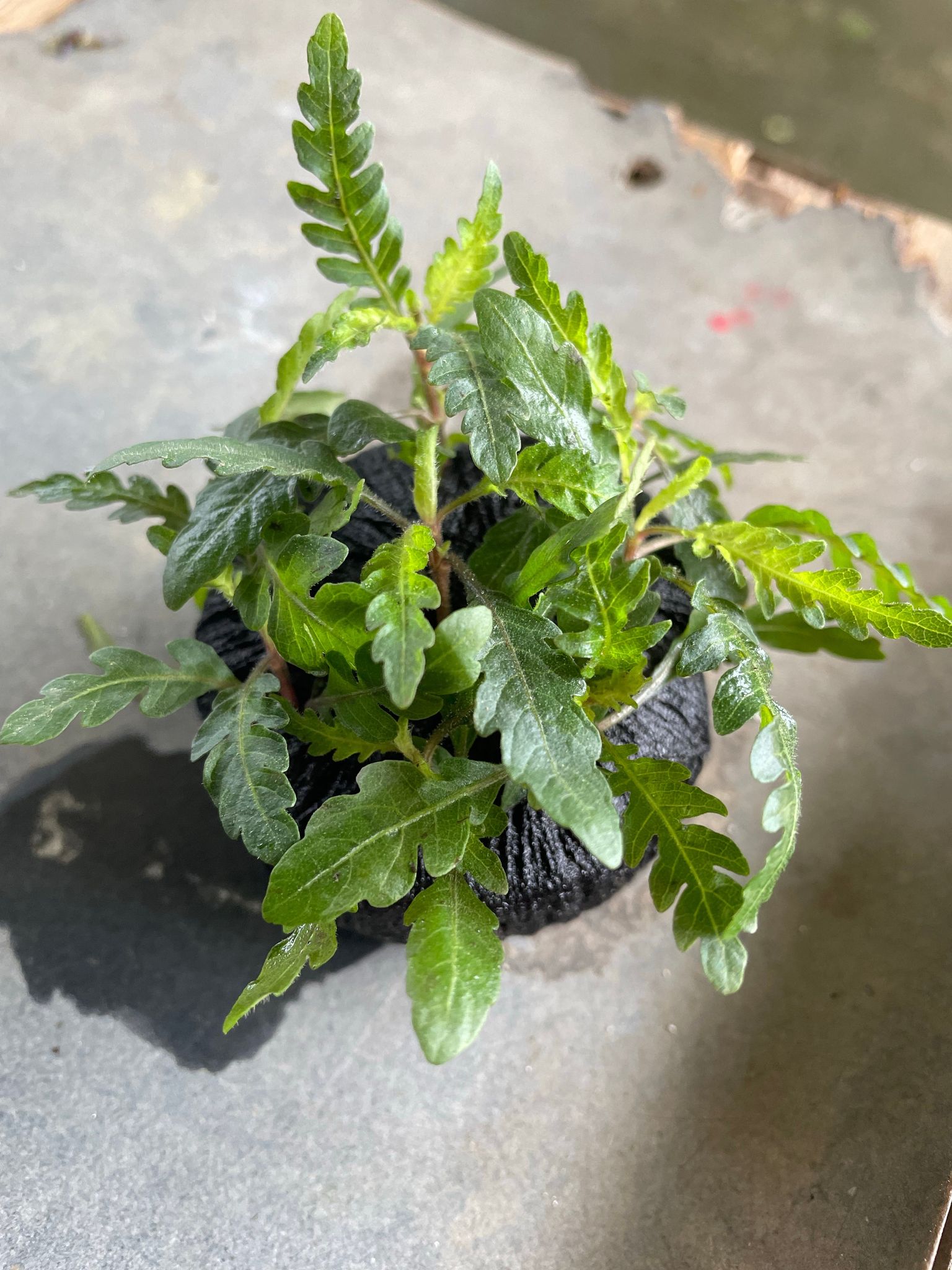
Why Is My Hygrophila Pinnatifida Melting or Turning Brown? Causes and Fixes
A newly planted Hygrophila pinnatifida that turns mushy, translucent, or brown is usually going through a normal adjustment, not dying. This guide explains when melt is expected, when it signals a real problem, and how to fix lighting, CO2, feeding, flow, and planting depth so the plant recovers and grows in its signature reddish-brown color.
What Hygrophila Pinnatifida Looks Like When It's Healthy
Hygrophila pinnatifida is a low-to-midground stem and creeping plant native to India, easy to identify by its deeply lobed, oak-leaf-shaped foliage. Healthy leaves show two distinct sides:
- Top surface: olive-green, sometimes with a slight bronze tint under strong light.
- Underside: reddish-purple, visible when leaves curl slightly or when viewed from below.
It can be grown two ways: planted in substrate like a typical rooted stem plant, or attached to hardscape (driftwood or rock) like an epiphyte, where it sends out creeping runners and clings on its own over time. A struggling plant, by contrast, shows progressive collapse across multiple leaves at once, a mushy or blackened base, or no sign of new leaf buds after several weeks — that distinction matters more than any single brown leaf.
Is It Normal Transition Melt or a Real Problem?
Most Hygrophila pinnatifida sold to hobbyists is grown emersed (above water, in nursery trays) because it produces sturdier, easier-to-ship foliage that way. Once submerged, those emersed leaves are physiologically different from the aquatic-form leaves the plant needs underwater, so it commonly sheds the original growth within 1 to 3 weeks of planting. This is an adaptation process, not disease — as long as new leaves appear from the crown or nodes during that window.
Use this quick comparison to tell the two apart:
| Sign | Normal transition melt | A deeper problem |
|---|---|---|
| Timing | Starts within days, resolves in 2–4 weeks | Continues or worsens past 4 weeks |
| Pattern | Older/lower leaves go first | New leaves also melt or fail to form |
| New growth | Fresh buds appear at crown/nodes | No new buds at all |
| Base/stem | Stays firm | Turns black, mushy, or rotten |
| Spread | Limited to a few leaves | Progresses across the whole plant |
If new growth is emerging anywhere on the plant, give it time. If there's total collapse with zero new buds after three to four weeks, something else — parameters, burial depth, or lighting — needs to change.
Ideal Water Parameters and Lighting at a Glance
Hygrophila pinnatifida tolerates a fairly wide range of conditions, but it only shows its best color and density within a narrower comfort zone.
| Parameter | Tolerable range | Best for color & growth |
|---|---|---|
| Temperature | 68–82°F (20–28°C) | Middle of range; avoid the high end paired with low CO2/oxygen |
| pH | 6.0–7.5 | 6.5–7.0 |
| Water hardness | Soft to moderately hard | Soft to medium |
| Light | Low to high | Medium-to-high, roughly 30–50+ PAR at the plant |
| CO2 | None required | Injected, roughly 15–30 ppm, with good surface agitation |
Sources genuinely disagree on how demanding this plant is. Some care guides call it beginner-friendly and CO2-free; others treat it as a fussy, CO2-dependent red plant. Both are partly right: it survives and grows slowly with no CO2 and moderate light, but the reddish coloration, compact form, and resistance to melting really depend on at least moderate-to-high light plus supplemental CO2 or a liquid carbon source. Set your expectations by tank type — a low-tech tank will keep the plant alive and mostly green; a higher-light, CO2-supplemented tank will produce the deep red undersides and tighter growth shown in most photos.
How to Plant or Attach It Correctly
Planting depth is one of the most common sources of brown, mushy bases. Hygrophila pinnatifida has a rhizome-like crown, and that crown needs access to oxygen to stay healthy.
Planting in substrate:
- Bury only the root mass, keeping the crown and growth point at or just above the substrate surface.
- Space individual stems or plantlets about 2–3 inches (5–8 cm) apart to leave room for lateral runners.
- Avoid pressing the whole base deep into the substrate — this is the single biggest cause of anaerobic rot and blackened, mushy tissue at the base.
Attaching to hardscape:
- Tie or glue the base to driftwood or rock rather than burying it at all.
- The plant behaves like an epiphyte here, gradually anchoring itself and sending runners across the surface.
- This method sidesteps burial-depth mistakes entirely and is a reliable option if a substrate planting keeps rotting.
Either approach works — the real disagreement among growers is about how deep to bury the base, not which method is correct. Once established, the plant sends out horizontal runners with new plantlets forming along the way, and it settles into a hardy, slow-to-moderate growth rate. A nutrient-rich planted substrate gives the root system a strong start regardless of which method you choose; a proper substrate designed for planted tanks makes root establishment noticeably faster than plain gravel.
Fertilizing Routine to Prevent Nutrient-Deficiency Browning
Hygrophila pinnatifida feeds through both its roots and the water column, and skipping one input often shows up as browning or discoloration.
- Root tabs: Push iron-rich root tabs into the substrate near the base at planting, and replace them roughly every 1–2 months depending on the product's release rate. This is essential even though the plant also feeds from the water column — root tabs alone versus liquid fertilizer alone both tend to underperform compared to using both.
- Liquid fertilizer: Dose a complete liquid fertilizer that supplies macronutrients (nitrate, phosphate, potassium) alongside micronutrients, especially iron and trace elements.
- Watch for deficiency signs: New leaves that emerge pale, with holes, or with brown speckling typically point to an iron or micronutrient shortfall rather than a lighting or CO2 issue.
Algae and Biofilm: The Great Melting Look-Alike
Not everything that looks brown on this plant is melting. The leaf undersides are slightly textured, which makes them a magnet for diatom film and detritus buildup, especially in a newer or low-flow tank. This brown fuzz or dusty coating is often mistaken for disease or dying tissue, but it's usually just biofilm sitting on top of healthy leaf tissue.
Fixes:
- Improve flow across the plant so debris and biofilm don't settle — a canister or filter sized to circulate the whole footprint of the tank helps prevent dead spots near the leaves.
- Let a new tank fully mature; diatom blooms in the first weeks are common and usually resolve on their own as the tank's biological balance stabilizes.
- Spot-clean by gently rubbing the film off with a fingertip or soft brush rather than assuming the plant is failing.
Propagation From Runners
Once established, Hygrophila pinnatifida spreads via horizontal runners that produce new plantlets along their length. When trimming for propagation:
- Cut runners once plantlets have developed a few of their own leaves and small roots.
- Replant or reattach the cut sections promptly; a brown tint at a fresh cut end is normal tissue response, not rot, as long as the rest of the cutting stays firm.
- Avoid trimming into the older, established stem more than necessary — cutting into healthy tissue for cosmetic reasons can set the plant back the same way over-aggressive melt-leaf removal does.
Common Mistakes That Make Melting Worse
- Discarding the plant too early. Waiting it out through the first 2–3 weeks, watching for new crown growth, saves plants that would have otherwise recovered.
- Burying the crown. This is the top cause of blackened, mushy bases — not disease.
- Expecting magazine-red color in a low-light, unfertilized tank. Coloration is light- and nutrient-driven, not automatic.
- Skipping root tabs because the plant also feeds from the water column — it genuinely does better with both.
- Ignoring flow, which lets brown biofilm settle on leaves and get misread as a plant problem.
- Sudden parameter swings right after planting — a large cold-water change or new-tank ammonia spike stacks extra stress on top of normal transition melt.
- Over-trimming melted leaves in a way that cuts into healthy stem tissue.
Frequently Asked Questions
Is it normal for new Hygrophila pinnatifida to melt after planting?
Yes. This is especially common with emersed-grown stock, and some leaf loss in the first 2–3 weeks is expected while the plant converts to aquatic-form leaves. As long as new growth follows at the crown or nodes, this is a normal transition, not a failing plant.
How long does it take to recover from melt?
Most plants show fresh leaf buds within 2–4 weeks if light and water parameters are adequate. If there's no new growth at all after 3–4 weeks, look at planting depth, light intensity, and water parameters rather than waiting longer.
Does Hygrophila pinnatifida need CO2?
Not strictly — it survives and grows slowly without it. However, supplemental CO2 or liquid carbon paired with moderate-to-high light produces denser, more colorful, and more melt-resistant growth than a low-tech setup.
Why are the leaves plain green instead of reddish-brown?
This usually points to insufficient light intensity or duration, or a shortfall in iron and micronutrients. The red pigment on the leaf underside is driven by both light and nutrition, so a low-light or under-fertilized tank tends to stay mostly green.
Why is the base of my plant turning black or mushy?
The most likely cause is the crown or rhizome-like base being buried too deep in the substrate, which cuts off oxygen and leads to rot. Replant it with the growth point sitting at or above the substrate surface.
Can I just tie it to driftwood instead of planting it?
Yes. Hygrophila pinnatifida grows well attached to hardscape like an epiphyte, and this method also avoids burial-related rot entirely since there's no substrate to over-bury it in.
Is the brown fuzz on the leaves algae or disease?
Often it's diatom film or general detritus buildup from low flow or a still-maturing tank, not a disease affecting the plant itself. Improving water flow, letting the tank mature, and spot-cleaning the leaves usually clears it up.
Browsing a lighting upgrade or a full planted-tank setup makes it easier to hit the light and flow targets this plant needs — check FishyHub's current selection to match equipment to your tank size before troubleshooting goes any further.


