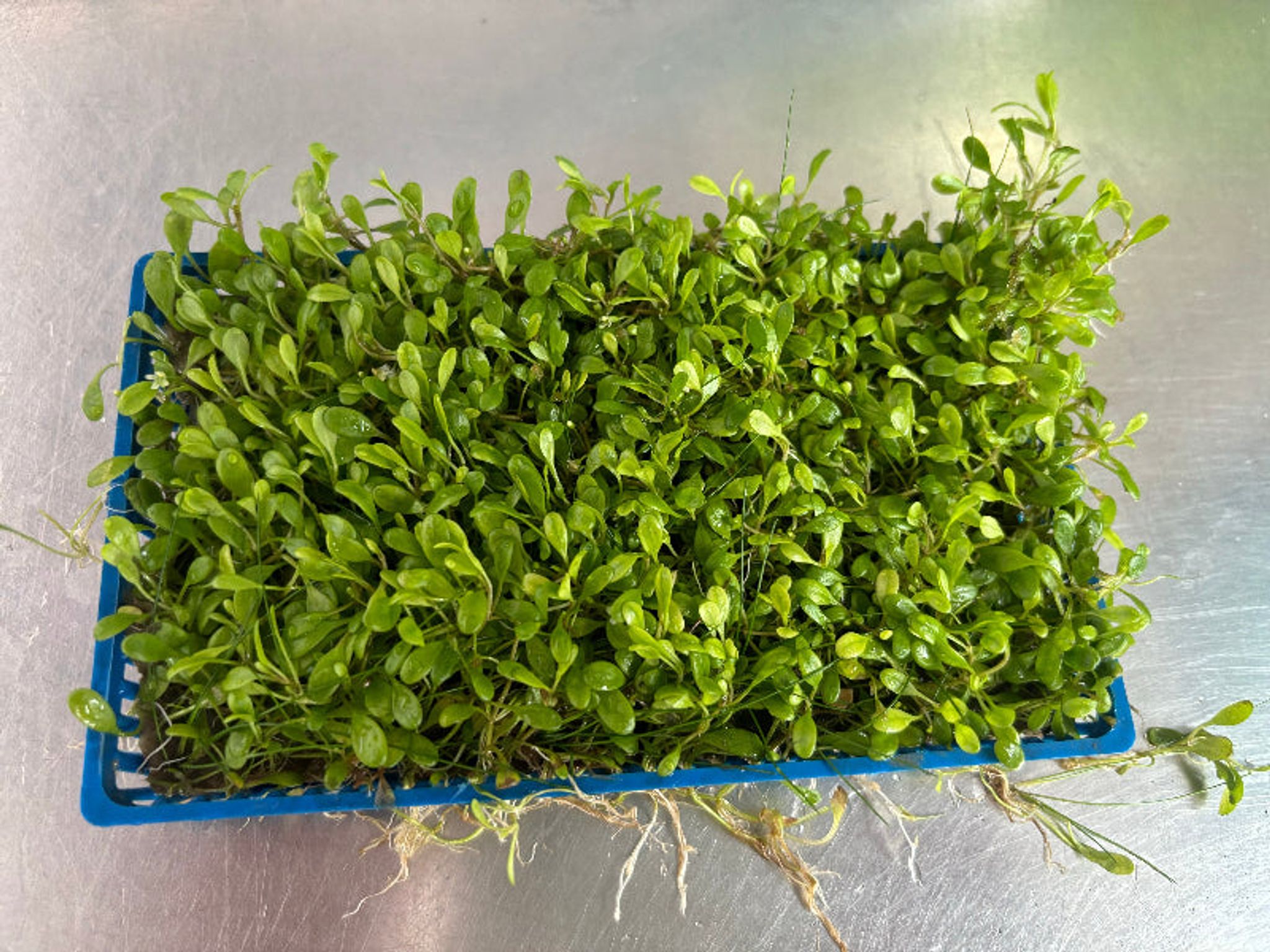

Why Is My Glossostigma Melting or Turning Brown? Causes and Fixes
Glossostigma elatinoides is one of the most rewarding carpet plants in the hobby and also one of the least forgiving. When it starts going translucent, mushy, or brown, the cause depends heavily on whether you just planted it or you're watching an established carpet decline, and mixing up the two leads to the wrong fix. This guide walks through both scenarios in the order you should actually check them.
Melting vs. Browning: Not the Same Problem
These two symptoms look related but usually point to different root causes.
- Melting is fast: leaf tissue turns translucent or mushy within days, and whole stems can collapse or detach in sheets. It's a sign of sudden physiological stress.
- Browning is slow: leaves yellow, then brown, starting with older growth, and the carpet thins out gradually over one to several weeks. It points to a chronic deficiency or a lighting/flow problem that's been building.
Both can happen on the same plant, and a bad melt that isn't trimmed away often triggers rot and browning around it. Treat the speed of the symptom as your first diagnostic clue.
Is This a New Planting or an Established Carpet?
Splitting causes this way keeps you from over-correcting.
New Plantings (First 1–2 Weeks)
Glossostigma sold as tissue-culture cups or emersed-grown mats is usually grown above water, with a leaf structure suited to air, not submersion. When you plant it underwater, a full melt-back to almost nothing is a normal, expected transition for this species — not a sign you did something wrong. The plant regrows fresh, fully aquatic leaves from surviving nodes and runners, typically over 2–4 weeks.
The mistake most people make here is panic: dosing extra fertilizer, cranking up CO2, or ripping out the mat and replanting. Don't. Trim off the mush, keep parameters stable, and give it time.
Established Carpets (Weeks to Months In)
If a carpet that was previously thriving starts browning, the cause is almost always environmental or nutritional rather than transitional. This is where the diagnostic order below matters most.
Diagnostic Order: Check These Four Things First
Work through causes in this sequence rather than guessing — it saves you from dosing your way around a lighting or flow problem.
1. CO2 Consistency
Glossostigma needs steady, injected CO2 to hold a low, dense carpet. Inconsistent CO2 is one of the most common melt triggers, especially when light output outpaces it.
- A drop checker should read lime-green, not blue (too little) or yellow (too much).
- A rough baseline is 1–2 bubbles per second, tuned to your specific tank and adjusted from there.
- Turn CO2 on 1–2 hours before the lights so concentration is already stable when photosynthesis ramps up.
- Check that surface agitation isn't gassing off CO2 faster than it can build — a bit less agitation right at lights-on can help, as long as oxygen levels stay adequate overnight.
2. Light Distribution at Substrate Level
Because Glossostigma is a foreground carpet, it's the shortest plant in the tank — and the first one shaded out. Check for:
- Taller foreground or midground plants that have grown in and now cast shadow over the carpet.
- Hardscape (rock or wood) blocking light from reaching low areas.
- A fixture mounted too high or an aging bulb/LED that has lost intensity.
A practical target is roughly 50–80+ PAR at the substrate for a true low carpet, though this isn't a hard cutoff — it needs to scale together with your CO2 and fertilizer dosing, not be raised in isolation.
3. Fertilizer (Macro and Micro)
Older, lower leaves turning pale yellow-brown while newer growth looks fine points to a nutrient deficiency, particularly nitrogen, potassium, or iron/micronutrients. This is common with inert substrates (plain sand or gravel) that don't supply nutrients on their own, and it also shows up months into a tank's life once an enriched substrate's initial charge or root tabs are exhausted.
| Substrate age | What typically happens | Fix |
|---|---|---|
| First 2–3 months (nutrient-rich substrate) | Carpet grows well with light dosing | Maintain a light complete fert line |
| 3–12+ months (nutrient-rich substrate) | Older leaves start browning as the initial charge depletes | Add root tabs or increase liquid dosing |
| Any age (inert sand/gravel) | Deficiency symptoms appear early and steadily | Dose a complete macro + micro fert line from the start |
4. Flow and Substrate Conditions
Poor flow creates dead zones at carpet height where CO2 and nutrients never arrive, even if your overall levels look fine. Meanwhile, too much flow can uproot Glossostigma's shallow root system or tear at spreading runners. Also check the substrate itself:
- Too deep or overly compacted substrate can create anaerobic pockets under the carpet. A rotten-egg smell when you probe the substrate is a clear red flag and means roots are rotting.
- Aggressive gravel vacuuming right at the carpet line, or bottom-dwelling fish and shrimp digging, can uproot shallow sections.
Water Quality and Physical Stress
A few less common but important contributors:
- Ammonia or nitrite spikes in an uncycled or overstocked tank will stress and melt sensitive plants along with fish.
- Sudden pH or hardness swings, or a large water change using water with very different temperature or chemistry, can shock the carpet.
- Keep parameters in Glossostigma's comfort zone: pH 6.0–7.5, temperature 68–78°F (20–26°C), and stable soft-to-moderate hardness — consistency matters more than hitting an exact number.
- Algae coating (diatoms or black beard algae) smothering the blades will also brown and choke out a carpet independent of any of the above; distinguish this from melt because algae leaves visible fuzzy or slimy growth on structurally intact leaves, whereas melt shows translucent or mushy tissue breaking down at its own pace.
The Fix Checklist
- Verify and stabilize CO2 (lime-green drop checker, steady bubble rate, on before lights).
- Raise light gradually rather than jumping intensity all at once.
- Dose a complete macro and micro fertilizer line, especially over inert substrate or once an enriched substrate ages.
- Trim off melted or browning tissue promptly — decaying matter fouls water and pulls energy away from healthy runners.
- Improve flow at substrate level without blasting the carpet loose.
- Be patient. A full melt-and-regrow cycle after planting, or a multi-week recovery after fixing an established-carpet issue, is normal — expect visible improvement over 2–4 weeks, not days.
Best Lighting for a Glossostigma Carpet
Since light reaching the substrate is one of the top two or three causes of both melting and browning, it's worth getting the fixture setup right:
- Aim for a mixed red/blue/violet spectrum, similar to natural daylight, which supports strong growth without disproportionately feeding algae.
- Run an 8–10 hour photoperiod as a steady daily baseline.
- A programmable LED fixture lets you raise intensity gradually over days or weeks rather than jumping straight to full output — important if the carpet is already stressed or recovering from a melt.
- Position the light so it actually reaches carpet height, not just the tallest background plants — a fixture mounted too high, or blocked by taller growth, will always under-light a foreground carpet even at full intensity. You can browse LED aquarium lighting on FishyHub for programmable fixtures suited to planted tanks.
If nutrient depletion in an aging substrate turns out to be part of the problem, look at a root tab or dosing-friendly substrate to rebuild the nutrient base under the carpet, and a water conditioner or additive line to keep parameters stable during recovery.
Documenting Your Carpet's Recovery
Once you've made adjustments, photos are the easiest way to confirm they're working rather than guessing week to week.
- Shoot in a darkened room, level with or slightly above the tank light, to cut glare off the glass.
- Alternatively, use soft indirect natural light — avoid warm household bulbs, which clash with the tank's color temperature and skew colors.
- Clean the glass before every shoot.
- Frame full-tank shots with a little negative space around the tank rather than cropping right to the glass edges.
- Alternate full-tank shots (to track overall carpet fill) with close-ups (to check leaf color and density).
- A smartphone camera is sufficient — no dedicated camera gear is needed to track progress meaningfully.
Frequently Asked Questions
Is it normal for Glossostigma to melt completely after planting?
Yes, for many tissue-culture or emersed-grown mats. Trim away the mush and wait for regrowth from surviving nodes and runners, which usually takes 2–4 weeks.
Can Glossostigma carpet without CO2 injection?
It can survive without injected CO2, but it rarely holds a tight, low carpet. Without it, expect leggy, upward growth and eventual browning or melt as the plant struggles to keep pace with light.
How much light does a Glossostigma carpet need?
Medium-to-high, ideally high, with light actually reaching the substrate rather than just illuminating taller background plants. Any light increase should be paired with matching CO2 and fertilizer dosing rather than raised on its own.
Why is only the bottom or center of my carpet browning while the edges look fine?
This is usually localized shading from hardscape or overgrown neighboring plants, or a dead-flow zone where CO2 and nutrients aren't reaching that specific spot.
What water parameters keep Glossostigma healthy?
Roughly pH 6.0–7.5, temperature 68–78°F (20–26°C), and stable soft-to-moderate hardness. Consistency in CO2 and fertilizer dosing matters as much as hitting exact numbers.
Should I remove melted leaves or leave them?
Trim and remove decaying tissue promptly. Left in place, it fouls the water and encourages rot or algae at the substrate line, while removing it lets the plant redirect energy toward new growth.
How do I tell melt from an algae problem?
Melt shows translucent, mushy, or browning tissue detaching at the plant's own pace, with the leaf structure breaking down. Algae shows a visible fuzzy, hairy, or slimy coating growing on otherwise structurally intact leaves.
Can too much light cause melting, not just too little?
Yes. A sudden jump in intensity without matching CO2 and nutrients can burn leaf tissue and trigger a melt, so any lighting change should be gradual rather than immediate.
Ready to rebuild your carpet's foundation? Browse aquarium lighting and substrate options on FishyHub to find fixtures and materials suited to demanding foreground plants like Glossostigma.


