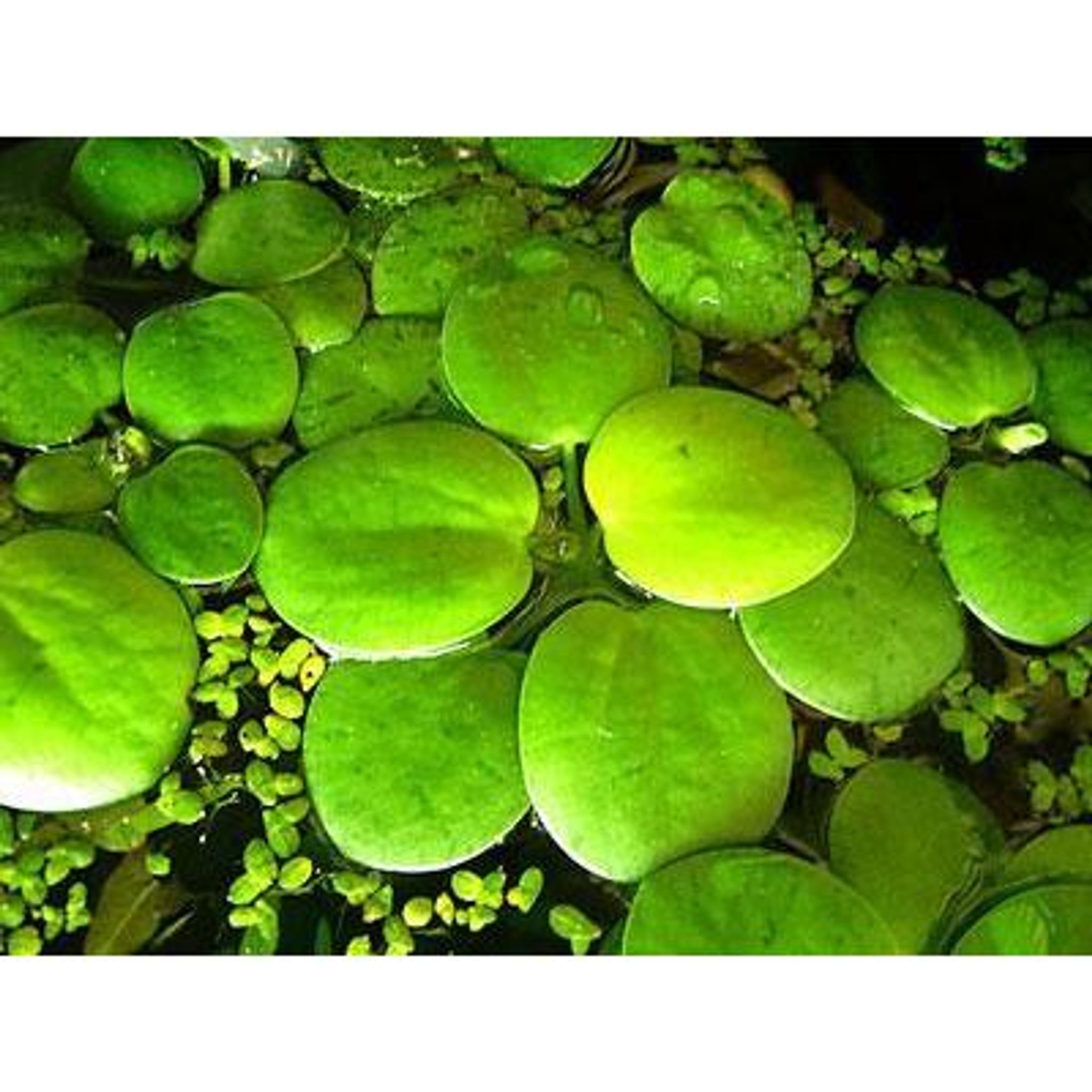

Why Is My Frogbit Melting or Turning Brown? Causes and Fixes
Amazon frogbit (Limnobium laevigatum) can go from lush green pads to mushy, brown, or yellow leaves surprisingly fast, and it's rarely one single cause. This guide walks through the most common triggers — moisture on the leaf tops, low light, nutrient shortages, and water quality — so you can match the symptom to the fix instead of guessing.
First, Is This Normal Transplant Shock?
If you just added frogbit to your tank in the last one to three weeks, some melting is expected, not a sign you did something wrong. Most retail frogbit is grown emersed (out of water, in humid greenhouse trays), so its original leaves are built for open air, not for sitting on the water surface of a tank. Once submersed conditions kick in, those original leaves often yellow, brown, and dissolve while a new set of thicker, more water-adapted leaves grows in underneath.
Signs this is normal shock rather than a real problem:
- Only the older, outer leaves are affected; the crown (center) still looks firm and green.
- New tiny leaves are emerging even as old ones die back.
- The plant was fine in the store or bag and started declining only after being placed in your tank.
Give it 2 to 4 weeks after planting before judging the outcome. Trim off the dying leaves as they go (see the trimming section below) rather than removing the whole plant.
Melting, Mushy, Translucent Leaves: The Moisture Problem
Frogbit leaves have a waxy, water-repellent surface on top designed to stay bone-dry, with air pockets underneath that keep the plant afloat. When water sits on that top surface instead of beading off, the leaf tissue breaks down, turns translucent, blackens, and eventually disintegrates — this is the classic "melting" look, and it's a physically different problem from yellowing (covered later).
Common sources of surface water
- Splashing during water changes — pouring or siphoning water back in without redirecting flow away from the floating patch.
- Dripping from a closing lid or from condensation collecting on the underside of a lid and dropping onto the leaves below. A mostly-closed lid raises humidity inside the tank, and that condensation can mimic splash damage even if you never touched the plant.
- Filter output, spray bars, air stones, and bubblers creating ripples or a direct stream that flips leaves over or dunks them.
Fixes
- Redirect hang-on-back (HOB) or canister filter output away from the frogbit patch, or angle a spray bar so it doesn't create surface chop where the plants sit. Browsing filters built with adjustable flow or spray-bar attachments makes this easier to dial in.
- Turn off air stones and bubblers directly under the mat, or move them to a corner of the tank away from the plants.
- Corral the plants into a calm zone using a floating plant ring, a suction-cup barrier, or a simple fence made from airline tubing, so the rest of the tank keeps normal filtration and turnover while the frogbit sits in a low-flow pocket.
- During water changes, pour new water down the glass or against a decoration instead of over the plant mat, and avoid letting condensation-heavy lids sit fully closed for long stretches — crack them slightly for airflow.
Browning and Curling at the Edges
Edge browning with a crispy or curled texture usually points to the same moisture issue as melting, just less severe — leaves that got splashed or flipped partially instead of fully soaked. The dried, damaged tissue turns brown and curls inward as it dies back.
If flow and splashing are already ruled out, check whether the browning is uniform across the whole plant with little new growth. That pattern usually means insufficient light rather than moisture damage.
Light: How Much Frogbit Actually Needs
Frogbit sits right at the water's surface, so it gets the most intense light in the tank — but tall stem plants, floating decor, or a lid rim can easily shade it without you noticing, and stunted or dull growth from shading is often mistaken for a nutrient problem.
General guidance:
- Aim for 8 to 10 hours per day of at least moderate light intensity.
- Stronger or closer lighting (e.g., a fixture mounted low over the tank) needs a shorter photoperiod, closer to 7–8 hours, to avoid leaf bleaching or burn.
- Weaker or more distant lighting can run slightly longer, up to 10–12 hours, without stressing the plant.
- Position the frogbit patch where nothing tall blocks it — this is a common blind spot in heavily planted tanks.
- A tank near a window can get a burst of stronger, longer summer sun that neither the light nor the timer accounts for, which can cause sudden browning alongside an algae bloom (more on that below). If your tank sits near natural light, keep an eye on seasonal changes.
Running lighting on a consistent timer, ideally through a dedicated LED lamp, makes it easier to hold a steady photoperiod rather than relying on ambient room light.
Yellowing Leaves: A Nutrient Story
Yellowing is a different symptom from melting or browning, and where it shows up on the plant tells you which nutrient is short.
| Symptom | Likely deficiency | What to do |
|---|---|---|
| New/young leaves yellow, older leaves still green | Iron or general micronutrients | Dose a comprehensive liquid fertilizer with chelated iron |
| Older/lower leaves yellow first, new growth looks fine | Nitrogen (nitrate) | Light nitrate dosing, or reduce competing plant mass |
| Whole plant pale/yellow with stunted growth | Broad macro/micro shortage (N, P, K, magnesium, trace elements) | Dose a comprehensive all-in-one liquid fertilizer 1–2x weekly per label |
Frogbit has only fine, trailing roots that hang in the water column — it has no real substrate roots, so root-tab fertilizers do nothing for it. All feeding has to come through water-column dosing. This is an easy mistake in tanks that are otherwise dosed for root-feeding plants like swords or crypts.
Low-fish-load or heavily planted tanks are especially prone to nitrogen shortages, since fast-growing stems and other floaters can strip nitrate before frogbit gets its share.
Root Health: A Separate Signal From Leaf Problems
Frogbit's long, trailing roots do double duty — they pull nitrate and ammonia out of the water, and they're a favorite hiding spot and nursery for shrimp and fry. Because of that, root condition deserves its own check, separate from what's happening on the leaves.
- Brown, mushy, or disintegrating roots usually point to poor water quality — an ammonia or nitrite spike, or root rot from stagnant, dirty water — rather than a light or flow issue.
- If roots look bad but leaves still look fine, test your water parameters and do a water change before assuming it's a leaf-level problem.
- Healthy roots are typically white to pale and firm; treat a sudden change here as an early warning sign.
Temperature and Water Chemistry
Frogbit tolerates a wide range but doesn't necessarily thrive across all of it.
- Tolerance range: roughly 64–86°F (18–30°C).
- Best range for steady, non-browning growth: keep it closer to 72–78°F (22–26°C). Consistently warm water above the high 70s°F stresses the plant and speeds up browning, which matters most in summer or in tanks without a chiller.
- pH: roughly 6.0–7.5.
- Hardness: soft to medium, about 0–12 °GH.
None of these are hard cutoffs, but extremes on either end add stress that shows up as slower growth and more browning over time.
Does Algae Affect My Frogbit?
Green water — a bloom of free-floating, single-celled algae that turns the tank cloudy green — isn't caused by frogbit itself. It's driven by excess light and a buildup of nutrients or waste. In fact, a healthy frogbit mat can help suppress green water by shading the water column and competing with algae for the same nutrients.
If you're dealing with a green water bloom alongside frogbit issues, options include:
- A 3–5 day full blackout: cover the tank, pause CO2 and fertilizer dosing, but keep surface agitation or an air stone running so oxygen stays up.
- A UV sterilizer, which typically clears green water within about a week.
- Adding more fast-growing floating or stem plants to out-compete the algae for nutrients.
- Mechanical or diatom filtration to physically strain out the algae cells.
- As a last resort, an algae-clearing chemical treatment.
For prevention, avoid overfeeding and overstocking, keep lighting on a consistent timer away from direct window sun, and stay on a regular water-change schedule. A water conditioner or additive used alongside routine water changes can help keep parameters stable while you sort out an algae or nutrient issue.
Common Mistakes to Avoid
- Splashing or dripping water onto the leaf tops during water changes, top-offs, or when closing the lid.
- Running strong filter output or air stone bubbles directly under the floating patch.
- Assuming initial post-purchase melt means the plant is dead and pulling it out too early.
- Growing frogbit under tall stem plants or décor that shades it, then blaming nutrients for what's really a light problem.
- Dosing only root tabs instead of a water-column fertilizer.
- Letting decayed leaves sit and decompose, which spikes ammonia and nitrogen and can trigger more yellowing and algae.
- Letting duckweed or other floaters overcrowd the surface, blocking light and airflow to the frogbit crowns and rotting the center of the mat.
- Skipping a quick rinse or quarantine of new frogbit, which can bring in hitchhiker snails, algae spores, or pest bugs that get blamed on husbandry.
Routine Fix-It Checklist
- Trim any brown, yellow, or melted leaves promptly — they won't green back up, and leaving them to decompose fouls the water.
- Stop splashing during water changes and reduce flow/bubbles under the mat.
- Test water parameters — ammonia, nitrite, nitrate, GH/KH, and temperature — whenever problems appear.
- Adjust light position or photoperiod if growth is dull with little new leaf production.
- Dose a liquid fertilizer if yellowing points to a nutrient shortage.
- Wait 2–4 weeks after making corrections before judging results — floating plants are slow to show visible recovery.
Frequently Asked Questions
Is it normal for frogbit to melt after I first plant it?
Yes, especially with emersed-grown stock. Old leaves often die back within the first couple of weeks while new submersed leaves take over underneath; keep water off the leaf tops and be patient rather than pulling the plant.
Why do my frogbit leaves turn brown and curl at the edges?
This is most often water splashing or agitation drying unevenly on the leaf surface, or a filter current disturbing the mat. Reduce flow near the plants and avoid splashing during maintenance.
Why are new frogbit leaves yellow but older leaves still green?
That pattern points to iron or general micronutrient deficiency. Dose a comprehensive liquid fertilizer that includes chelated iron.
Why are my older/bottom frogbit leaves yellowing while new leaves look fine?
This usually signals a nitrogen (nitrate) shortage, common in low-fish-load or heavily planted tanks. Consider light water-column fertilizing or reducing the amount of plant mass competing for nitrate.
Can too much light hurt frogbit?
Yes. Very intense or very close lighting can bleach or yellow leaves and eventually cause browning. Raise the light fixture or shorten the photoperiod, especially with stronger fixtures.
Does water temperature affect frogbit health?
Yes. Frogbit tolerates a wide range, but consistently warm water above the high 70s°F stresses the plant and speeds up browning. Keeping it in a moderate 72–78°F range gives the steadiest growth.
Should I remove melted or brown frogbit leaves?
Yes. Trim them promptly since they won't recover, and leaving them to decompose adds to the ammonia and nutrient load in the tank.
Will duckweed or algae outcompete my frogbit?
Dense duckweed cover can shade and crowd frogbit, causing die-back in the center of the mat. Thin out competing floaters regularly to keep the frogbit crowns exposed to light and air.
Once your frogbit is back on track, browse filters on FishyHub to find low-turbulence options that keep water moving through your tank without disturbing a delicate floating plant mat.


