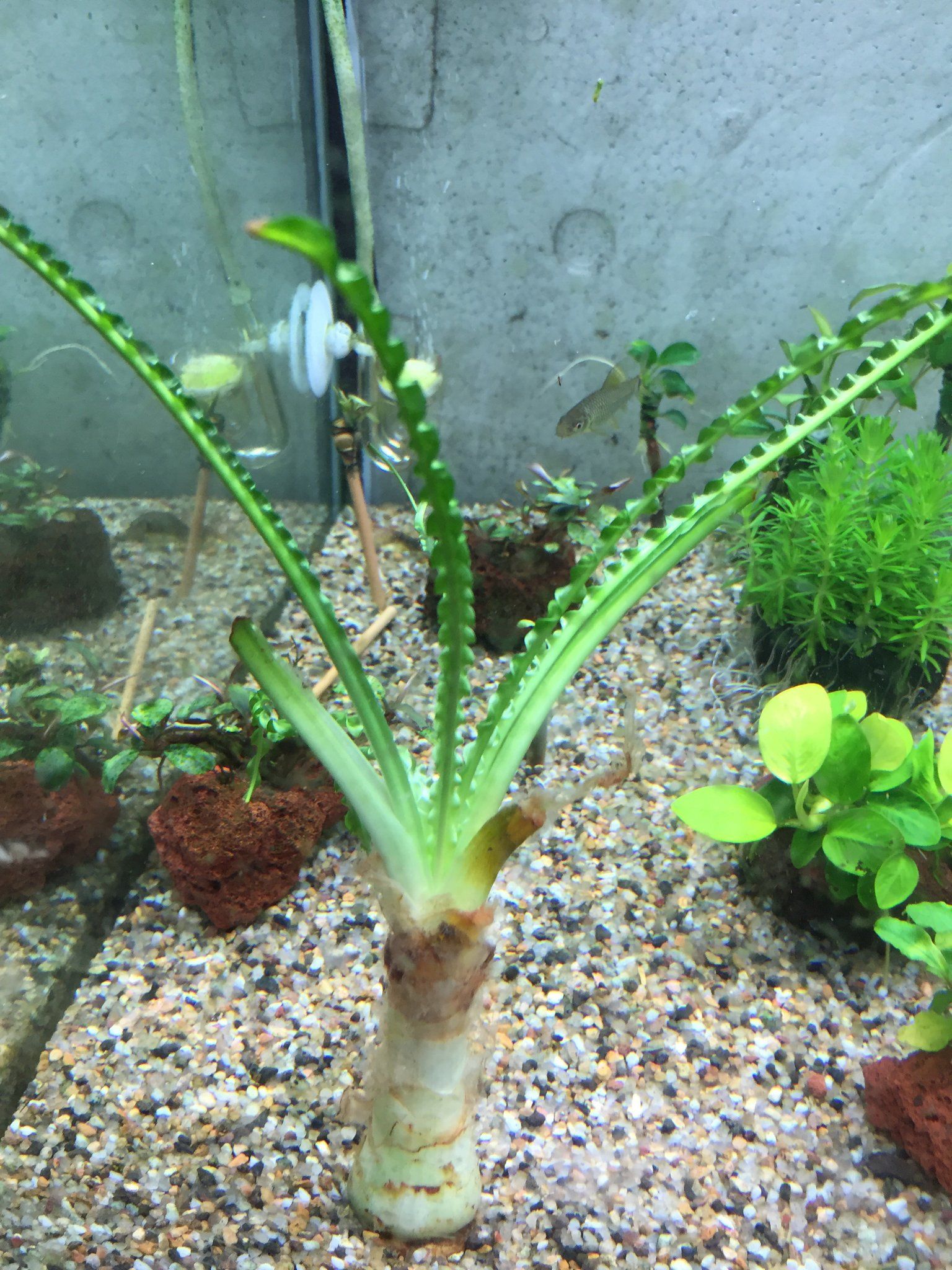
Why Is My Crinum Melting or Turning Brown? Causes and Fixes
A crinum bulb going soft, translucent, or brown can look like your plant is dying, but in most cases the bulb underneath is still perfectly alive. This guide sorts out normal leaf shedding from real trouble, walks through the parameter and nutrient causes behind melt, and shows how to protect the bulb itself, since the bulb — not any single leaf — is what actually needs to survive.
Know Your Crinum First
Three crinum species show up most often in freshwater tanks, and each has a slightly different "normal" appearance:
- Crinum thaianum (onion plant): long, ribbon-like leaves up to several feet, growing from an onion-shaped bulb. A classic tall background plant.
- Crinum calamistratum: narrow, wavy, curling leaves; a notably slow grower even by crinum standards.
- Crinum natans: broader, wavier leaves than thaianum, with a similar bulb structure.
All three are true bulb plants, not stem plants. The bulb is the storage organ that holds the plant's energy reserves, and it is the part that must stay healthy — leaves are somewhat expendable and regrow over time as long as the bulb itself is intact.
Melting vs. Browning: What's the Difference?
These two symptoms look similar but point to different causes:
| Symptom | Appearance | Common starting point |
|---|---|---|
| Melting | Tissue turns translucent, soft, or slimy, then disintegrates | Leaf tips or margins |
| Browning | Tissue dies but stays intact and firm longer, turning tan or brown | Older, outer leaves first |
Melting usually signals a sudden environmental shift (new tank, water change, transition from emersed growth). Browning more often points to a slower-building issue like nutrient deficiency or algae fouling. Neither is automatically an emergency — read on for how to tell normal from problematic.
Normal Leaf Shedding vs. a Real Problem
Healthy crinums drop one or two older outer leaves periodically as part of ordinary growth, even in a stable, well-maintained tank. This is routine turnover, not disease.
The distinction to watch for:
- Normal: one or two leaves at a time, usually the oldest/outermost ones, while newer leaves stay green and firm.
- A real problem: several leaves melting or browning simultaneously, including younger growth, or the melt keeps spreading week over week with no new leaves appearing to replace it.
If new growth is emerging from the crown even while old leaves die back, the plant is very likely fine.
The New-Plant Acclimation Timeline
Most crinum trouble reports come from newly purchased plants, and there's a predictable pattern worth expecting in advance:
- Week 1: Emersed-grown (grown-out-of-water) leaves start melting or collapsing within days of being submerged. This is expected — those leaves were built for air, not water, and can't survive underwater long-term.
- Weeks 1–3: Most or all of the original emersed foliage dies back. The bulb may look almost bare.
- A lag period: Nothing visible seems to happen for a few weeks. This is normal; the bulb is redirecting energy into new, thinner, water-adapted leaves rather than pushing growth you can see yet.
- Weeks 4–8+ (sometimes longer): New submerged-form leaves emerge from the crown, thinner and often a slightly different shape than the original nursery leaves.
Because crinum growth is naturally very slow, recovery from this transition — or from any setback — can take weeks to a couple of months. Patience is more useful here than frequent intervention. Shipping and transplant leaf damage on arrival is also common and does not by itself mean the plant is unhealthy, as long as the bulb is firm.
Causes of Melting and Browning, and How to Fix Each
Light: Too Little or Too Much
Crinums do well under medium light, roughly 20–40 PAR at the substrate.
- Too little light: leaves grow weak, pale, and stretched out, then brown and die back over time. This is a frequently overlooked cause of slow, drawn-out melt — a plant placed in dim light won't recover quickly no matter what else you fix.
- Too much light without matching nutrients or CO2: algae growth on the leaf surface can block light and trap detritus, which is easily mistaken for a disease or browning problem when it's really a light/nutrient mismatch.
Checking your fixture's actual output against the plant's needs is worth doing before assuming a nutrient or disease cause. Browse LED aquarium lighting if your current setup is underpowered or unmeasured.
Nutrients: Root Feeding Matters Most
Crinums are heavy root feeders. The most common limiting nutrients are nitrate (roughly 10–30 ppm), potassium, and iron. Deficiency typically shows up as yellowing or browning starting on the older, lower leaves, sometimes with pinholes or clear, translucent veins.
The standard fix is root tabs pushed into the substrate near — but not touching — the bulb, combined with a liquid all-in-one fertilizer for the water column. That said:
- If you're using an inert substrate like plain sand or gravel, root tabs are generally necessary.
- If your substrate is already nutrient-rich (an aquasoil-type product), tabs may be unnecessary early on — add them only if the plant shows deficiency signs despite the enriched substrate.
Test water parameters before assuming deficiency and dosing heavily. Piling on fertilizer without testing can mask an underlying ammonia or nitrite problem that needs a different fix entirely.
CO2: Optional, Not Required
Crinum does fine as a true low-tech, no-CO2 plant. Injected CO2 isn't required, but it can speed recovery and reduce how often melt occurs, since the plant simply has more available carbon to build new tissue with. If you're running CO2 injection already, keep it consistent — a crashing or fluctuating CO2 level stresses leaves and can trigger melt on its own. A beginner running a low-tech tank shouldn't feel pressured into injection just for this plant.
Water Quality and Temperature
Ammonia or nitrite spikes from a new, uncycled tank, old neglected water carrying high nitrate, or a sudden pH or hardness swing after a large water change can all trigger leaf melt as a stress response — separate from any nutrient deficiency. Standard tropical temperatures of roughly 72–82°F (22–28°C) suit crinum well; the plant tolerates a range, but sudden swings add stress on top of whatever else is going on.
If you suspect water quality is the driver, test first rather than dosing fertilizer, and consider a conditioner or stabilizer from water conditioning and additive products to smooth out swings during a cycle or after a large change.
Physical and Pest Damage
Snails, shrimp, or fish rasping on leaf surfaces, algae smothering a leaf, or poor water flow letting detritus settle on broad leaf surfaces can all mimic disease. These are mechanical or environmental issues, not infections, and the fix is usually addressing the cause (pest population, flow, or algae) rather than treating the plant itself.
Placement and Flow
Crinum's long or broad leaves can shade out neighboring plants or block flow through part of the tank. Moderate water movement across the leaf surface reduces the detritus buildup and biofilm that often gets mistaken for disease. If your crinum sits in a dead spot, repositioning an outlet or adding a small filter to improve circulation around it can help.
Bulb Rot: The One True Emergency
Everything above deals with leaves. Bulb rot is different and more serious: the bulb tissue itself turns soft, mushy, and foul-smelling, instead of staying firm and white or cream inside.
Common causes:
- Planting the bulb too deep, trapping moisture and waste against it
- Physical damage during handling or planting
- Bacterial or fungal infection taking hold in poor water quality
If you find rot, cut away the dead, mushy tissue back to firm material, and consider relocating the bulb (or isolating it in a separate container) to keep the rot from spreading to substrate bacteria or other plants nearby. A bulb that is mostly rotted through with little firm tissue left is a likely total loss; one with a small soft patch and a large firm core is often salvageable.
Bulb Health Check Without Uprooting
Constantly pulling the plant up to inspect the bulb causes more stress and leaf loss than leaving it alone. Instead, check periodically and gently:
- Firmness: press lightly at the exposed shoulder of the bulb — it should feel solid, not squishy.
- Color: visible bulb tissue should be white or cream, not brown, gray, or discolored.
- Smell: a healthy bulb has little to no odor; a foul or sulfurous smell is a rot indicator even before the tissue looks obviously soft.
If all three check out, leave the plant alone and give it time, even if the leaves above look rough.
Correct Planting Depth
Planting depth is one of the most inconsistent pieces of advice out there, ranging from "rest it right on top of the substrate" to "bury it halfway." A sensible middle ground: bury only the root/basal plate and the lower third of the bulb, leaving the bulb's shoulder visible above the substrate line. Full burial traps moisture and waste against the bulb and invites rot; a bulb left completely exposed in loose or disturbed substrate can rock loose, especially soon after planting.
It's also normal for a newly planted bulb to float or work itself loose in the first few days. Anchor it loosely with substrate or a piece of hardscape rather than burying it deeper to compensate. A well-chosen substrate that holds its shape around the base makes this easier to manage.
Trimming Damaged Leaves Correctly
Cut dying or melted leaves off close to the base or crown with scissors rather than pulling them, which can damage the bulb or tear healthy neighboring leaves. Remove clearly dead, mushy tissue promptly — decaying leaf matter left in the tank raises the ammonia load and can spread fungal or bacterial issues to leaves that are still healthy. That said, don't strip every leaf showing any damage: a leaf with green tissue remaining is still photosynthesizing and feeding the bulb, even if part of it looks rough.
Propagation as a Hedge
Crinum bulbs produce offset bulblets over time. If a parent bulb is struggling or partially rotted, check around its base for small bulblets before writing off the whole plant — a melting or declining parent can sometimes still be producing viable offsets that will carry the plant forward even if the original bulb doesn't fully recover.
Common Mistakes to Avoid
- Uprooting repeatedly to check the bulb. This causes more stress and leaf loss than an occasional gentle check.
- Burying the bulb completely "to be safe." This suffocates it and is a leading cause of rot.
- Assuming all browning is nutrient deficiency and dosing heavily without testing water first, which can mask an ammonia or nitrite problem.
- Leaving decaying leaf matter in the tank, spiking ammonia and spreading fungal or bacterial issues to healthy leaves.
- Giving up too soon. Because growth is extremely slow, recovery can take 4–8+ weeks and look like nothing is happening in the meantime.
- Assuming low light won't matter. Insufficient light is a common, overlooked cause of slow, drawn-out melt that won't resolve on its own.
Frequently Asked Questions
Will my crinum recover after melting, or is it dead?
If the bulb is firm, white or cream inside, and free of foul odor, it will very likely regrow. Recovery is simply slow, so don't judge the plant's prospects by how the leaves look right now.
How long does crinum melt last?
Old leaves typically die back over roughly 1–3 weeks. New growth then takes anywhere from several weeks to a couple of months to appear, given how slowly crinum grows overall.
Should I remove all the melted leaves at once?
Trim off clearly dead or mushy tissue promptly at the base, but leave any leaf that still has green tissue, since it's still contributing energy to the bulb even while partly damaged.
Is it normal for a crinum bulb to float or come loose?
Yes, especially right after planting. Anchor it loosely with substrate or hardscape rather than burying it deeper, which risks rot instead.
Can too much light cause browning?
Indirectly, yes. Excess light without matching nutrients or CO2 encourages algae growth on the leaves, which blocks light and traps detritus — this is often mistaken for disease when it's really an algae and light-balance issue.
Do I need CO2 or special fertilizer for crinum?
No. Root tabs plus a basic liquid fertilizer in a low-tech tank are typically sufficient. CO2 injection is optional and mainly speeds up recovery rather than being a requirement.
Why does only one crinum leaf melt while the rest look fine?
This is usually normal old-leaf senescence or localized pest nibbling or damage, not a systemic problem, especially if the rest of the plant looks healthy and new growth is appearing.
Is my crinum bulb rotting or just dormant?
Rot presents as soft, discolored tissue with a bad smell. A dormant or slow-growing bulb stays firm and intact with no odor, even if little visible growth is happening above it.
Whether you're troubleshooting an established crinum or setting up a new one, the right substrate and lighting go a long way toward preventing melt before it starts — browse substrate options on FishyHub to find a base that suits root feeders like crinum.


