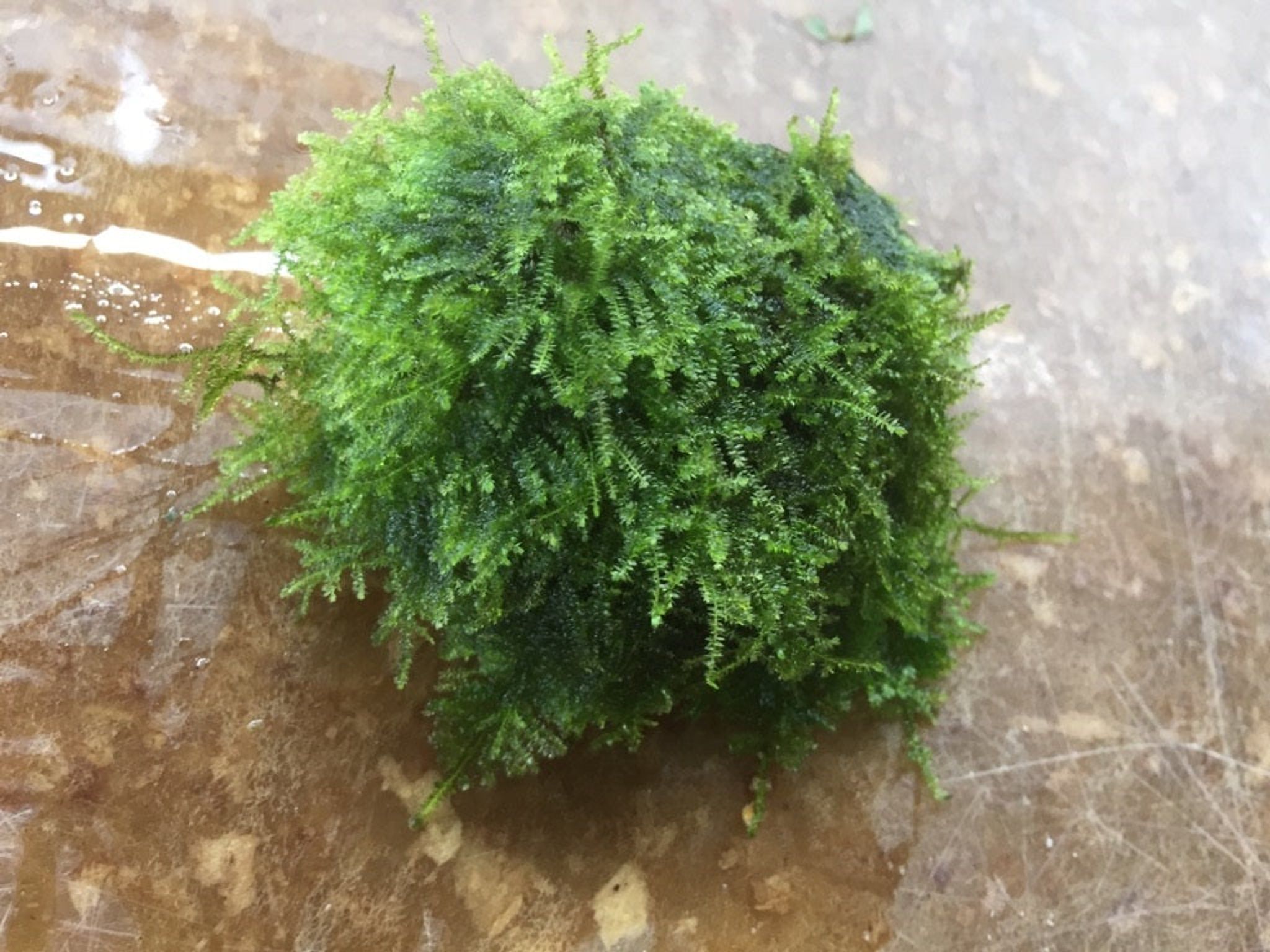

Why Is My Christmas Moss Melting or Turning Brown? Causes and Fixes
Brown or mushy patches on Christmas moss usually mean one of a few specific things: transplant shock, a tank that's too warm, trapped detritus inside a thick mat, or algae growing over the moss itself. Most of these are fixable without tearing the whole clump out, and some browning is simply normal aging. This guide walks through how to tell the difference and what to do about each cause.
First, Don't Panic-Remove It
New Christmas moss (Vesicularia montagnei) very often browns or blackens at the tips within the first few days after planting or after a period in shipping packaging. This is transplant shock, not death. A portion of the outer strands dies back while the moss redirects energy into new growth.
Give freshly planted moss 2 to 4 weeks in stable water conditions before judging it. New green shoots emerging along the mat or wall is the sign that it has recovered. Ripping out an entire clump at the first sign of brown is one of the most common mistakes and usually removes moss that would have bounced back on its own.
Quick Visual Triage
Use this simple checklist to sort what you're seeing before you start troubleshooting causes:
| What you see | Likely status | Action |
|---|---|---|
| Mushy, disintegrates when touched, foul smell | Dead tissue | Trim and remove |
| Brown/tan but firm, still attached, tiny green shoots nearby | Melting but alive | Leave alone 2–3 weeks |
| Brown at the very base of a mature wall, green on top | Normal old-growth die-back | Thin if excessive, otherwise ignore |
| Fuzzy, hairy, or dark tufts sitting on top of green moss | Algae growth, not the moss itself | Treat as algae (see below) |
| Whole sections shredded or pulled loose | Physical/grazing damage | Prune damaged bits |
As a general rule: trim only material that's clearly mushy, detached, or foul-smelling. Leave partially brown but still-attached strands alone for a few weeks — cutting too aggressively adds more stress on top of whatever caused the browning in the first place.
The Most Overlooked Cause: Water Temperature
Christmas moss does best at roughly 70–78°F (21–26°C). It's a cooler-tolerant species, which is easy to forget because it's so often sold for tropical community tanks running warmer.
Sustained temperatures above 80–82°F (27–28°C) significantly raise the risk of melt and browning. Many keepers set their heater for the fish (community tropicals are frequently kept at 78–82°F) without realizing the moss is quietly struggling at the upper end of that range. If your tank runs warm and the moss keeps browning despite otherwise good care, temperature is the first thing to check — it's frequently the hidden cause behind chronic, recurring melt.
Other Common Causes and Fixes
Poor Attachment or Mat Too Thick
Christmas moss is epiphytic — it has no roots and must be tied or glued to hardscape (driftwood, rock, or mesh) rather than planted in substrate. Two attachment mistakes cause browning:
- Tying too tightly: crushing stems with thread or fishing line kills tissue right at the contact points, leaving localized brown spots.
- Clumping too thick: a mat packed several layers deep blocks light and flow from reaching the interior. The base and center go brown and slimy from trapped detritus and low oxygen, even while the surface looks perfectly green.
Fix: tie moss in a single loose layer, not a clump, using thread, fine fishing line, or mesh, or use an aquarium-safe glue for small portions. Leave enough space for light and gentle water movement to reach every side of the mat. If an established mat has gone thick over time, thin it back to one layer during a trim.
Flow: Too Little or Too Aggressive
Christmas moss needs gentle, indirect circulation. A dead zone with no flow lets mulm and debris settle inside the mat, causing rot from within. Strong direct flow, on the other hand, physically tears the delicate strands or uproots ties. Aim for moderate flow that reaches the moss without blasting it directly — redirecting an outflow nozzle off a nearby surface usually works well. A sponge filter is a good low-turbulence option for moss-heavy setups.
Water Quality
Ammonia or nitrite spikes, common in a new or uncycled tank, stress moss and trigger browning quickly. Old, stagnant water with a nitrate/phosphate buildup from overfeeding has a similar effect over time. If you're unsure, test your parameters and do a water change — aim for ammonia and nitrite at 0 ppm and nitrate under roughly 40 ppm.
Light and Nutrients
Christmas moss needs only low to moderate light, roughly in the 20–40 PAR range at the moss. Two opposite problems both cause browning:
- Too little light or nutrients: moss thins out and pales/browns from starvation, especially without any micronutrient dosing.
- Too much light without matching CO2/nutrients: this doesn't harm the moss directly, but it fuels algae growth on top of it, which then smothers and browns the moss underneath.
CO2 and Fertilization — Is It Actually Needed?
No. Christmas moss is a low-tech-friendly plant and survives fine without supplemental CO2. That said, light CO2 or liquid carbon supplementation, along with regular iron/micronutrient dosing, does produce denser, greener growth and measurably reduces the algae problems described above — especially in higher-light tanks. Treat it as an optional upgrade for appearance, not a survival requirement.
Go easy on dosing, though. Mosses lack roots and true leaves the way stem or rosette plants do, which makes them more sensitive to concentrated liquid ferts and especially to chemical algaecides. Always dilute per label guidance and spot-treat rather than dosing heavily.
Physical and Grazing Damage
Excessive handling, frequent repositioning, or fish and snails uprooting sections all leave shredded, damaged fragments that turn brown. Snails and shrimp grazing on biofilm can also disturb loosely tied moss. Minimize handling once the moss is placed, and prune off any visibly shredded pieces rather than waiting for them to rot.
Species Mix-Up
Christmas moss is sometimes mislabeled or sold mixed in with Java moss, weeping moss, or willow moss. If your moss is behaving very differently from what's described here — for example, tolerating much warmer water without issue, or growing in a completely different pattern — confirm you actually have Christmas moss, since a different species may have different tolerances.
Algae Control on Christmas Moss
If the "brown" is actually a fuzzy or dark growth sitting on top of otherwise green moss, you're dealing with algae — commonly black beard algae, staghorn algae, diatoms, or cyanobacteria — not a dying plant. This is typically triggered by excess light paired with inconsistent CO2 or nutrient dosing.
Work through these steps in order:
- Manual removal: rinse affected moss in dechlorinated water and gently swish or pick out algae with tweezers or a soft brush.
- Reduce photoperiod and intensity: cut lighting to roughly 6–8 hours a day and lower intensity if algae keeps returning.
- Add a cleanup crew: amano shrimp, otocinclus, and nerite snails are generally safe on moss and will graze down light algae growth. Browse a wider range of freshwater algae eaters suited to your tank size.
- Spot-treat chemically only as a last resort: algaecides can also damage moss tissue since it lacks true roots and leaves, so use them sparingly and only on stubborn, localized patches.
- Fix the underlying imbalance: match your light intensity to your CO2/nutrient level so algae doesn't simply return after treatment.
Normal Maintenance Browning vs. an Active Problem
On a mature moss wall or carpet, some brown at the very base is expected — it's old growth dying back naturally as new growth pushes out on top, similar to shedding leaves. This is maintenance browning, not failure, and doesn't need intervention beyond periodic thinning.
Watch for signs that separate this from an active problem: browning that's spreading upward rather than staying confined to the base, a foul smell, or sections detaching on their own. Those point to trapped detritus, poor flow, or water quality issues that need addressing rather than routine aging.
Frequently Asked Questions
Is it normal for new Christmas moss to turn brown after planting?
Yes. Transplant shock, often called melt, is common in freshly planted or recently shipped moss. Give it 2–4 weeks in stable water conditions before deciding it isn't recovering.
How do I tell if my Christmas moss is dead vs. just melting?
Dead moss is mushy, disintegrates at a touch, and often smells foul. Melting-but-alive moss is discolored but still has structure, stays firmly attached, and typically shows tiny new green shoots nearby within a few weeks.
Can Christmas moss survive without CO2?
Yes. It's a low-tech-friendly plant that survives and grows slowly without any CO2 supplementation. Adding light CO2 or liquid carbon simply makes growth denser and greener and helps reduce algae.
What temperature is too hot for Christmas moss?
Sustained temperatures above roughly 80–82°F (27–28°C) meaningfully increase melt and browning risk. It does best in the low-to-mid 70s°F (around 21–24°C), which is cooler than many tropical community tanks run.
Why is the bottom of my moss wall or mat brown while the top is green?
This is usually a combination of normal old-growth die-back and trapped detritus, low light, or low flow reaching the base of a thick mat. Some basal browning is expected on a mature wall, but thin the mat if it looks excessive or is spreading.
How much light does Christmas moss need?
Low to moderate light is enough — roughly 20–40 PAR at the moss. Excess light without matching CO2 and nutrients doesn't hurt the moss directly but fuels algae growth on top of it, which then looks like brown, dirty patches.
What's the best way to attach Christmas moss so it doesn't die?
Tie it loosely, in a single layer, using thread, fine fishing line, or mesh, or use an aquarium-safe glue for small portions. Avoid crushing it into a tight ball — every side of the mat needs light and gentle flow to reach it.
Can too much fertilizer or algaecide hurt Christmas moss?
Yes. Mosses lack the roots and true leaves that higher plants have, making them more sensitive to heavy dosing and chemical algae treatments. Dilute per label guidance and spot-treat rather than dosing the whole tank heavily.
Ready to add or refresh your moss setup? Browse tank-appropriate glass aquariums on FishyHub to find the right size and shape for a moss wall or carpet build.


