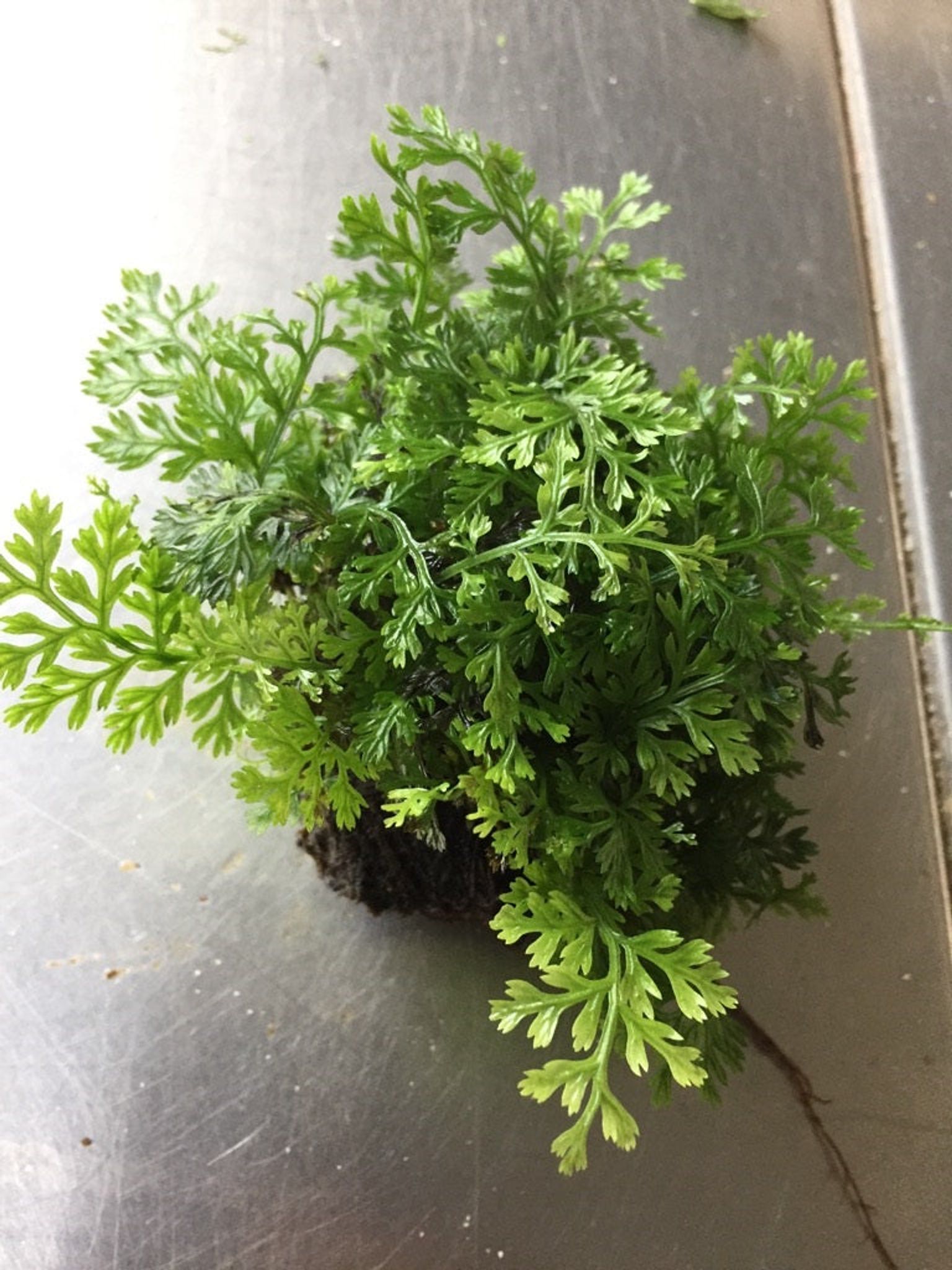

Why Is My Bolbitis Melting or Turning Brown? Causes and Fixes
Watching a Bolbitis fern turn brown and mushy is alarming, but most of the time it is not dying — it is transitioning. This guide walks through how to tell normal melt from a real husbandry problem, and exactly what to check and fix along the way.
How Bolbitis Actually Grows
Bolbitis heudelotii, commonly called African water fern, is a rhizome epiphyte. In nature it clings to submerged wood and rock with its rhizome and wiry roots rather than rooting in soil or sand. This single fact explains most Bolbitis problems.
- The rhizome should be tied or glued to driftwood or rock, never pushed into substrate.
- Roots anchor the plant to a surface; they are not built to absorb nutrients from buried soil the way substrate-rooted plants do.
- A rhizome that gets buried — by substrate creep, gravel, or even the weight of a rock or plant weight resting on it — loses access to oxygen and begins to rot. That rot shows up as blackening or a mushy, melting section right at the base.
Misunderstanding this growth habit is the single most common preventable cause of Bolbitis rot. If you inherited a plant that arrived already tucked into substrate, gently lift the rhizome free and re-secure it to hardscape as soon as possible.
Transition Melt vs. Established Plant Decline
Not all browning means the same thing, and the timeline tells you which situation you're in.
New Plant Transition Melt
Bolbitis sold through the aquarium trade is frequently farm-grown emersed — out of water, in humid greenhouse conditions. Those emersed leaves are physiologically different from the leaves the plant produces underwater. Once submerged:
- The original emersed leaves typically die back within days to a few weeks.
- New, fully aquatic leaves emerge from the rhizome as the plant adjusts.
- This is a normal, expected transition, not disease — and it is the reason so many new owners panic unnecessarily.
The fix here is patience: don't discard the plant, don't dose extra chemicals, and don't rip out leaves that are only partly discolored.
Established Plant Decline
If a Bolbitis that has been settled and growing for months suddenly starts melting, treat it differently. This pattern points to a sudden change in conditions rather than a normal transition:
- A temperature swing, pH shift, hardness change, or fertilizer dosing change
- A lapsed water-change routine that let waste and dissolved organics build up
- A hardscape or substrate addition (like crushed coral) that quietly altered water chemistry
In this case, the plant was stable and something changed. The fix is to identify and reverse that destabilizing event, not to wait it out passively.
Ideal Water Parameters at a Glance
Bolbitis is more sensitive to hard, alkaline water than many common aquarium plants, and stability matters as much as the exact numbers.
| Parameter | Target Range | Notes |
|---|---|---|
| Temperature | 70–82°F (21–28°C) | Growth slows or stalls below ~68°F; keep it stable |
| pH | 6.0–7.0 ideal; up to ~7.5 tolerable if stable | Consistently above ~7–7.5 is a known browning/dissolving trigger |
| General hardness | Soft water; roughly under 6 dGH | Treat as a "soft water plant" rather than chasing one exact number |
| Water flow | Moderate to strong, consistent | Prevents detritus and algae buildup on the leaves |
| Lighting | Low to moderate intensity, 6–10 hour photoperiod | Too intense causes bleaching/brown spots; too little plus low nutrients causes yellowing |
If you dose with an RO remineralizer or use a buffering substrate, check pH and hardness after any change — these products can push water outside Bolbitis's comfort zone without an obvious trigger event.
The Other Preventable Causes
Hard or Alkaline Water
Bolbitis is repeatedly flagged as more alkalinity-sensitive than average. Water that sits consistently above roughly 7–7.5 pH is a common cause of leaf dissolving and browning, even when other tank residents show no stress at all. If your tap water runs hard or alkaline, this is worth testing before blaming anything else.
Low Flow and Algae Buildup
Bolbitis wants moderate-to-strong, consistent flow. In a low-flow or shaded corner, detritus and algae — including black beard algae — settle on the plant's tough, slow-growing leaves. This can look identical to true browning or worsen it. Improving flow around the plant, and physically wiping or trimming affected leaf sections, often resolves what looked like a mystery illness. A filter sized to circulate the whole tank, not just the water column near the intake, makes a real difference here.
Lighting Mismatch
Too much direct, intense light causes bleached or brown-spotted leaves. Too little light combined with low nutrients causes yellowing and gradual dieback. A LED lamp set to a moderate intensity with a 6–10 hour photoperiod is usually the safer target for this plant, which naturally grows in shaded, flowing water.
Physical Stress and Tankmates
Frequent uprooting, rearranging hardscape, or moving the plant between tanks causes localized browning and torn tips. Some snails, plecos, and crayfish will nibble Bolbitis leaves; bite damage can look like rot but is mechanical, not a health issue. Once you've placed and secured the rhizome, leave it alone.
Old Leaf Senescence
Individual older leaves naturally brown and die as part of normal turnover, even on a thriving plant. This is not cause for concern — trim the dead leaf at the rhizome and move on.
Nutrient Deficiency vs. Instability Melt
A less-discussed distinction: pinholes, translucent patches, or thinning leaf tissue that develop gradually — without any recent parameter swing — can point to a potassium or micronutrient shortfall rather than instability-driven melt. Instability melt tends to affect multiple leaves at once and follows a clear trigger; deficiency symptoms creep in slowly across older leaves first. A light, regular dose of a balanced liquid fertilizer usually resolves the latter.
CO2 and Fertilization: Helpful, Not Required
Bolbitis survives without supplemental CO2 or fertilizer. That said:
- A liquid carbon source (glutaraldehyde-based) can accelerate growth and reduce algae susceptibility.
- Weekly light dosing of a balanced liquid fertilizer supports faster recovery after melt.
- Neither is necessary to stop melting outright — parameter stability and correct placement matter far more.
Step-by-Step Triage Checklist
When you notice browning or melting, work through this order rather than reacting to the first thing you see:
- Check the rhizome. Is it buried, weighted down, or wedged into substrate? Free it and reattach to hardscape if so.
- Verify parameters against the target ranges above — temperature, pH, and hardness in particular.
- Assess flow. Is the plant sitting in a dead spot behind decor or in a corner with no current?
- Inspect for pests and algae. Look for bite marks, algae film, or detritus coating the leaves.
- Trim only dead tissue. Cut fully brown, mushy leaves at the rhizome; leave partially green leaves attached.
- Wait and observe. Bolbitis is naturally slow-growing, so recovery takes weeks, not days.
Throughout this process, the rhizome is your best diagnostic tool: if it stays firm, green-to-tan, and free of soft or dark patches, new leaf growth is very likely even after near-total leaf loss. A rhizome that turns soft, dark, and mushy to the touch is the real signal that the plant is not coming back.
Common Mistakes to Avoid
- Burying the rhizome in substrate or letting substrate/plant weights creep over it.
- Discarding a brand-new plant during normal transition melt instead of waiting it out.
- Chasing melt with large corrective water changes or dosing swings, which adds a second destabilizing event on top of the first.
- Blaming disease for what's actually algae and detritus caused by low flow or poor light placement.
- Over-trimming, cutting healthy green tissue along with dead leaves, or nicking the rhizome itself.
- Ignoring tankmates that nibble leaves and misreading bite damage as rot.
- Skipping a parameter check after adding crushed coral or other hardscape that can quietly raise pH and hardness.
One additional note: smaller cultivars sometimes sold as Bolbitis difformis or heteroclita types can be more delicate to handle than standard heudelotii, so extra care during placement and acclimation is worthwhile with these variants.
Frequently Asked Questions
Is it normal for a new Bolbitis to melt after I buy it?
Yes. Most store-bought Bolbitis is grown emersed, and those leaves typically die back within days to a few weeks after being submerged. As long as the rhizome stays firm, new fully aquatic leaves should follow.
Will Bolbitis grow back after melting?
Generally yes, provided the rhizome itself remains firm and isn't soft or rotted. Because Bolbitis grows slowly, expect regrowth to take weeks rather than days.
Should I cut off all the brown leaves?
Only trim leaves that are fully dead or mushy, cutting near the rhizome. Leave any leaf that still has green tissue attached, since it can keep contributing energy to the plant while new growth develops.
Can I plant Bolbitis in the substrate instead of tying it to wood?
No. Burying the rhizome cuts off oxygen and is one of the primary causes of rot and blackening. Always attach it to driftwood or rock instead.
What water parameters does Bolbitis need to stop melting?
Aim for a stable temperature of 70–82°F, pH around 6.0–7.0 (up to about 7.5 tolerable if stable), and soft water, paired with steady flow and low-to-moderate light. Instability in any of these is more damaging than a slightly imperfect but steady number.
Does Bolbitis need CO2 or fertilizer to survive?
No, it can survive without either. A liquid carbon supplement and light doses of a balanced liquid fertilizer can speed up recovery and growth, but neither is required to stop melting.
Why does my Bolbitis have algae or black spots instead of clean brown melt?
This usually points to a flow or light mismatch that lets algae colonize the plant's slow-growing leaves, rather than true tissue death. Improve circulation and light balance, then manually clean the affected leaves.
How long should I wait before giving up on a melted Bolbitis?
Give it several weeks to a couple of months, as long as the rhizome still looks healthy. Only discard the plant if the rhizome itself turns soft, dark, and rotten to the touch.
Once your parameters and placement are dialed in, you can browse healthy, ready-to-attach specimens and related supplies in FishyHub's freshwater livestock and treatment and water conditioning categories to round out your setup.


