Why Is My Banana Plant Melting or Turning Brown? Causes and Fixes
A banana plant with browning, translucent, or crumbling leaves is alarming, but in most cases it is not dying — it is adjusting. This guide walks through what "melting" actually means, separates the harmless causes from the ones that need action, and gives you a step-by-step fix for each.
What Is a Banana Plant, Exactly?
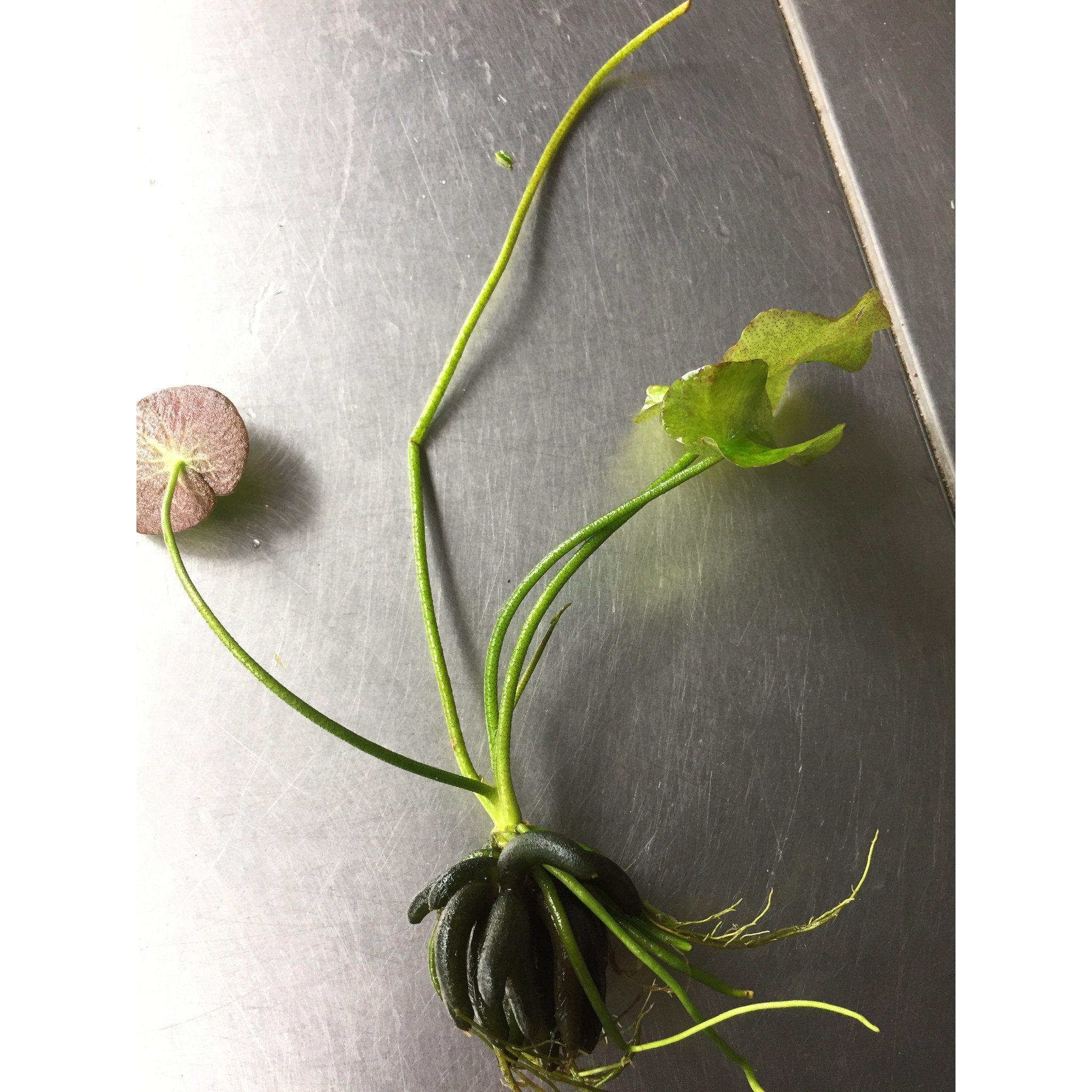
The aquarium "banana plant" or "banana lily" (Nymphoides aquatica) is native to slow-moving streams and ponds in the southeastern United States. It gets its common name from the cluster of yellow-green, banana-shaped tubers it uses to store energy. Those tubers, plus a root system that develops as the plant matures, are the key to understanding why leaves sometimes fade.
Baseline Water Parameters
Before troubleshooting, confirm your tank is even in the right range. A plant struggling outside its comfort zone will show chronic problems that look a lot like disease.
| Parameter | Ideal Range |
|---|---|
| Temperature | 68–82°F (20–28°C) |
| pH | 6.0–7.5 |
| General hardness (GH) | Soft to moderately hard, roughly 3–15 dGH |
| Lighting | Low to high tolerated; moderate-to-high produces the best growth |
| CO2 | Not required |
"Melting" vs. Rot: What You're Actually Looking At
These two problems look similar at a glance but need completely different responses.
- Melting: leaves turn brown or yellow, become thin and translucent, and sometimes disintegrate at the edges. The tuber and crown remain firm. This is usually a stress or transition response, not death.
- Rot: tissue turns soft, mushy, and discolored, often with a foul smell. Rot can spread from a damaged leaf into the tuber, or start in the tuber and work outward. Rot needs to be cut away immediately.
A simple rule: if you can squeeze it and it holds shape, it's probably melting. If it squishes or smells bad, it's rot.
The 8 Most Common Causes
1. New Tank or Transport Shock
Leaves grown emersed (above water) at a supplier, or grown in different water chemistry, often melt away within the first one to three weeks after planting. The plant is redirecting stored energy from the tuber into new, tank-adapted growth. This is the single most common reason people think their banana plant is dying when it isn't.
Fix: Do nothing drastic. Trim the melted leaves as they go, keep parameters stable, and give the plant 2–4 weeks before judging it a failure. New leaves emerging from the tuber's growth point are the sign to watch for.
2. Planting Too Deep
This is the most common cause of true, avoidable rot. Banana plant tubers are not bulbs — they should not be buried the way you'd bury a tulip bulb.
- Best practice: rest the tuber on top of the substrate with little or no burial.
- At most, cover it by about ¼ inch (0.6 cm) — never deeper.
- Full burial cuts off oxygen to the tuber, causing soft, mushy, brown rot that can spread to the crown and smell strongly.
3. Tuber Rot vs. Normal Tuber "Disappearance"
These are frequently confused, but the difference matters a lot.
- Rot: the tuber turns soft and discolored, sometimes with a foul odor, and the attached leaves usually decline at the same time.
- Normal disappearance: after roughly 3–6 months, once a mature root system is established, the tuber can shrink and eventually dissolve simply because the plant no longer needs stored reserves. The leaves stay green, new growth continues, and the tuber will not regrow — that's expected, not a failure.
The practical takeaway: judge the whole plant. If leaves are healthy and new growth is appearing, a shrinking tuber alone is not an emergency. Only dig deeper if leaf health is declining too.
4. Nutrient Deficiency
Yellowing leaves, or browning that starts at the leaf margins or between the veins, points to insufficient iron or other micronutrients — especially common in a bare or low-nutrient substrate.
Fix:
- Dose a liquid all-in-one fertilizer per label instructions.
- Push root tabs into the substrate near — not directly into — the tuber, roughly every 3–4 months or as the product recommends.
- A nutrient-rich substrate under the root zone makes a bigger long-term difference than liquid dosing alone.
5. Water Chemistry Stress
Water that's persistently hard or alkaline, well outside the plant's soft-to-moderate preference, can cause slow, chronic leaf deterioration that doesn't resolve no matter how well you otherwise care for the tank.
Fix: If browning continues despite good light, stable temperature, and fertilization, test GH, KH, and pH. Chronic hardness stress is easy to overlook because it doesn't cause a dramatic, sudden decline — just a steady one.
6. Old-Age Leaf Turnover
Lower and older leaves naturally yellow, brown, and die off as the plant channels energy into new growth. This is normal senescence, not a symptom of anything wrong, and it happens continuously in a healthy plant.
Fix: Trim the old leaf near its base once it's clearly spent. No other action needed.
7. Algae Mistaken for Rot
A dark coating on the tuber or leaves is sometimes assumed to be rot, but it can simply be algae growth on the surface.
The rub test: gently rub the dark area with your finger.
- Wipes off clean → it's algae. Improve flow/light balance and clean manually; fertilizing won't help and may make algae worse.
- Stays soft and mushy underneath → it's rot. Remove the affected tissue.
8. Physical Damage
Torn or browned leaves do not heal or repair themselves. Left in place, damaged tissue decays and fouls the water, encouraging both algae and ammonia spikes.
Fix: Trim damaged leaves promptly rather than waiting to see if they recover.
Where Sources Disagree (and the Sensible Middle Ground)
- Planting depth: recommendations range from zero burial to up to ½ inch. Err on the side of less — rest on the surface or bury at most ¼ inch.
- Tuber loss: most treat it as benign once rooted; a few tie it more cautiously to water hardness or fertilizing habits. Use overall leaf health as your guide, as above.
- Propagation difficulty: some call it simple (float a cut leaf until roots form), others call it genuinely hit-or-miss in fully submersed setups, with higher success rates when started semi-emersed (a damp, humid setup). Treat it as possible but slow, and expect a mixed success rate underwater.
- Light needs: the plant tolerates low light and survives fine, but only produces its signature round, lily-pad surface leaves and best coloration under moderate-to-high light.
How to Plant a Banana Plant Correctly
- Rinse the tuber gently to remove any packing debris.
- Place it roots-down (if roots are visible) directly on top of the substrate.
- Avoid burying it — light contact with the substrate is enough for roots to anchor.
- If it floats, that's fine too: the tuber will grow roots downward and eventually anchor itself. A soft weight (like a plant clip) can hold it in place temporarily.
- Space multiple plants 4–6 inches (10–15 cm) apart to give leaves room to spread. A gravel and sand substrate with some fine grain gives roots an easier hold than coarse gravel alone.
Lighting and Growth Habit
Under higher light, the plant sends stems to the surface, producing round, floating lily-pad leaves — often green to reddish on top and purplish underneath. Under lower light, it stays smaller, fully submersed, and more uniformly yellow-green. Neither pattern is disease; it's a normal light-adaptation response. If you want the classic lily-pad look, a stronger aquarium light over a well-fertilized substrate will get you there faster than a low-light setup will.
Fertilizing Schedule
- Liquid all-in-one fertilizer: dose per label, generally weekly with water changes.
- Root tabs: insert into the substrate near (not touching) the tuber every 3–4 months, or per the product's schedule.
- CO2 injection is not required — this plant is considered easy and beginner-friendly, but it grows lusher and faster with fertilization and good light than in a bare low-tech tank.
Propagation
Cut a mature leaf with a bit of stem attached and let it float on the surface. Given time, small roots and a new plantlet can form at the base, which you then plant as its own tuber. This works, but success in a fully submersed tank is inconsistent and stem rot is a real risk. Starting the cutting in a semi-emersed setup — shallow water or a humid, damp environment — tends to produce more reliable results.
Trimming and Maintenance
- Prune floating surface leaves regularly if they start shading other plants in the tank.
- Remove any browned, melted, or torn leaf tissue as soon as you notice it, rather than letting it decay in place.
- Expect ongoing surface growth under good light — trimming controls it but won't stop new leaves from forming; that's a normal growth habit, not something to "cure."
A Simple First-Aid Checklist
When you're worried, work through this order:
- Smell test — foul odor near the tuber or a leaf base signals rot; remove that tissue now.
- Texture test — soft and mushy means rot; thin and see-through but still holding shape means melt.
- Whole-plant check — are new leaves emerging from the crown even as old ones decline? That's a good sign regardless of tuber condition.
- Timeline check — give shock/acclimation melt 2–4 weeks before judging. Give nutrient or hardness fixes several weeks to show visible improvement, since new growth takes time to appear.
Other Contributing Factors Worth Ruling Out
- Tank mates: bottom-dwelling or digging fish can uproot or nibble at tubers, physically damaging tissue in a way that mimics rot or disease.
- Compacted or bare substrate: gravel with no nutrient capacity and no root tabs starves the plant slowly over months — a different problem from a single bad week of stress, and one that liquid fertilizer alone won't fully solve.
- New-plant contamination: a brief quarantine or dip for new plants can help rule out pests or snail eggs as a hidden stress factor behind ongoing leaf decline. Keeping water parameters stable with a reliable conditioner during this period also reduces added stress; a water conditioner or additive is worth having on hand for new plant introductions and water changes alike.
Common Mistakes to Avoid
- Burying the tuber like a bulb — the leading cause of true rot.
- Discarding the plant the moment post-purchase leaves melt, before giving it a few weeks to recover.
- Leaving melted or browned leaf debris in the tank, where it decays and can spike ammonia or fuel algae.
- Assuming all yellowing means disease, when it's often normal old-leaf turnover or a lighting color shift.
- Skipping water hardness/pH testing when browning persists despite otherwise good care.
- Skipping fertilization entirely in a low-tech tank, then blaming "melting" for what's actually a nutrient deficiency.
- Letting surface leaves multiply unchecked, shading the rest of the tank and reducing light and flow to the plant's own crown.
Frequently Asked Questions
Is it normal for a new banana plant to melt after planting?
Yes. Shock or acclimation melt is common in the first few weeks after planting, especially with leaves that were grown emersed. Wait 2–4 weeks and watch for new growth from the tuber before assuming the plant is dying.
Should I cut off brown or melting leaves?
Yes. Trim damaged or melting leaves close to their base, since they won't repair themselves and decaying tissue left in the tank can foul the water.
Why did my banana plant's tubers disappear?
Usually the plant no longer needs its stored reserves once its root system is established, typically after 3–6 months. Only be concerned if the remaining leaves are also declining in health.
How deep should I plant the banana plant tuber?
Not at all is ideal — rest it on top of the substrate. If you do bury it, go no deeper than about ¼ inch, and never fully cover it like a bulb.
Does my banana plant need CO2 or special fertilizer?
No CO2 injection is required. The plant benefits from root tabs placed near (not into) the tuber and a liquid all-in-one fertilizer for faster, healthier growth, but it will survive without either.
Why are my banana plant's leaves turning yellow instead of brown?
This is most often a nutrient deficiency (iron or other micronutrients) or natural aging of older leaves. Less commonly, it's a normal color shift as the plant adapts to a different light level.
Is the dark coating on my tuber algae or rot?
Rub it gently — if it wipes off clean, it's algae and just needs better light/flow balance and manual cleaning. If it's soft and mushy underneath, it's rot and needs to be removed.
Can I stop my banana plant from growing floating surface leaves?
You can trim the surface leaves and stalks regularly, but the plant will keep sending up new ones under adequate light. It's a natural growth habit tied to lighting, not a defect to fix.
Ready to set your banana plant up right from the start? Browse substrate options built for rooting aquatic plants in FishyHub's Substrate category.


