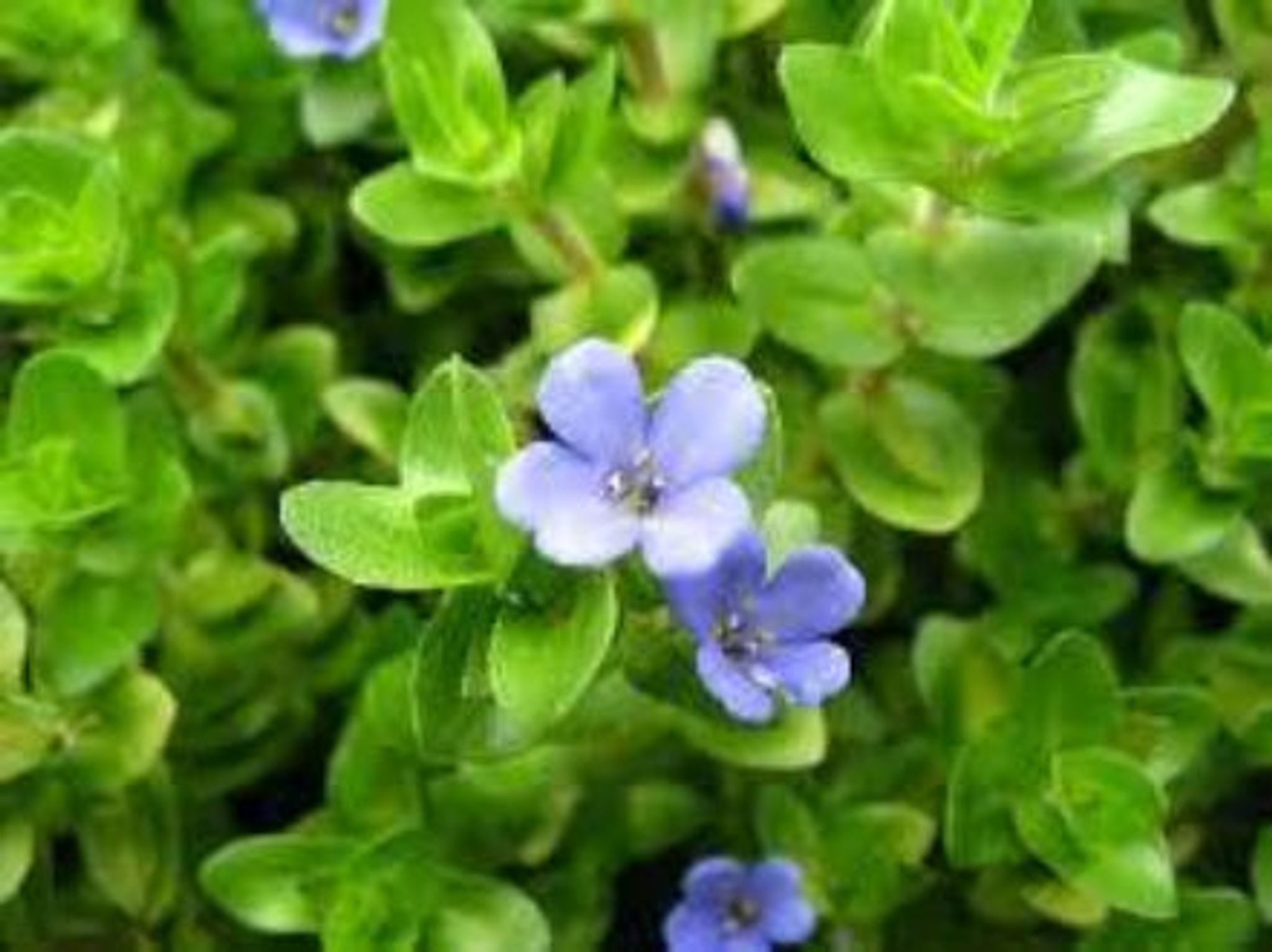

Why Is My Bacopa Melting or Turning Brown? Causes and Fixes
Watching a newly planted bacopa turn mushy and brown feels alarming, but in most cases it's a normal adjustment, not a dying plant. This guide walks through how to tell harmless "melt" apart from real nutrient or rot problems, and gives a clear recovery plan for either.
Why New Bacopa Melts After Planting
Most bacopa sold for aquariums, including Bacopa caroliniana and Bacopa monnieri, is grown emersed — above water, in trays or greenhouse beds — because that's faster and cheaper for growers than raising it fully submerged. Emersed leaves are built for air: thicker cuticle, different internal structure, less efficient at pulling nutrients from water.
Once you plant that stem underwater, the plant has to grow a completely new set of submersed-form leaves suited to life in the tank. The old emersed leaves aren't built for that job, so the plant abandons them. Over the first 1–3 weeks you'll typically see:
- Older leaves turning yellow, then translucent
- Leaf tissue going soft and mushy
- Leaves detaching and floating or settling in the substrate
This is expected melt, not disease. As long as new, smaller submersed leaves are emerging along the stem at the same time, the plant is transitioning normally, not failing.
Don't Panic-React During the Transition Window
The most common mistake during this period is overcorrecting: yanking the plant to inspect roots repeatedly, dosing a big slug of fertilizer, or suddenly cranking up CO2 or light to "help." None of that speeds up melt — it usually adds a second stressor on top of the first. During the first two to three weeks after planting, keep parameters stable, remove dead tissue as it appears, and let the new growth establish before making any equipment or dosing changes.
Melt vs. Rot vs. Deficiency: Three Different Problems
Readers often lump every brown or mushy leaf into one category, but there are three distinct issues, and they call for different fixes.
| Symptom pattern | Texture | Where it starts | Likely cause |
|---|---|---|---|
| Translucent, collapsing leaves shortly after planting | Soft, mushy | Older emersed leaves, whole leaf | Normal transition melt |
| Yellow-to-brown leaves, thinning gradually | Soft, sometimes mushy | Oldest/lowest leaves first | Nutrient deficiency (N, K, iron/micros) or bacterial rot at wound sites |
| Dry, crispy, browned edges or tips | Crispy, brittle | Leaf margins or tips, can be any age leaf | Light burn, CO2/nutrient imbalance, or old age |
| Dark fuzzy or black spots on otherwise intact leaves | Fuzzy, textured, sits on the surface | Older leaves, low-flow areas | Algae growth, not plant tissue damage |
A useful rule of thumb: damage that starts on the oldest, lowest leaves while new growth stays green usually points to the plant triaging a nutrient or light shortage — it's sacrificing old leaves to fund new ones. Damage that starts on new growth, spreads quickly across the whole plant, or shows up alongside gasping fish or cloudy water points instead to a water chemistry shock, toxin, or acute stress event.
Is Reddish-Brown Bacopa a Bad Sign?
Not necessarily. Under strong light with adequate iron, bacopa — especially B. caroliniana — develops an attractive reddish-bronze tint as a pigment response, similar to how many stem plants color up under intense light. This is healthy coloration, not decline.
The distinction is texture and structural integrity:
- Healthy red/bronze tint: leaves stay firm, flat, and intact; color is even across the leaf
- True browning/rot: accompanied by softening, curling, or the leaf actually dropping off
If the plant is coloring up but leaves are still crisp and attached, leave it alone — that's the plant looking its best.
Getting the Baseline Right
Before troubleshooting further, confirm the tank is even in bacopa's comfort zone:
- Temperature: 68–82°F (20–28°C)
- pH: 6.0–8.0
- General hardness (GH): roughly 2–15
- Substrate: most standard substrates work fine; no special mineral substrate required
Bacopa tolerates a wide range on all of these, so parameters are rarely the sole cause of trouble — but a tank running well outside this range adds stress on top of whatever else is going on.
Light and Photoperiod
Bacopa wants medium-to-high light to stay compact and colorful. Under low light, expect:
- Leggy stems with wide spacing between leaf pairs
- Lower leaves dropping as the plant stretches upward chasing light
A typical photoperiod is 8–10 hours a day. Both too many hours and too few can contribute to stress-related leaf loss, but consistency matters more than hitting an exact number — a stable 9-hour schedule beats a photoperiod that changes daily. If your fixture is underpowered for the tank depth, browsing the LED lighting options on FishyHub is a reasonable next step before assuming a nutrient problem.
CO2 and Fertilizing: Where Sources Disagree
There's genuine disagreement in the hobby here, worth stating plainly:
- CO2: Some say bacopa doesn't need it at all; others recommend it for best growth. Reality: bacopa survives fine without injected CO2, but with CO2 (or a liquid carbon supplement) it grows denser, less leggy, and melts or browns less often — especially under higher light, where the plant's demand for carbon rises faster than a low-tech tank can supply it.
- Fertilizer: Some argue fish waste alone is enough; others recommend routine dosing. Reality: no dosing at all can work, but growth is slower and lower-leaf yellowing becomes more likely over time, particularly in newer or heavily-planted tanks where waste-based nutrients get spread thin. If yellowing or browning is already showing up, light liquid fertilizing or root tabs supplying nitrogen, potassium, iron, and micronutrients is a reasonable fix, not overkill.
Planting Technique That Prevents Problems Later
A lot of "why is my bacopa browning" cases trace back to how it was planted:
- Bury only the bottom 1–2 nodes of the stem in the substrate
- Strip any leaves that would end up buried — leaves left underground rot and can spread that rot upward into the stem
- Avoid planting too deep (stem suffocates and rots) or too shallow (stem floats or uproots)
- Give stems room: overcrowding blocks light from reaching lower leaves, causing them to yellow, brown, and drop from shading alone
As a spacing guideline, plant bacopa stems roughly 1–2 inches (2.5–5 cm) apart in a group rather than packing them edge to edge. This keeps light reaching the base of each stem and heads off shading-related lower-leaf loss before it starts, rather than trimming around it later.
Trimming and Propagation: Fixing the "Green Top, Brown Bottom" Look
Left alone long enough, almost every stem plant eventually develops a bare, leggy, or browning lower section while the top stays green — light simply can't reach the base once the canopy fills in. The fix isn't to keep fertilizing the bottom; it's to trim.
- Cut the stem just above a node, taking the healthy green top portion
- Replant that cutting directly into the substrate (bury the bottom node or two, as above)
- Discard or compost the bare, yellowing, or rotting bottom section — it won't recover once light-starved and browning
- Repeat this topping every 2–4 weeks as the plant grows, which also keeps the overall mass bushy instead of leggy
This same technique applies to stem plants generally, not just bacopa: cutting above a node and replanting the top is the standard way to keep any stem plant dense and to renew a stand that's started thinning at the base.
Water Changes and Shipping Stress
Two overlooked stressors deserve a mention:
- Water change consistency: Irregular or infrequent water changes let ammonia and nitrite spikes or sudden parameter swings build up, which stresses roots and lower leaves and accelerates melting. Weekly changes of 20–30%, temperature-matched to the tank, help new plantings settle in faster. A dependable water conditioner makes it easier to keep those changes routine without adding chlorine or chloramine stress of its own.
- Shipping and acclimation stress: Plants shipped by mail can be exposed to cold or heat in transit and arrive already damaged, melting fast regardless of how well your tank is run. Give a newly arrived plant 2–3 weeks before judging it a failure — much of what looks like a doomed plant in week one is a normal transition or transit-stress recovery playing out.
Temperature swings from a drafty room, a window, or an air vent near the tank are an easy factor to overlook — stem plants in general respond to repeated temperature fluctuation with the same kind of leaf melt and drop seen from unstable water chemistry, so tank placement is worth a second look if melting persists despite otherwise stable parameters.
Common Mistakes to Avoid
- Planting too deep and burying too much stem, so the buried portion rots and browning spreads upward
- Leaving melted or dying leaves in the tank to decompose, which fouls water and feeds algae
- Overreacting to normal post-purchase melt with a big dose of fertilizer or a CO2 spike
- Letting stems get overcrowded and shaded, so lower leaves brown and drop from light starvation
- Skipping water changes and letting nitrate or ammonia build up, stressing roots and lower leaves
- Mistaking algae growth on old leaves for plant disease
- Never trimming leggy, bare-bottomed stems, leaving the unattractive brown lower section in place instead of replanting the healthy top
Remove any melted, mushy, or clearly dead leaf tissue promptly rather than waiting for it to fully decompose — decaying plant matter fouls water and tends to feed the exact algae growth that then gets mistaken for a second plant problem.
A Quick Diagnostic Flow
When you're not sure what's going on, work through it in this order:
- Is this a new or recently replanted stem? If yes, and it's within 1–3 weeks, this is likely normal melt — hold steady and wait it out.
- Which part of the stem is affected? Bottom/older leaves point to light shading or nutrient depletion; new growth affected points to water chemistry shock.
- Is the tissue soft/mushy or dry/crispy? Soft and mushy suggests melt or rot; dry and crispy suggests light burn or a specific nutrient shortfall.
- Is it fuzzy or spotted rather than discolored evenly? That's algae on the leaf surface, not the plant itself failing.
A Note on Species: Caroliniana vs. Monnieri
The two most common bacopa species in the trade behave a little differently. Bacopa caroliniana grows more upright with rounder, thicker leaves and colors up more dramatically under strong light. Bacopa monnieri is more amphibious and creeping, generally more tolerant of low-tech, lower-light setups, and often adapts to submersed growth with less dramatic melt. If you're not sure which one you have, monnieri's smaller, more oval leaves and lower, spreading growth habit are the easiest way to tell it apart from the taller, more upright caroliniana.
Frequently Asked Questions
Is it normal for new bacopa to melt after I plant it?
Yes. Because most bacopa is grown emersed, the old above-water leaves commonly yellow, go translucent, and drop within the first couple of weeks after planting. Keep conditions stable, trim off dying leaves, and let new submersed-form growth take over.
Should I remove brown or melting leaves, or leave them?
Remove them promptly. Decaying leaf tissue fouls the water and encourages algae growth, so cut back to healthy tissue or a node rather than waiting for melted leaves to fully break down on their own.
Why does my bacopa look leggy with a brown bottom but green top?
This is usually low light reaching the lower leaves, nutrient depletion, or both, made worse by overcrowded stems blocking light from the base. Cut the healthy top section, replant it, and improve lighting or add light fertilizing to prevent the same thing happening again.
Does bacopa need CO2 to survive?
No. Bacopa grows fine without injected CO2, but adding injected or liquid carbon reduces melting and browning frequency and produces denser, more compact, more colorful growth, especially under higher light.
How much light does bacopa need?
Medium-to-high light for roughly 8–10 hours a day is typical for compact, colorful growth. Low light leads to leggy stems with wide leaf spacing and can contribute to lower-leaf drop.
Can nutrient deficiency cause bacopa to brown?
Yes. Insufficient nitrogen, potassium, or iron and micronutrients commonly shows up as yellowing or browning that starts on the older, lower leaves while new growth stays green.
How long does it take bacopa to recover from melting?
Recovery typically takes a few weeks once conditions stabilize and new submersed-form leaves start appearing along the stem. Full fill-in to a bushy, established look can take 1–2 months depending on light levels and nutrient availability.
Is reddish-brown bacopa a bad sign?
Not necessarily. Under strong light with adequate iron, a reddish-bronze tint is a healthy pigment response and distinct from true browning, which comes with softening, curling, or leaf loss rather than just a color shift.
Once your bacopa's melt has passed and new growth is filling in, keeping the rest of the setup dialed in — enough light, steady water changes, and enough flow to avoid stagnant, algae-prone spots — does most of the remaining work. You can browse substrate options on FishyHub if you're planning a new planted setup or refreshing an existing one.


