
White Cloud Mountain Minnow Care Guide: Tank Size, Diet, Water Parameters and Temperament
White cloud mountain minnows do best in groups of 6 or more, in a 10-gallon (38 L) or larger tank kept at 64–72°F (18–22°C) with a pH of about 6.8–7.5. They eat small flakes, micro pellets and frozen foods, and they're peaceful with other small fish. In most heated US homes they don't need a heater. That makes them one of the easiest unheated community fish you can keep.
Quick Facts
| Trait | Details |
|---|---|
| Scientific name | Tanichthys albonubes |
| Adult size | 1.25–1.5 in (3–4 cm) |
| Lifespan | Typically 3–5 years; some keepers report up to 7 in cool water |
| Minimum tank | 10 gal (38 L) for 6 fish; 20 gal long is ideal |
| Group size | 6 minimum, 8–10+ preferred |
| Temperature | 64–72°F (18–22°C) ideal; about 60–75°F workable |
| pH / hardness | 6.0–8.0 (ideal 6.8–7.5); roughly 5–19 dGH |
| Diet | Omnivore; flakes, micro pellets, small frozen and live foods |
| Temperament | Peaceful, active mid- and top-water schooler |
Origin, Appearance and Varieties
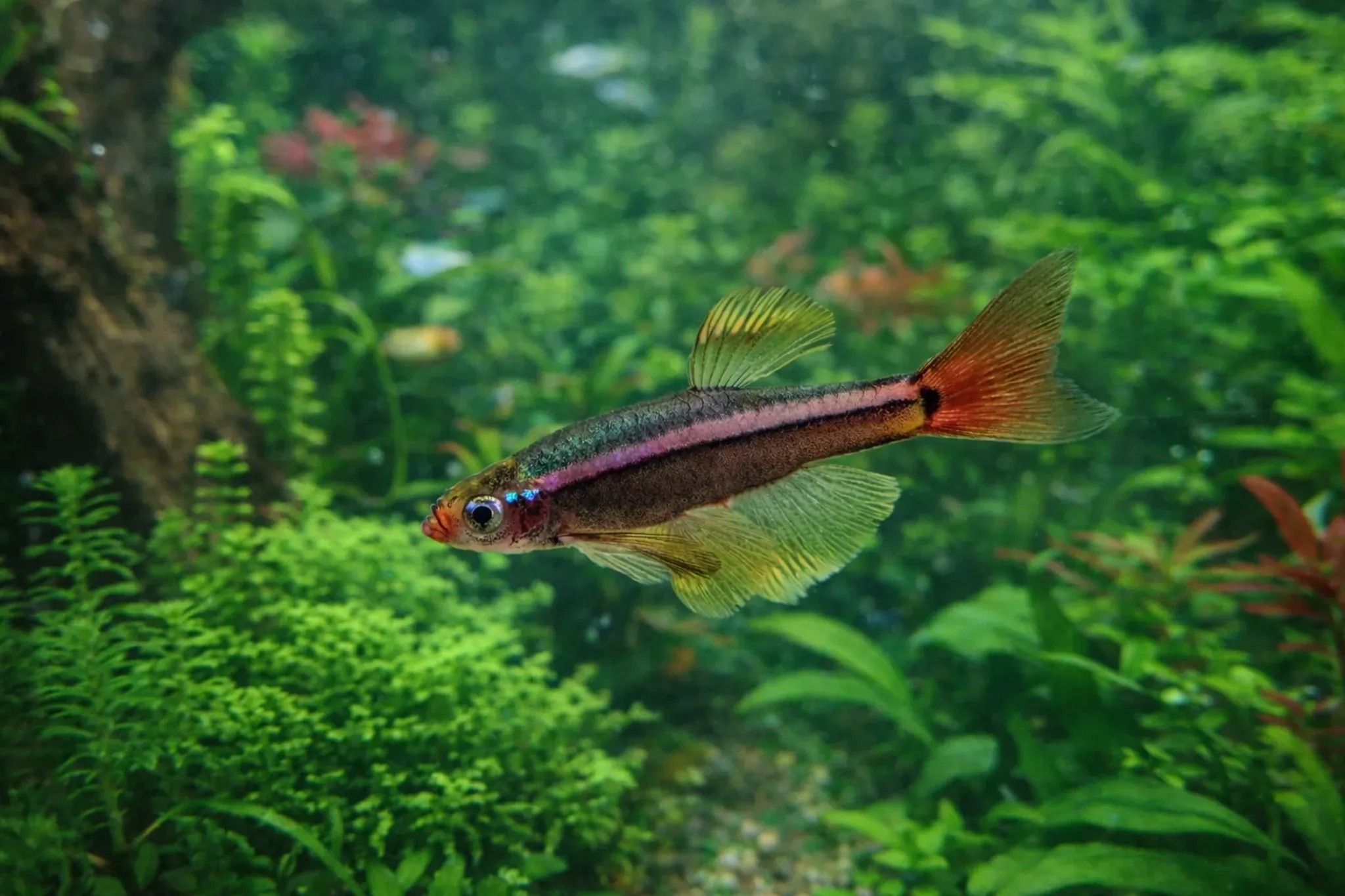
The white cloud is a small cyprinid from cool, clear, flowing hill streams in southern China. Its type locality is the Baiyun Mountain area near Guangzhou in Guangdong, and remnant populations also live elsewhere in the region, including Hainan. It has a slim, torpedo-shaped body. An iridescent gold-to-pink line runs over a dark lateral band, the fins are tipped in red, and there's a dark spot at the base of the tail.
For a long time it was thought to be extinct in the wild at its type locality. Small wild populations have since been found, and the species is protected in China. Every white cloud you'll see in the hobby is captive-bred, so buying them doesn't hurt wild stocks.
Common varieties:
- Wild type: the classic bronze-and-red look.
- Gold white cloud: a golden body with red accents. Care is identical. Keep at least 6–8, and add extra cover, because the lighter color makes them easier for predators to spot and they feel more exposed.
- Long-fin "meteor": flowing fins. Keep them away from fin-nippers.
- "Hong Kong" type: a paler form.
The Vietnamese white cloud (Tanichthys micagemmae, sometimes called the sparkle-eye white cloud) is a separate species. It grows to about 1 inch (2.5 cm), is peaceful and easy to breed, and wants a group of 6+ in similar cool-to-mild water.
Tank Size and Stocking
Sources disagree on the minimum, with some saying 10 gallons and others 15. A 10-gallon tank works for a group of 6 on its own. A 20-gallon long is the better choice for 8–12 fish or for a community. As a rough guide, allow 1–2 extra gallons for each additional fish. Because these are fast horizontal swimmers, footprint matters more than height, so a long, shallow tank beats a tall one.
Don't use bowls or tanks under 10 gallons (38 L). The fish are hardy, but that doesn't make a cramped tank acceptable.
| Tank | White clouds | Good additions |
|---|---|---|
| 10 gal (38 L) | 6–7 | Neocaridina shrimp colony, a few nerite snails |
| 20 gal long (76 L) | 10–12 | Shrimp, snails, 4–6 cool-tolerant corydoras |
| 20 gal long (76 L), mixed | 8 | 6 zebra danios or 6 ricefish, plus shrimp |
| 29 gal (110 L) | 12–15 | A second schooling species, a hillstream loach, corydoras |
Minnows and Other Fish for Nano Tanks
White clouds are the largest of the popular mini cyprinids. If your tank is under 10 gallons, choose a smaller species instead, such as a group of tiny rasboras in a heated nano. For schooling minnows of any size, a long, shallow tank is the right shape.
Water Parameters
- Temperature: 64–72°F (18–22°C) is the sweet spot. Published limits run from 57–64°F at the low end to 72–77°F at the high end. Treat the mid-70s °F as the ceiling for long-term keeping. They survive brief dips into the 40s °F and short spells above 80°F (27°C), but living above about 77°F (25°C) stresses them and shortens their lives.
- pH: 6.0–8.0, tolerating up to about 8.5. Ideal is roughly 6.8–7.5. They adapt well, and a stable pH matters more than hitting an exact number.
- Hardness: soft to moderately hard, about 5–19 dGH. Most dechlorinated US tap water is fine.
- Nitrogen: ammonia and nitrite at 0 ppm, and nitrate under 20–40 ppm.
- Flow: gentle to moderate. They like some current, so a hang-on-back or sponge filter suits them well.
Why Cooler Water Seems to Help
Many hobbyists say white clouds kept cool show richer color and live longer than those kept in warm tropical tanks. A slower metabolism in cool water is a likely reason, but treat this as observation rather than proven fact.
White Cloud Temperature Through the US Seasons
Keep the temperature stable first and aim for a specific number second. Use a stick-on or digital thermometer and check it daily for the first few weeks.
Do They Need a Heater?
Usually not, if your home is heated. Add a low-wattage preset heater only if the room, and so the tank, regularly drops below about 60°F (16°C). That's common in unfinished basements, garages and drafty rooms in northern winters.
Handling Summer Heat Waves
In homes without air conditioning, tanks can climb toward 80°F in July and August. Try these cheaper fixes before anything else:
- Point a small fan across the water surface to cool it by evaporation.
- Prop the lid open a little, with mesh or a gap small enough that fish can't jump out.
- Float a sealed frozen water bottle in the tank, and swap it out so the temperature drops slowly rather than all at once.
- Move the tank out of direct sun and turn off the lights during the hottest hours.
An aquarium chiller is rarely worth it for white clouds. Save it for high-value tanks in very hot climates.
Patio Tubs and Ponds
White clouds do well outdoors from late spring to early fall across most of the US. Move them outside once nights stay reliably above about 60°F, which happens earlier in the South and later in the northern states. Bring them back in before hard freezes or ice-over.
Simple Beginner Setup
- A 10–20 gal (38–76 L) tank with a tight-fitting lid, because white clouds jump
- A sponge or hang-on-back filter
- Sand or smooth gravel
- Rocks and easy plants such as hornwort, java moss, vallisneria and floating plants, with open swimming space near the top
- A thermometer, dechlorinator and liquid test kit
- A full fishless cycle before you add fish
Their hardy reputation leads a lot of people to add fish to uncycled tanks. Cycle the tank first anyway.
Diet and Feeding
White clouds are omnivorous micropredators. Staples are small flakes and nano or micro pellets. A few times a week, add frozen or live daphnia, cyclops, baby brine shrimp, bloodworms or mosquito larvae. A little plant matter is fine too. You can browse flakes, pellets and freeze-dried options in FishyHub's food and supplements section.
- Feed 1–3 small meals a day.
- Give only what they finish in about 2 minutes.
- Their mouths are small, so crush large flakes.
Swim Bladder Issues
Floating, tilting or struggling to stay level is usually caused by overfeeding or bulky dry food. Fast the fish for 1–2 days, then feed smaller portions or presoaked food.
Temperament and Behavior
White clouds are peaceful, busy schoolers that mostly use the middle and top of the tank. In groups of 8–10 or more they're bolder and more colorful, and males display to each other more often. When two males spread their fins and circle, that's courtship and sparring, not real aggression. If you see actual injuries, the tank or the group is probably too small.
Telling Males From Females
- Males: slimmer, with brighter red and white fin edges, and they flare often.
- Females: rounder bellies and duller color.
Tank Mates
Choose other peaceful, similar-sized fish that tolerate cool water:
- Zebra and other small danios (see the danio selection on FishyHub)
- Rosy and gold barbs
- Cool-tolerant corydoras
- Ricefish, hillstream loaches and small killifish
- Cherry and other neocaridina shrimp, plus snails
Avoid cichlids, tiger barbs and any fish large enough to eat them. Also skip fancy goldfish. The temperature matches, but goldfish grow far larger and produce much more waste.
Tropical Compromises
Some lists include neon tetras, gouramis and bettas. Those are tropical fish, so the overlap only works at 72–75°F (22–24°C), which is a compromise for both. Bettas, including Betta ocellata, are a poor match. They want 78°F+ and may attack white clouds.
Other Cool-Water Options
- Ricefish (Japanese medaka, Daisy's ricefish): peaceful top-dwellers under 2 in (5 cm) with similar temperature tolerance. They're good tank mates or alternatives, they jump readily, and they do well in patio tubs.
- Chinese vermilion goby: another unheated nano option.
- Everglades pygmy sunfish: a native cool-water nano fish. It's shy and eats shrimp fry, so keep it in a species-only tank.
When White Clouds Are the Wrong Fish
If your tank already runs at 78°F or higher for tropical fish, or you're building around a betta, pick a tropical nano species instead.
Breeding
White clouds are among the easiest egg scatterers to breed. Eggs fall into plants or moss and hatch in about 2 days at roughly 68–72°F (20–22°C). Adults eat fewer fry than most scatterers do, so colony breeding works in a heavily planted tank with dense moss. For bigger numbers, move the adults to a separate tank. Start fry on infusoria or powdered fry food, then move them up to microworms and baby brine shrimp.
Maintenance, Health and Hygiene
- Change 20–30% of the water weekly using dechlorinated water matched to the tank temperature.
- Rinse filter media in old tank water, never straight tap water.
Quarantine Cheap "Feeder" Stock
Bargain white clouds sold as feeders often carry disease. Quarantine new fish in a separate tank for a few weeks, and acclimate them slowly to your temperature and pH.
Troubleshooting
| Symptom | Likely cause | What to do |
|---|---|---|
| Pale or hiding fish | Group too small, too warm, not enough cover | Get to 6+ fish, cool the water, add plants |
| White spots | Ich | Raise the temperature gently to about 75°F (24°C) and treat |
| Frayed fins | Fin rot or nipping | Check nitrates and tank mates |
| Erratic spinning | Possible bacterial infection | Isolate the fish and fix water quality |
| Bloating, floating | Overfeeding | Fast, then feed smaller, soaked meals |
Fish Diseases and Humans
Wear gloves if you have cuts on your hands, and wash up after every tank session. Fish TB (Mycobacterium) can cause skin infections in people, and cheap feeder stock is one more reason to be careful.
Common Mistakes
- Keeping them in a tropical tank at 78–82°F, which fades their color and shortens their lives
- Buying only 2–3 fish, which leaves them pale and hiding
- Leaving the tank uncovered, so fish end up on the floor
- Adding fish to an uncycled tank
- Overfeeding big flakes
- Housing them with goldfish or large barbs that outgrow and eat them
Frequently Asked Questions
Do white cloud mountain minnows need a heater?
Usually not in a heated US home. Keep a thermometer in the tank and add a small preset heater only if the water stays below about 60°F (16°C), as it can in a cold basement or garage.
Can white clouds live with a betta?
It isn't a good idea. Bettas need 78°F (26°C) or warmer, which is too warm for white clouds over the long term, and a betta may attack them.
Can white clouds live with goldfish?
Only with young single-tail goldfish, and only for a short time. Adult goldfish can eat white clouds and produce far more waste than a small-fish tank can handle.
How many white clouds can go in a 10-gallon tank?
Six or seven is the limit. A 5-gallon tank is too small for a proper group.
Can white clouds live outdoors in a pond or tub?
Yes, from late spring to early fall in most of the US. Bring them indoors before hard freezes or before the surface ices over.
Are white cloud mountain minnows endangered?
They're rare in the wild and protected in China, but every aquarium white cloud is captive-bred. Buying them has no effect on wild populations.
Why are my white clouds fighting?
Fin-flaring and chasing between males is normal courtship display and doesn't hurt anyone. Torn fins or other real injuries usually mean the tank is too small or the group is too small.
Find Your White Clouds
A cool, covered, planted tank with a group of 6 or more is all white clouds need to show their best color for years. You can browse white clouds and compatible schooling fish in FishyHub's small community fishes category.


