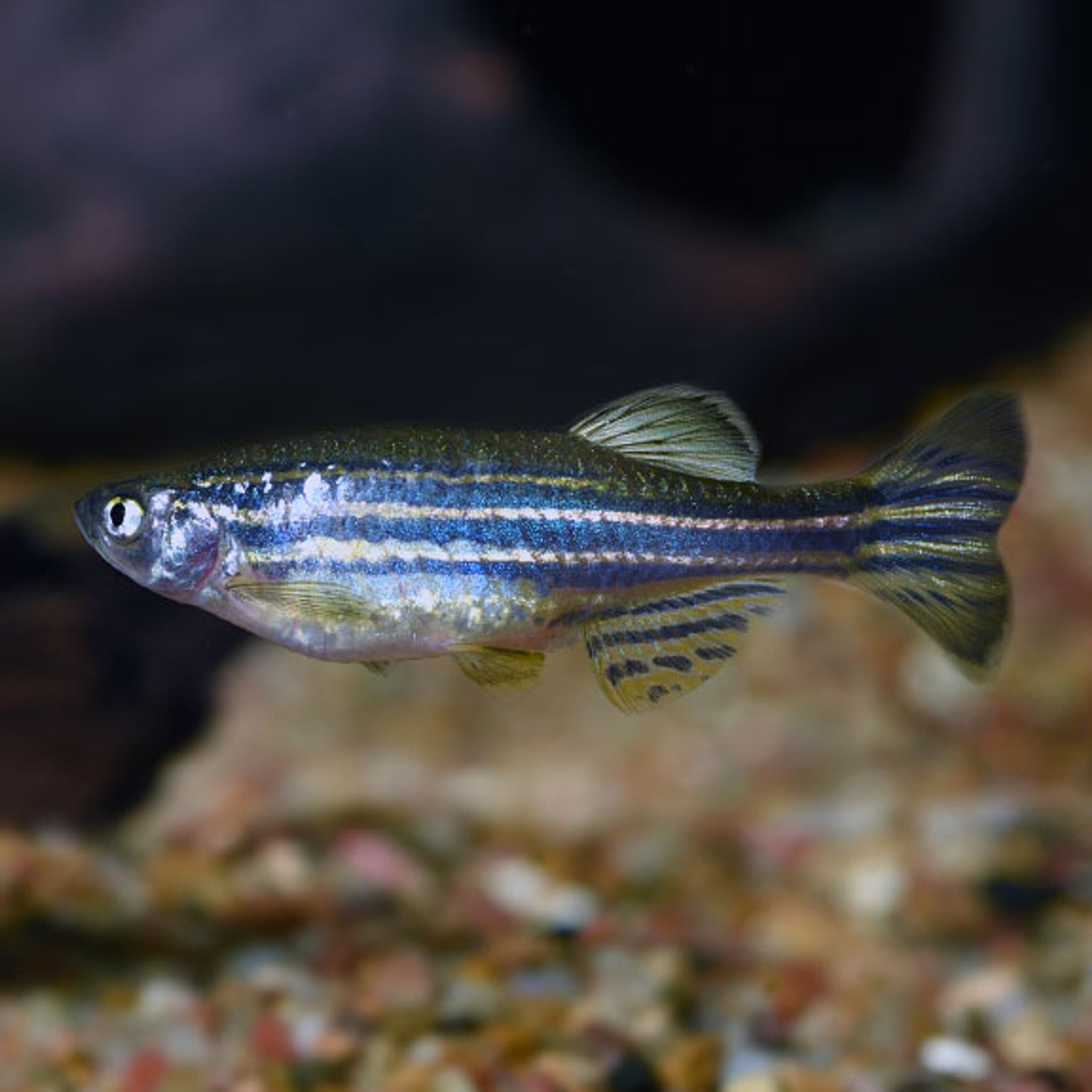

What Do Zebra Danio Eat? A Practical Feeding Guide
Zebra danios are omnivorous surface feeders that do best on a daily flake or micro-pellet staple, supplemented a few times a week with live or frozen protein and the occasional bit of vegetable matter. This guide breaks down exactly what to feed, how much, how often, and how to avoid the mistakes that most commonly show up in mixed community tanks.
What zebra danios eat in the wild
In their natural streams and rice paddies, zebra danios are opportunistic feeders that pick off whatever drifts by near the surface. Their wild diet includes:
- Algae and biofilm growing on rocks and plants
- Small insects and insect larvae, including mosquito larvae
- Worms
- Small crustaceans and zooplankton
This background matters because it explains why danios thrive on a varied, protein-leaning diet rather than a single food type, and why they instinctively look up and toward the surface for food rather than down at the substrate.
The base diet: daily staple food
A high-quality tropical flake or micro-pellet should form the backbone of a zebra danio's diet, fed once or twice a day. Because danios feed at the surface, floating flakes or slow-sinking micro-pellets match their natural feeding zone better than bottom-weighted foods.
As omnivores, zebra danios do well on a moderate-protein formula. For context, general aquarium-fish guidance puts herbivore-leaning foods around 15–30% protein and carnivore-leaning foods around 40–45%. Danios sit comfortably in between — a flake or pellet in the roughly 30–40% protein range works as a sensible everyday staple, with protein-rich treats layered in a few times a week.
Reading the label
Ingredients on fish food packaging are listed by concentration, heaviest first, so the order tells you a lot:
- Look for a named protein source (fish meal, shrimp meal, worm meal) near the top of the list rather than grain fillers dominating the first few ingredients.
- Added vitamins and minerals are a good sign of a more complete formula.
- Food form should match feeding zone: flakes and floating pellets suit surface feeders like danios, while sinking pellets or wafers are better aimed at bottom dwellers sharing the tank.
Quality and variety in food genuinely affect coloration, growth rate, and disease resistance over time, which is why relying on a single food type long-term is one of the more common feeding mistakes.
Protein treats: live and frozen food
Two to three times a week, supplement the staple diet with live or frozen protein such as:
- Brine shrimp
- Daphnia
- Bloodworms
- Mosquito larvae
These treats sharpen coloration and help condition danios for breeding, since a protein boost tends to trigger spawning readiness more reliably than flake alone. If a rotating stock of frozen foods isn't part of the routine yet, a browse through Food & Supplements or a freeze-dried option is an easy way to add variety without committing to live cultures.
Important: thaw frozen food in a small separate cup of tank water before adding it to the aquarium. Dropping a frozen cube straight into the tank causes temperature shock for the fish and often leaves clumps of uneaten food that sink and rot rather than getting eaten.
Vegetable matter: a small, occasional supplement
Zebra danios are not heavy grazers the way true herbivores are, but they do benefit from a bit of plant matter once or twice a week:
- Blanched, shredded spinach
- Cucumber or zucchini slices
- Peas, shelled and skins removed
Small amounts go a long way. Treat vegetables as an occasional supplement rather than a diet pillar, and don't be surprised if danios show only mild interest compared to dedicated algae-grazing species. Crumbled algae wafers are also worth offering occasionally — danios will pick at the crumbs, even if they're not a primary food source for them.
How often and how much to feed
Feed twice a day as the default for zebra danios. They're small, active, high-metabolism fish, so two feedings suit them better than the once-a-day schedule that's often enough for larger, less active species. That said, once-daily feeding is workable if the single portion is properly sized — the frequency matters less than getting the amount right.
For portion sizing, use two checks together rather than relying on either alone:
- Round-belly check (primary gauge): after eating, a danio's belly should look gently rounded, never visibly distended or bulging.
- Time check (quick daily sanity check): food should be fully consumed within about 2 minutes. If flakes are still drifting after 3–5 minutes, the portion was too large.
As a beginner-friendly starting point, a small pinch of flake — roughly what fits between two fingertips — is generally enough for a group of 6–8 adult danios per feeding. Adjust up or down based on the round-belly and 2-minute checks over the first week.
Water temperature also affects appetite: cooler water slows a danio's metabolism, so fish in an unheated tank running on the cool side may eat noticeably less than the same fish in a warmer setup. Don't force a full portion if activity and appetite are visibly reduced.
A weekly fasting day is a healthy practice, not a neglect issue — it gives the digestive system a break and helps limit leftover waste that would otherwise degrade water quality.
Best feeding time
Many keepers feed 10–15 minutes after tank lights come on, when danios are most active and alert and competition for food is easiest to observe. Adjust the schedule if the tank houses nocturnal or crepuscular species that need their own feeding window.
Feeding danios in a community tank
Zebra danios are fast, top-of-tank feeders, and that speed means they will out-compete slower or bottom-dwelling tankmates if food is dropped in one spot. In a mixed tank with species like corydoras or shrimp, try:
- Feeding at multiple points across the surface so danios can't guard a single spot
- Using a mix of floating and sinking foods so bottom dwellers get their own supply once the danios have skimmed the surface
- Offering sinking pellets or wafers separately for corydoras and similar bottom feeders after the initial surface feeding settles down
Anyone stocking danios alongside bottom dwellers can browse corydoras on FishyHub to plan compatible tankmates before adjusting a feeding routine around them.
Feeding fry (baby zebra danios)
Zebra danio eggs typically hatch in 2–3 days, with fry becoming free-swimming shortly after. From that point:
- Start with infusoria or liquid fry food as soon as fry are free-swimming.
- Move to newly hatched brine shrimp and crushed flake as fry grow large enough to handle bigger particles.
- Feed small amounts several times a day rather than one or two larger meals — fry have tiny stomachs and no fat reserves to fall back on, so under-feeding on an adult schedule leads to slow growth or die-off.
What if you're away? Feeding during vacations and travel
Healthy adult zebra danios can typically go about a week without food, relying on their own body reserves. For trips longer than that, or for tanks that include fry or fussier eaters, a vacation feeder block or an automatic feeder is a safer bet than assuming the fish will simply wait it out.
Common feeding mistakes to avoid
| Mistake | Why it's a problem | Fix |
|---|---|---|
| Overfeeding | Leftover food fouls water and drives ammonia/nitrite spikes; can cause bloating | Cut portion size; add a weekly fasting day |
| Flakes only, long-term | Duller color, possible nutritional gaps | Rotate in frozen/live protein and occasional veggies |
| Dropping frozen food in frozen | Clumping, uneaten waste, temperature shock | Thaw in a cup of tank water first |
| Letting danios monopolize food | Slower or bottom-dwelling tankmates go hungry | Feed at multiple spots; use sinking food for bottom feeders |
| Under-feeding fry | Slow growth or fry die-off | Small meals, several times a day |
| Assuming refusal = hunger | Fish that won't eat may be sick or stressed | Check water quality and temperature before adjusting feeding |
Related feeding notes
Pearl danios
Pearl danios share the same omnivorous, surface-feeding habits as zebra danios and thrive on the identical diet — flake or micro-pellet staple, plus small live or frozen foods a few times a week. Anyone keeping both species together can use one feeding routine for the whole group.
GloFish
GloFish sold under that brand name are genetically modified zebra danios (along with a few other species), and their dietary needs are identical to standard zebra danios. The same flake, frozen, and live food routine applies — no specialized "GloFish food" is required, even though marketed formulas exist for them.
What do fish eat, generally?
Aquarium fish broadly fall into three feeding categories: herbivores (plant-heavy diets, lower protein), carnivores (protein-heavy diets, 40–45% protein foods), and omnivores like zebra danios that sit in between and do best on a varied diet rather than a single food type. Understanding which category a fish falls into is the fastest way to judge whether its current food is actually a good match.
Frequently Asked Questions
How many times a day should I feed zebra danios?
Twice daily is the standard recommendation for zebra danios given their small size and high metabolism. Once a day is workable if the portion is sized correctly, but in either case only feed what they can finish in about 2 minutes.
What human/kitchen foods can I feed zebra danios?
Small bits of blanched spinach, cucumber, zucchini, or shelled peas make an occasional supplement once or twice a week. Avoid anything seasoned, oily, or cooked with salt, butter, or spices.
Can zebra danios eat only flakes?
Yes, in the short term flakes alone will keep them fed. Long-term, a varied diet with occasional live or frozen protein and vegetable matter supports better color, growth, and disease resistance.
How long can zebra danios go without food?
Healthy adults can typically go about a week without feeding, drawing on their own body reserves. For longer absences, especially in tanks with fry or picky eaters, use an automatic feeder or a vacation feeder block instead.
What do baby zebra danios (fry) eat?
Right after becoming free-swimming, fry need infusoria or a liquid fry food. As they grow, transition them to newly hatched brine shrimp and crushed flake, feeding small amounts several times a day.
Do GloFish danios need special food?
No. GloFish are genetically modified zebra danios with identical feeding needs to standard zebra danios. Branded foods are marketed for them but aren't required.
Why isn't my zebra danio eating?
Check water quality and temperature first, since poor parameters or a temperature swing commonly suppress appetite. If the water tests fine, consider stress, illness, or recent overfeeding as the next likely causes.
Will zebra danios eat algae?
They'll nibble at algae wafer crumbs and biofilm on decorations, but they aren't a reliable algae-control species. Don't count on danios to keep algae growth in check on their own.
Ready to add zebra danios or their tankmates to a tank? Browse the full danio selection on FishyHub to plan a feeding-friendly community setup.


