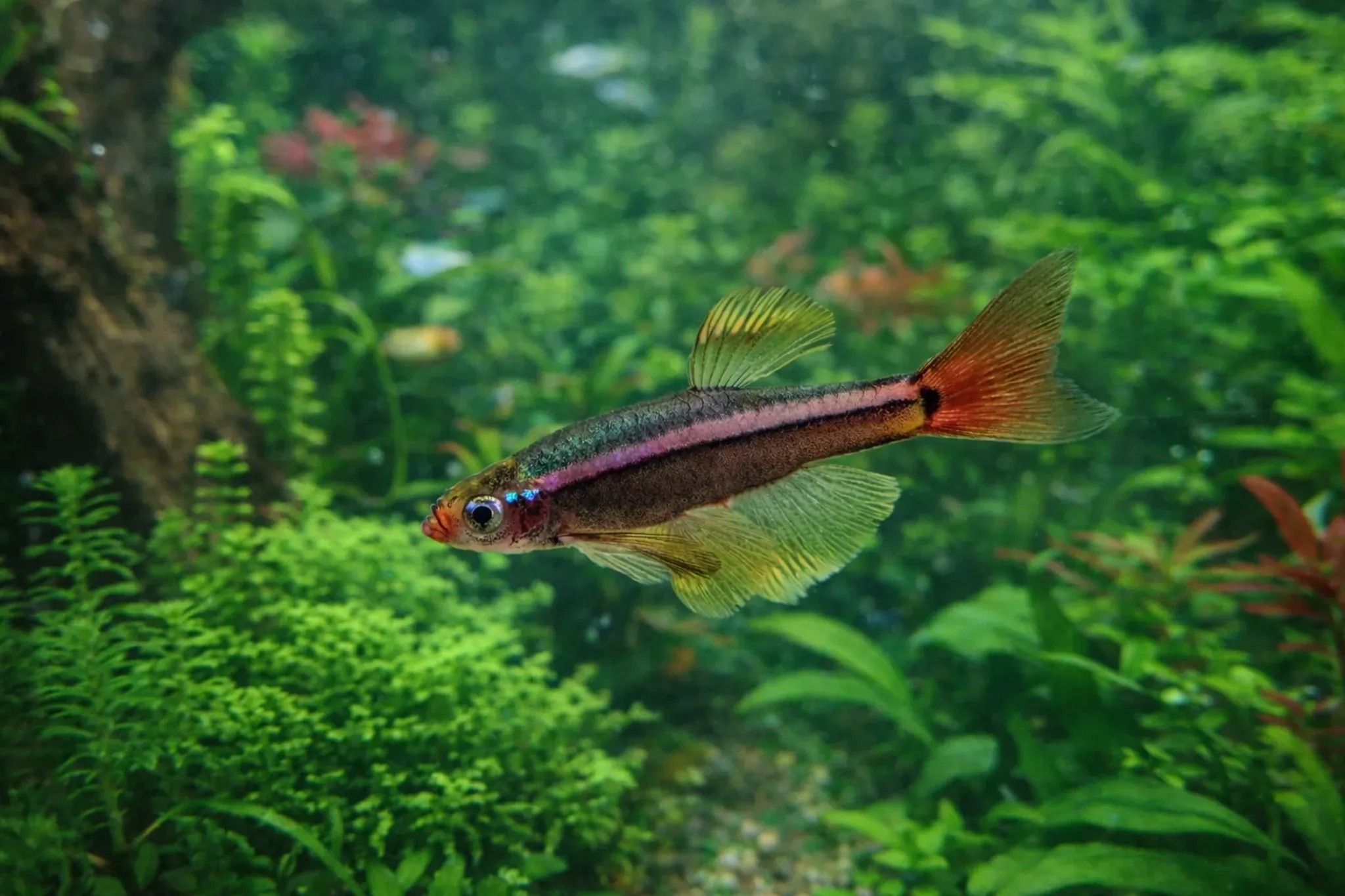

What Do White Cloud Mountain Minnow Eat? A Practical Feeding Guide
White Cloud Mountain Minnows are easygoing omnivores that thrive on a rotation of high-quality micro flake or pellet food, occasional frozen or live protein, and the odd blanched vegetable. This guide breaks down exactly how much to feed, how often, and how their cool-water background changes the rules compared to typical tropical fish.
Where This Fish Comes From — and Why It Matters for Feeding
Tanichthys albonubes originated in cool, fast-flowing mountain streams in China, where food is often scarce and the water stays well below typical tropical tank temperatures. In the wild, they graze constantly on small insects, insect larvae, zooplankton, and algae or biofilm coating rocks and plants.
That background explains two things hobbyists often overlook:
- They are efficient foragers built to handle lean periods, so an occasional light feeding day doesn't stress them the way it might a fast-metabolizing tropical species.
- Their appetite and metabolism are tied closely to water temperature — colder water slows digestion, warmer water speeds it up, so feeding amounts should shift with the season rather than staying fixed year-round.
The Core Diet: Flakes and Micro-Pellets
A high-quality tropical flake or micro-pellet food should be the staple, offered 1–2 times per day. The catch is mouth size: White Cloud Mountain Minnows have tiny mouths, so standard-size flakes or pellets are often too big.
- Crush flakes into a fine powder between your fingers before feeding.
- Look for foods explicitly labeled "micro" or sized under roughly 1 mm, which cuts down on both choking risk and wasted food that sinks uneaten.
- Because minnows feed at the surface and mid-water column rather than along the substrate, avoid relying heavily on sinking pellets — feed something that lingers near the top where they actually forage. Community-friendly flake and micro-pellet options for small schooling fish can be browsed under Food & Supplements.
Adding Protein: Frozen, Live, and Freeze-Dried Options
Two to three times a week, supplement the staple diet with protein-rich foods to support color, growth, and breeding condition:
- Brine shrimp (live or frozen)
- Daphnia
- Bloodworms, chopped small for their mouth size
- Cyclops
- Grindal worms or microworms
Feeding only flakes long-term is a common mistake that leads to nutritional gaps and dull coloration. Rotating in animal protein a few times weekly fixes this without overcomplicating the routine. Freeze-dried versions of these same foods are a convenient, low-mess alternative and can be found in the Freeze Dried Food category.
Vegetables: An Occasional Treat, Not a Staple
White Cloud Mountain Minnows will pick at vegetable matter, but it should stay a minor supplement rather than a regular menu item:
| Vegetable | Prep method | Notes |
|---|---|---|
| Peas (shelled) | Boil 1–3 minutes, then peel off the tough skin | Skin removal matters — it's hard for tiny mouths to break down |
| Zucchini | Blanch into thin medallions | Soft skin is fine to leave on |
| Spinach | Blanch 1–3 minutes, then shock in ice water | No peeling needed |
| Lettuce | Blanch briefly, shock in ice water | Softens quickly; offer in small pieces |
Remove any uneaten vegetable matter within a few hours and no later than 24 hours — sooner in warm weather, when it breaks down and fouls water faster.
Gel Food: A Good Fit for Grazers
Gel-style foods (mixed from a powder, similar to the Repashy format) work well for White Cloud Mountain Minnows because the fish naturally graze rather than gulp food all at once.
How to make it:
- Mix the powder with hot water at roughly a 3:1 water-to-powder ratio.
- Stir thoroughly until fully combined.
- Chill until it sets into a firm, jello-like block.
Once set, gel food holds its shape in the tank for about a day, so it doesn't turn into instant mush the way flake does. You can doctor a batch with extra finely chopped vegetables or a supplement powder. Store it in the refrigerator for up to about two weeks, or portion it into ice cube trays and freeze it for up to roughly six months, thawing only what you need per feeding.
Homemade Fish Food
A blended homemade mix is a reasonable supplemental option, though it shouldn't fully replace a balanced commercial staple. A basic approach:
- Blend a lean protein source (white fish fillet, shrimp, or lean beef heart) with vegetables.
- Add a binder — unflavored gelatin or spirulina powder works well.
- Pour the mixture into an ice cube tray and freeze.
- Thaw only what's needed for one feeding; don't refreeze thawed portions.
- Wrap the tray or use a sealed container to prevent freezer burn during storage.
If you want a lower-effort, homemade-adjacent option, finely crushed spirulina flakes mixed into the regular feeding rotation add a similar nutritional boost without the prep work.
How Much, How Often: The 2–3 Minute Rule
Regardless of which food you're using, portion by fish size and number, not by tank size. The standard is simple:
- Feed only what the group finishes in 2–3 minutes.
- Remove any uneaten food — flake, gel, or vegetable — within a few hours, and never let it sit longer than 24 hours.
- Feed during daylight or morning hours, since White Cloud Mountain Minnows are diurnal and forage most actively when it's light.
Overfeeding is by far the most common feeding mistake with this species. Excess food leads to bloating and constipation in the fish, plus fouled water, ammonia spikes, and algae blooms as leftovers decay. If you notice cloudy water or algae creeping up shortly after feeding, cut the portion size before doing anything else.
Should You Skip a Feeding Day?
Sources disagree here. The practical middle ground: 1–2 small feedings daily works for most keepers, and an occasional weekly fasting day is a reasonable option for adult-only tanks. Skip the fasting day for growing juveniles or fish you're actively conditioning for breeding — they need consistent nutrition to grow and produce healthy eggs.
Feeding in Groups
White Cloud Mountain Minnows are shoaling fish, and feeding behavior reflects that directly. In groups of six or more, they compete for food evenly and confidently. Smaller groups often show uneven feeding, with bolder individuals crowding out shier ones at the food source — something worth considering if a few fish always look thinner than the rest. Community-friendly shoaling species like these can be sourced from the Small Community Fishes category.
Feeding Fry
If you're breeding White Cloud Mountain Minnows, fry need a different sequence entirely:
- Newly hatched fry: infusoria or a liquid fry food, since their mouths are too small for anything else.
- As they grow: transition to newly hatched baby brine shrimp.
- Juveniles: finely crushed flake once they're large enough to handle it.
Feeding varied protein sources to adults in the weeks leading up to breeding also improves spawning success and egg quality — a detail worth keeping in mind if you're planning a breeding project rather than just maintaining a community tank.
Temperature, Appetite, and Feeding Adjustments
White Cloud Mountain Minnows are unusually cold-tolerant for an aquarium fish, comfortable in roughly 64–72°F (18–22°C) as a core range, with brief tolerance into the upper 70s°F without needing a heater. That's noticeably cooler than the 74–80°F (23–27°C) most tropical community fish prefer.
Temperature directly affects appetite:
- Colder water slows metabolism — feed slightly less, but don't skip feedings entirely, since a sluggish fish is still using energy and can be stressed by underfeeding during a cold snap.
- Warmer water speeds metabolism — normal feeding is fine, but watch water quality more closely since warmth also accelerates decay of any leftover food.
- Overheating above the low 80s°F stresses fish noticeably (rapid gill movement, gasping at the surface) and can even crash biological filtration — feeding heavily during a heat spike compounds the problem, since stressed fish process food less efficiently.
Keeping the Tank Cool in Summer
Because this species runs cooler than most tropical fish, summer heat waves are a real feeding-adjacent concern. A few practical cooling methods, roughly in order of effort:
- Boost evaporation: crack or remove the tank lid to let heat escape.
- Add airflow: point a fan across the water surface — this can drop the temperature several degrees but increases evaporation, so top off with fresh water regularly.
- Improve surface agitation: an air stone or a sponge filter helps with gas exchange when warm water holds less oxygen.
- Do smaller, more frequent water changes using cooler water rather than one large change, which can shock the fish with a sudden temperature swing.
- Reduce lighting: shorten the photoperiod or shift lighting to cooler nighttime hours.
- Emergency measures: float a sealed bag of ice or a frozen water bottle in the tank if temperatures spike suddenly.
- Cut unnecessary heat sources: unplug non-essential heat-generating equipment, but keep air pumps and circulation running.
- Reposition the tank: move it away from direct sunlight or windows.
- Long-term fix: an aquarium chiller is the most reliable solution in consistently hot climates.
During a heat event, feed slightly smaller portions and watch fish behavior — if they seem sluggish or are hanging near the surface, ease off rather than feeding on the usual schedule.
Frequently Asked Questions
How often should I feed White Cloud Mountain Minnows?
Feed 1–2 small meals daily, offering only what the group can finish in 2–3 minutes. This keeps portions appropriate and limits leftover food fouling the water.
Can White Cloud Mountain Minnows eat vegetables?
Yes — blanched peas (peeled), zucchini, spinach, or lettuce make an occasional treat. Remove any uneaten portion within about 24 hours, sooner in warm water.
Do White Cloud Mountain Minnows need live food?
Live food isn't required, but frozen or live protein like brine shrimp, daphnia, or bloodworms a few times a week improves color and vigor, and is especially useful when conditioning fish for breeding.
What do White Cloud Mountain Minnow fry eat?
Newly hatched fry start on infusoria or a liquid fry food, since their mouths are too small for anything larger. As they grow, move them onto baby brine shrimp and then finely crushed flake.
Can I feed gel food to White Cloud Mountain Minnows?
Yes, gel food is a good supplemental option for their grazing habits. Mix the powder with hot water at roughly a 3:1 ratio, chill until set, and offer small pieces.
How do I keep my minnows fed while keeping the tank cool in summer?
Feed slightly smaller portions if fish seem stressed or less active, and stick to cooler parts of the day. Heat-stressed fish process food less efficiently, so overfeeding during a heat spike adds unnecessary strain on water quality.
What's the ideal water temperature for feeding activity?
Roughly 64–72°F (18–22°C) is the comfortable core range where appetite stays consistent. Near either extreme of their broader tolerance, feeding activity can dip noticeably.
Can I make homemade fish food for minnows?
Yes — small batches blending lean protein and vegetables with a gelatin or spirulina binder, frozen into ice cube portions, work well as a supplement. Treat it as an addition to a quality commercial staple rather than a full replacement.
Once you've got the feeding routine down, browse Small Community Fishes on FishyHub to round out a cool-water shoal, or check current stock in Food & Supplements for staple and supplemental foods sized right for small mouths.


