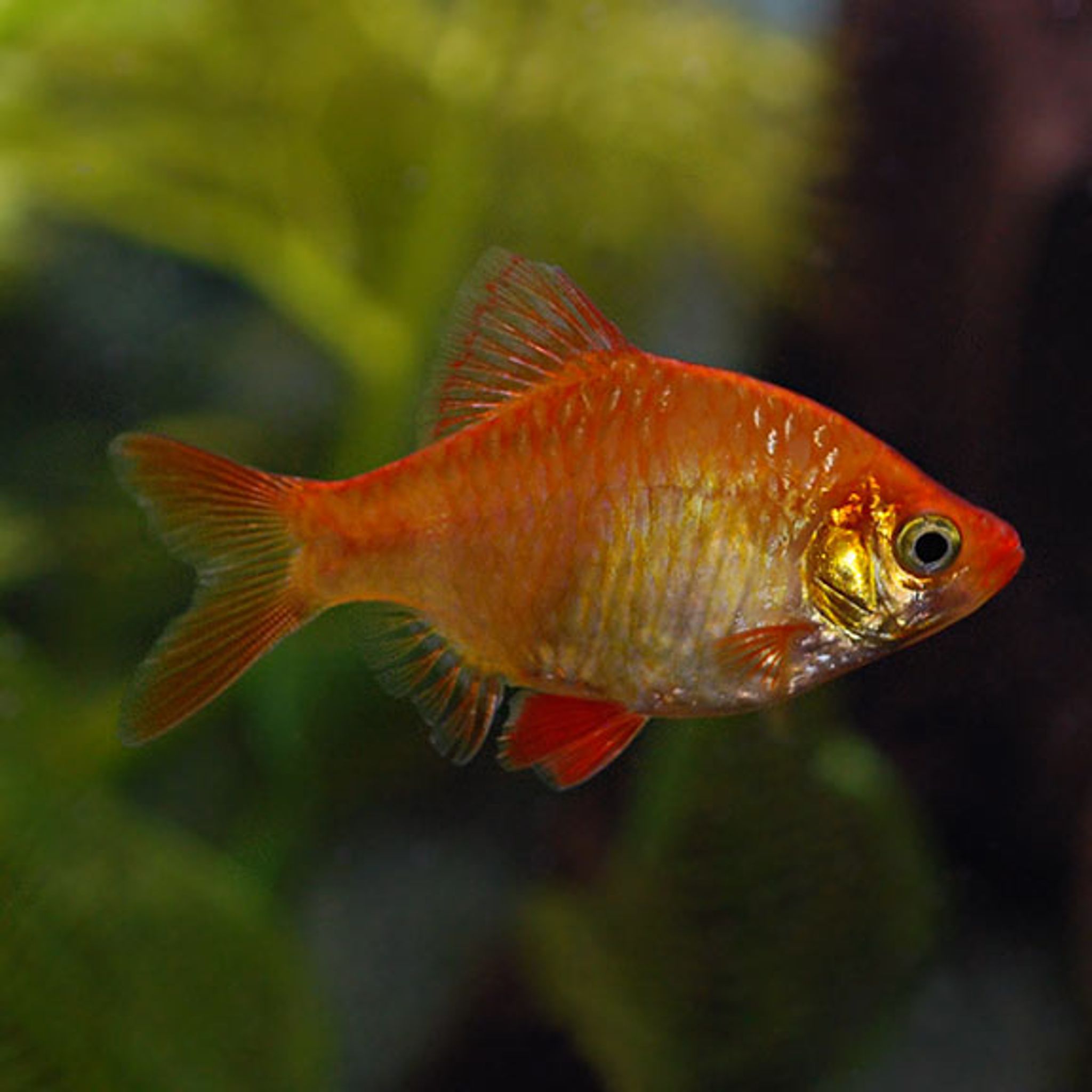

What Do Tiger Barb Eat? A Practical Feeding Guide
Tiger barbs are true omnivores that need a rotation of staple flake or pellet, live or frozen protein, and the occasional vegetable to stay colorful and calm. Get the mix wrong and you'll see dull colors, cloudy water, or more fin-nipping in the tank. This guide gives you a weekly plan, a size-based portion chart, and the mistakes to avoid.
What Tiger Barbs Eat in the Wild
Tiger barbs originate in slow-moving streams and blackwater tributaries across Southeast Asia, where they graze almost constantly on whatever the current brings past. Their natural diet is a mix of algae and soft plant matter, zooplankton, insect larvae, small worms, and tiny crustaceans. They are not vegetarians and they are not strict carnivores — they're opportunistic feeders that pick at anything edible-sized throughout the day.
That background matters for home aquariums: a diet built entirely around one food type doesn't match how this fish actually forages. Rotating between protein-rich and plant-based foods mimics the variety they'd encounter in a stream and tends to produce better color and steadier energy than a single staple alone.
The Right Protein-to-Plant Balance
A workable target is roughly 40-50% protein-forward foods, with the remainder made up of plant matter and fiber. Tiger barbs can and will eat protein-heavy meals happily, but a diet skewed too far toward meaty foods over time can lead to bloating and sluggish digestion. Treating protein and plant matter as two halves of the same routine — not protein as the "real" food and vegetables as an afterthought — keeps digestion regular.
Daily Staple: Flake or Sinking Pellet
For everyday feeding, a high-quality tropical flake or a small sinking/slow-sinking pellet (roughly 0.5-1.5 mm) should form the base of the diet. Both are acceptable as a daily staple, and the choice mostly comes down to feeding behavior:
- Flake floats and spreads across the surface, which suits a shoal but can encourage fast, competitive gulping at the top of the tank.
- Sinking or slow-sinking pellets move through the water column more predictably, giving a fast eater like the tiger barb less reason to gulp air at the surface — a small but real advantage for reducing bloat risk in this species.
When shopping for either, a quick ingredient-quality check helps regardless of brand: look for whole fish or shrimp meal listed near the top of the ingredient panel rather than a formula built mostly on fillers. You can browse staple and freeze-dried options for a mixed-species community on FishyHub's freeze-dried food selection.
Rotating in Live and Frozen Foods
Several times a week, supplement the staple with live or frozen animal protein: brine shrimp, daphnia (water fleas), bloodworms, and blackworms are all good choices that tiger barbs take readily. These foods drive noticeably better coloration, more natural activity, and better breeding condition than flake alone.
Beef heart shows up in some older feeding lists as a tiger barb favorite, but most current feeding guidance treats it as an occasional, fatty treat rather than a staple — it's harder for a small schooling fish to digest and fouls water faster than brine shrimp or bloodworms. If you want an occasional meaty extra, keep it rare and small, and lean on brine shrimp and bloodworms as your primary animal-protein rotation instead.
Vegetable Matter: Don't Skip It
Offer vegetable matter 1-2 times per week: blanched zucchini, shelled peas, spinach, romaine lettuce, cucumber, or a spirulina-based flake or pellet all work well. Skipping vegetables entirely is a common mistake — since the wild diet includes real plant material, cutting it out can contribute to digestive issues in a fish that's biologically built to process some fiber.
How Often and How Much to Feed
Feed adults 2-3 small meals per day, offering only what the group clears in a couple of minutes. Most feeding guidance targets 1-3 minutes as the window food should disappear in; treat anything stretching toward 5 minutes as the outer limit, and scale the next portion down if you're regularly seeing food linger that long. One large daily feeding instead of several smaller ones is a common mistake that leads to bloating and uneven growth across the group.
Portion-by-Size Chart
Because "a pinch" means different things to different people, size the amount to the fish rather than guessing at a fixed quantity:
| Body length | Suggested portion | What to look for |
|---|---|---|
| Under 1 inch (2.5 cm) | A small pinch | Food gone in under 2 minutes |
| 1-2 inches (2.5-5 cm) | A slightly larger pinch | Food gone in about 2-3 minutes |
| Over 2 inches (5+ cm) | Roughly double a small pinch | Food gone in 2-3 minutes, minimal sinking leftovers |
Adjust upward as juveniles grow — undersized adults are often a sign the portion was never increased as the fish matured.
Feeding in a Community or Planted Tank
Tiger barbs are fast, competitive schoolers, and in a mixed community or planted setup that changes the math slightly. They'll often out-compete slower tankmates for food at the surface, and in a well-planted tank they may also graze on biofilm and algae between meals, which reduces how much supplemental food they actually need. Watch slower fish during feeding to confirm everyone is getting a share, and don't assume a barb group is underfed just because they're active — some of their day-to-day grazing happens off-camera on tank surfaces.
Fin-Nipping: It's Not Just About Food
Diet plays a real role in reducing nippy behavior, but it isn't the whole story. Keeping tiger barbs in groups of 8-12 and feeding on a consistent schedule both reduce nipping directed at slower tankmates by giving the group enough food and social structure to burn off competitive energy on each other rather than on neighbors. Group size matters as much as feeding: fewer than 6-8 barbs together tends to concentrate aggression onto whichever fish is lowest in the pecking order.
That said, no feeding routine fully offsets a bad tankmate choice. Avoid housing tiger barbs with long-finned fish such as bettas or angelfish regardless of how well you feed the group — their flowing fins are an obvious target for a species that nips by instinct. If you're stocking a barb shoal, FishyHub's barb selection and broader small community fishes category are worth browsing for compatible numbers and tankmates.
Conditioning for Breeding
In the days leading up to a planned spawn, step up live and frozen protein — brine shrimp and bloodworms in particular — to condition adults. The extra protein density supports egg and milt development more effectively than the daily staple alone, and most breeders start this increase roughly a week before an intended spawn.
Feeding Fry
Fry need a completely different progression than adults, moving through stages as their mouths grow:
- First few days: infusoria or a liquid fry food, sized for mouths too small for anything else.
- After the first several days: baby brine shrimp or microworms, once fry are large enough to take them.
- After roughly 1-2 weeks: finely crushed flake or powdered food, gradually mixed into the diet.
Fry also need to eat more often than adults — 3-4 feedings per day rather than 2-3 — since they're growing quickly and can't hold as much per meal.
Life Stage and Health Adjustments
Feeding needs shift a little beyond the fry-versus-adult split. Older or less active tiger barbs generally need a slightly smaller portion than a young, fast-swimming shoal. And if a fish is in quarantine or recovering from illness, it's reasonable to reduce feeding frequency temporarily and watch appetite closely rather than sticking to a fixed schedule regardless of how the fish is behaving.
What Happens If You Overfeed
Overfeeding is one of the most common and most preventable mistakes in tiger barb care. Uneaten food doesn't disappear — it fouls the water, drives ammonia and nitrite spikes, feeds algae blooms, and contributes to obesity in fish that are naturally active grazers. Excess energy and surface competition from overfeeding can also worsen fin-nipping, so cutting back is often as helpful for tank behavior as it is for water quality. Leftover food that's still visible a few minutes after feeding is the clearest sign to scale the next portion down.
Traveling? Here's How to Handle Feeding Gaps
Healthy adult tiger barbs can safely go about a week without food. For a short trip, there's rarely a need to do anything beyond your normal schedule. For longer absences, an automatic feeder or a slow-release feeder block is a better solution than loading up the tank with extra food before you leave — a pile of uneaten food while you're away is far more damaging than a fish that eats a bit less for a few days.
Quick-Reference Shopping List
Use this as a simple checklist when stocking up:
| Category | Examples | Frequency |
|---|---|---|
| Staple | Tropical flake or 0.5-1.5 mm sinking pellet | Daily |
| Live/frozen protein | Brine shrimp, daphnia, bloodworms | Several times a week |
| Vegetable matter | Blanched zucchini, peas, spinach, cucumber | 1-2x per week |
| Travel backup | Automatic feeder or feeder block | As needed for trips |
Common Mistakes to Avoid
- One big daily meal instead of 2-3 smaller ones — leads to bloating and uneven growth.
- Flake only, no rotation — dulls coloration and creates nutrient gaps over time.
- "Just in case" overfeeding with visible leftovers — the main driver of cloudy water and algae.
- Skipping vegetables entirely — can contribute to digestive issues in this omnivorous species.
- Not scaling portions up as juveniles grow — undersized adults are often just underfed.
- Blaming hunger for all fin-nipping — group size and tankmate choice matter just as much as feeding.
Frequently Asked Questions
How often should I feed tiger barbs?
Feed adults 2-3 times daily, offering only what they finish within a couple of minutes. If food is still visible after 3 minutes, reduce the portion at the next feeding.
What is the best staple food for tiger barbs?
A quality tropical flake or a small (0.5-1.5 mm) sinking pellet both work well as a daily base. Pellets sink more predictably, which can help reduce surface-gulping in this fast, competitive eater.
Do tiger barbs need live food?
It's not strictly required, but live or frozen brine shrimp, daphnia, and bloodworms noticeably improve color, activity, and breeding condition. Offer these a few times a week alongside the staple diet.
Can tiger barbs eat vegetables?
Yes. Blanched zucchini, shelled peas, spinach, cucumber, or romaine lettuce a couple of times a week supports healthy digestion in this omnivorous species.
How long can tiger barbs go without food?
Healthy adults tolerate about a week without feeding. For longer trips, use an automatic feeder or a slow-release feeder block rather than overfeeding before you leave.
What should I feed tiger barb fry?
Start with infusoria or a liquid fry food, move to baby brine shrimp or microworms once they're large enough, and transition to finely crushed flake after roughly 1-2 weeks. Fry need 3-4 feedings a day, more often than adults.
Does diet affect tiger barb aggression or fin-nipping?
Consistent feeding times and adequate group size (8-12 fish) reduce nipping more than any single food choice. Avoid pairing tiger barbs with long-finned tankmates like bettas or angelfish regardless of how well they're fed.
Can overfeeding hurt my tank?
Yes. Uneaten food degrades water quality, raises ammonia and nitrite levels, and can fuel algae blooms and obesity in the fish over time.
Ready to build out your shoal? Browse tiger barbs and other compatible schoolers in FishyHub's barb category to plan your group size before you shop for food.


