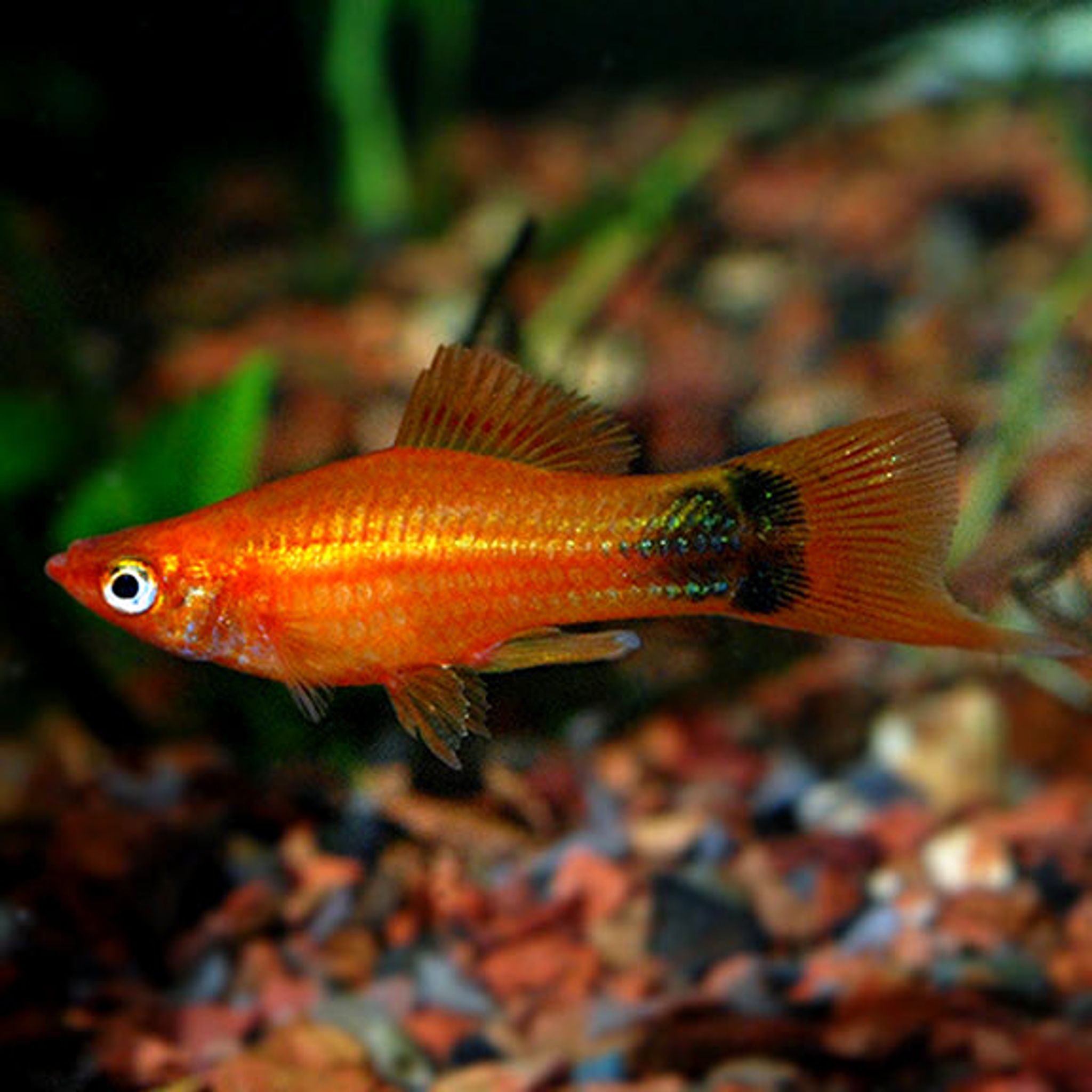

What Do Swordtail Eat? A Practical Feeding Guide
Swordtails (Xiphophorus hellerii) are omnivorous livebearers that thrive on a rotation of flake or micro-pellet staples, protein-rich frozen or live foods, and vegetable matter. Getting the ratio and timing right matters just as much as the food itself — overfeeding is the single biggest cause of cloudy water and bloated fish. Below is a concrete schedule, a portion guide, and answers to the questions swordtail owners actually ask.
What Swordtails Eat in the Wild vs. the Home Aquarium
Wild swordtails from Central America and Mexico graze on insect larvae, algae, and detritus in slow-moving streams — a pattern shared by many livebearers. Wild guppies from northeastern South America (Trinidad, Venezuela, Guyana) follow the same script, feeding heavily on mosquito larvae and biofilm. That background is the reason a varied, omnivorous diet works better than a single food type: it mimics what these fish evolved to eat, not what's easiest to scoop from a container.
In the tank, that translates to three food categories working together:
- A staple — flake or micro-pellet, fed daily
- Protein boosters — live or frozen brine shrimp, daphnia, bloodworms, or tubifex, a few times a week
- Plant matter — blanched vegetables, algae wafers, and the biofilm/algae fish graze on naturally
The Daily Staple
A high-quality tropical flake or micro-pellet formulated for omnivores should be the base of the diet, fed daily. When choosing one, a simple checklist helps you cut through vague labels:
- Protein target: look for roughly 30–40% crude protein for an omnivore blend — swordtails aren't strict herbivores or carnivores.
- Ingredient order: whole fish meal, shrimp meal, or algae meal should appear near the top of the ingredient list, not buried after fillers like wheat or corn gluten.
- Pellet size: micro-pellets or crushed flake are easier for a 2–4 inch (5–10 cm) swordtail to eat cleanly than oversized pellets meant for larger fish.
You can browse flake, pellet, and freeze-dried options built for community tanks in FishyHub's Food & Supplements category, including freeze-dried food that works well as a protein rotation between live and frozen feedings.
Protein Boosters (2–3x Per Week)
Live or frozen brine shrimp, daphnia, bloodworms, and tubifex add the protein density that supports color, growth, and breeding condition. Feed these two to three times a week rather than daily — they're a supplement to the staple diet, not a replacement for it.
A tip most feeding guides skip: gut-load your live foods. Feeding brine shrimp or daphnia a nutrient-rich food for a day before offering them to your swordtails passes that extra nutrition along to your fish, effectively turning a live food into a fortified one.
Plant Matter Is Not Optional
Swordtails need vegetable matter as a regular part of the diet, not an occasional treat. Offer:
- Blanched zucchini or cucumber slices, weighted or clipped so they sink
- Blanched spinach
- Algae wafers
They'll also graze on algae and biofilm growing on tank surfaces and decor. That grazing is a genuine supplemental food source — if your tank has a healthy algae film, you can ease off vegetable feeding slightly rather than assuming the fish need more supplementation than they're getting.
Feeding Frequency and Portions
Adults
Feed adult swordtails twice a day — once in the morning, once in the evening — as a solid baseline for most home aquariums. Hobbyists chasing faster growth or peak breeding condition sometimes split the day into three smaller feedings instead. Both approaches work fine as long as the total daily volume stays modest; three small meals isn't a way to feed more overall, just to spread the same amount out.
Juveniles
Growing juveniles need more frequent meals with a higher protein ratio: 3–4 feedings a day, each in smaller portions than an adult meal. As they approach adult size, taper down toward the twice-daily adult schedule.
The Portion Rule
Rather than guessing at a pinch or a specific weight, use a behavioral rule: feed only what the group finishes in 2–3 minutes, then remove anything left uneaten. This single habit prevents the majority of feeding-related water quality problems, since leftover food is what actually fouls the tank — not the fish themselves.
| Life stage | Feedings/day | Portion guide | Food focus |
|---|---|---|---|
| Fry (first weeks) | Up to 4 | Tiny amounts, several times | Powdered fry food, infusoria, baby brine shrimp |
| Juveniles | 3–4 | Small portions | Crushed flake, higher protein ratio |
| Adults | 2 (or 3 smaller) | 2–3 minute rule | Flake/pellet + protein 2–3x/week + veggies |
The Optional Fasting Day
Skipping food one day a week is a common recommendation for livebearers generally, including swordtails. It isn't universal or mandatory, but it's a sensible practice to support digestion and help prevent obesity in fish that are otherwise fed twice daily with regular protein boosters. Treat it as a helpful habit rather than a strict rule.
Feeding Fry
Newborn swordtail fry cannot eat standard flake or pellet food — it's simply too large for their mouths and won't be digested efficiently. Instead, feed:
- Powdered or crushed fry food
- Infusoria (for the very first days)
- Freshly hatched brine shrimp or microworms
Fry should be fed up to four times a day in small amounts, since their growth rate and survival depend on frequent access to appropriately sized food. As they grow, gradually introduce crushed flake and reduce feeding frequency toward the juvenile schedule described above.
Because females release live, free-swimming fry rather than laying external eggs, feeding starts immediately after birth — there's no incubation period to plan around. If you're breeding intentionally, dense plant cover or a separate rearing tank helps fry survive long enough to reach that first meal, since tankmates and even parents will eat newborns given the chance.
Water Conditions That Affect Appetite
Feeding only works as well as the water it happens in. Swordtails do best at roughly 65–82°F (18–28°C), pH 7.0–8.4, and moderately hard water — they're a livebearer species that appreciates some mineral hardness. Two practical notes:
- At the cooler end of that range, metabolism slows and appetite drops — don't be surprised if fish eat less and take longer to finish a meal in a cooler tank.
- Feeding heavily into poor water quality compounds problems fast, since uneaten food and waste both spike ammonia in already-stressed water.
Coloring and Sword Growth
Feeding quality shows up visibly in male swordtails. Carotenoid-rich foods — many color-enhancing flakes, along with foods like brine shrimp and daphnia — support more vivid red and orange coloration and generally better overall condition, which indirectly supports sword growth and finnage development. A diet of plain flake alone tends to produce duller color over time compared to one rotating in protein and color-supporting ingredients.
Common Feeding Mistakes (and Fixes)
| Mistake | Consequence | Fix |
|---|---|---|
| Overfeeding | Cloudy water, ammonia spikes, obese or bloated fish | Apply the 2–3 minute rule; add a weekly fasting day |
| Flake/pellet only | Nutritional gaps, poor color, weaker immunity | Rotate in frozen/live protein and vegetables |
| Ignoring fry needs | Fry starve or grow slowly on adult food | Use crushed flake, infusoria, or baby brine shrimp |
| Assuming no algae grazing | Over-supplementing an already-fed fish | Let biofilm/algae act as a supplemental source |
| Feeding table scraps | Digestive distress, long-term stress | Stick to fish-safe foods only |
| Uneven feeding in mixed tanks | Larger swordtails out-compete smaller fish | Spread food across multiple points in the tank |
That last point matters if you're keeping swordtails alongside guppies or platies, which is common in community setups — swordtails are larger and faster, so scattering food widely (rather than in one pile) gives smaller fish a fair shot.
Foods to Never Feed
Can fish eat cheese? No. Fish lack lactase, so dairy causes bloating and watery, mucus-covered feces. Cheese's fat, salt, and cholesterol content adds further stress on top of the digestive issue — never feed cheese to swordtails.
Can fish eat chocolate? No. Chocolate's fat and sugar content triggers digestive upset and weight-related problems, and cocoa carries trace heavy metals like cadmium and lead that are toxic to fish. No fish species naturally encounters chocolate, and it has no place in a feeding routine — keep it away from the tank entirely.
Livebearer Breeding Carryover Topics
Because swordtails share biology with guppies and platies, a few adjacent questions come up often for mixed-livebearer keepers.
Fish eggs vs. livebearer reproduction: True fish eggs (roe) are small, round, and often translucent, ranging from pale yellow to red or black depending on species. Swordtails don't produce visible external eggs at all — they're livebearers, meaning females gestate internally and release fully formed, free-swimming fry.
Pregnant (gravid) females: A gravid spot near the anal fin darkens as fry develop internally. Females can store sperm for months and produce repeat broods without re-mating, which is why a female can give birth again even without a male present. Feeding a visibly gravid female extra protein in the weeks before birth supports healthier fry.
Still looks fat after giving birth? This is common and usually isn't a sign of a failed birth. The likely causes are retained or undeveloped eggs still being carried, general overfeeding leading to obesity, or stress and poor water quality slowing metabolism. The fix isn't more food — it's better-quality nutrition in modest amounts, stable water parameters, and a few days to let her recover.
Guppy varieties: Guppies (Poecilia reticulata) come in many selectively bred finnage and color varieties, such as fantail and veiltail types. This isn't diet-related, but it's worth knowing if you keep guppies and swordtails together — both are omnivorous livebearers with essentially the same feeding needs, so one schedule covers both.
Frequently Asked Questions
How often should I feed swordtail fish?
Twice daily is the standard recommendation for adults, though some keepers split that into three smaller feedings for faster growth or breeding condition. Juveniles need more frequent meals — 3 to 4 times a day — in smaller portions.
What is the best staple food for swordtails?
A quality flake or micro-pellet formulated for tropical omnivores, fed daily, with roughly 30–40% protein and whole fish or shrimp meal near the top of the ingredient list. This should form the base of the diet, supplemented with protein and vegetables.
Do swordtails need live or frozen food?
It's not strictly required, but recommended 2–3 times a week. Live or frozen brine shrimp, daphnia, and bloodworms noticeably improve color, growth rate, and breeding condition compared to a flake-only diet.
Can swordtails eat vegetables?
Yes, and they should regularly. Blanched zucchini, cucumber, or spinach, along with algae wafers, should be part of the rotation. Swordtails also graze on tank algae and biofilm as a supplemental food source.
What do baby swordtails (fry) eat?
Fry need powdered fry food, infusoria, or freshly hatched brine shrimp and microworms — standard flake is too large for them to eat. Feed several small meals a day, up to four times, tapering toward the juvenile schedule as they grow large enough for crushed flake.
Can fish eat cheese or chocolate?
No to both. Fish lack the enzymes to digest dairy properly, and chocolate's fat, sugar, and trace heavy metal content causes digestive distress and long-term health problems. Stick to fish-appropriate foods only.
Should I fast my swordtails?
An occasional one-day-a-week fast is a reasonable and commonly recommended practice for livebearers. It isn't mandatory, but it can support digestion and help prevent obesity in fish fed twice daily with regular protein supplementation.
Why does my female swordtail still look fat after giving birth?
This usually reflects retained or undeveloped eggs, general overfeeding, or stress and poor water quality rather than a failed birth. Focus on nutrition quality over volume and stable water conditions, and give her a few days to recover before assuming something is wrong.
Ready to stock your feeding rotation or add new livebearers to the mix? Browse live swordtails and compatible tankmates in FishyHub's swordtail category.


