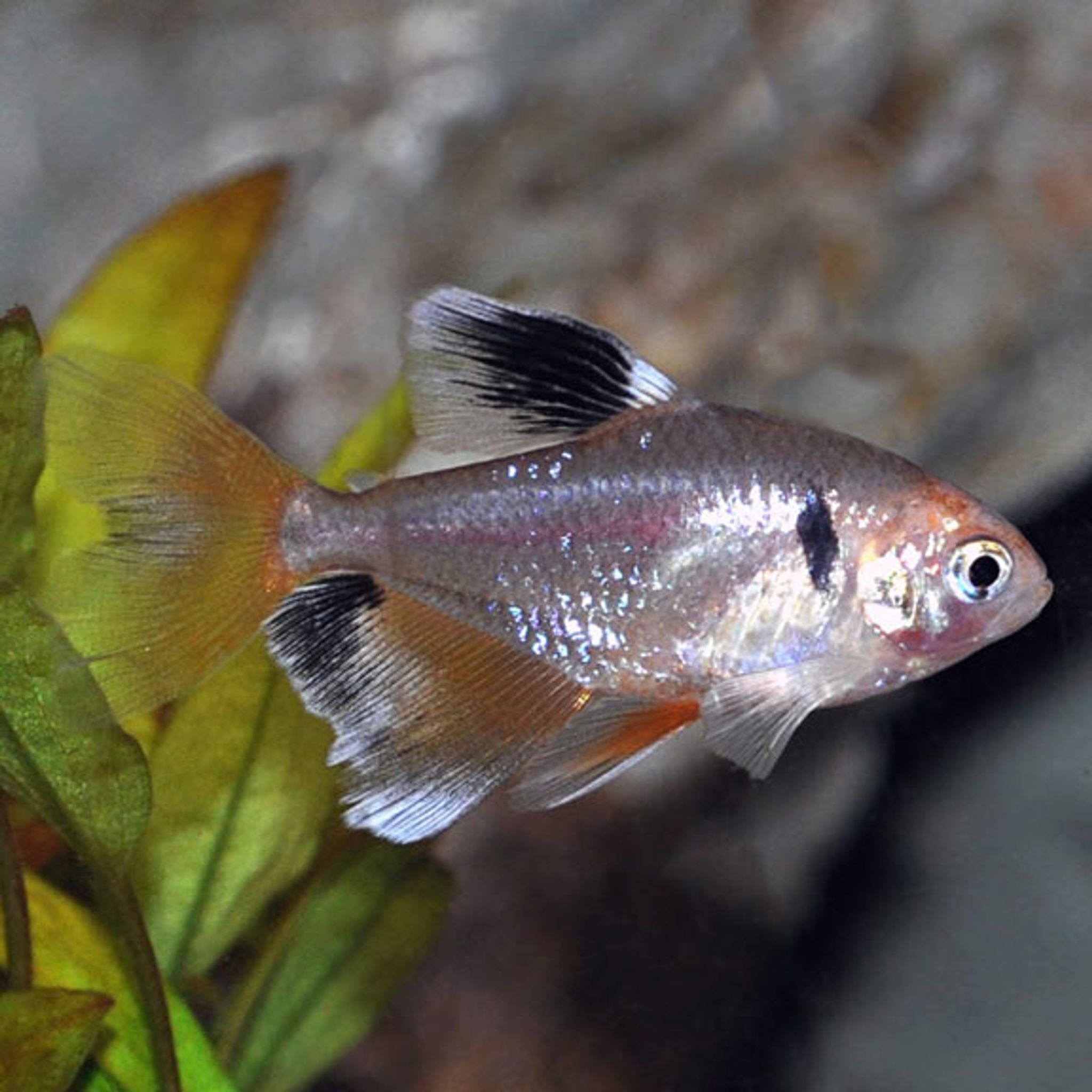
What Do Serpae Tetra Eat? A Practical Feeding Guide
Serpae tetras (Hyphessobrycon eques) are easygoing omnivores that thrive on a rotation of quality flakes or micro-pellets plus regular servings of protein-rich frozen or live food. The trickier part isn't what to feed them — it's how and where, since this species is a well-known fin-nipper that can turn feeding time into a scramble. This guide covers the full diet, a feeding schedule, and the tactics that keep a serpae tetra shoal well-fed without picking on tankmates.
What Serpae Tetras Eat in the Wild
In their native South American streams, serpae tetras forage constantly in loose shoals, picking off:
- Small insects and insect larvae drifting in the current
- Tiny crustaceans and zooplankton
- Bits of algae and soft plant matter encountered while foraging
This background matters because it explains their behavior in a tank: serpae tetras are opportunistic, food-driven fish that expect to compete for scattered items throughout the day, not to wait patiently for one big meal in one spot.
Mouth Shape and Why It Matters
A serpae tetra has a small, slightly upturned (terminal) mouth built for picking food out of the water column and off the surface — it is not shaped for grubbing along the substrate.
Mouth position is a quick, reliable clue to how any fish feeds:
| Mouth type | Feeding zone | Example fish |
|---|---|---|
| Superior (upward-pointing) | Surface | Hatchetfish, some killifish |
| Terminal (centered, slightly upturned) | Mid-water | Serpae tetra, most community tetras |
| Sub-terminal / inferior (downturned) | Substrate | Corydoras, loaches, plecos |
Because serpae tetras share a terminal, mid-water mouth with many other popular community fish, they're competing directly with those species — not with bottom dwellers — for the exact same drifting food. That overlap is a big part of why serpaes can get pushy at feeding time around other mid-water eaters, while bottom feeders sorting through leftovers are largely left alone.
The Core Diet: Staples and Supplements
Staple food
A high-quality tropical flake or micro-pellet sized for a small mouth should form the base of the diet. Adult serpae tetras run about 1.5–2 inches (4–5 cm), so oversized pellets meant for bigger fish will simply be ignored or spat out. You can browse sized foods and general aquarium supplies in FishyHub's Food & Supplements selection when stocking up.
Protein supplements
Two to three times a week, add:
- Bloodworm (live or frozen)
- Brine shrimp (live or frozen)
- Daphnia
These boost color saturation and physical conditioning, and they're especially useful before an attempted breeding attempt, when extra live or frozen protein sharpens male coloration and readiness.
Plant and vegetable matter
Serpae tetras lean more carnivorous/omnivorous than herbivorous, so vegetables are a supplement, not a requirement. An occasional piece of blanched zucchini, spinach, or a few peas adds fiber and variety without being essential the way it is for herbivore-leaning species like some plecos.
How Often and How Much to Feed
Feed adult serpae tetras 1–2 times per day, offering only what the shoal clears in 2–3 minutes. If you're conditioning for breeding or raising fry alongside adults, splitting the ration into two smaller feedings is more useful than adding a third or fourth feeding.
A simple portion rule of thumb: start with a pinch of food per 5–6 fish, then adjust up or down based on how quickly it disappears. It's better to slightly underfeed and add a touch more than to dump in excess that sinks uneaten.
Reading body condition is a fast visual check for a slim-bodied fish like this one:
- A visibly pinched or concave belly behind the head suggests underfeeding
- A distended, rounded belly suggests overfeeding
Water temperature also affects appetite: serpae tetras kept toward the warmer end of their range (roughly 75–82°F / 24–28°C) have a faster metabolism and may do better with slightly smaller, more frequent meals rather than one large feeding.
Managing Fin-Nipping at Feeding Time
Serpae tetras are semi-aggressive fin-nippers, and feeding time is when that instinct shows up most. A few practical fixes:
- Keep a proper shoal of 6 or more. A lone fish or an undersized group redirects competitive, food-driven energy into nipping tankmates instead of schooling and chasing food together.
- Scatter food across multiple spots in the tank, or use a feeding ring, instead of dropping it in one place. A single feeding point lets the fastest, boldest fish (often the serpaes) monopolize it while shyer tankmates go hungry.
- Avoid pairing them with slow, long-finned fish — bettas, angelfish, and fancy guppies are the classic targets when serpaes are hunting for an outlet at mealtime.
Alternative Foods Worth Rotating In
A flakes-and-frozen-food routine covers the basics, but rotating in these options adds meaningful variety:
- Gel food: a binder-based food you mix yourself with protein and vegetable ingredients; customizable and freezer-stable for about a year, making it a convenient way to batch-prepare varied meals.
- Frozen foods: bloodworm, brine shrimp, mysis, and daphnia. Thaw a portion in a small cup of tank water before adding it — never drop a frozen cube straight into the tank.
- Fresh blanched vegetables: zucchini, peas, and spinach work well. Remove any uneaten pieces within about 12 hours to protect water quality, and never offer onion or seasoned food.
- Live cultured foods: baby brine shrimp, daphnia, microworms, and vinegar eels are particularly valuable for fry and for conditioning adults before breeding.
Rotating these in — rather than relying on flakes alone — improves color, immune health, and natural foraging behavior. Flakes-only feeding isn't harmful in the short term, but color and vigor noticeably improve once protein and plant variety are added.
Feeding Fry and Juveniles
Very young fry need food small enough to fit their tiny mouths:
- Infusoria or baby brine shrimp for the first days after they become free-swimming
- Crushed flake or micro-pellets as they grow large enough to handle bigger particles
A Note on Water Quality and Protein Load
Serpae tetras naturally come from soft, slightly acidic water, and protein-heavy foods like bloodworm and brine shrimp add more waste load than flakes alone. In smaller tanks especially, rotating in extra protein means paying closer attention to ammonia and nitrite, and doing slightly more frequent partial water changes to keep pace with the added bioload.
Feeding During Vacations
Prepping the tank before you leave
Handle water changes and filter cleaning 3–4 days before departure, not the night before — this avoids triggering a mini-cycle or missing a slow leak while you're away. Also worth doing before you go:
- Top off water to account for evaporation
- Check that heater and lighting timers are working correctly
- Assemble a small emergency kit near the tank (dechlorinator, a spare air pump, and the sitter's contact information)
How to actually feed fish while away
Healthy adult serpae tetras can safely fast for roughly a week to 10 days with no ill effects — often a safer bet than an inexperienced sitter who overfeeds. For longer trips:
- Use a tested automatic feeder, run for several days beforehand to dial in the correct portion size
- Or arrange a sitter with pre-portioned daily amounts, such as doses pre-measured into a labeled pill organizer
Avoid dissolving vacation feeder blocks: they commonly cloud the water and spike ammonia, and they're far less precise than a feeder or a briefed sitter for a fish this small. Resist the urge to panic-feed right before leaving or overcompensate with a big meal the moment you're back — stick to the same small portions.
Common Feeding Mistakes
| Mistake | Why it's a problem | Fix |
|---|---|---|
| Overfeeding | Leftover food fouls water, driving ammonia/nitrite spikes | Feed only what clears in 2–3 minutes |
| Flakes-only diet long-term | Dull color, weaker immunity | Rotate in frozen/live protein and occasional veggies |
| Keeping too few serpaes | More fin-nipping at feeding time and in general | Keep a shoal of 6 or more |
| Feeding from one spot | Fastest fish monopolize food; shy tankmates go hungry | Scatter food or use several feeding points |
| Using vacation feeder blocks | Often clouds water and spikes ammonia | Use a tested auto-feeder or a briefed sitter |
Frequently Asked Questions
How often should I feed serpae tetras?
Feed adult serpae tetras 1–2 times daily, offering only as much as they can consume within 2–3 minutes. Splitting the ration into two smaller feedings helps if you're conditioning for breeding or raising fry alongside adults.
Do serpae tetras eat plants or vegetables?
They're mainly carnivorous/omnivorous foragers, so vegetables are a nice-to-have rather than a core requirement. Occasional blanched zucchini, spinach, or peas add fiber, but they aren't essential the way they are for more herbivore-leaning fish.
What live or frozen foods are best for serpae tetras?
Bloodworm, brine shrimp, and daphnia are the top choices. All three intensify coloration and help condition fish for breeding, whether offered live or frozen.
Why are my serpae tetras nipping fins at feeding time?
It's usually feeding-time competition and aggression rather than a personality problem. Scatter food across multiple points, keep a full shoal of 6 or more, and avoid housing them with slow, long-finned tankmates like bettas or angelfish.
Can serpae tetras go without food while I'm on vacation?
Yes — healthy adults handle roughly a week to 10 days of fasting without issue. For longer trips, use a tested automatic feeder or a sitter with pre-portioned daily amounts instead of leaving out excess food.
What size food do serpae tetras need?
Small flakes or micro-pellets that match their small, terminal mouth work best for adults, which run about 1.5–2 inches (4–5 cm). Fry and juveniles need crushed flake, micro-pellets, or baby brine shrimp until they're large enough for standard-sized food.
Is it bad to only feed flakes?
It isn't harmful in the short term, but a flakes-only diet tends to dull coloration and weaken immunity over time. Adding frozen or live protein and the occasional vegetable noticeably improves health, color, and breeding condition.
Ready to build out a serpae tetra shoal or round out a mixed community tank? Browse Small Community Fishes on FishyHub to find tetras and compatible tankmates suited to your setup.


