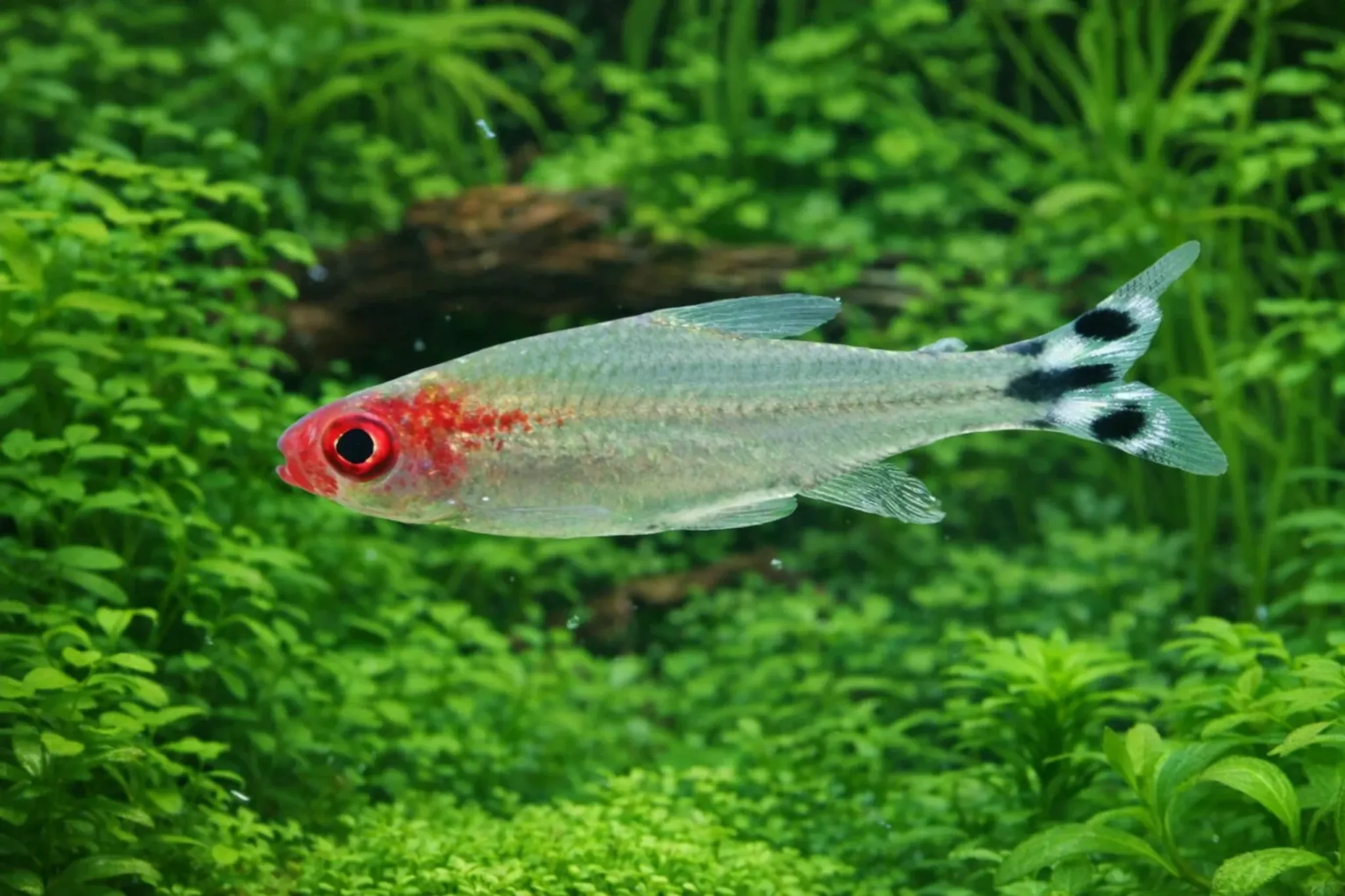
What Do Rummy-Nose Tetra Eat? A Practical Feeding Guide
Rummy-nose tetra thrive on a small-particle omnivore diet: a high-quality micro pellet or flake as the daily staple, topped up two to three times a week with live or frozen protein like daphnia, baby brine shrimp, or chopped bloodworms. Feeding twice a day in amounts they clear within two to three minutes matches their active, shoaling metabolism and keeps water quality — and their red nose color — stable. Below is a shopping list, a weekly schedule, and fixes for the feeding problems that actually come up.
What rummy-nose tetra eat in the wild vs. the tank
Rummy-nose tetra (the group sold as Hemigrammus bleheri, Petitella, and close relatives) are omnivorous micro-predators and grazers. In their native waters they pick constantly at biofilm, soft algae, tiny invertebrates, and decaying plant debris rather than eating large meals. That grazing habit matters for how you feed them in a home aquarium:
- They have small, forward-facing mouths built for picking, not gulping.
- They forage almost continuously in the wild, so their gut is adapted to frequent, small intakes rather than one large feeding.
- Biofilm and soft algae in a mature tank supplement their diet, but they should never be relied on as a primary food source — treat any tank grazing as a bonus, not a plan.
The staple diet: what to feed every day
A small-particle flake or micro/nano pellet sized for their mouths should form the backbone of their diet. For very small individuals or a newly settled shoal, crushing flake between your fingers before it hits the water makes it easier for them to grab.
Look for a staple where a named protein source (fish, krill, shrimp) leads the ingredient list rather than fillers like corn, soy, or vague "fish meal." Foods dominated by cheap fillers offer less usable nutrition per bite, which over time shows up as duller color and slower growth. You can browse staple flakes and micro pellets sized for small schooling fish like these in FishyHub's tetra livestock section, where feeding notes are often listed alongside the fish themselves.
Protein treats, 2–3 times a week
Rotate in live or frozen protein a few times weekly to boost color and breeding condition:
- Daphnia (live or frozen)
- Baby brine shrimp
- Bloodworms, chopped small for their mouth size
- Micro-worms
These treats aren't just enrichment — they close nutritional gaps that a dry-only diet leaves open, and they're what conditions a shoal for breeding.
Color-enhancing foods
The red "nose" is a visible health signal owners watch closely, and diet plays a real role in keeping it vivid. Foods built around krill, shrimp, or salmon/astaxanthin ingredients intensify that red blush over time. A practical approach: rotate in a color-formula flake or krill flake once a week rather than feeding it exclusively, so the shoal still gets a varied amino acid profile.
How often and how much to feed
Twice daily is the better default for a rummy-nose shoal. Sources are split here — some guides say once a day is fine for adults, others recommend twice — but two smaller feedings matches their near-continuous foraging behavior in the wild better than one larger meal, and it reduces competition stress within the shoal. If you're actively managing water quality (see below) or noticing any overfeeding signs, dropping to once a day is a reasonable adjustment, not a downgrade.
Portion size is simpler to describe than to measure by weight: feed only what the shoal clears in 2–3 minutes. For a shoal of 6–10 fish, that's typically a pinch of flake crumbled to fingernail-sized flecks, or a similarly small amount of micro pellets — enough to lightly dust an area roughly the size of your palm across the water's surface, not a solid layer.
Because rummy-nose are shoaling fish, shy individuals often hang toward the back or bottom of the group. Spread food over a wider area of the tank rather than dumping more total food in one spot — this gets food to timid fish without increasing the overall amount you're adding.
| Feeding element | Guidance |
|---|---|
| Staple food | Small-particle flake or micro/nano pellet, daily |
| Protein treat | Daphnia, baby brine shrimp, or chopped bloodworms, 2–3x/week |
| Color food | Krill- or astaxanthin-based flake, about once a week |
| Frequency | 2 small feedings/day (1/day acceptable for adults if watching water quality) |
| Portion | Cleared within 2–3 minutes; spread across a wide area |
| Fry | Infusoria/liquid fry food, then baby brine shrimp/microworms |
A sample weekly feeding rotation
None of the usual advice lays out a concrete week, so here's a simple rotation that covers the staple, protein, and color-food needs above without overcomplicating a daily routine:
| Day | Morning | Evening |
|---|---|---|
| Mon | Staple micro pellet | Staple flake |
| Tue | Staple flake | Frozen baby brine shrimp |
| Wed | Color/krill flake | Staple micro pellet |
| Thu | Staple flake | Frozen daphnia |
| Fri | Staple micro pellet | Chopped bloodworms |
| Sat | Color/krill flake | Staple flake |
| Sun | Staple micro pellet | Frozen daphnia or brine shrimp |
Adjust portions down if you notice any uneaten food after 3 minutes, and skip a feeding occasionally (a "fasting" evening) if the tank shows any early water quality drift.
Overfeeding: the real risk with this species
Rummy-nose tetra are frequently called a "canary in the coal mine" fish because they show stress from water quality problems faster and more visibly than many tankmates — often through a pale or faded nose before anything else looks wrong. Leftover food breaks down quickly and drives ammonia and nitrite spikes, so overfeeding is one of the fastest ways to trigger that stress response.
As a target, aim to keep ammonia and nitrite at undetectable levels (0 ppm) and nitrate low (many keepers aim under 20 ppm) through a combination of correct portions and regular water changes — not feeding discipline alone, but feeding discipline is the easiest lever you control day to day. If you're dosing a water conditioner as part of your routine, FishyHub's water conditioning and additives category covers products that support that baseline.
Feeding fry: when you're breeding
If your rummy-nose have spawned, fry feeding is a different track entirely. Newly free-swimming fry cannot eat standard flake — it's far too large for their mouths and will simply go uneaten.
- First food: infusoria or a liquid fry food for the first several days.
- As they grow: transition to baby brine shrimp and microworms once they're visibly free-swimming and larger.
- Regular staple: only introduce crushed flake or micro pellet once fry are large enough to handle it, usually several weeks in.
Skipping the fry-specific stage is one of the most common mistakes new breeders make — it isn't that fry refuse to eat, it's that the food itself is physically too big.
Fish food drawer essentials
Keeping a small, rotating stock on hand makes the schedule above easy to follow without last-minute substitutions:
- A staple flake or micro pellet as your everyday base
- A color-enhancing flake or krill product for weekly rotation
- Frozen or freeze-dried daphnia, brine shrimp, and bloodworms for protein treats
For frozen foods, portion cubes ahead of time and thaw only what you need per feeding in a small cup of tank water — this cuts waste and avoids repeated freeze-thaw cycles degrading nutrients in the rest of the block. FishyHub's freeze-dried food selection and broader food and supplements range are worth browsing to build out this rotation.
Dealing with a picky eater
Rummy-nose tetra feed mid-water to bottom rather than exclusively at the surface, so food format matters as much as food type. Slow-sinking micro pellets or flake crumbs that settle through the water column tend to work better than surface flake alone, especially once faster surface-feeding tankmates have had their pass.
Newly added fish may refuse food for several days after transport — this is normal acclimation stress, not a sign of illness. To help:
- Offer live baby brine shrimp or daphnia, which tends to trigger a feeding response even in stressed fish.
- Check that faster or more aggressive tankmates aren't outcompeting the shoal at feeding time.
- If refusal continues beyond a week, rule out poor water quality or an incorrect tank temperature before assuming it's just shyness.
Automatic feeders for travel or consistency
For vacations or simply keeping feeding consistent, an auger-style feeder — a small motor turning a screw that pushes food through a tube — holds up better than gravity or funnel-style feeders, which tend to clog from humidity inside the hood.
- Calibrate the feeder to dispense a pinch-sized portion, once or twice daily, matching the shoal's normal amount.
- Test-run it dry for a few days before you leave to confirm the timing and portion are correct.
- Keep the feeder away from splashing water or humid air stone output, since damp food clumps and jams the mechanism.
Going away without a test run is a common and entirely avoidable mistake — a jammed feeder means either a starving shoal or, worse, days of unattended overfeeding.
"True" rummy-nose vs. look-alikes: does diet differ?
Retailers sometimes sell true rummy-nose (Hemigrammus bleheri) alongside similar red-nosed species, including some headstander-type fish marketed under the same common name. If you're not sure which one you have, it usually doesn't change the feeding plan much — all of these species are small-mouthed omnivores that do well on the same staple-plus-protein rotation described above. The main thing worth double-checking is mouth and body size: a slightly larger look-alike may handle standard flake without crushing it first, while true rummy-nose generally benefit from smaller particle sizes throughout their life.
Frequently Asked Questions
How often should I feed rummy-nose tetra?
Twice daily, in small amounts the shoal clears within two to three minutes, matches their active foraging behavior best. Once daily can work for adults if you're closely watching water quality, but two feedings reduces competition stress within the shoal.
What is the best food for rummy-nose tetra color?
A krill- or salmon/astaxanthin-based color-enhancing flake or micro pellet, rotated in about once a week alongside regular daphnia or bloodworm treats, does the most for nose color. Avoid feeding a color food exclusively — variety still matters more than any single ingredient.
Can rummy-nose tetra eat algae wafers or plant-based food?
They'll nibble soft algae and biofilm in a mature tank, but this is supplemental, not sufficient. A protein-inclusive omnivore diet should remain their staple; algae wafers aren't necessary as a regular food.
Do rummy-nose tetra need live food?
No, live food isn't required, but occasional live or frozen daphnia and brine shrimp noticeably improves color, body condition, and breeding readiness compared to a dry-only diet.
Why is my rummy-nose tetra's nose turning pale?
Pale or faded nose color is usually an early sign of stress, poor water quality, or a monotonous diet lacking protein and color-enhancing ingredients — not a purely cosmetic issue. Check ammonia, nitrite, and nitrate first, then review diet variety before assuming it's something more serious.
How do I feed rummy-nose tetra fry?
Start newly free-swimming fry on infusoria or a liquid fry food, since regular flake is far too large for them. Once they're visibly larger, move them onto baby brine shrimp and microworms, then transition to crushed flake or micro pellet as they mature.
Can I use an automatic feeder for a rummy-nose tetra tank?
Yes — an auger-style feeder set to dispense small, frequent portions works well for this species. Avoid gravity-style feeders, which tend to clump and jam in the humid air inside an aquarium hood.
What if my new rummy-nose tetra won't eat?
Give it several days to acclimate before worrying; transport stress commonly causes short-term refusal. Try live baby brine shrimp or daphnia to tempt it, make sure tankmates aren't outcompeting it, and check water quality and temperature if refusal lasts more than a week.
Ready to add rummy-nose tetra to your community tank or restock their feeding rotation? Browse FishyHub's freshwater tetra selection to find shoal-mates and stock, or head to Food & Supplements to round out your feeding drawer.


